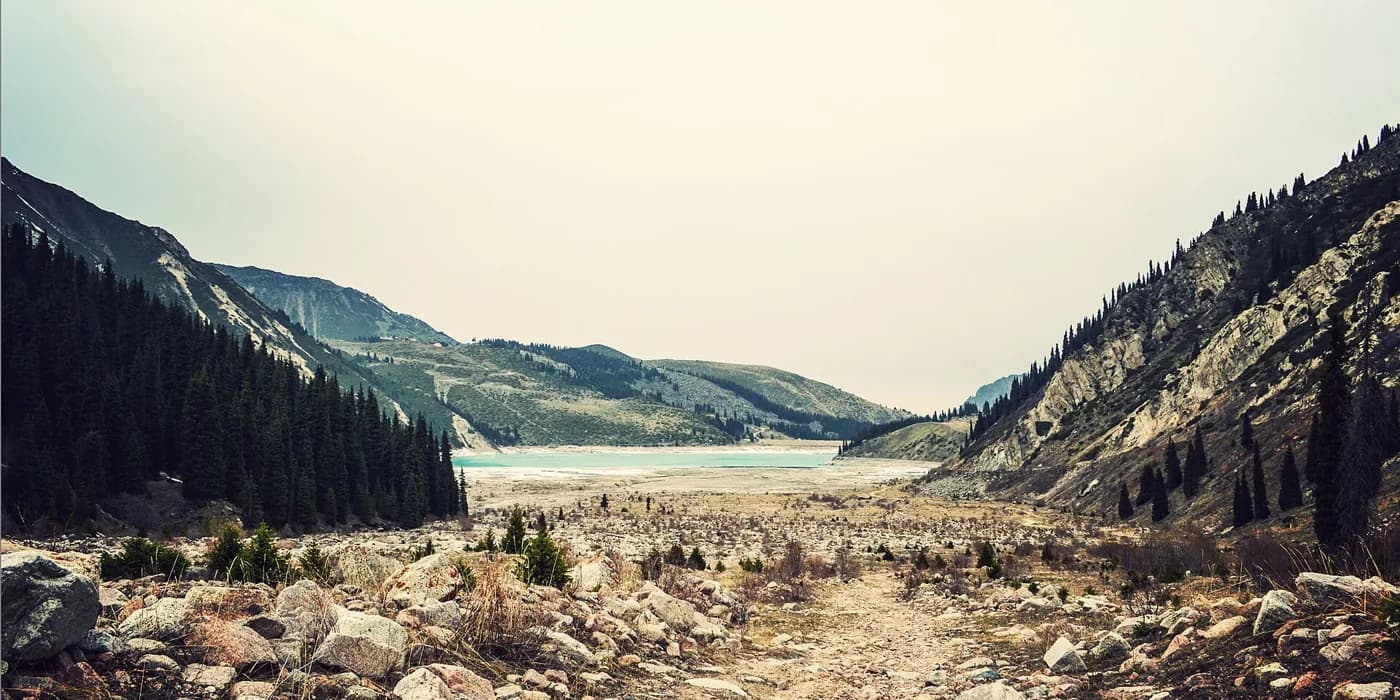

Kazakhstan
Neo Nomad Visa (B12-1): health insurance requirements
Yes: health insurance is required
Kazakhstan launched the Neo Nomad Visa (B12-1) in November 2024, the first digital nomad visa in Central Asia. It requires proof of at least $3,000 in monthly foreign-sourced income, six months of bank statements, a clean criminal record, and a health insurance policy valid in Kazakhstan for the full visa period. It runs for one year and is extendable; holders cannot work for local employers.
The requirements at a glance
| Local-licensed insurer required | No: compliant international IPMI is accepted |
|---|---|
| Accepted proof | A health insurance policy (insurance certificate) valid in Kazakhstan for the entire duration of the visa, submitted with the application via the Astana Hub portal; updated proof is required at renewal. |
Minimum monthly income of $3,000 from sources outside Kazakhstan; six months of bank statements; clean criminal record from country of residence; passport with at least two blank pages; 100% remote work as an employee, freelancer, or business owner; no employment with local Kazakh companies. A separate, more selective Digital Nomad Residency (B9-1) for vetted IT specialists via Astana Hub/MDIIA grants a 10-year residence permit with no income threshold.
By September 2025, Kazakhstan's Digital Nomad Residency (B9-1), the IT-specialist track launched in January 2025 via Astana Hub, had received more than 270 applications from 20 countries, with the first 10-year permit issued to analytics engineer Pavel Filatov.
Our take
The insurance condition is real but loosely defined: Kazakhstan requires cover valid in-country for the whole visa term, yet publishes no minimum coverage amount. That looseness is a trap, because a cheap policy can satisfy the letter of the rule while leaving you badly exposed. Treat the requirement as a floor, not a target.
Buy comprehensive international cover with explicit medical evacuation and repatriation. The local private system in Almaty and Astana handles routine care, but complex or critical cases are routinely moved to Dubai, Istanbul, or Western Europe, and an air ambulance dwarfs any saving from a thin plan.
What happens if you get it wrong
Submitting a basic travel insurance add-on or a policy that does not clearly state validity in Kazakhstan for the full visa duration. Renewal also requires fresh insurance proof, so a policy that lapses mid-term can sink an extension.
Assuming the $3,000 income figure and one-year-plus-extension terms are fixed. The visa is new and details have shifted between sources, so confirm the current income threshold, fee, and renewal cap with Astana Hub or a consulate before applying.
Interactive
Verified pricesWhat would it cost in Kazakhstan without insurance?
You pay, out of pocket
$1,000–$8,000
A serious private admission or common surgery.
Bars to scale. A flight home is in another league.
That is the bill you carry alone. Insurance exists for exactly this.
See what cover costsTypical private-care estimates for illustration, not a quote. Actual bills vary by hospital, city and severity.
FAQ
Yes. Applicants must hold a health insurance policy valid in Kazakhstan for the entire duration of the visa. The requirement applies again at renewal.
No official minimum coverage figure is published. Because of that, the safe approach is comprehensive international cover with medical evacuation and repatriation rather than a low-limit travel policy.
Reported requirements are at least $3,000 per month from foreign sources, supported by six months of bank statements. Confirm the current threshold via Astana Hub before applying, as figures have varied between sources.
It is valid for one year and can be extended, with renewal requiring updated insurance and a fresh income statement. You cannot work for local Kazakh employers on it.
Yes. The Digital Nomad Residency (B9-1), launched in 2025 for vetted IT professionals through the Astana Hub innovation cluster, grants a 10-year residence permit and has no income threshold, but requires a criminal-record certificate and qualification vetting.
How to apply
- Processing time
- About 1 to 5 business days for citizens of the designated developed countries; roughly 5 to 30 calendar days for other nationalities, including invitation processing.
- Government fee
- Consular fee of 30 MRP, about KZT 117,960 in 2025. The exact charge varies by nationality and mission (some missions quote a USD equivalent of roughly US$100 to 200).
- Where to apply
- A Kazakhstan embassy or consulate in your country of citizenship or residence. Extensions are handled in-country by the migration police.
- 1
Confirm you qualify: steady income from foreign sources of more than US$3,000 per month, evidenced by six months of bank statements. If you are not a citizen of one of the designated developed countries, obtain an invitation first.
- 2
Book an appointment at a Kazakhstan embassy or consulate and prepare your documents: passport, completed application, six months of bank statements, a criminal-record certificate, medical insurance covering the visa period, and the invitation letter if required.
- 3
Submit the application in person at the Kazakhstan diplomatic mission in your country of citizenship or residence.
- 4
Pay the consular fee.
- 5
Receive a multiple-entry visa valid for up to one year. Family members get a visa for the same period but may not work.
- 6
After arrival, you can apply to the migration police to extend the stay for up to one additional year.
Fees and processing times move, sometimes without announcement, and a consulate can add a document the published checklist does not mention. Treat the above as the shape of the process rather than a guarantee, and check the current requirement with the mission handling your application before you book anything.
What policy actually satisfies this visa
Kazakhstan does not publish a minimum figure, which sounds permissive and is not. It means you are judged against somebody's unwritten idea of adequate, and the safe reading of adequate is enough to cover a serious hospital admission in Kazakhstan, not the cheapest policy that technically exists.
A compliant international policy is accepted, so you are not forced into a local insurer. That matters more than it sounds: it means one policy can follow you when you leave, instead of expiring at the border.
Repatriation is not named as a condition, though it is the benefit you would most want to have if the worst happened, and it costs very little to add.
And the dates. The policy has to run for the whole permit, which a standard travel policy cannot do because it stops at around 90 days. An officer comparing your policy period with your permit period does not have to look hard to see it expire in the middle.
Ask your insurer for a certificate of cover that states your full name as it appears on your passport, the exact policy period, the territory covered, and the benefit amounts. That is a normal request and any decent insurer issues it without fuss. The insurance being real and the paperwork still failing is a more common way to lose an application than being uninsured.
The other ways into Kazakhstan
A nomad visa is not the only door, and for a lot of people it is not the right one. If you do not clear the income bar, or you only want a few months, these are the routes the country actually runs.
Tourist Visa (F1) / Visa-Free Short Stay
Visa-free stay capped at approx. 42 days within any 180-day period for most exempt nationalities; F1 tourist visa typically up to 90 days (single-entry), extendable on multi-entry up to ~180 days. Verify per nationality.Leisure travellers and visitors. Note: nationals of 80+ countries (incl. EU, UK, US) can enter visa-free for short stays without an F1 visa at all.
Valid passport; for the F1 visa, an application supported by a Kazakh travel agency. Visa-free travellers just need a passport and onward/return ticket.
Insurance: Recommended. No government health-insurance mandate was found in official sources for short stays, but travel medical cover is strongly advised. Verify.
Business Visa (D-series, D1–D8)
Short-term; varies by sub-category and single/multi-entry. Verify exact duration with the issuing consulate.Foreigners visiting for negotiations, forums, conferences, market research and other non-employment business activities.
Invitation/application from a legal entity (company) registered in Kazakhstan.
Insurance: Recommended. No specific government insurance requirement found in official sources for business visas. Verify.
Work Visa (C3 employment; M-series labour)
Single-entry up to ~90 days for entry; multi-entry tied to the work permit, typically up to 1 year (sometimes up to 3), renewable annually in-country.Foreign nationals employed in Kazakhstan under a local contract (skilled workers, managers, intra-company transferees). C5 covers business immigrants/company founders.
Employer must first obtain a Permit to Engage Foreign Labour (work permit) plus an invitation; from 1 Sept 2025 a labour-market test applies. C5 founder route requires an LLP/company stake.
Insurance: Recommended/verify. No explicit government health-insurance mandate surfaced for the work visa itself, but long-term residents are required to hold medical insurance (see residence permit). Confirm with employer/consulate.
Student Visa (L1 / L2)
Tied to the course of study; issued on application of the institution, with immigration-police approval. Verify duration.Foreign students enrolled at accredited Kazakh educational institutions.
Admission/invitation from a Kazakh educational institution and immigration-police clearance.
Insurance: Recommended/verify. Not confirmed as a stated government requirement in the sources found; many universities require it. Confirm with the institution.
Temporary Residence Permit (TRP) / Permanent Residence
TRP typically valid 1 year and renewable; permanent residence (indefinite) after approx. 5 years of lawful temporary stay (3 if married to a Kazakh citizen). 2026 pilot adds a points/language test and a financial threshold; verify.Foreigners staying long-term: workers, students, entrepreneurs, financially independent persons and family members. PR available after several years of lawful stay.
Proof of income/financial capacity, accommodation (property or rental), clean criminal record; 2026 rules add digital screening and language proficiency.
Insurance: Required. Long-term residents must maintain medical insurance for themselves and dependents (per immigration advisories); a medical certificate is also required. Verify current rules.
Rules are written for third-country foreign nationals (non-CIS / non-visa-exempt passport holders); many nationalities enjoy 14–90 day visa-free entry, so confirm your own passport's terms first.
The visa tells you the minimum. It does not tell you what to actually carry. Those are different questions, and the paperwork minimum is nearly always the smaller of the two answers.
Get a policy that satisfies this visa
Three minutes of honest questions, then we'll match you to insurance that meets Kazakhstan'srequirements and actually works where you're going.
Find my plan