Destination
Healthcare in Anguilla, and what it costs without cover
The remote-work permit has disappeared from every government page without a word, so remote workers arrive as ordinary visitors. One small public hospital serves the island, and serious cases leave by air ambulance, which is the bill worth insuring against.
A short trip to Anguilla can still use travel cover. Living there needs international health insurance that outlasts the visa.
- Best for Long-term nomads
- Best for Slowmads
- Best for Freelancers
- Best for Perpetual travelers
- Insurance required?
- Not requiredthe permit is gone
- Recommended coverage
- Air ambulance essential · evacuation US$20,000+ICU US$50,000+
- Emergency number
- 911
- Healthcare quality
- One public hospitalEnglish-speaking · small scale
The system
Healthcare system in Anguilla
Anguilla is a British Overseas Territory, so English is the working language of every clinic and there is no language barrier to navigate.
Healthcare runs on a small scale. The Princess Alexandra Hospital in The Valley is the only public hospital on the island, with a 24-hour emergency room, inpatient and outpatient care, maternity, diagnostic imaging, dialysis and routine surgery. It handles day-to-day and many urgent needs well, but it is not a large referral centre. For non-emergency care most residents and longer-stay visitors use private practices such as the Hughes Medical Center and the Atlantic Star Center, where waits are shorter.
Air ambulance off-island
The emergency number is 911 for ambulance, police and fire, and the hospital direct line is +1 264 497 2551. The point that should shape your insurance decision is what happens when a case is beyond the island's capacity: patients are evacuated by air ambulance to St. Maarten, Puerto Rico or Miami depending on the emergency. That medical flight, not a clinic bill, is the expense that can run into tens of thousands of dollars. Pharmacies are available, with Paramount Pharmacy the main name, plus a pharmacy at the hospital, though specific brands may not be stocked, so bring enough of any essential medicine with a doctor's letter. One practical warning: doctors here generally expect to be paid in cash and may not bill a travel insurer directly, so you pay up front and claim afterward.
What you'd pay
Typical costs
| Private GP or consultation | commonly US$50 to US$150, paid in cash (no official tariff is published) |
|---|---|
| Private health or travel insurance with air ambulance cover | roughly US$200 to US$400 a month, depending on age and limits |
| Emergency room or private admission | expect to prepay, often hundreds of US dollars |
| Air ambulance evacuation off-island | typically US$20,000 and up, and an ICU repatriation can exceed US$50,000 |
Anguilla publishes no official private tariff, so treat the consultation and admission figures as indicative rather than fixed. Everyday prices are quoted in Eastern Caribbean dollars, pegged to the US dollar at EC$2.70 to US$1, but most tourist and medical pricing is also given in US dollars. The number that matters is the last one: a serious case leaving the island by air is precisely the cost the program forces your insurance to cover.
Entry & stay
Visa, residency & insurance
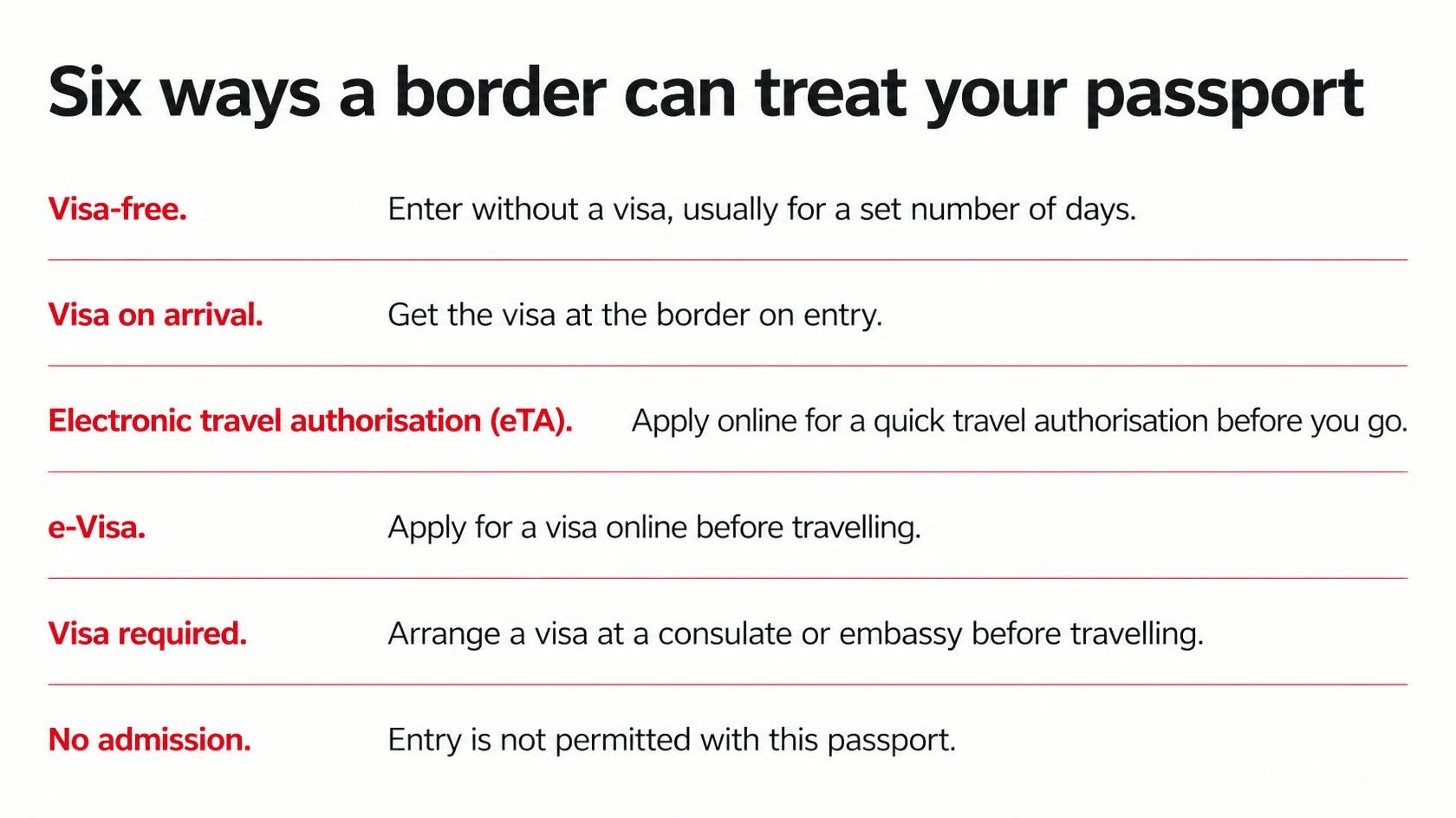
For short stays, US, British, Canadian and Australian visitors enter visa-free for up to 90 days, with the exact length set by the immigration officer on arrival.
You need a passport valid for at least six months beyond arrival, return or onward tickets, and you should be able to show accommodation and means to support yourself. Travel insurance is not a legal entry requirement for tourists, though given that serious cases are evacuated off-island it is strongly advised.
The Work from Anguilla programme has gone quiet
Anguilla launched a remote-work permit in 2020 that ran for up to 12 months and asked for US$55,000 of annual income. It is no longer possible to find it anywhere official. The tourist board's pages for it return 404, the dedicated subdomain it was hosted on no longer resolves at all, and the Immigration Department's current service list carries six services with no remote-work route among them. The government's document library, which holds instruments up to 2026, contains nothing that would create or continue such a permit, and the FCDO's Anguilla entry guidance does not mention it.
No closure was ever announced, so there is no date to give you. What can be said is that the programme has left no trace in any current government index, which is the same way the Cayman Islands programme ended: not with a notice, but by quietly failing to renew.
Treat the figures still circulating in nomad guides accordingly. The income threshold, the fees and the processing time all described something you cannot currently apply for.
What remote workers use now
Visa-free entry. US, British, Canadian and Australian visitors are admitted for up to 90 days, with the length set by the officer on arrival. You need a passport valid at least six months beyond arrival, a return or onward ticket, and to be able to show accommodation and means to support yourself. Working for employers or clients outside Anguilla during a visit is the everyday reality; taking work from Anguillan entities requires a work permit, and those go through the Labour Department with the vacancy advertised locally first.
Nothing now requires insurance, and that changes less than it sounds
The old programme's insurance rule was unusually good: it named air ambulance explicitly, so a thin travel policy would not satisfy it. With the programme gone, that requirement is gone too, and visa-free entry imposes none.
The rule was pointing at something real, though. Princess Alexandra Hospital is the island's only public hospital, it is small, and cases beyond its capability are flown to St. Maarten, Puerto Rico or Miami. Clinics here commonly expect cash and will not bill a foreign insurer, so you pay first and claim later. The old application was, in effect, forcing people to buy the cover this island actually calls for. Now nobody is checking.
Who these rules apply to: All foreign visitors; 124 visa-exempt countries (incl. US/CA/UK/EU/AU/NZ/JP) enter visa-free up to 90 days. Holders of valid US/UK/CA visas or US Green Cards also visa-exempt. Other nationals must obtain eVisa
- Recommended
Visa-Free Tourist Entry
Up to 90 days124 visa-exempt countries (US/CA/UK/EU/AU/NZ/JP etc.) and holders of valid US/UK/CA visas or US Green Cards. Passport 6+ months, return/onward ticket, accommodation, sufficient funds
- Recommended
eVisa (Tourist)
Up to 90 daysNationals of countries not qualifying for visa-free. Online at evisa.gov.ai, USD 20 non-refundable fee, passport, accommodation and return ticket; processing ~10 days
- Required
Work From Anguilla (Digital Nomad Visa)
12 months, not extendable (must reapply)Remote employees, self-employed, freelancers and students working for foreign employer or own business. Remote employment or business incorporation proof, police clearance (last 6 months) for all 18+ applicants, passport copy, birth cert; fee USD 2,000 individual or 3,000 family of up to 4
- Optional
High-Value Resident (HVR) Program
Renewable long-term; 5-yr minimum commitment; 45 days physical presence/yrHNW seeking long-term residency and Anguilla tax base. Purchase of real estate worth ≥400,000 USD and commitment to pay ≥75,000 USD/yr in Anguilla taxes; clean record; 18+
- Optional
Permanent Residence by Investment
Permanent (no physical presence min for PR)Investors seeking PR, potentially path to British Overseas Territories citizenship after 5 yrs. Either 150,000 USD Capital Development Fund contribution (single, +50,000 per dependent) or 750,000+ USD real estate held 5 yrs; clean record; 18+
Visa rules change often and depend on your nationality. Always confirm with the official immigration service or your nearest consulate before you apply.
Once a stay outruns a travel policy's trip limit, our guide to when travel insurance stops and nomad health insurance starts explains which kind of cover fits.
Interactive
Verified pricesWhat would it cost in Anguilla without insurance?
You pay, out of pocket
$50–$150
A private GP consultation, paid in cash; no official tariff is published.
Bars to scale. A flight home is in another league.
That is the bill you carry alone. Insurance exists for exactly this.
See what a match needsTypical private-care estimates for illustration, not a quote. Actual bills vary by hospital, city and severity.
Local risk notes
What to watch out for in Anguilla
- Off-island evacuation.
- With one public hospital, serious cases are flown to St. Maarten, Puerto Rico or Miami, and that flight is the single biggest medical expense you could face, which is exactly why the program demands air ambulance cover.
- Hurricane season. The Atlantic season runs June to November; storms can strengthen quickly and disrupt flights, power and medical services, so keep travel flexible and follow local warnings.
- Mosquito-borne disease. Dengue, Zika and chikungunya are present year-round and the mosquitoes bite by day, especially around sunrise and sunset, so use repellent and cover up.
- Cash up front for care. Doctors and clinics generally expect cash and may not bill your insurer directly, so keep accessible funds and itemised receipts to claim back later.
- Tap water and small-island supply. Many residents drink bottled or filtered water rather than tap, and specific medicines or specialist care may simply not be available without travelling off-island.
Common questions
Anguilla insurance FAQ
Not one you can apply for. The Work from Anguilla programme launched in 2020 but has disappeared from every official source: the tourist-board pages 404, its dedicated subdomain no longer resolves, and it is absent from the Immigration Department's service list and the government document library. No closure was announced, so no end date exists, but nothing supports treating it as available.
No. The old programme required a policy covering air ambulance explicitly, which was a sensible rule, but it went with the programme. Visa-free entry carries no insurance condition. The underlying risk is unchanged: one small public hospital, evacuation off-island for serious cases, and clinics that expect payment up front rather than billing your insurer.
Because Princess Alexandra Hospital is the only public hospital and serious cases are evacuated by air to St. Maarten, Puerto Rico or Miami. That flight commonly starts around US$20,000 and an ICU repatriation can exceed US$50,000, which is why the program writes evacuation cover into the rules.
No. Anguilla imposes no income, capital gains or estate tax on individuals regardless of residency, so your foreign earnings are not taxed locally while you are there.
US, British, Canadian and Australian visitors enter visa-free for up to 90 days, with the length set on arrival. You need a passport valid for at least six months, a return or onward ticket, and proof you can support yourself.
Often not. Doctors and clinics in Anguilla generally expect to be paid in cash and may not deal with your insurer, so you usually pay up front and claim afterward. Keep itemised receipts for your provider.
This page is the healthcare guide. It does not quote a premium and does not name an insurer. How we measure cost.
In 3 steps
- 01
Fill out
The form only asks what changes the plan.
- 02
We find your match
We compare the panel against your route, stay and visa.
- 03
Become a member
If the offer fits, you take it out directly.
Have a look if this page was not the question you came with.