
Destination
Healthcare in Namibia, and what it costs without cover
A real six-month nomad visa, English everywhere, and some of the emptiest roads on earth. The good hospitals are in Windhoek, serious cases leave for South Africa, and the north carries malaria, so evacuation cover earns its keep.
A short trip to Namibia can still use travel cover. Living there needs international health insurance that outlasts the visa.
- Best for Long-term nomads
- Best for Slowmads
- Best for Freelancers
- Best for Perpetual travelers
- Insurance required?
- Digital Nomad Visa requires valid health or travel insurance covering risks in Namibia for the stay; no minimum sum published
- Recommended coverage
- Cover including medical treatment, emergency evacuation and repatriation
- Emergency number
- Windhoek emergency +264 61 211 111E-Med Rescue 24 081 924 · police 10111
- Healthcare quality
- Two-tier; good private hospitals in Windhoek, thin elsewhere
The system
Healthcare system in Namibia
Namibia has a two-tier system.
Public hospitals are stretched and concentrated in towns, so nomads and expats use private care, which is good in the capital and thin everywhere else. The private hospitals to know are clustered in Windhoek: Lady Pohamba Private Hospital and Mediclinic Windhoek are the two most modern, both with ICU, emergency departments and cardiac capability, alongside Rhino Park Private Hospital and the Roman Catholic Hospital. On the coast there is Mediclinic Swakopmund and Welwitchia Hospital in Walvis Bay, and in the north the private Ongwediva Medipark. Advanced imaging like CT and MRI is essentially a Windhoek-and-coast affair.
Distance and emergency response
English is the official language and the language of medicine, so communication is rarely the problem. The bigger issue is distance and the patchwork emergency system. There is no single national ambulance number; you call a provider directly. The City of Windhoek emergency line is +264 61 211 111, and private operators run their own numbers, including E-Med Rescue 24 (081 924 or +264 61 411 600), which flies air ambulances. The general police number is 10111. For anything serious that the country cannot handle, patients are air-evacuated, usually to South Africa, which is precisely why insurance with strong medical evacuation cover is not optional here. Pharmacies are well stocked in Windhoek, Swakopmund and larger towns, far less so off the main routes, so carry a buffer of any regular medication.
What you'd pay
Typical costs
| GP consultation, uninsured private | around N$700 (about $37) |
|---|---|
| Private hospital, per day with care | around N$21,000 (about $1,135) |
| One-bed apartment rent, Windhoek | around N$9,000 per month (about $500) |
| Visa-on-arrival or e-visa, per adult | N$1,600 (about $88) |
These figures are indicative, in Namibian dollars (pegged 1:1 to the South African rand), not official price lists, and private hospitals typically want a deposit up front from the uninsured. The number that dwarfs all of these is an air evacuation to South Africa for a serious case, which runs into many thousands of dollars and is the reason the insurance line matters.
Entry & stay
Visa, residency & insurance
Tourist entry changed in 2025.
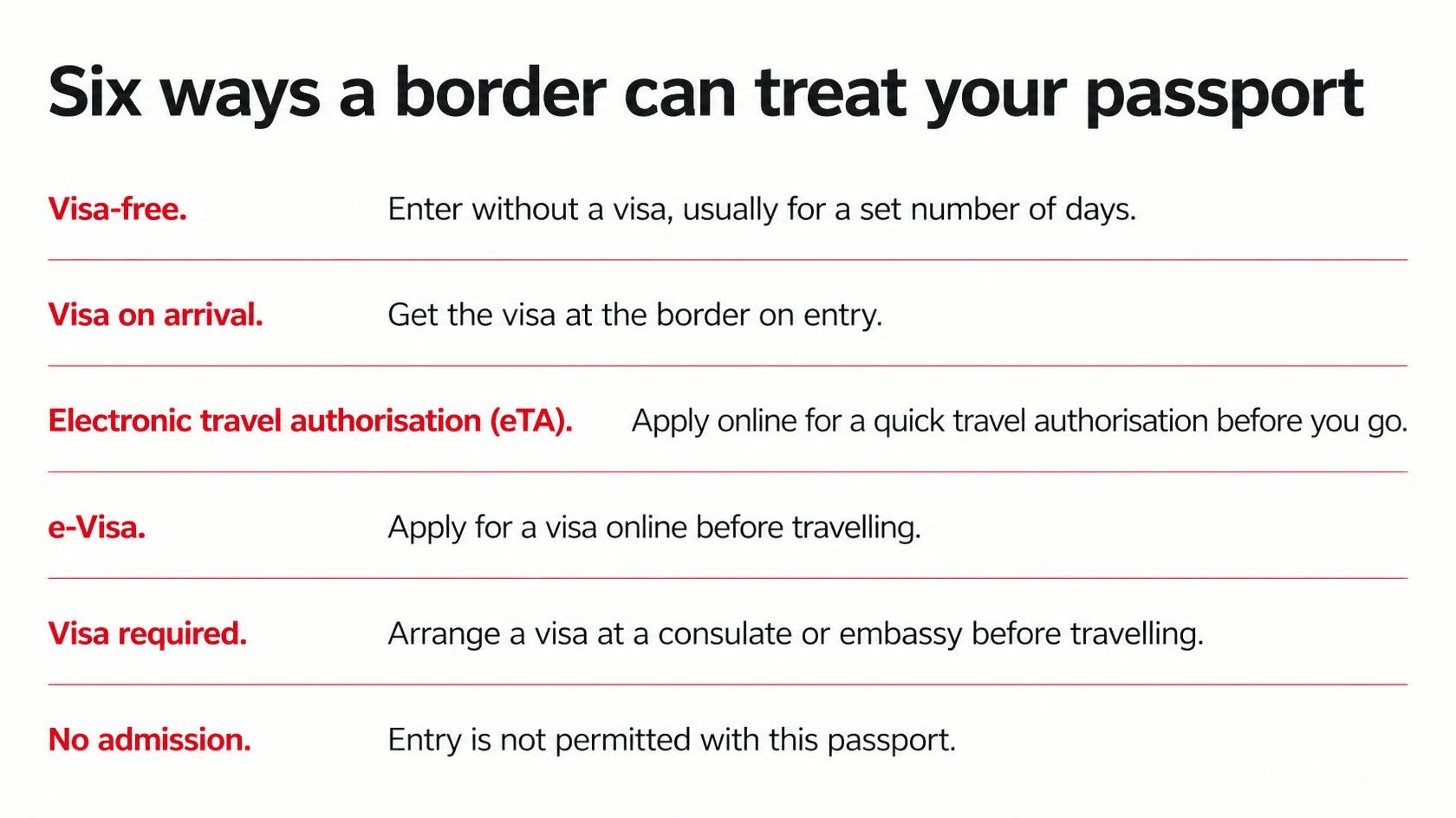
Namibia ended visa-free access for many Western nationals on 1 April 2025, so US, British, Canadian and Australian visitors now need a visa, available either on arrival at the airport or as an e-visa applied for online beforehand through the Ministry of Home Affairs portal. It costs N$1,600 per traveller over 11. The stamp is commonly cited at 30 days with up to 90 possible, though no Namibian government page confirms those lengths, so treat them as indicative and expect the inspector to decide.
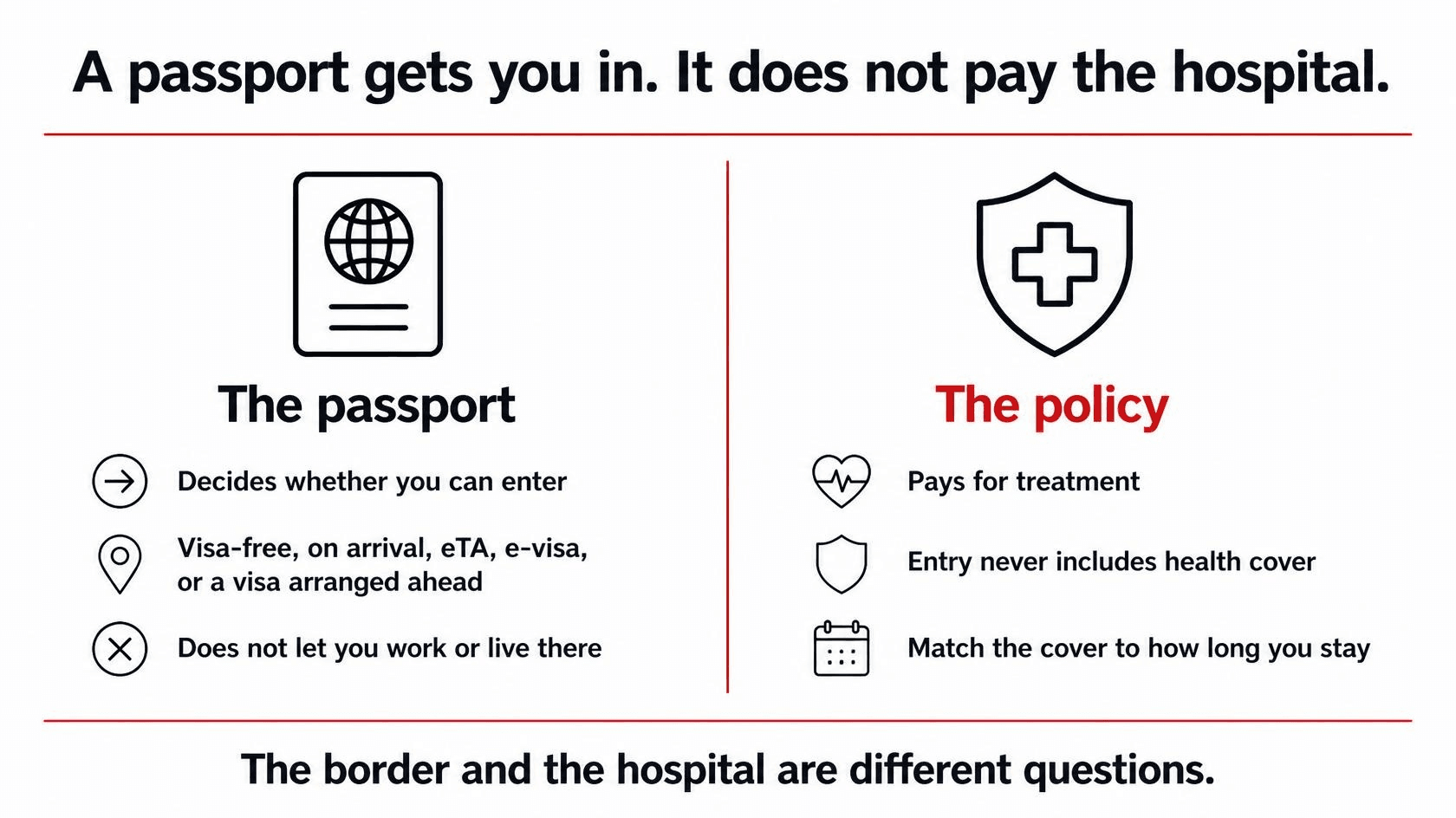
On insurance the answer depends on how you enter. Nothing is checked at the border for a visa on arrival. If you apply in advance through a Namibian mission, travel or medical insurance appears in the document pack, so it is a paperwork condition rather than an entry condition. Either way the evacuation reality makes it the wrong place to economise.
Digital Nomad Visa
To stay and work remotely there is a formal route: the Namibia Digital Nomad Visa, introduced in 2022 and run by the Namibia Investment Promotion and Development Board. It is valid for six months and is non-renewable, with reapplication permitted twelve months after expiry. Eligibility hinges on income earned outside Namibia: USD 2,000 a month for the main applicant, plus USD 1,000 for a spouse and USD 500 per child. Insurance is a written requirement: applicants must show valid health or travel insurance covering risks while in Namibia for the duration of the stay. There is no published minimum sum insured, so the sensible standard is cover that includes medical treatment, emergency evacuation and repatriation. The fee is NAD 3,300, payable on approval, and a police clearance certificate is required. We lay out the details on the Namibia digital nomad visa page.
Who these rules apply to: DN open to all nationalities; tourist visa-free varies by passport (SADC, EU, US, UK, most Commonwealth and many others exempt for up to 90 days)
- Recommended
Tourist Visa-Free Entry
90 daysSADC, EU, US, UK, CA, AU, JP and many other visa-exempt countries. Passport 6+ months with 3 blank pages; onward travel and funds
- Recommended
Visa on Arrival
30 days (extendable)Nationals of 35+ added countries (since 1 April 2025) not on visa-free list. Valid passport, onward ticket, VOA fee at port of entry
- Recommended
Short-Term Employment Permit (Work Visa)
Up to 6 monthsForeign nationals taking employment up to 6 months. Sponsoring Namibian employer; motivation letter; employer Social Security and Tax Clearance Certificates; min income ~EUR 2,500/month
- Recommended
Long-Term Work Permit
1 to 3 years (renewable)Skilled foreign workers with confirmed Namibian employment for 1-3 years. Job offer, qualifications, min income ~EUR 3,500/month; police clearance; medical cert; processing 56-70 days
- Required
Digital Nomad Visa
6 months (non-renewable in current form)Remote workers, freelancers and employees of foreign companies. Remote employment or client contracts proof; min monthly income USD 2,000 (main applicant), USD 1,000 spouse, USD 500 per child; 6 months statements; clean record
Visa rules change often and depend on your nationality. Always confirm with the official immigration service or your nearest consulate before you apply.
If you will keep moving after Namibia, cover that keeps running between countries is explained in our guide to digital nomad insurance cover and limits.
Interactive
Verified pricesWhat would it cost in Namibia without insurance?
You pay, out of pocket
$1,500–$7,000
A serious private admission or common surgery.
Bars to scale. A flight home is in another league.
That is the bill you carry alone. Insurance exists for exactly this.
See what a match needsTypical private-care estimates for illustration, not a quote. Actual bills vary by hospital, city and severity.
Local risk notes
What to watch out for in Namibia
- Road risk.
- Namibia has one of the world's highest road-fatality rates per capita, with long gravel roads, wildlife and big distances; this is the single most likely way a nomad ends up needing that evacuation cover.
- Malaria in the north. The risk is real in the northern and northeastern regions, with the Zambezi strip high year-round and others (Kavango, Ohangwena, Oshana, Etosha and more) high from roughly September to May; Windhoek and the south are low risk.
- Evacuation distances. Outside Windhoek and the coast you can be many hours from a hospital with imaging or surgery, and the definitive answer for serious cases is an air evacuation, often to South Africa.
- Patchwork emergency response. There is no universal ambulance number and rural cover is limited, so know your insurer's assistance line and a private rescue number before you travel up-country.
- Sun, heat and dehydration. This is a desert country with intense sun and remote stretches; heat, dehydration and the lack of services between towns catch people out more than crime does.
Common questions
Namibia insurance FAQ
Yes. The Namibia Digital Nomad Visa launched in 2022, run by the Namibia Investment Promotion and Development Board. It is valid for six months and non-renewable, for people earning income from outside Namibia.
Yes. Applicants must show valid health or travel insurance covering risks while in Namibia for the full duration of the stay. No minimum sum insured is published, so cover that includes evacuation and repatriation is the sensible benchmark.
USD 2,000 a month for the main applicant, plus USD 1,000 for an accompanying spouse and USD 500 per accompanying child, all earned from outside Namibia.
Yes, since 1 April 2025. You get it on arrival or as an e-visa beforehand, costing N$1,600 per adult, usually for 30 days with up to 90 days possible. No insurance is required to enter, but it is strongly advised.
Because the strong hospitals are in Windhoek and the coast, distances are huge, and serious cases are air-evacuated, usually to South Africa. A policy with medical evacuation and repatriation is the part that actually protects you here.
Only in parts. The northern and northeastern regions carry malaria, with the Zambezi region high year-round and others seasonal from about September to May. Windhoek, Swakopmund and the south are low risk.
This page is the healthcare guide. It does not quote a premium and does not name an insurer. How we measure cost.
In 3 steps
- 01
Fill out
The form only asks what changes the plan.
- 02
We find your match
We compare the panel against your route, stay and visa.
- 03
Become a member
If the offer fits, you take it out directly.
Have a look if this page was not the question you came with.