Destination
Healthcare in Grenada, and what it costs without cover
A remote-work visa that exists in law but has no published way to apply, on a spice island that is English-speaking and tax-free on foreign income. Serious cases leave the country by air, so evacuation cover is the line that counts.
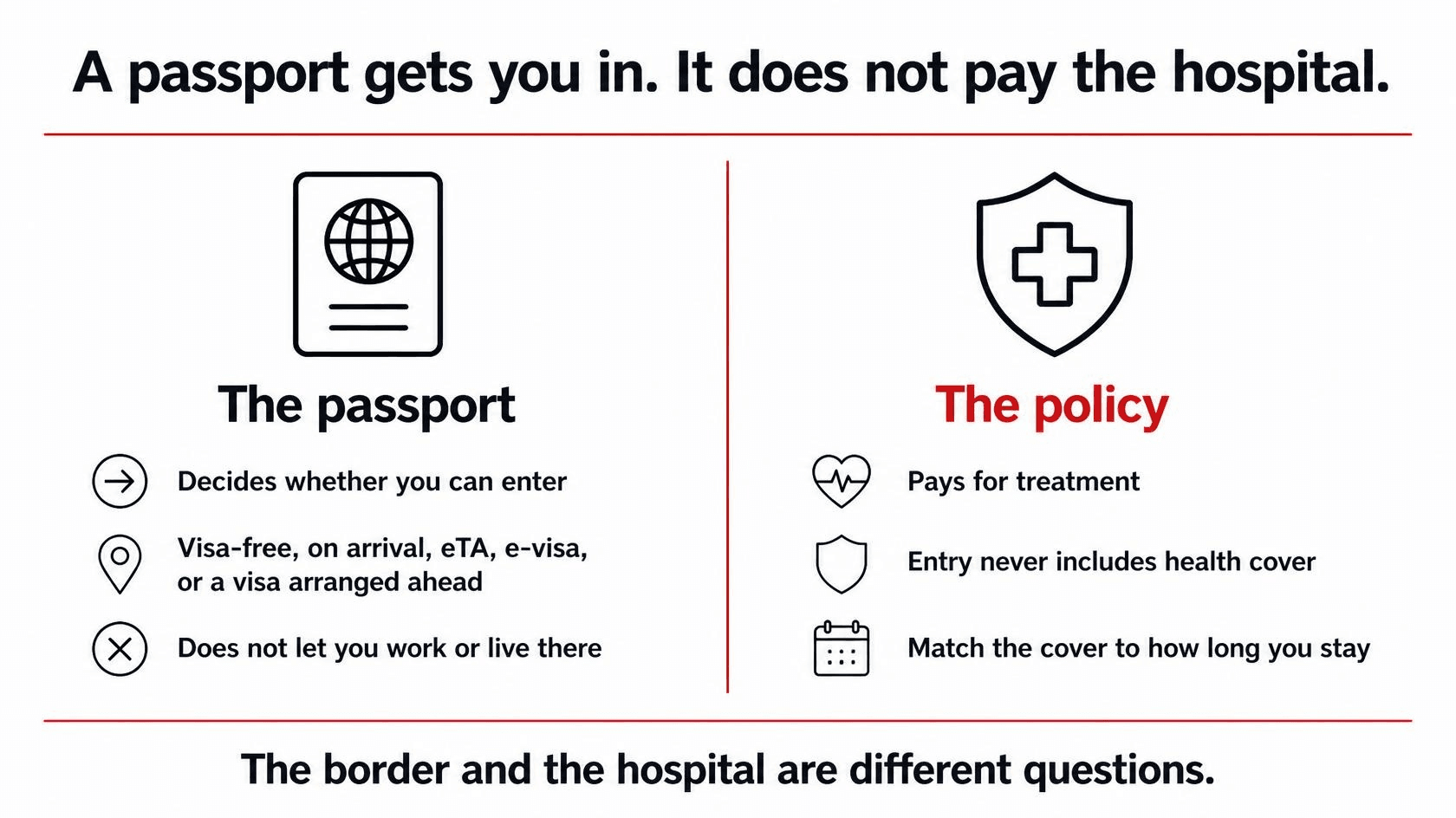
A short trip to Grenada can still use travel cover. Living there needs international health insurance that outlasts the visa.
- Best for Long-term nomads
- Best for Slowmads
- Best for Freelancers
- Best for Perpetual travelers
- Insurance required?
- Required by the remote-work law, which has no application route
- Recommended coverage
- Basic expat plans from about US$55 a month, more with evacuation; a serious case or air evacuation runs into the thousands
- Emergency number
- 911police/fire); call the hospital direct for ambulance (434 St. George's General
- Healthcare quality
- One main public hospital plus small private clinics; English-speaking, Western-trained doctors via St. George's University
The system
Healthcare system in Grenada
English is the official language, so navigating care is straightforward.
Public hospitals
Public care centres on St. George's General Hospital in the capital, the island's largest state facility (commonly cited at around 198 beds) and its main accident and emergency centre. Two smaller public hospitals serve the rest of the country: Princess Alice Hospital in Saint Andrew (Grenville) and Princess Royal Hospital in Carriacou. Public facilities cover primary and emergency care, but specialised and advanced treatment is limited, and most nomads lean on private clinics for day-to-day needs because waits are shorter and the experience is more predictable.
The best-known private option
The best-known private option is St. Augustine's Medical Services (SAMS) in St. George's, which lists more than a dozen clinical departments including general surgery, orthopaedics, cardiovascular surgery, OB-GYN and radiology, with a 24/7 emergency contact line. The island also hosts St. George's University, a large US-style medical school, so there is a deep pool of English-speaking, Western-trained doctors. Emergency numbers are not a single 911 here: police and fire are 911, but for an ambulance you call the hospital directly, 434 for St. George's General, 724 for Princess Alice, 774 for Princess Royal. Pharmacies are well stocked in St. George's and Grand Anse (for example Mitchell's at Grand Anse), but bring enough of any essential medicine with a doctor's letter, as specific brands may not be available. The island reality is the one that matters: the UK Foreign Office states plainly that the main hospital can manage many treatments but serious cases may need emergency evacuation, and that treatment is expensive. That medevac, a flight to Barbados, Trinidad or the US, is the bill that makes evacuation cover non-negotiable.
What you'd pay
Typical costs
| Private GP or consultation | about EC$100 to EC$150 (roughly US$37 to US$55) |
|---|---|
| Private health insurance for an expat, basic plans | from about EC$150 a month (roughly US$55), more with evacuation |
| Emergency room or private admission | expect to prepay, often hundreds of US dollars |
| Serious admission, surgery or an off-island air evacuation | into the thousands, or far more |
Grenada publishes no official private tariff, so treat these as indicative; the Eastern Caribbean dollar is pegged to the US dollar at EC$2.70 to US$1. Cheaper local plans rarely fund a medical flight, so the figure that should drive your decision is the last one: a serious case or an air evacuation off the island is exactly the cost insurance exists to cover.
Entry & stay
Visa, residency & insurance
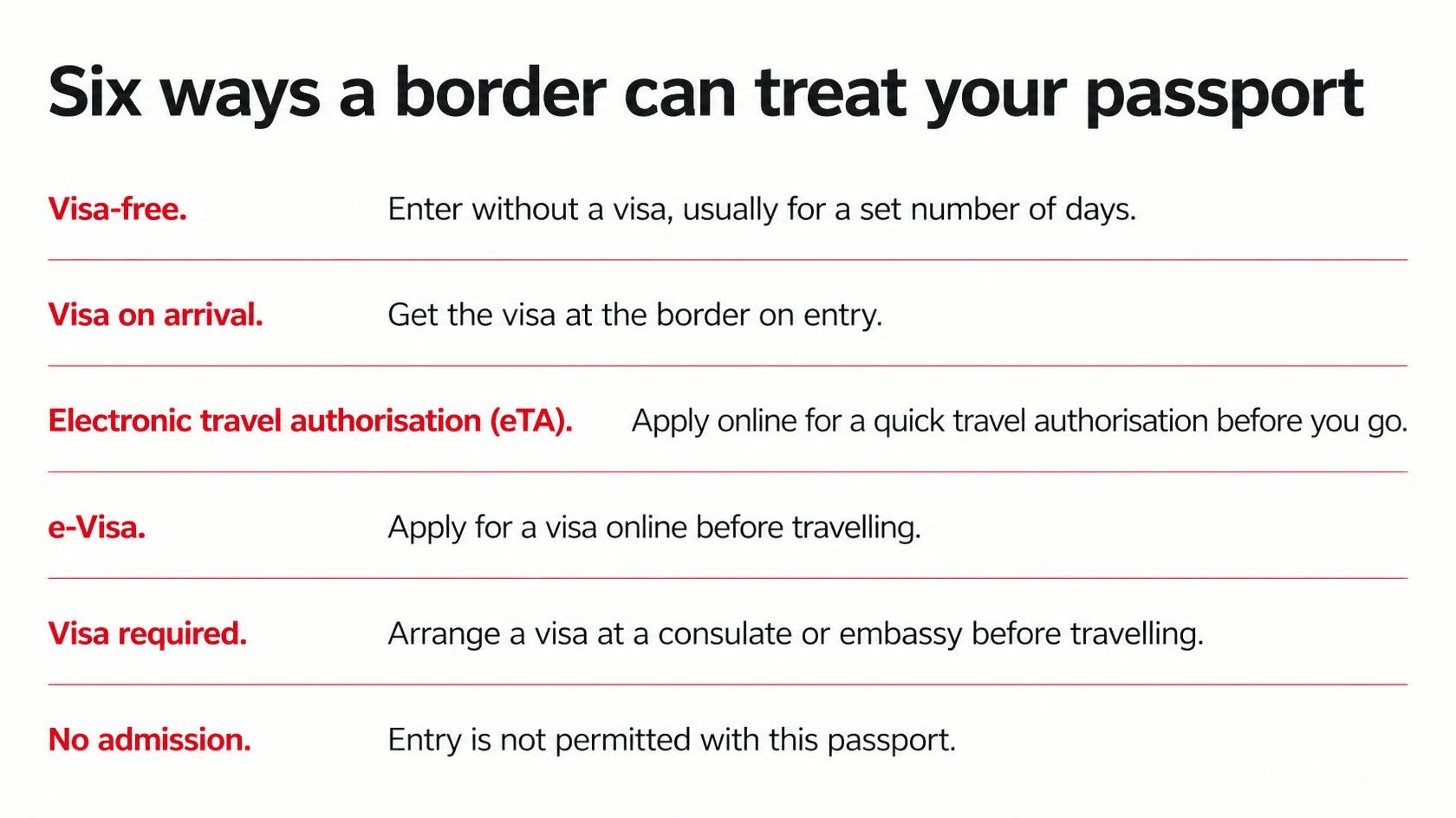
For short stays, US, British, Canadian and Australian visitors enter visa-free.
Published guidance disagrees on how long you get. The UK Foreign Office states a maximum of three months for British visitors, while other sources cite up to six. The officer at the port sets the actual length, so plan around three months and treat more as a bonus. Your passport should be valid for at least six months and you need an onward or return ticket. Travel insurance is not a legal entry requirement for tourists, though given the off-island evacuation reality it is strongly advised.
The Remote Employment Act
Grenada's Remote Employment Act, passed in 2021, created a non-immigrant remote-work visa for people employed by, or running, a business outside the country. That much is solid: the Act is published by the Parliament of Grenada, and the Grenada Tourism Authority, a statutory body, sets out the terms. It runs for up to one year, the income threshold is EC$100,000 a year (about US$37,000), the fee for an individual is US$1,500, and health insurance covering the stay is a condition of approval for each applicant and dependant, with no minimum sum published.
What is missing is any way to act on it. The government's forms portal lists six immigration documents and none of them is a remote-work application. The labour ministry's work-permit page covers employer-sponsored categories only and does not mention the remote category. The national payment portal carries no fee line for it. The Immigration Department's own page has been returning server errors, and the high commission and embassy visa pages are gone.
No closure has been announced either, so this is not a lapsed programme. It reads as a live statute that was never given an operational front door, or one whose front door is not visible from outside the country. If you want to use it, expect to work through the Immigration Department or a Grenadian mission directly rather than filling in a form online, and get written confirmation of the current fee before you send money. Foreign income is not taxed locally either way.
What this means for your cover
The practical effect is that most people reading this will be in Grenada as visitors, on a stamp that asks nothing about insurance, rather than on a permit that requires it. The requirement disappears; the reason behind it does not.
Three things on this island push in the same direction. Private clinics expect payment before treatment, in cash more often than not, whether or not you hold a policy, so you are funding your own care first and claiming afterwards. Specialised treatment is limited enough that the UK Foreign Office warns outright that serious cases may need evacuation and that it is expensive. And Grenada is a serious dive destination, which adds a risk most Caribbean pages can skip: decompression sickness needs a hyperbaric chamber, and reaching one has meant flying patients to Barbados.
That combination, prepayment plus a realistic chance of leaving the island by air, is what a policy here has to be built around. A cheap local plan that covers a clinic visit but not a medevac fails at exactly the moment it matters, and if you dive, a policy that excludes it is worth no more than none at all.
Who these rules apply to: Most Western (US/UK/EU/CA/AU/NZ/most Commonwealth) for 90-day visa-free. CBI open worldwide subject to due diligence
- Recommended
Visa-Free Tourist Entry
90 days per entry, extendable at Immigration Division discretionUS/UK/EU/CA/AU/NZ and most Commonwealth. Valid passport, return/onward ticket, sufficient funds
- Recommended
Tourist Visa Extension
Additional at Immigration Division discretion (typically up to further 90 days)Visitors in country wanting to stay >90 days. Apply at Immigration Division St George's before initial stay expires, valid reason, funds
- Required
Remote Employment Act Permit (Digital Nomad)
12 months renewable for additional 12Remote workers employed by or contracting with non-Grenadian companies
- Recommended
Permanent Residence Permit
Indefinite once granted, subject to renewalLong-term residents, retirees, family of citizens
- Recommended
Citizenship by Investment
Permanent (citizenship)HNW individuals and families seeking second passport with E-2 US access. Min 235,000 USD donation to National Transformation Fund (family up to 4) or 270,000 USD approved real estate, due diligence and processing fees, clean background
Visa rules change often and depend on your nationality. Always confirm with the official immigration service or your nearest consulate before you apply.
Interactive
Verified pricesWhat would it cost in Grenada without insurance?
You pay, out of pocket
$1,500–$6,000
A serious private admission or common surgery.
Bars to scale. A flight home is in another league.
That is the bill you carry alone. Insurance exists for exactly this.
See what a match needsTypical private-care estimates for illustration, not a quote. Actual bills vary by hospital, city and severity.
Local risk notes
What to watch out for in Grenada
- Off-island evacuation.
- With one main public hospital and small private clinics, serious or specialised cases are flown to Barbados, Trinidad or the US, so a policy with medical evacuation is genuinely important, not a formality.
- Diving accidents. Grenada is a major dive destination, and decompression sickness can mean an air evacuation to a hyperbaric chamber off-island (a documented Divers Alert Network case flew a diver from Grenada to Barbados), so confirm your policy covers diving and evacuation.
- Hurricane season. The Atlantic season runs June to November; Grenada was devastated by Hurricane Ivan in 2004, and storms can disrupt flights, power and medical services, so build in flexibility and follow local warnings.
- Mosquito-borne disease. Dengue, Zika and chikungunya are all present, with dengue the main traveller risk; use repellent, especially during the day.
- Pay-first clinics. Most doctors and private hospitals expect payment up front, often in cash, regardless of insurance, so keep accessible funds and itemised receipts to claim back later.
Common questions
Grenada insurance FAQ
In law, yes. The Remote Employment Act 2021 created a non-immigrant remote-work visa, and the tourism authority sets out its terms. In practice there is no published way to apply: no form in the government's document portal, no category on the labour ministry's work-permit page, and no fee line on the national payment portal. Expect to approach the Immigration Department or a Grenadian mission directly.
Yes. Applicants must show evidence of a valid health insurance policy covering their stay in Grenada, for each applicant and dependant. No fixed minimum sum is published, so prioritise a policy that includes medical evacuation.
The published threshold is EC$100,000 a year, about US$37,000, and the fee for an individual is US$1,500. Figures circulating for dependants and for renewal could not be confirmed against a government source, so confirm the current schedule in writing before paying anything.
No. Income earned from outside Grenada is not taxed locally while you are on the remote-work visa, since the work and clients are abroad.
US, British, Canadian and Australian visitors enter visa-free, but the published lengths conflict: the UK Foreign Office states a maximum of three months, while other sources cite up to six. The immigration officer decides on arrival, so plan around three months. You need a passport valid for at least six months and an onward ticket.
Because Grenada has one main public hospital and only small private clinics, the most serious cases are flown to Barbados, Trinidad or the US. That air evacuation is expensive, so evacuation cover is the part of a policy that earns its keep.
Here for a few weeks rather than living here? A trip policy is the right tool; see our guide to nomad travel insurance.
This page is the healthcare guide. It does not quote a premium and does not name an insurer. How we measure cost.
In 3 steps
- 01
Fill out
The form only asks what changes the plan.
- 02
We find your match
We compare the panel against your route, stay and visa.
- 03
Become a member
If the offer fits, you take it out directly.
Have a look if this page was not the question you came with.