Destination
Healthcare in Armenia, and what it costs without cover
A cheap Caucasus base with a rare 180-day visa-free welcome and cheap, decent private clinics in Yerevan. There is no formal nomad visa and the residence permit does not require insurance, so the cover that matters is for the serious stuff and getting flown out.
A short trip to Armenia can still use travel cover. Living there needs international health insurance that outlasts the visa.
- Best for Long-term nomads
- Best for Slowmads
- Best for Freelancers
- Best for Perpetual travelers
- Insurance required?
- Not requiredpermit needs only a medical certificate
- Recommended coverage
- Strong evacuation and repatriation cover
- Emergency number
- 911112 · 103 ambulance
- Healthcare quality
- Private clinics in Yerevan cheap and decentthin outside capital
The system
Healthcare system in Armenia
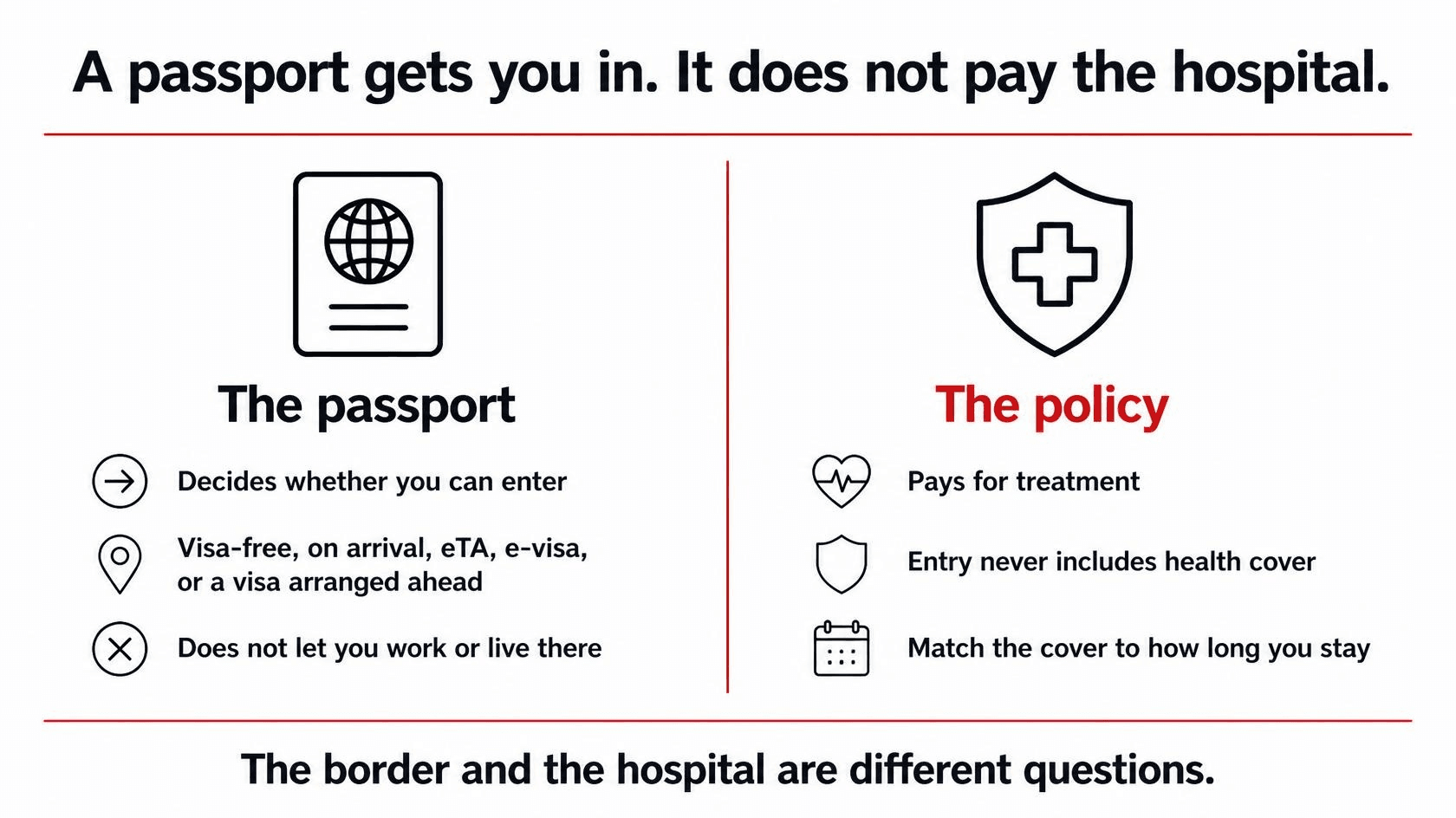
Armenia runs a mixed system: the state pays in full or in part for specific groups (children, pensioners, people with disabilities, refugees and other listed categories) under a Basic Benefits Package, but most services are private and paid out of pocket.
From 1 January 2026 the country began rolling out a universal mandatory health insurance scheme, phased through 2028 and tied at first to employees earning over 200,000 AMD a month, so a foreign remote worker is not automatically inside it. In practice nomads pay cash at private clinics, where care is cheap and good enough for routine needs, and almost all of the depth is concentrated in the capital. Outside Yerevan, the US State Department warns that facilities are limited and ambulances are unreliable and poorly equipped, which is the single biggest reason to carry your own cover.
Hospitals and emergencies in Yerevan
English is workable in the private centres aimed at international and diaspora patients, though Russian is the more common second language among doctors. The hospitals nomads and expats lean on are in Yerevan: Erebuni Medical Center (large, with emergency, cardiology and neurology units), Nairi Medical Center, Arabkir Medical Center (known for friendly, English-speaking staff) and Vardanants Medical Center. The general emergency number is 911, which also connects to 112, and operators speak English; for an ambulance directly, dial 103, and state ambulances are government-subsidised and free, though private hospital ambulances charge. Pharmacies are plentiful in the cities and many medicines are available without the hoops you would expect at home.
Landlocked evacuation reality
The reality to plan around: Armenia is landlocked, the most complex surgery, serious oncology and specialist care it lacks often mean treatment abroad, and an air-ambulance flight out is private and expensive. Most travellers will care more about being flown to a major medical hub or home than about local bills, which is exactly what strong evacuation and repatriation cover buys.
What you'd pay
Typical costs
| Private GP or short consultation | about 12,000 AMD (roughly $30), commonly cited in the $15 to $40 range |
|---|---|
| Specialist consultation (private) | about $30 to $70 |
| Emergency room visit (private) | about $50 to $200 |
| One-bedroom flat, central Yerevan | roughly $650 to $750 a month |
Armenia uses the dram (AMD), and these are indicative figures that move with the clinic and the exchange rate. Private care is inexpensive by Western standards, which is why most nomads skip the public route and simply pay as they go. The cost that should drive your insurance decision is not the consultation, it is a serious admission or an air evacuation out of a landlocked country, where the numbers jump into the thousands.
Entry & stay
Visa, residency & insurance
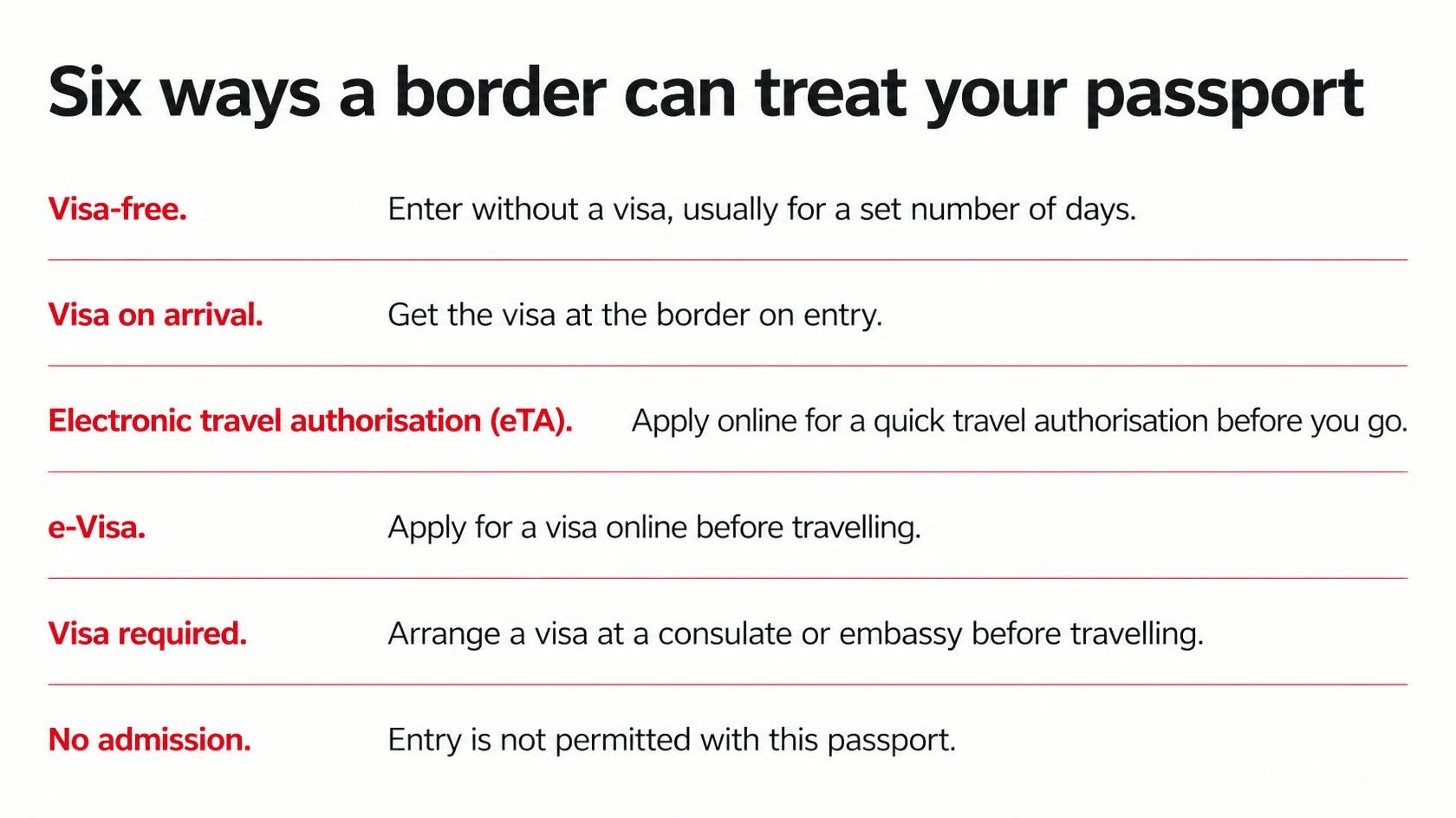
Entry is unusually easy.
Citizens of the United States, the United Kingdom, Canada, Australia, the EU, New Zealand, Japan and South Korea can enter visa-free for up to 180 days per year on a valid passport, with no invitation needed. That is one of the longest visa-free windows anywhere, and travel insurance is not a legal condition of entry as a tourist, though carrying it is sensible given the evacuation gap above. For stays beyond 180 days you move to a residence permit.
Residence via private entrepreneur
There is no formal, branded digital nomad visa in Armenia. The practical route to live and work remotely is a temporary residence permit, valid one year and renewable, most commonly obtained by registering as a private entrepreneur (an individual entrepreneur or PE) with the State Registry and paying tax on Armenian-attributable income. There is no minimum income test and no bank-statement requirement under the current rules. Crucially for insurance, the permit does not demand proof of a health insurance policy: the health-related document required is a medical certificate (a health check), not cover, and even that is waived for some work-permit applications. From 1 November 2026 the rules tighten: entrepreneurial applicants will need to show roughly 1,000,000 AMD in a local account or equivalent turnover in the prior 60 days, government fees rise from January 2027, and a permit can be invalidated if no tax is assessed within 180 days or the holder is absent over 183 days without notifying. Confirm the live requirements with the Migration and Citizenship Service or an Armenian immigration lawyer. The full route is on the Armenia digital nomad visa page.
Who these rules apply to: EU/US/UK/CA/AU/NZ/JP/KR (180 days visa-free); 113 countries via residence-permit waiver until 1 July 2026
- Required
Visa-free entry (180 days)
180 days per calendar yearEU/US/UK/CA/AU/NZ/JP/KR nationals. Passport 3+ months beyond stay; no invitation required
- Required
Temporary residence permit (work/study/property/family)
Up to 1 year renewable annuallyForeigners with justified ground (employment, study, property, family) intending to stay 1+ year. Application, passport with notarized Armenian translation, 3 photos (35x45mm), health certificate, proof of legal residence and justifying documents (work permit, admission letter, property deed). Gov fee rising to 150,000 AMD from August 2026
- Recommended
Permanent residence permit
5 years renewableForeigners with close family ties to Armenia, ethnic Armenians, or those with 3 yrs prior temporary residence (from Aug 2026 reform). Justifying documents, clean record, accommodation, evidence of 3 yrs temporary residence (post Aug 2026). Fee rising to 250,000 AMD
- Recommended
IT sector / high-tech residence pathway
1 year temporary renewable; PR after 3 yrsForeign high-tech employees and IT specialists employed by Armenian tech companies; freelance IT consultants and startup founders. Employment contract with Armenian tech company or tax registration as IT freelancer/entrepreneur; from Jan 2026 eligible foreign tech workers receive 60% PIT subsidy paid directly
- Recommended
Residency by investment (fast track)
5-yr permanent residence card, immediate permanent statusInvestors meeting qualifying investment threshold (program launching 1 Aug 2026). Qualifying investment in Armenian economy; digital application; no physical presence required to maintain card
Visa rules change often and depend on your nationality. Always confirm with the official immigration service or your nearest consulate before you apply.
Once a stay outruns a travel policy's trip limit, our guide to nomad health insurance vs travel insurance explains which kind of cover fits.
Interactive
Verified pricesWhat would it cost in Armenia without insurance?
A fever you assume is flu until the platelet count comes back. Common across the places nomads spend winters.
| The first doctor visit, before anyone worries | $15–$40 |
| Back again, this time to emergency | $50–$200 |
| Four nights on fluids and monitoring | not verified here |
| At least | $65–$240 |
One step in this bill has no verified price for Armenia yet, so the real total sits above this one. We would rather leave the line blank than guess at it.
Priced as one lump instead of itemised, a serious admission in Armenia runs $1,900 to $5,500.
That is the bill you carry alone. Insurance exists for exactly this.
See what a match needsTypical private-care estimates for illustration, not a quote. Actual bills vary by hospital, city and severity.
Local risk notes
What to watch out for in Armenia
- The Azerbaijan border.
- The US State Department advises against travel near the border and within roughly 5km of it, where past military action and checkpoints can close roads without notice.
- Care drops off outside Yerevan. Facilities are limited and ambulances unreliable beyond the capital, so a serious incident in the regions can mean a slow transfer to Yerevan or out of the country.
- Landlocked evacuation. Complex cases often leave Armenia entirely, and a private air-ambulance flight is expensive, which is why evacuation cover matters more here than the price of a clinic visit.
- Reckless driving and night roads. Driving is aggressive, traffic rules are loosely followed, and poor road conditions make night travel risky.
- Demonstrations. Protests are frequent in Yerevan and even peaceful ones can turn confrontational, so steer clear of crowds and political flashpoints.
Common questions
Armenia insurance FAQ
No. There is no formal, branded digital nomad visa. Remote workers stay long-term on a one-year temporary residence permit, most often by registering as a private entrepreneur and paying tax on Armenian-attributable income.
No. The temporary residence permit does not require proof of an insurance policy. The health-related document is a medical certificate (a health check), and it is even waived for some work-permit applications. Carry cover anyway for the serious stuff.
US, UK, Canadian, Australian and many other citizens can stay visa-free for up to 180 days per year on a valid passport. Insurance is not a legal condition of tourist entry, but it is strongly advisable.
Private clinics in Yerevan are cheap and fine for routine care, with English in the international and diaspora-facing centres like Erebuni, Nairi and Arabkir. Outside the capital facilities are limited, and the most complex cases are often treated abroad, which is why evacuation cover is the priority.
Dial 911 for any emergency, which also routes through 112, and operators speak English. For an ambulance directly, call 103; state ambulances are government-subsidised and free.
Armenia is landlocked and its healthcare depth is concentrated in Yerevan. Serious surgery, oncology and specialist care it lacks frequently mean treatment in another country, and a private air-ambulance flight runs into the thousands, far more than any local bill.
This page is the healthcare guide. It does not quote a premium and does not name an insurer. How we measure cost.
In 3 steps
- 01
Fill out
The form only asks what changes the plan.
- 02
We find your match
We compare the panel against your route, stay and visa.
- 03
Become a member
If the offer fits, you take it out directly.
Have a look if this page was not the question you came with.