
Destination
Healthcare in Czechia, and what it costs without cover
Prague on a budget, two ways to stay, and excellent hospitals. The long-stay insurance rule is strict, at least €400,000 of cover from a Czech-authorised insurer, and the forests carry ticks.
A short trip to Czechia can still use travel cover. Living there needs international health insurance that outlasts the visa.
- Best for Long-term nomads
- Best for Slowmads
- Best for Freelancers
- Best for Perpetual travelers
- Insurance required?
- Long-term visa requires comprehensive health insurance of at least €400,000 per event, no cost-sharing, from a Czech-authorised insurerhome or travel policy not accepted
- Recommended coverage
- At least €400,000 per event, no cost-sharing
- Emergency number
- 112155 for ambulance
- Healthcare quality
- Strong universal public system; English-speaking expat care concentrated in Prague
The system
Healthcare system in Czechia
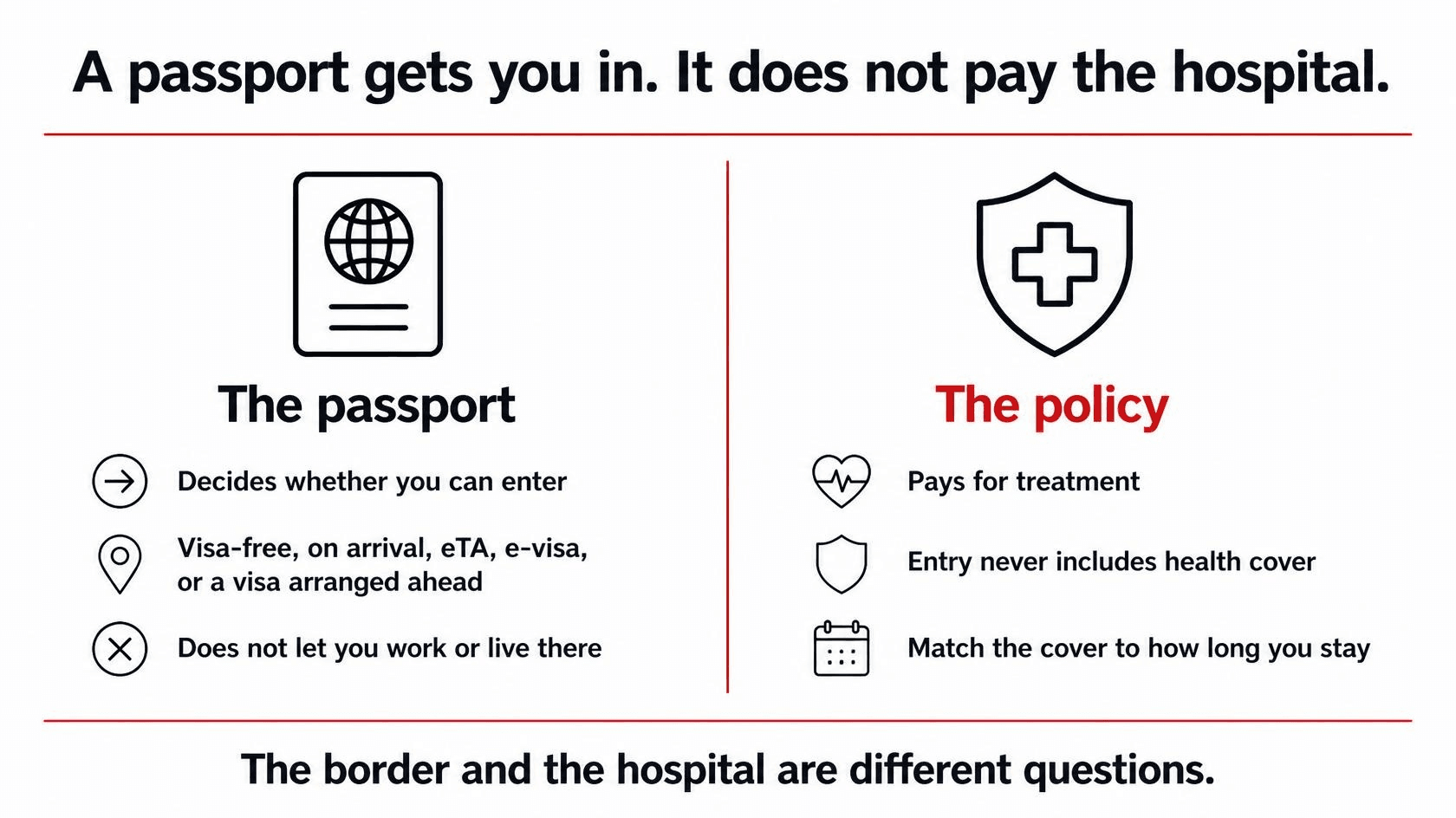
Czechia has a strong universal public system funded by mandatory contributions, but it is Czech-language-first and slower for foreigners who are not in the public scheme.
Prague's big hospitals
Prague is where the English-speaking, expat-oriented care is, mostly in private clinics. The big hospitals are excellent: Motol University Hospital is one of the largest in Central Europe and runs a foreigners' department with English-speaking consultations, and the Military University Hospital (ÚVN) has a 24-hour emergency room with English-speaking staff on hand. Private expat clinics like Canadian Medical and Unicare round out the options.
Emergencies and pharmacies
The emergency number is 112, with 155 the dedicated ambulance line. Pharmacies (lékárna) are widespread, with some 24-hour pharmacies in Prague.
What you'd pay
Typical costs
| Private GP or short consultation | about 1,200 CZK (~$55, €50 to €55) |
|---|---|
| Specialist consultation (private) | 800 to 1,500 CZK (~$40–70) |
| Emergency room (self-payer) | around a 5,000 CZK deposit (~$235), plus an admin fee |
| Serious admission or surgery | into the tens of thousands of CZK (~$1,000–4,000), which is why long-stay cover must reach €400,000 (~$457,000) |
These are indicative self-payer figures; with Czech insurance the statutory hospital fee is only about 60 CZK a day. The gap between the insured and uninsured price is exactly why the long-term visa demands a high coverage limit.
Entry & stay
Visa, residency & insurance
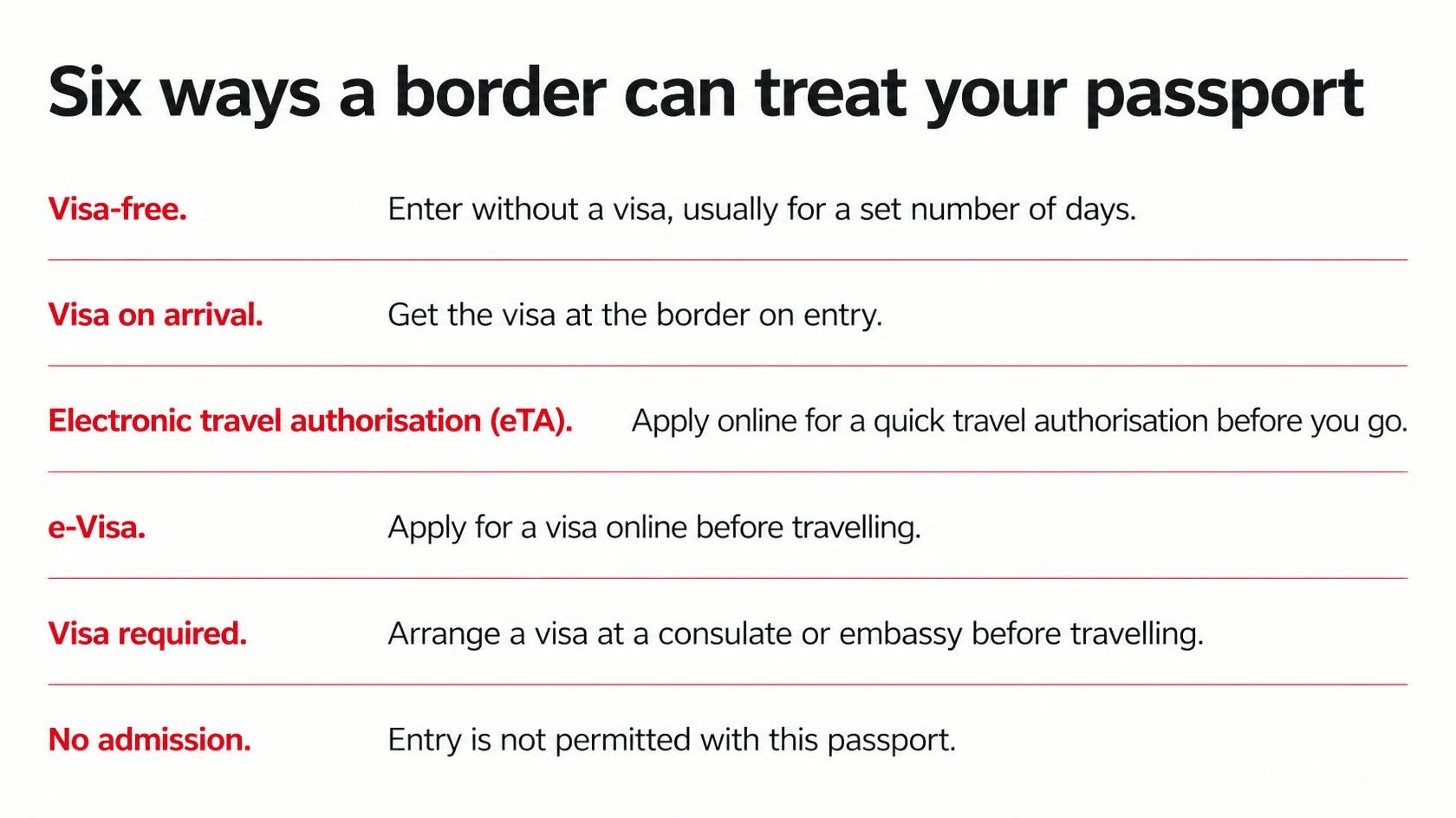
For short stays, Czechia is in Schengen, so US, British, Canadian and Australian visitors enter visa-free for 90 days in any 180-day period.
The EU's Entry/Exit System rolled out through 2025 and 2026, and the ETIAS authorisation is expected late in 2026 but is not yet required. Travel insurance is not a legal entry requirement for visa-free visitors.
Two routes to stay
To stay and work remotely, there are two routes. The traditional one is the long-term business visa on a trade licence (živnostenské oprávnění, the "Živno"), used by freelancers for years, which asks for proof of funds of about 156,500 CZK. The newer Digital Nomad Programme, launched in 2023 and expanded in 2025, is faster but open only to a set list of nationalities (which includes the US, UK, Canada and Australia) and asks for IT experience or a STEM degree plus income of at least 1.5 times the Czech average salary.
The insurance rule
Both share the insurance rule that defines Czechia: for a long-term visa you must hold comprehensive health insurance with a limit of at least €400,000 per event and no cost-sharing, and it must come from an insurer authorised in the Czech Republic. A home-country or travel policy is not accepted for the long-term stage. Until September 2023 this could only be bought from one provider (PVZP); now any Czech-authorised insurer qualifies. We lay out the rule on the Czechia digital nomad visa page.
Who these rules apply to: Non-EU/EEA/Swiss for long stays; EU/EEA/Swiss free movement, register after 30 days
- Required
Schengen Short-Stay (Tourist / Visa-Free)
90 in 180Tourists, short visitors, business meetings. Valid passport (visa-free US/UK/CA/AU/EU; ETIAS from 2026 for exempts); others apply for Schengen C
- Optional
Employee Card (Zamestnanecka Karta)
Up to 2 years, renewable; tied to employer/positionNon-EU with Czech job offer (incl. IT/shortage roles). Contract or letter of intent, min wage and 15+ hrs/week, position in central register, passport, clean record
- Optional
EU Blue Card
Up to 3 years, renewable; faster PR trackHighly-qualified non-EU with degree and Czech job offer. Recognised higher ed., 1-yr contract at 1.5x average Czech wage (1.2x for IT/shortage in 2026)
- Required
Zivno (Freelance Trade Licence Visa)
6 to 12 months initially; renewable; long-term residence after 5 years, PR afterNon-EU freelancers, remote workers, solopreneurs (de facto nomad route). Czech trade licence (~1,000 CZK), accommodation proof, apostilled criminal record, funds ~124,500 CZK (~5,600 USD), purpose of stay
- Required
Long-Term Residence Permit
Usually up to 2 years, renewableThird-country nationals >1 year for study, research, family reunification, investment, ICT. Documented purpose, accommodation, funds, clean record
- Required
Long-Term Visa (>90 Days)
Up to 1 year (non-renewable; convert to long-term RP)Third-country nationals 91-365 days for business/family/cultural/sport/seasonal work. Documented purpose, accommodation, funds, clean record, in-person embassy application
Visa rules change often and depend on your nationality. Always confirm with the official immigration service or your nearest consulate before you apply.
If you will keep moving after Czechia, cover that keeps running between countries is explained in our guide to digital nomad insurance.
Interactive
Verified pricesWhat would it cost in Czechia without insurance?
The textbook traveller emergency. It cannot wait, it cannot be treated at a pharmacy, and it ends in an operating theatre.
| Emergency room, on arrival | $240–$550 |
| A scan to confirm it | $377–$424 |
| The operation | $3,257 |
| Three nights recovering | $426–$567 |
| You pay, out of pocket | $4,300–$4,798 |
Priced as one lump instead of itemised, a serious admission in Czechia runs $6,000 to $11,000.
That is the bill you carry alone. Insurance exists for exactly this.
See what a match needsTypical private-care estimates for illustration, not a quote. Actual bills vary by hospital, city and severity.
Local risk notes
What to watch out for in Czechia
- Ticks.
- Czechia has one of the highest rates of tick-borne encephalitis in Europe, with hundreds of cases a year. Risk is countrywide in forests and grassland from spring to autumn, so use repellent, check for ticks, and consider the TBE vaccine if you will spend time outdoors.
- Prague scams. Pickpocketing is common at Charles Bridge, Old Town Square and on trams and the metro. Avoid taxis with tampered meters (use apps) and tourist-area currency-exchange booths, which skim heavily; use ATMs.
- Summer heat. Heatwaves occur in summer, so standard hydration and sun precautions apply.
- Tap water. It is safe to drink and meets EU standards.
- Language. Outside private clinics and central Prague, English is patchy in the public system, so an expat clinic is the path of least resistance for care.
Common questions
Czechia insurance FAQ
Yes, two routes: the long-standing Živno freelancer visa, and a newer Digital Nomad Programme (2023, expanded 2025) open to a set list of nationalities including the US, UK, Canada and Australia.
Comprehensive health insurance of at least €400,000 per event with no cost-sharing, from an insurer authorised in the Czech Republic. A home-country or travel policy is not accepted for the long-term stage.
For the long-term visa, yes, the comprehensive policy must be from a Czech-authorised insurer. Until September 2023 only one provider (PVZP) offered it; now any authorised Czech insurer can.
Nationals of a set list of countries (including the US, UK, Canada and Australia) with three years of IT experience or a STEM degree, earning at least 1.5 times the Czech average salary.
No. As a Schengen member, Czechia lets US, British, Canadian and Australian visitors stay 90 days in any 180. ETIAS is coming but not yet required.
Yes, Czech tap water is safe to drink and meets EU standards.
This page is the healthcare guide. It does not quote a premium and does not name an insurer. How we measure cost.
In 3 steps
- 01
Fill out
The form only asks what changes the plan.
- 02
We find your match
We compare the panel against your route, stay and visa.
- 03
Become a member
If the offer fits, you take it out directly.
Have a look if this page was not the question you came with.