
Destination
Healthcare in Costa Rica, and what it costs without cover
Pura vida comes with good, affordable private hospitals around San José and a remote-work visa with a real tax break. The catch is the visa's $50,000 insurance requirement, plus roads and dengue that make going uninsured a genuine gamble.
A short trip to Costa Rica can still use travel cover. Living there needs international health insurance that outlasts the visa.
- Best for Long-term nomads
- Best for Slowmads
- Best for Families
- Best for Freelancers
- Insurance required?
- Estancia: $50,000 cover required
- Recommended coverage
- $100,000+ incl. evacuationfloor $50k
- Emergency number
- 911 (bilingual)Red Cross 128
- Healthcare quality
- Private: excellentpublic: slow
The system
Healthcare system in Costa Rica
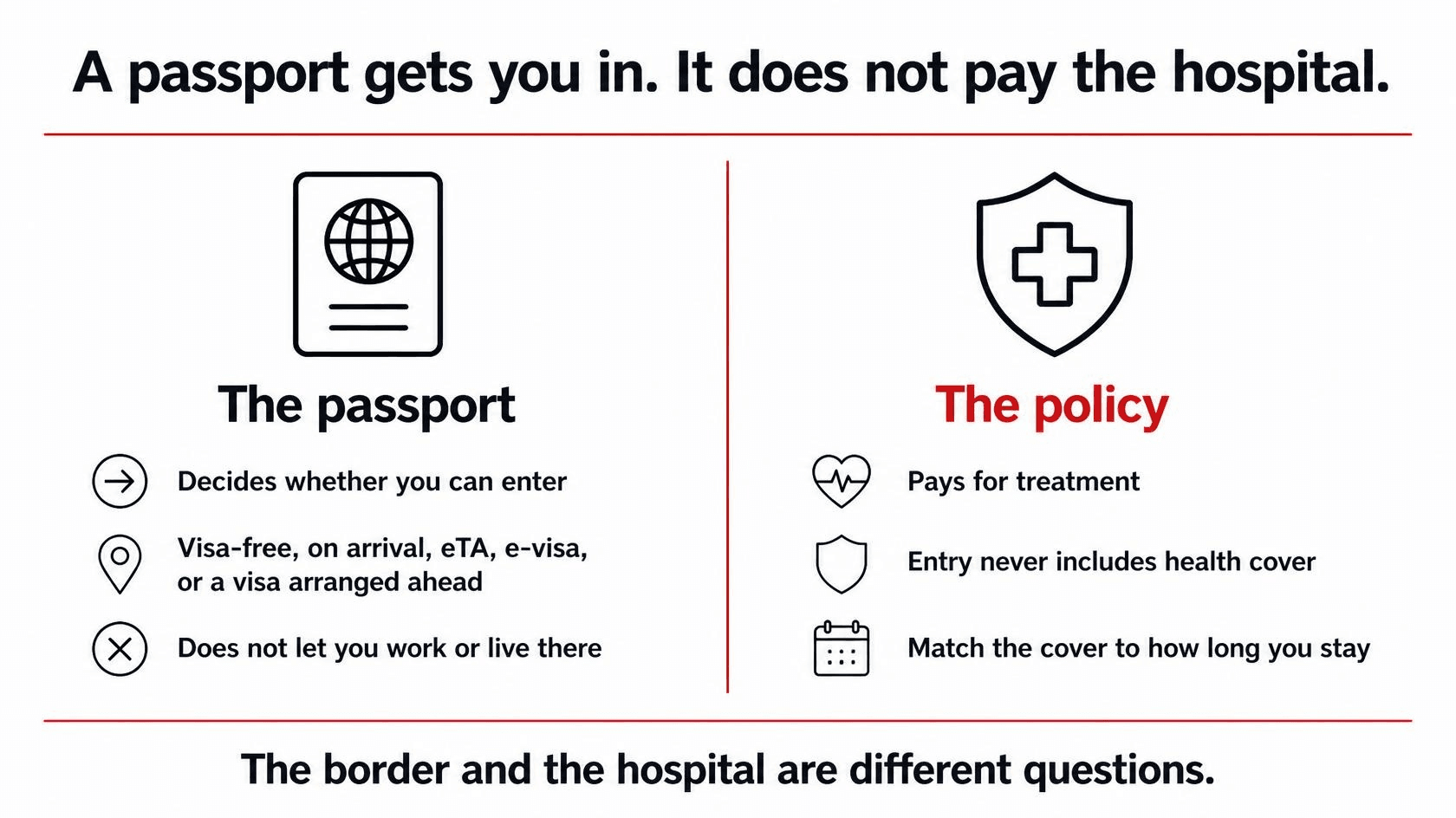
Costa Rica runs two parallel systems and nomads end up using both.
The public side is the Caja Costarricense de Seguro Social, known locally as the Caja: universal, mandatory for legal residents, and well regarded across Latin America. It is also slow for anything non-urgent, with long waits for specialists and elective procedures. For day-to-day care most foreigners go private, where the experience is closer to what Americans and Europeans expect and the prices are a fraction of US ones.
Private hospitals worth knowing
The private hospitals worth knowing sit in and around San José. Hospital CIMA in Escazú is the one expats name first, and it is the only hospital in Central America accredited by the US Department of Veterans Affairs. Hospital Clínica Bíblica and Hospital Clínica Católica in the capital, along with Hospital Metropolitano, round out the private tier. English-speaking, US or European-trained doctors are common at all of them, which is why San José doubles as a medical-tourism hub. Outside the private tier and the main tourist towns, Spanish becomes the working language.
Pharmacies and emergencies
Pharmacies are easy to find and pharmacists handle minor issues directly. Antibiotics legally require a prescription, though enforcement varies, and many maintenance medicines are sold over the counter. A foreign prescription is not automatically valid, so bring enough of anything essential and plan to see a local doctor to continue it. The emergency number is 911, with bilingual operators, and the Red Cross ambulance is on 128.
What you'd pay
Typical costs
| Private GP visit | $50 to $80 USD |
|---|---|
| Specialist consultation | $80 to $120 USD |
| X-ray or ultrasound | $40 to $90 USD |
| MRI scan | around $500 USD |
| One-night hospital stay (serious case, private) | up to $5,000 USD |
| Medical flight home (air ambulance) | $25,000 to over $250,000 USD |
These are typical private-sector ranges from expat and insurer guides, not an official tariff. Real bills vary by hospital, city, and whether you are billed as a tourist or a resident, and the public Caja is far cheaper but not a practical option for short-term foreigners.
Entry & stay
Visa, residency & insurance
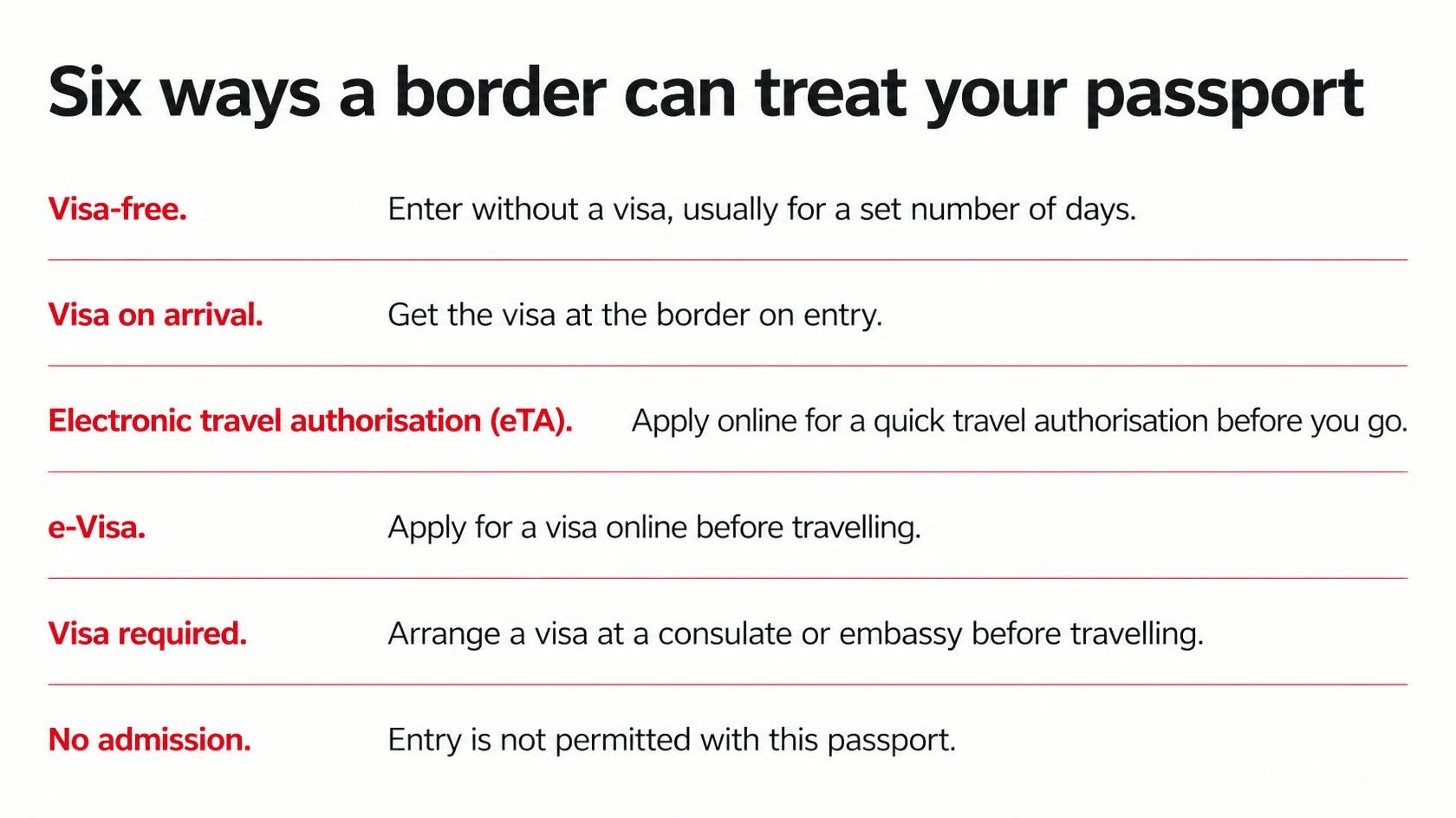
Most nomads arrive as tourists.
US, Canadian, UK, EU, and Australian passport holders get up to 180 days visa-free, though the exact length is set by the officer on arrival and is not guaranteed. You need to show an onward or return ticket, and officials can ask for proof of funds. Insurance is not a legal entry requirement for tourists. It was during the pandemic, but that rule ended on 1 April 2022.
The Estancia digital nomad visa
To stay longer and work remotely on the books, the route is the Estancia, the digital nomad visa created by Law 10008. It is aimed at people who earn from outside Costa Rica. The income bar is an average of at least $3,000 a month over the prior year, rising to $4,000 if you bring family. The official tourism site lists $5,000 for families, but the law itself says $4,000, so plan to the lower figure and confirm at application. The visa runs one year and renews once for a second, provided you spend at least 180 days in the country during the first year. The draw is tax: foreign income is exempt from Costa Rican income tax, and you can import the equipment you work with free of import duty.
The insurance condition
The condition that trips people up is insurance. The Estancia requires proof of at least $50,000 in medical cover for the entire stay, and every family member needs their own policy. An international plan or one from a Costa Rica-licensed insurer, regulated by SUGESE, are both accepted. On a tourist entry you have no claim on the public system and rely entirely on private cover; once you hold the visa, the $50,000 floor is the paperwork minimum rather than a sensible ceiling.
Who these rules apply to: Non-resident foreigners staying beyond 180-day tourist entry or working remotely from Costa Rica; Estancia visa for remote workers earning 3,000 USD/month (4,000 USD with dependents) from foreign sources
- Recommended
Tourist Entry
Up to 180 days per entry (extended from 90 in Sep 2023; officer discretion)Group 1 nationals (US, Canada, EU, UK, AU, NZ). Valid passport, onward ticket, proof of funds
- Required
Estancia (Digital Nomad) Visa
1 year, renewable for 1 more year if present at least 80 daysRemote workers and freelancers employed by a foreign entity or clients outside Costa Rica. Income 3,000 USD/month (4,000 USD with dependents), 100 USD application fee
- Required
Pensionado (Pensioner)
2 years initial temporary residency, renewable, PR pathRetirees with lifetime pension income. At least 1,000 USD/month lifetime pension income
- Required
Rentista
2 years initial, renewable, PR pathIndividuals with stable unearned income or savings. At least 2,500 USD/month stable income for 24 months, or 60,000 USD bank deposit
- Required
Inversionista (Investor)
2 years initial, renewableForeign investors. 150,000 USD investment in real estate, business or shares (100,000 USD approved forestry); discretionary review expected from July 2026
Visa rules change often and depend on your nationality. Always confirm with the official immigration service or your nearest consulate before you apply.
Interactive
Verified pricesWhat would it cost in Costa Rica without insurance?
A fever you assume is flu until the platelet count comes back. Common across the places nomads spend winters.
| The first doctor visit, before anyone worries | $50–$80 |
| Back again, this time to emergency | $250–$1,500 |
| Four nights on fluids and monitoring | not verified here |
| At least | $300–$1,580 |
One step in this bill has no verified price for Costa Rica yet, so the real total sits above this one. We would rather leave the line blank than guess at it.
Priced as one lump instead of itemised, a serious admission in Costa Rica runs $2,000 to $5,000.
That is the bill you carry alone. Insurance exists for exactly this.
See what a match needsTypical private-care estimates for illustration, not a quote. Actual bills vary by hospital, city and severity.
Local risk notes
What to watch out for in Costa Rica
- The $50,000 is a floor, not a target.
- It sits well below what a serious admission or an evacuation actually costs, so insure above it rather than buying the cheapest policy that prints the number.
- Scooter and motorbike exclusions. Costa Rica is an outdoor country with a road-accident rate several times Europe's; the World Health Organization puts road deaths at about 15.5 per 100,000. Many policies exclude two-wheelers unless you hold a recognised motorcycle licence, so check before you ride.
- Dengue. Mosquito-borne and year-round, with a heavy 2024 outbreak of more than 30,000 cases before a sharp 2025 decline. Repellent and screened accommodation matter more than they sound.
- The Caja is slow for foreigners. It will treat a genuine emergency, but it is not a practical primary system for a visitor, which is exactly why private cover pays for itself.
- Prescriptions and paperwork. A foreign prescription is not automatically honoured at the pharmacy, and the official tourism site's $5,000 family-income figure contradicts the law's $4,000. Trust the law and confirm at application.
Common questions
Costa Rica insurance FAQ
Yes. Law 10008 requires proof of at least $50,000 in medical cover for your whole authorized stay, and each family member needs their own policy. International or Costa Rica-licensed (SUGESE) policies are both accepted.
No. The COVID-era requirement ended on 1 April 2022. Insurance is recommended but not checked at the border for tourists. You do need an onward or return ticket and may be asked for proof of funds.
The public Caja is respected and cheap but slow for non-urgent care. Most nomads use private hospitals like CIMA in Escazú, where English-speaking, US-trained doctors are common and prices are a fraction of US ones.
Tourists get up to 180 days at the officer's discretion. The digital nomad visa runs one year and renews once for a second, provided you spent at least 180 days in the country during the first year.
A private GP visit is roughly $50 to $80 and a specialist $80 to $120, but a serious hospital stay can reach about $5,000, and a medical flight home runs far higher. Those costs, not routine care, are the reason to carry cover.
Rarely for routine care. Most US domestic plans cover emergencies only, slowly and partially, and Medicare does not pay for care in Costa Rica at all. Plan on a travel-medical or international policy instead.
Either works. The Estancia accepts an international medical policy or one from a SUGESE-licensed Costa Rican insurer, as long as it shows at least $50,000 of cover for the full stay.
Here for a few weeks rather than living here? A trip policy is the right tool; see our guide to the best travel insurance for digital nomads.
This page is the healthcare guide. It does not quote a premium and does not name an insurer. How we measure cost.
In 3 steps
- 01
Fill out
The form only asks what changes the plan.
- 02
We find your match
We compare the panel against your route, stay and visa.
- 03
Become a member
If the offer fits, you take it out directly.
Have a look if this page was not the question you came with.