Destination
Healthcare in Dominica, and what it costs without cover
An 18-month nomad visa, English-speaking and tax-free on foreign income, on a rugged volcanic island where the most serious cases leave by air. Evacuation cover is the line that counts.
A short trip to Dominica can still use travel cover. Living there needs international health insurance that outlasts the visa.
- Best for Long-term nomads
- Best for Slowmads
- Best for Freelancers
- Best for Perpetual travelers
- Insurance required?
- Required for the WIN visa · health insurance valid in Dominica covering you and all accompanying family members, proven by a certificate or policyno fixed minimum sum published
- Emergency number
- 999911 also in operation
- Healthcare quality
- One main referral hospital (Dominica China Friendship Hospital); facilities limited
The system
Healthcare system in Dominica
Dominica runs a public system funded through its national social security scheme, with free primary care for citizens at a network of health centres and clinics across the island.
Foreigners are not covered by that scheme, so as a nomad you either pay out of pocket or rely on insurance, even at public facilities. Routine and primary care is handled at the health centres, while anything more serious goes to hospital. Many residents and visitors use the private route for day-to-day needs, where waits are shorter and the experience more predictable.
The main referral hospital
English is the official language, so navigating care is straightforward and rarely lost in translation. The main public facility is the Dominica China Friendship Hospital in the Goodwill area of the capital, Roseau (renamed from Princess Margaret Hospital in 2019 after Chinese-funded reconstruction following Hurricane Maria); it is the island's principal referral and trauma hospital, with an emergency department, and it makes referrals for overseas tertiary care. Smaller public hospitals serve the regions, including Marigot Hospital in the north-east and the Portsmouth hospital in the north, and the Justin Fadipe Medical Centre in Mero is the main private hospital. The emergency number is 999 (a 911 service is also in operation) and you ask for an ambulance, though ambulance cover is limited across much of the island. The island caveat is the one that matters: both the UK Foreign Office and the US State Department state that facilities are limited and serious cases may need emergency evacuation off the island, usually a medical flight to Martinique, Guadeloupe or the United States. That flight is the bill that makes evacuation cover non-negotiable here. Pharmacies operate in Roseau and the larger towns, but private clinics commonly expect cash payment up front and may not bill an insurer directly, so bring accessible funds and keep receipts to claim back.
What you'd pay
Typical costs
| Private GP or consultation | no official tariff published; expect to pay in cash, often tens of US dollars |
|---|---|
| Public hospital care for a foreigner | charged, not free; budget for it or insure |
| Emergency room or private admission | expect to prepay, often hundreds of US dollars |
| Serious admission, surgery or an off-island medical flight | into the thousands, or far more |
Dominica publishes no official private price list, so treat these as indicative rather than quoted figures; the local currency is the Eastern Caribbean dollar, pegged to the US dollar at EC$2.70 to US$1. The number that should drive your decision is the last one: a serious case or a medical flight off the island is exactly the cost insurance exists to cover, and home-country health plans rarely pay for care or evacuation here.
Entry & stay
Visa, residency & insurance
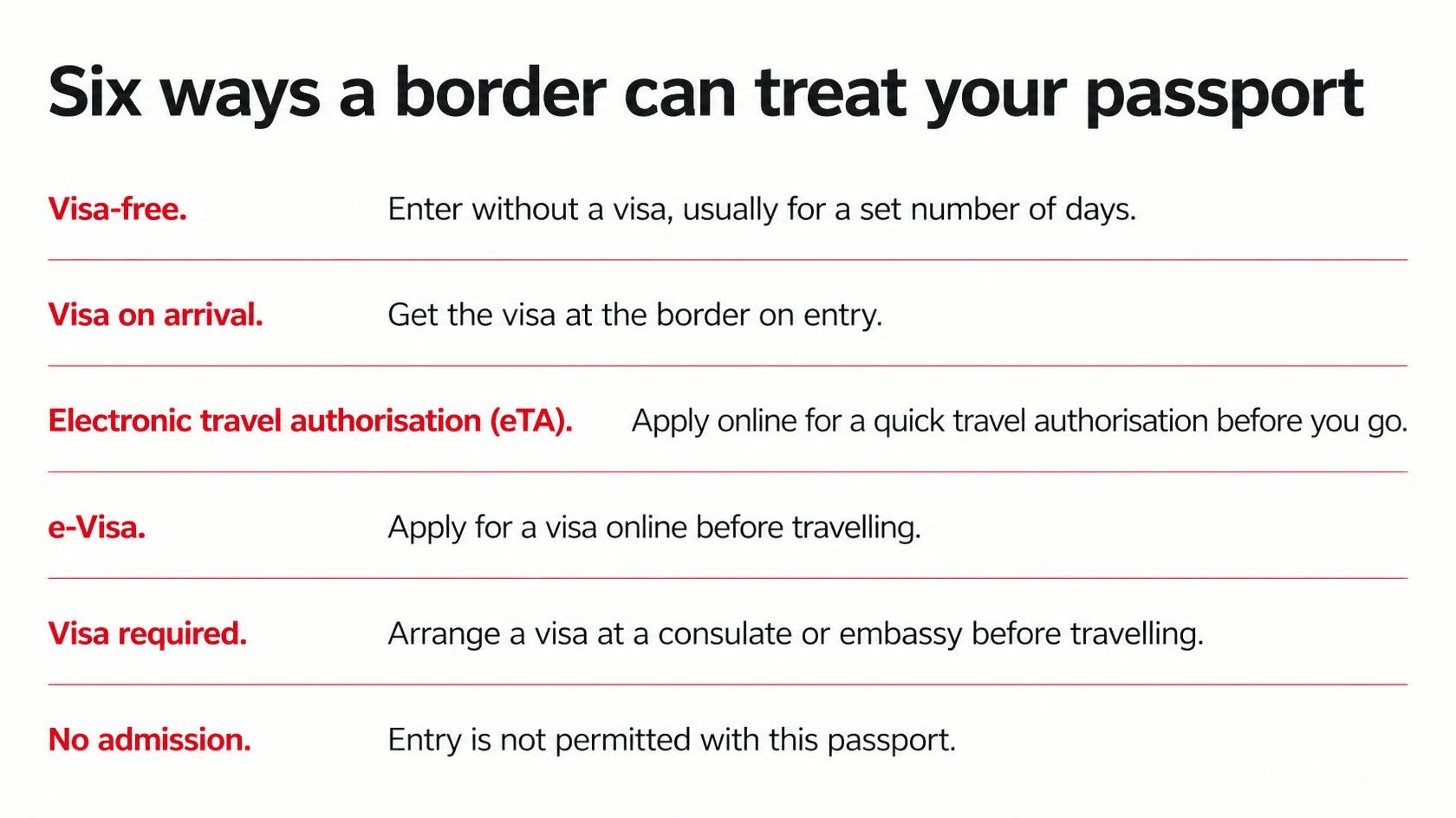
For short stays, US, British, Canadian and Australian visitors enter visa-free for up to six months, the same allowance for all four.
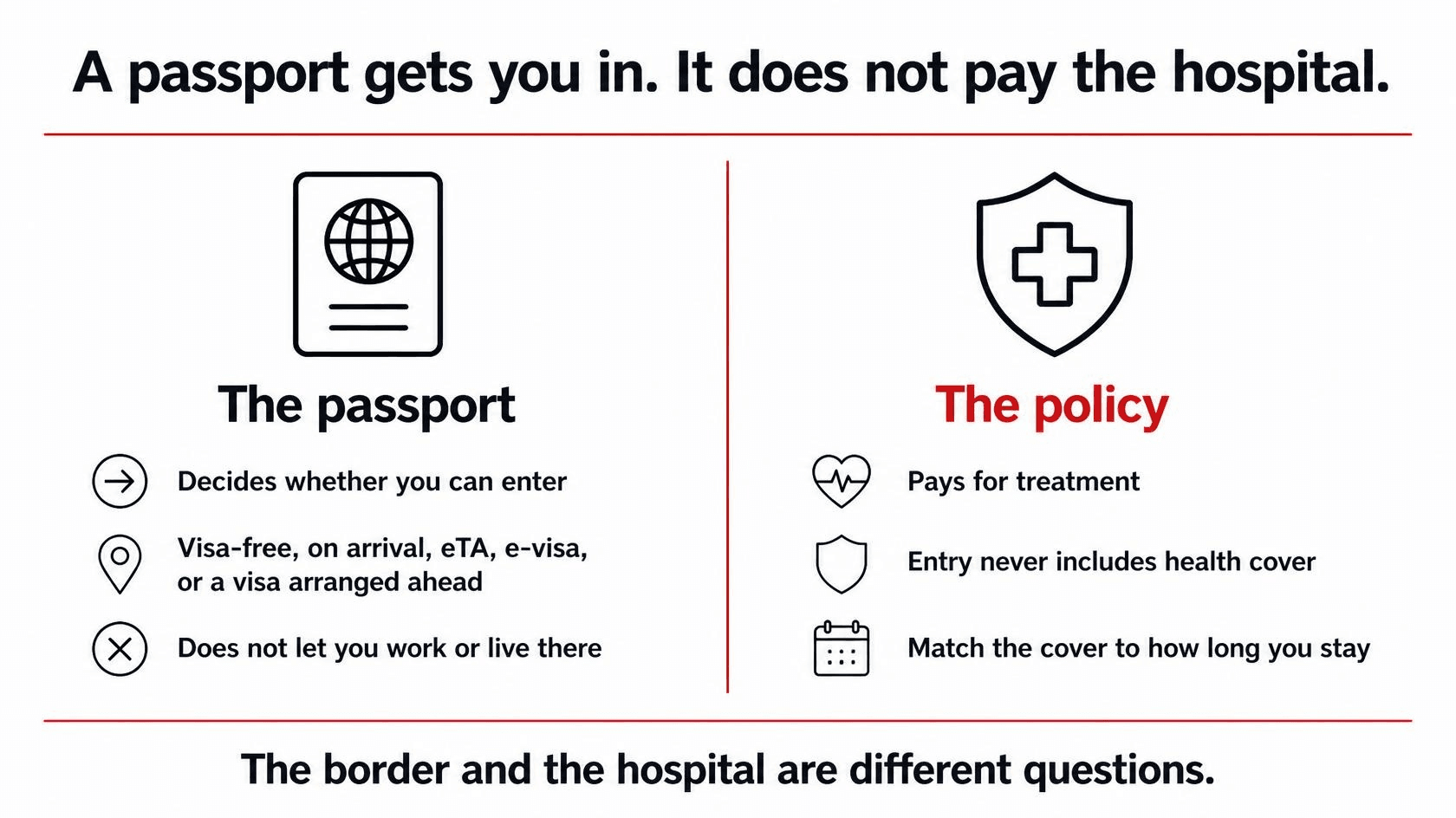
Your passport should be valid for the length of your stay, and immigration may ask for an onward or return ticket and proof you can support yourself. Travel insurance is not a legal entry requirement for tourists, though given the off-island evacuation reality it is strongly advised rather than optional.
Work In Nature (WIN) visa
To stay and work remotely, the Work In Nature (WIN) Extended Stay visa lets you live in Dominica for up to 18 months while working for an employer or clients not registered in the country. Employees, freelancers, the self-employed and business owners all qualify. You must expect to earn US$50,000 or more over the next 12 months (or show equivalent means to support yourself and any family), and WIN holders pay no Dominica income, capital gains or dividend tax for the duration of the stay. Fees are US$100 to apply (non-refundable) and, on approval, US$800 for an individual or US$1,200 for a family. Insurance is a prerequisite for approval: the government requires health insurance valid in Dominica that covers you and all accompanying family members, evidenced by a certificate or policy showing you are a valid policyholder. No fixed minimum sum is published, so the practical question is not a headline number but whether the policy includes medical evacuation. We lay out the details on the Dominica digital nomad visa page.
Who these rules apply to: WIN visa open to all nationalities with remote income and clean police record. Tourist visa-free for US/UK/EU/Schengen/CA/AU/CARICOM and most Commonwealth
- Recommended
Tourist Entry (Visa-Free)
21 to 180 days depending on nationality (commonly 6 months UK/Commonwealth, 6 months US, up to 90 days for many others) granted on arrivalUS/UK/EU/Schengen/CA/AU/CARICOM and most Commonwealth for tourism. Passport (6 months validity recommended), return/onward ticket, accommodation, funds
- Recommended
Standard Visitor Visa (non-exempt nationalities)
Typically up to 90 days, extendable at Immigration Department in Roseau - Required
Work In Nature (WIN) Extended Stay Visa
Up to 18 monthsRemote workers, freelancers and self-employed working for non-Dominican employers or clients; spouse and dependents may accompany. Expected income ≥USD 50,000 over next 12 months, clean police records (past 5 yrs all jurisdictions), 6 months bank statements, employer letter or business proof, passport bio, USD 100 application fee + USD 800 (individual) or 1,200 (family) visa fee on approval
- Recommended
Citizenship by Investment (CBI) - Economic Diversification Fund
Permanent (citizenship for life, passport valid 10 yrs renewable)HNW investors seeking second passport and visa-free access to ~145 countries; applicant + family. Non-refundable USD 200,000 (single) or 250,000 (family up to 4) to Economic Diversification Fund + USD 1,000 processing + USD 7,500 due diligence main + USD 4,000 per dependant 16+, clean background, source-of-funds
- Optional
Citizenship by Investment (CBI) - Real Estate Route
Permanent citizenshipInvestors preferring approved real estate over fund. Min USD 200,000 in approved real estate (held min 3 yrs, or 5 if resold to another CBI applicant) + gov fees ~USD 75,000 single (total ~USD 285,000), due diligence and processing fees
Visa rules change often and depend on your nationality. Always confirm with the official immigration service or your nearest consulate before you apply.
Once a stay outruns a travel policy's trip limit, our guide to travel insurance vs nomad health insurance explains which kind of cover fits.
Interactive
Estimated levelWhat would it cost in Dominica without insurance?
Healthcare cost level
Low
National health spending is about $492 per person a year (2023), around the global median of about $470. That is a rough signal of how pricey private care tends to be, not a price you would be quoted.
The one bill that is the same everywhere
A medical evacuation costs the same wherever you are, and it dwarfs everything else.
Estimated cost level from national health-spending data, not local quotes. We haven't hand-verified local prices here yet. Get a quote for a real figure.
Local risk notes
What to watch out for in Dominica
- Off-island evacuation.
- With one main referral hospital and limited specialist capacity, the most serious cases are flown to Martinique, Guadeloupe or the US, so a policy with medical evacuation is genuinely important, not a formality.
- Hurricane season. The Atlantic season runs June to November; Dominica was devastated by Hurricane Maria in 2017, and storms can disrupt flights, power, water and medical services, so build in flexibility and follow local warnings.
- Mosquito-borne disease. Dengue, Zika and chikungunya are all present, with dengue the main traveller risk; use repellent, especially around dawn and dusk.
- Private clinics want prepayment. Many expect cash up front and will not bill your insurer directly, so keep accessible funds and itemised receipts to claim back later.
- Rugged terrain and tap water. The island is steep, wet and prone to landslides on mountain roads, and after heavy rain avoid wading in floodwater (leptospirosis risk rises); many residents filter or boil water outside the main supply.
Common questions
Dominica insurance FAQ
Yes, the Work In Nature (WIN) Extended Stay visa, for remote work for an employer or clients outside the country. It runs up to 18 months, expects income of US$50,000 or more over the next 12 months, and costs US$100 to apply plus US$800 (individual) or US$1,200 (family) on approval.
Yes. Applicants must show health insurance valid in Dominica that covers them and all accompanying family members, proven by a certificate or policy naming you as a valid policyholder. No fixed minimum sum is published, so prioritise a policy that includes medical evacuation.
No. WIN holders are not subject to Dominica income, capital gains or dividend tax for the duration of their stay, though you remain responsible for tax in your home country or tax domicile.
US, British, Canadian and Australian visitors enter visa-free for up to six months. Your passport should be valid for your stay, and immigration may ask for an onward ticket and proof of funds.
Because the island has one main referral hospital and limited specialist capacity. The most serious cases are flown off-island to Martinique, Guadeloupe or the US, and that medical flight is expensive, so evacuation cover is the part of a policy that earns its keep.
This page is the healthcare guide. It does not quote a premium and does not name an insurer. How we measure cost.
In 3 steps
- 01
Fill out
The form only asks what changes the plan.
- 02
We find your match
We compare the panel against your route, stay and visa.
- 03
Become a member
If the offer fits, you take it out directly.
Have a look if this page was not the question you came with.