
Destination
Healthcare in Argentina, and what it costs without cover
Buenos Aires is a top nomad city with a digital nomad residency and free public emergency care. But since 2025 non-emergency care is billed to non-residents, a new decree expects insurance on entry, and the peso keeps prices moving.
A short trip to Argentina can still use travel cover. Living there needs international health insurance that outlasts the visa.
- Best for Long-term nomads
- Best for Slowmads
- Best for Freelancers
- Best for Perpetual travelers
- Insurance required?
- Sworn declaration of health insurance for nomad residency2025 entry decree not yet enforced
- Recommended coverage
- $100,000+ emergency-medical, plus evacuation
- Emergency number
- 911 police107 ambulance (BA) · 100 fire
- Healthcare quality
- Private good and cheaper than North Americapublic free emergency
The system
Healthcare system in Argentina
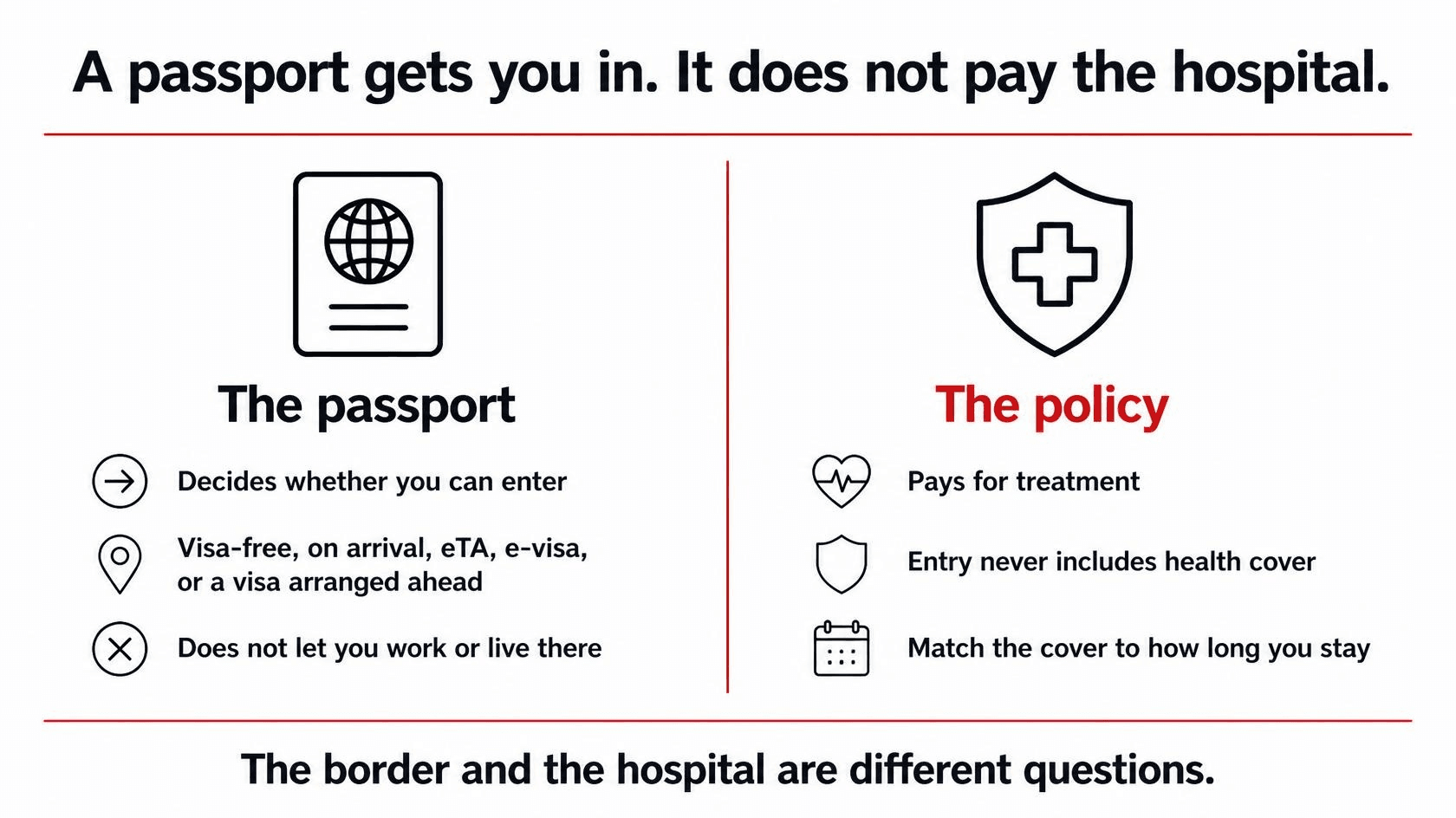
Argentina's public system is universal and free at the point of use, and crucially emergency care at public hospitals is free for everyone, including tourists, regardless of insurance or residency.
That is a genuine safety net for a real emergency. What changed in 2025 is non-emergency care: under a federal decree and provincial measures, the City of Buenos Aires and several provinces now bill non-resident foreigners for scheduled, non-urgent public treatment. Emergencies stay free; planned care no longer is.
Private hospitals nomads rely on
For anything beyond an emergency, nomads use the private sector, which is good and cheaper than North America. The Buenos Aires hospitals expats rely on include Hospital Alemán, Hospital Italiano, Hospital Británico, the Clínica Suizo Argentina and Sanatorio Otamendi. English-speaking care is realistic at these top private hospitals; elsewhere, and across the public system, Spanish is the working language.
Pharmacies and emergencies
Pharmacies are everywhere, many medicines are sold over the counter, and a 24-hour "farmacia de turno" rota covers the night. Emergency numbers: 911 reaches the police nationwide, 107 is the SAME medical ambulance line in the city of Buenos Aires, and 100 is the fire service.
What you'd pay
Typical costs
| Private GP or consultation | $20 to $70 USD |
|---|---|
| Specialist consultation | $35 to $150 USD |
| Emergency room (private, fee only) | $40 to $300 USD |
| Private hospital, per day | $150 to $500 USD, with intensive care $1,000+ USD |
| Serious admission or surgery | $2,000 to $30,000+ USD |
The peso is volatile, so treat these as approximate and expect swings. A major emergency with surgery and several days in care can reach tens of thousands of dollars, which is why policies for Argentina are usually advised to carry emergency-medical limits of at least $100,000, plus evacuation.
Entry & stay
Visa, residency & insurance
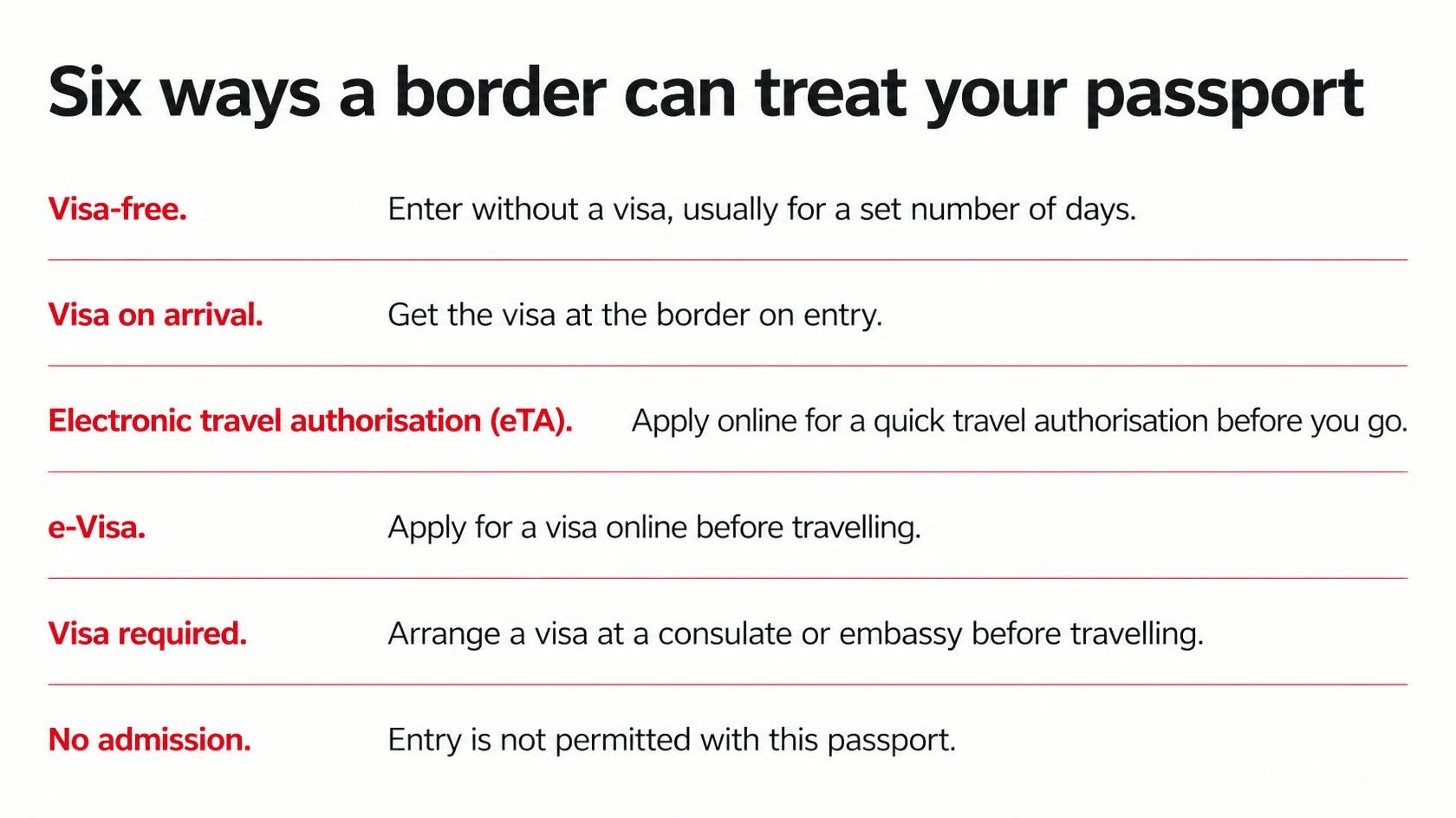
US, British, Canadian and Australian passport holders enter visa-free as tourists for up to 90 days, extendable once for a similar period.
The old reciprocity fee is gone and there is no electronic travel authorisation. One change to know: a 2025 immigration decree introduced a requirement for foreigners to show proof of travel-health insurance on entry, but it is not currently enforced at the border because the implementing rules have not been issued, so in practice insurance is not yet being checked. Given that non-emergency public care is now billed to non-residents, it is worth having regardless.
The digital nomad residency
To stay longer and work remotely, Argentina offers a digital nomad residency (a residencia transitoria, created by Disposición 758/2022) for nationals who do not need a tourist visa and who work remotely for clients or employers abroad. It grants up to 180 days, extendable once. There is no official minimum income in the rule itself, but you must document your work and earnings. Insurance is part of it: the application asks for a sworn declaration that you hold health insurance covering your medical needs. No specific coverage figure is set in the nomad rule, so insure for the real risk. We cover it on the Argentina digital nomad visa page. Many nomads simply use the tourist stamp and extend it, which is common but a legal grey area for working.
Who these rules apply to: Most Western (US/EU/Schengen/UK/CA/AU/NZ/JP/KR/BR/CL and 90+) visa-free 90 days. DNV open to nationals of visa-waiver countries working for foreign employers/clients
- Required
Tourist (visa-free entry)
90 days, extendable once for 90 more via Migraciones (fee ~USD 200)US/EU/UK/CA/AU/NZ/JP/BR/CL and 90+ visa-waiver. Passport 6+ months with 2 blank pages, onward ticket, accommodation, funds
- Required
Digital Nomad Visa (Nomada Digital)
180 days, renewable once for another 180 (12 months total)Remote workers and freelancers from visa-waiver countries with non-Argentine entities. Remote employment or freelance with foreign clients, foreign-source income (advisors suggest ~USD 2,500/month, no official minimum), clean record, valid passport
- Required
Rentista (Passive Income)
1 year temporary, renewable up to 3 yrs; PR after 2-3Foreigners with verifiable passive income from abroad. Passive income ≥5x Argentine min wage (~USD 1,400-2,000/month in 2026; advisors recommend 2,000+), apostilled docs, FBI/police check, birth cert
- Required
Pensionado (Retirement)
1 year temporary, renewable up to 3 yrs; PR after 3Foreign retirees with lifetime pension. Permanent monthly pension ≥5x Argentine min wage (~USD 1,300-2,000/month in 2026), apostilled pension cert, clean record, birth cert
- Required
Investor Visa (Inversor)
1 year temporary, renewable up to 3 yrs; PR after 3Foreigners making qualifying investment in Argentine business. Min ~ARS 1.5M (often considered low; advisors recommend higher real investment), business plan, fund origin, registration
- Recommended
Mercosur Residence
2 years temporary, convertible to permanentCitizens of Mercosur and associates (BR/CL/UY/PY/BO/CO/EC/PE/VE). Mercosur passport/ID, clean record from origin and past 5 yrs, birth cert
Visa rules change often and depend on your nationality. Always confirm with the official immigration service or your nearest consulate before you apply.
If you will keep moving after Argentina, cover that keeps running between countries is explained in our guide to digital nomad insurance.
Interactive
Verified pricesWhat would it cost in Argentina without insurance?
A fever you assume is flu until the platelet count comes back. Common across the places nomads spend winters.
| The first doctor visit, before anyone worries | $30–$70 |
| Back again, this time to emergency | $50–$300 |
| Four nights on fluids and monitoring | not verified here |
| At least | $80–$370 |
One step in this bill has no verified price for Argentina yet, so the real total sits above this one. We would rather leave the line blank than guess at it.
Priced as one lump instead of itemised, a serious admission in Argentina runs $2,000 to $30,000.
That is the bill you carry alone. Insurance exists for exactly this.
See what a match needsTypical private-care estimates for illustration, not a quote. Actual bills vary by hospital, city and severity.
Local risk notes
What to watch out for in Argentina
- Dengue.
- Argentina had its largest dengue epidemic on record in the 2023 to 2024 season, reaching into Buenos Aires province; 2025 was much milder. Risk is seasonal, in the warm, wet months, so use repellent.
- Petty crime. The main day-to-day risk in Buenos Aires is theft: pickpocketing, bag-snatching and "motochorros" on motorbikes, with occasional opportunistic express kidnappings. The country is relatively safe for the region; take normal big-city precautions and stay alert in San Telmo, La Boca and Retiro.
- Roads. Driving is more aggressive than many visitors expect, especially in Buenos Aires. If you ride a motorbike, confirm your policy covers it.
- Altitude, only in the northwest. Buenos Aires is at sea level, but the Andean northwest (Salta, Jujuy, the high Andes) climbs above 2,500 m, where altitude sickness is a real risk. Ascend gradually.
- The peso. Prices in dollars move a lot. After currency controls were lifted in 2025 the old "blue dollar" cash advantage has largely closed, so treat any price you read as approximate.
Common questions
Argentina insurance FAQ
Yes, a digital nomad residency (residencia transitoria, Disposición 758/2022) for people who work remotely for clients abroad. It grants up to 180 days, extendable once, and asks for a sworn declaration that you hold health insurance.
Yes, in the form of a sworn declaration that you have health insurance covering your medical needs. The rule sets no specific coverage figure, so insure for the real risk rather than a minimum.
A 2025 decree introduced an insurance requirement for entry, but it is not currently enforced because the implementing rules are not in place, so it is not being checked at the border yet. It is still worth having, because non-emergency public care is now billed to non-residents.
Yes. Emergency care at public hospitals is free for everyone in Argentina, including tourists. Since 2025, though, non-emergency public care is billed to non-resident foreigners in Buenos Aires and several provinces.
A private consultation runs about $20 to $70 and a private ER visit $40 to $300, but a serious admission can reach tens of thousands, so carry a high emergency-medical limit.
No. US, British, Canadian and Australian visitors enter visa-free for up to 90 days, extendable once. The old reciprocity fee no longer applies.
In Buenos Aires and the major cities the tap water is treated and generally safe; bottled is the safer choice in older buildings, rural areas and the north.
This page is the healthcare guide. It does not quote a premium and does not name an insurer. How we measure cost.
In 3 steps
- 01
Fill out
The form only asks what changes the plan.
- 02
We find your match
We compare the panel against your route, stay and visa.
- 03
Become a member
If the offer fits, you take it out directly.
Have a look if this page was not the question you came with.