

Destination
Healthcare in Uruguay, and what it costs without cover
South America's safest, most stable country, with a light nomad permit and an easy path to residency. It is pricey for the region, and a 2023 decree expects all visitors to carry medical insurance.
A short trip to Uruguay can still use travel cover. Living there needs international health insurance that outlasts the visa.
- Best for Long-term nomads
- Best for Slowmads
- Best for Freelancers
- Best for Perpetual travelers
- Insurance required?
- The nomad permit doesn't require it, but a 2023 decree makes medical insurance mandatory for all visitors
- Emergency number
- 911105 for a public ambulance
- Healthcare quality
- Well-regarded SNIS; distinctive non-profit mutualista hospital memberships
The system
Healthcare system in Uruguay
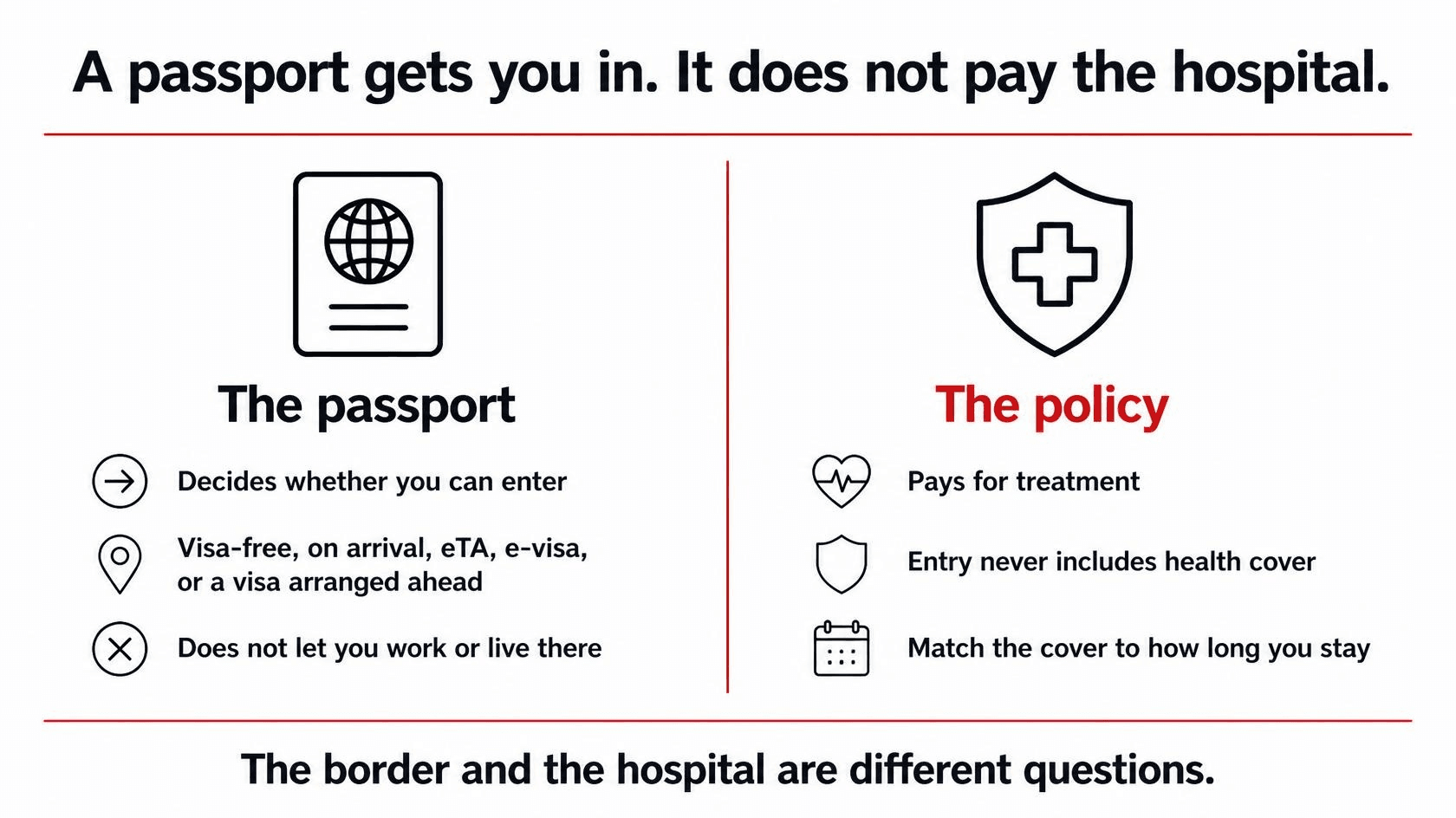
Uruguay's health system is among the best regarded in Latin America, built on the SNIS, which blends public and private providers, with one of the region's highest doctor-to-population ratios.
The mutualista model
The distinctive local model is the mutualista: a non-profit private hospital membership where you pay a flat monthly fee for access to that institution's doctors and hospital, plus small per-use co-pays, with no deductibles. The Montevideo private hospitals foreigners use are the British Hospital (Hospital Británico), generally rated the best for foreigners, the Asociación Española, and Médica Uruguaya.
Language and emergencies
One honest caveat: this is a Spanish-speaking country, and fluent-English medical staff are the exception. The British Hospital is the standout for English; elsewhere expect to use Spanish, an interpreter or a translation app. The general emergency number is 911, with 105 for a public ambulance, and many residents subscribe to a private emergency-mobile service for fast response. Pharmacies are widespread, with 24-hour and rotating duty pharmacies.
What you'd pay
Typical costs
| Private GP or consultation | about $20 to $50 USD |
|---|---|
| Specialist consultation | about $40 to $100 USD |
| Walk-in private ER (no plan) | around $85 USD including basic labs |
| Mutualista membership (the realistic ongoing option) | about $70 to $200 a month, plus small co-pays |
Uruguay is one of the more expensive countries in Latin America, and healthcare reflects it. There is no official tariff for an uninsured serious admission, which can run into the thousands, so nomads either join a mutualista or carry international health or travel insurance.
Entry & stay
Visa, residency & insurance
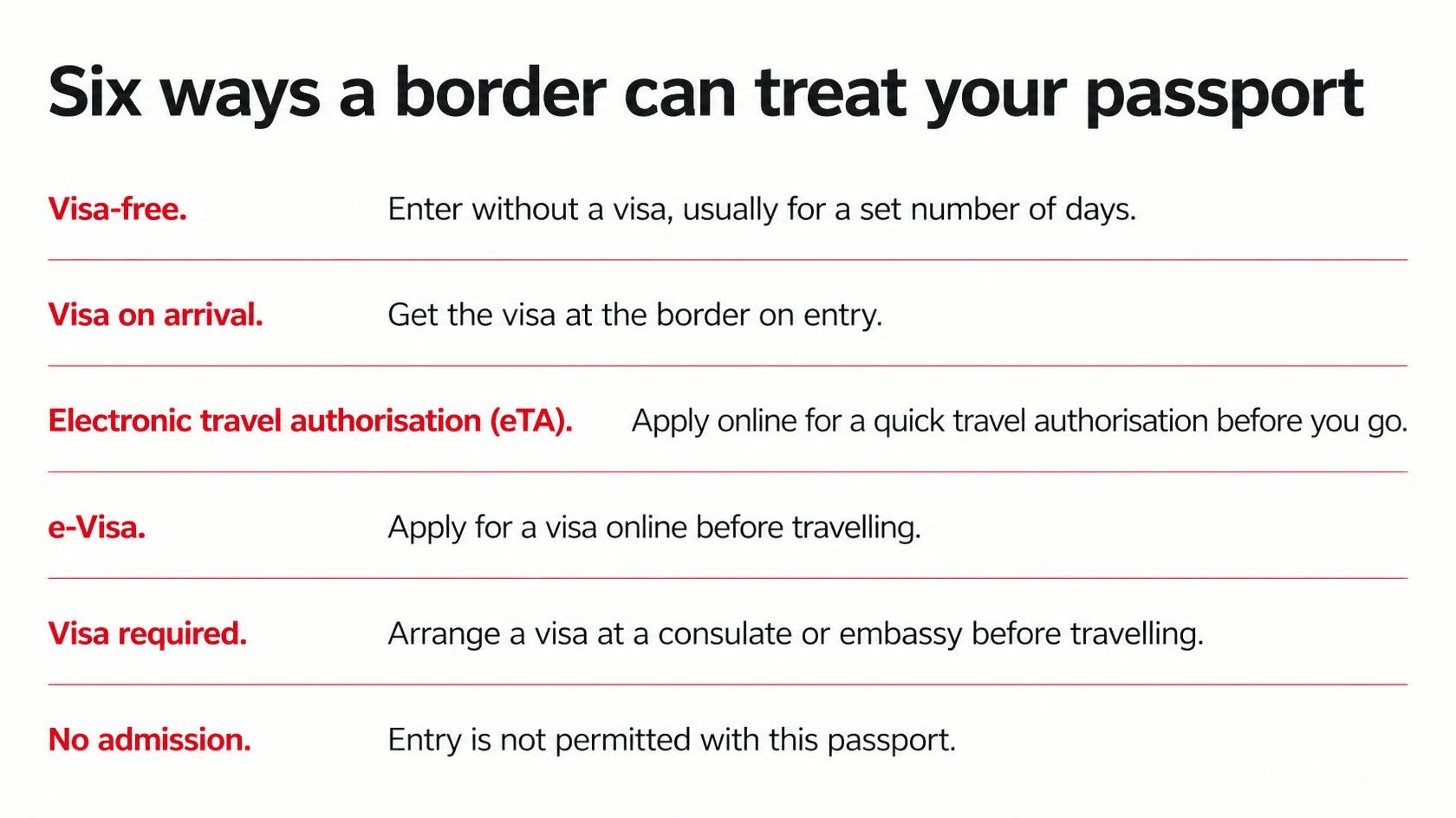
For short stays, US, British, Canadian and Australian visitors enter visa-free for 90 days, extendable for another 90.
One rule to know: a 2023 Ministry of Health decree makes medical insurance mandatory for all visitors entering Uruguay. It is briefly worded and weakly enforced in practice, so many arrivals are never asked, but carry proof to be safe.
Digital nomad permit
To stay and work remotely, Uruguay offers a digital nomad permit (a provisional identity sheet, the Hoja de Identidad Provisoria) for people working remotely for foreign companies or their own clients. It is light-touch: there is no fixed income threshold, just a sworn declaration that you can support yourself, plus a Uruguay-issued vaccination certificate. It grants up to 180 days, renewable once for a year total, and Uruguay is unusually easy about converting a stay into legal and then permanent residency, with a territorial tax system that does not tax foreign income. The permit itself does not list health insurance as a condition, but the entry decree above means you should carry it regardless. We lay out the permit on the Uruguay digital nomad visa page.
Who these rules apply to: US/UK/EU/CA/AU/NZ/JP/KR/IL/MX/BR/AR/CL and 84 jurisdictions visa-free. Residency open to all meeting requirements
- Recommended
Tourist (visa-free entry)
90 days, extendable once for 90 more at Direccion Nacional de Migracion (Montevideo)84 visa-exempt jurisdictions incl. US/UK/EU/CA/AU/NZ/JP/Mercosur. Passport valid 6 months, onward travel, funds may be requested
- Optional
Residencia Temporaria
1 to 2 years, renewableWorkers, students, family reunion, 1-2 yrs before PR. Passport, criminal record (apostilled and translated), vaccination cert, proof of income or activity; can yield Cedula in ~10 days
- Optional
Residencia Permanente
Indefinite, permanentForeigners intending to settle long-term, incl. remote workers and retirees. Lawful recurring passive income from abroad ~1,500 USD/month single (2,500 USD couple), clean record, apostilled+Spanish-translated docs, intent (lease, deed, host letter). No legal min, case-by-case. Avg 4-month processing 2026
- Optional
Rentista (Independent Means)
Leads directly to PR upon approvalApplicants with stable passive income (rentals, investments, annuities) abroad. Recurring passive income ~1,500 USD/month or higher for families, apostilled+translated statements, clean record, residential ties
- Optional
Pensionado
Leads directly to PR upon approvalRetirees drawing qualifying foreign pension. Documented foreign pension ~1,500 USD/month or higher, clean record from past 5 yrs, intent to reside, medical cert if requested
Visa rules change often and depend on your nationality. Always confirm with the official immigration service or your nearest consulate before you apply.
Comparing plans for a long stay in Uruguay? Our guide to the best health insurance for nomads sets out what to check first.
Interactive
Verified pricesWhat would it cost in Uruguay without insurance?
You pay, out of pocket
$3,000–$10,000
A serious private admission or common surgery.
Bars to scale. A flight home is in another league.
That is the bill you carry alone. Insurance exists for exactly this.
See what a match needsTypical private-care estimates for illustration, not a quote. Actual bills vary by hospital, city and severity.
Local risk notes
What to watch out for in Uruguay
- Cost.
- Uruguay is genuinely pricier than ArgentinaBrazil or Paraguay for rent, dining and healthcare; budget accordingly.
- Petty crime in Montevideo. The main day-to-day risk is theft, pickpocketing, bag-snatching and theft from cars, concentrated in parts of Montevideo like Ciudad Vieja and around the port. Violent crime has risen but stays well below most of the region.
- Language. Spanish dominates and English is limited outside the British Hospital and tourism, so some Spanish helps.
- Sun and roads. Strong summer UV on the coast, and the usual regional road-safety caution.
- Tap water. Montevideo tap water is potable and safe, a regional outlier; note that during the 2023 drought salinity rose temporarily, and at-risk groups were advised to prefer bottled water during such episodes.
Common questions
Uruguay insurance FAQ
Yes, a provisional identity sheet for remote workers (the Hoja de Identidad Provisoria). It is light-touch, with no fixed income threshold, just a sworn declaration of means, and grants up to 180 days, renewable to a year, with an easy path on to residency.
The permit itself does not list health insurance as a condition (it asks for a sworn declaration of means and a Uruguay-issued vaccination certificate). But a separate 2023 decree requires all visitors to carry medical insurance, so have it regardless.
There is no fixed threshold. You sign a sworn declaration that you have the means to support yourself; figures you see online are informal norms, not an official rule.
Visa-free tourists get 90 days, extendable to 180. The nomad permit grants up to 180 days, renewable once, and can lead on to residency.
It is the safest and most stable country in South America. The main risk is petty theft in parts of Montevideo; normal city precautions are enough.
Yes, Montevideo tap water is potable, unusually for the region. During the 2023 drought salinity rose briefly and at-risk groups were advised to prefer bottled water; normal supply has since resumed.
This page is the healthcare guide. It does not quote a premium and does not name an insurer. How we measure cost.
In 3 steps
- 01
Fill out
The form only asks what changes the plan.
- 02
We find your match
We compare the panel against your route, stay and visa.
- 03
Become a member
If the offer fits, you take it out directly.
Have a look if this page was not the question you came with.