
Destination
Healthcare in Mauritius, and what it costs without cover
A free one-year nomad visa, English and French, and one of Africa's most stable, peaceful countries. Serious cases may be flown off-island, and cyclone season is a real constraint.
A short trip to Mauritius can still use travel cover. Living there needs international health insurance that outlasts the visa.
- Best for Long-term nomads
- Best for Slowmads
- Best for Freelancers
- Best for Perpetual travelers
- Insurance required?
- Premium Travel Visa requires travel and health insurance for the initial period of stay; evacuation cover the sensible standard
- Emergency number
- 114 ambulance (SAMU)999 or 112 police
- Healthcare quality
- Private C-Care clinics handle expat care; complex cases evacuated
The system
Healthcare system in Mauritius
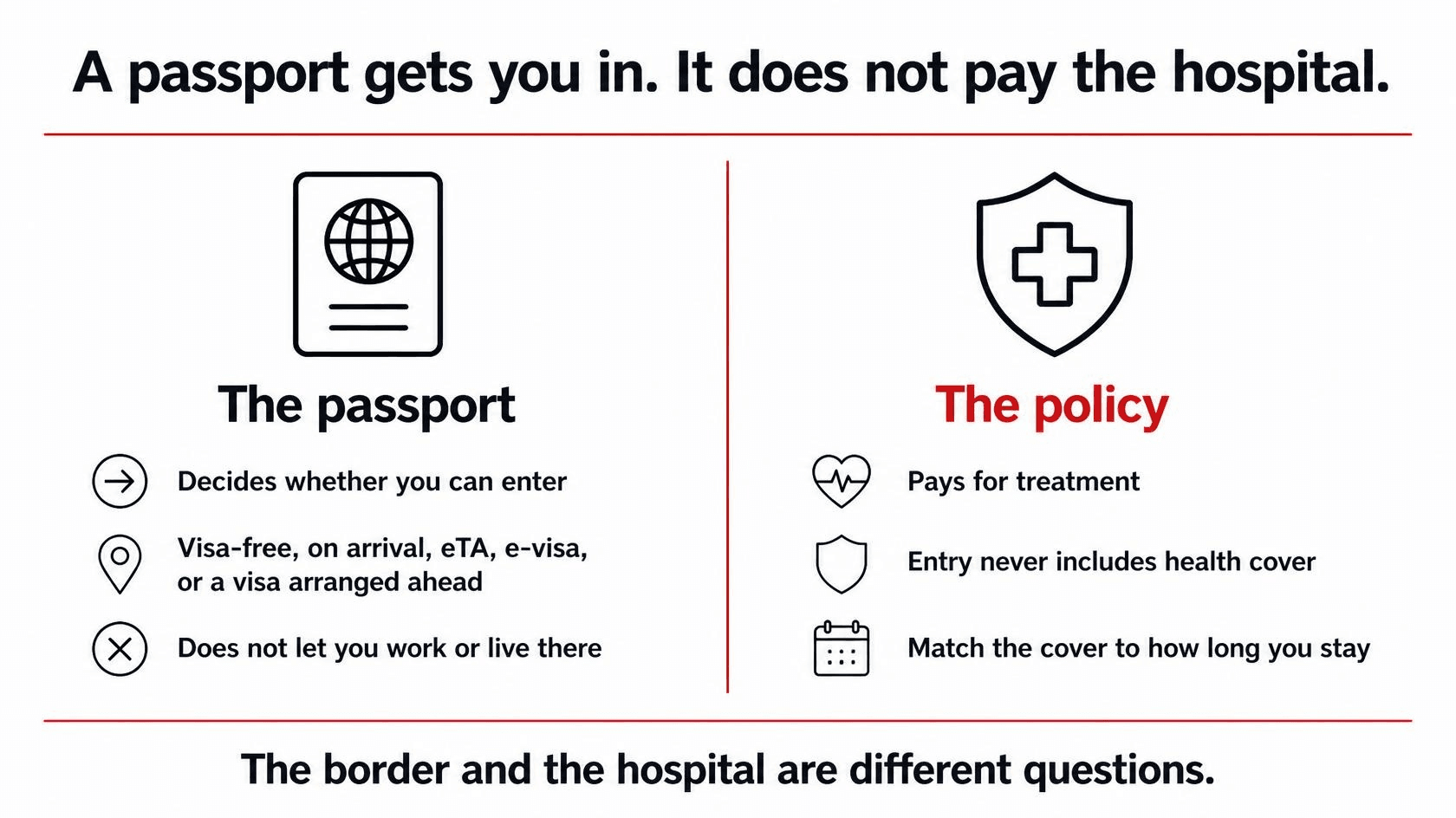
Mauritius has a public system that is free at the point of use, but it is basic and crowded, so expats and nomads use private care.
Private hospitals to know
The private hospitals to know are both run by the C-Care group: C-Care Wellkin in Moka (the largest and most modern, formerly Apollo Bramwell, with an ICU and 24-hour emergency department) and C-Care Darné in Floréal (formerly Fortis Clinique Darné, with a 24-hour ER, ICU and maternity). Care is comfortable, and English and French are both used, so language is rarely an issue.
Evacuation off-island
The important caveat is scale: for the most complex cases, patients are sometimes evacuated to Réunion or South Africa, which is exactly why cover that includes evacuation and treatment abroad matters here more than in a big-country destination.
Pharmacies are widespread, with 24-hour pharmacies at the major private hospitals; some medicines need a local prescription, and strong painkillers need prior authorisation to bring in. Emergency numbers are 114 for an ambulance (SAMU) and 999 or 112 for police.
What you'd pay
Typical costs
| GP or doctor consultation | Rs 600 to Rs 3,000 (about $13 to $63) |
|---|---|
| Specialist consultation | Rs 1,200 to Rs 6,000 (about $25 to $126) |
| Private hospital room, per day | Rs 3,500 to Rs 11,000 (about $74 to $316) |
| Serious admission or surgery | roughly Rs 75,000 to Rs 250,000 (about $1,600 to $5,300) |
These are indicative private rates, not official price lists; Mauritius publishes none. Uninsured patients are typically asked for a large deposit before admission, and an off-island evacuation for a complex case is in a different league again.
Entry & stay
Visa, residency & insurance
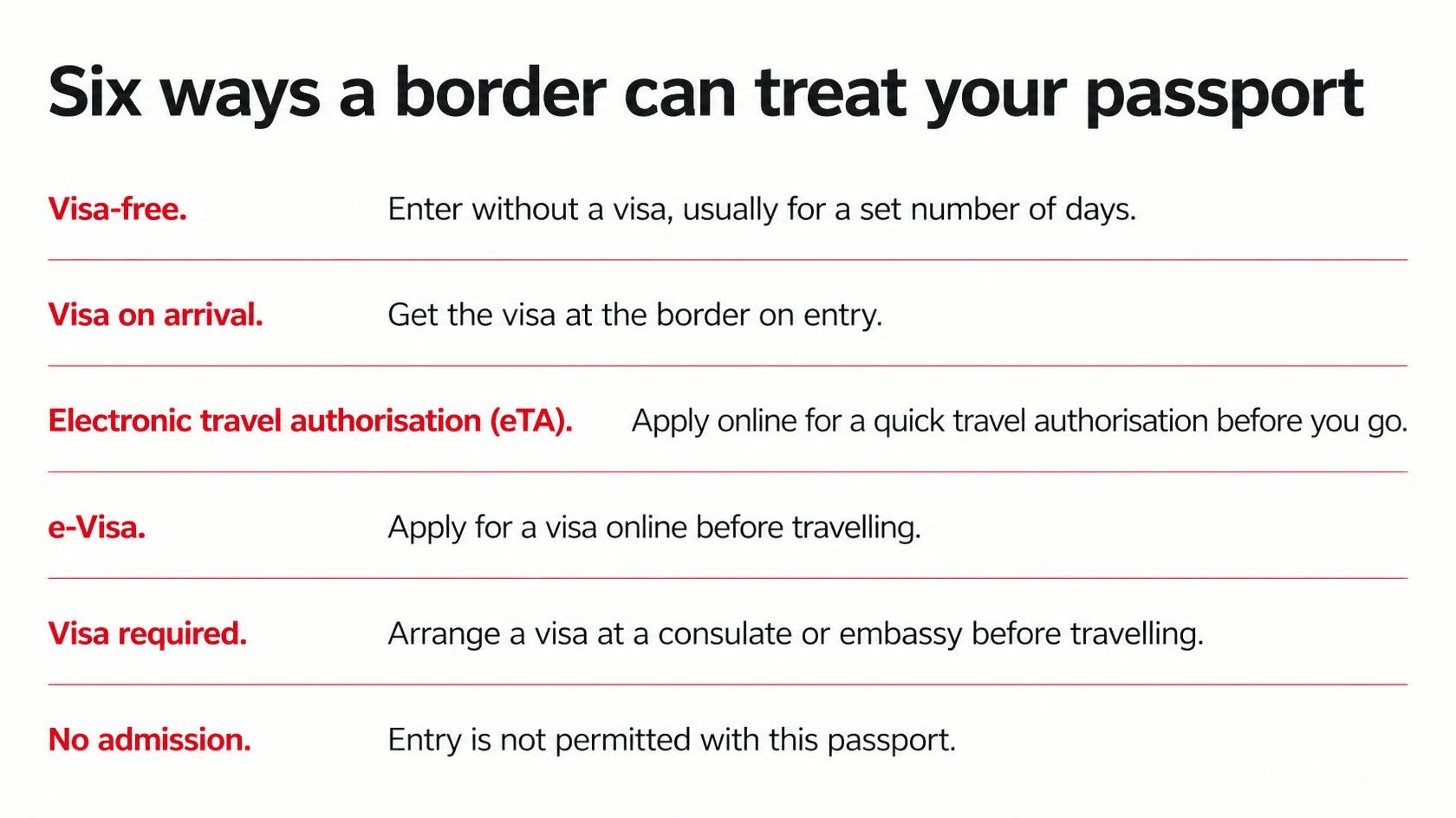
For short stays, US, British, Canadian and Australian visitors enter without an advance visa, with a permit stamped on arrival, commonly for up to 60 days, extendable to a maximum of 180 days in a calendar year.
You need a return ticket, proof of adequate funds and accommodation, and everyone completes the online All-in-One travel form before arrival. Travel insurance is no longer required to enter as a tourist, though it is strongly advised.
Premium Visa
To stay and work remotely, Mauritius runs the Premium Visa, launched in 2020, issued for a period exceeding six months up to one year, renewable, and free of charge. It is for people whose work and income are based outside Mauritius, and who will not enter the local labour market. Insurance is a written requirement: the official rule asks for "travel and health insurance for the initial period of stay." There is no government-set minimum sum, but given the off-island evacuation reality, cover that includes medical care, emergency evacuation and repatriation is the sensible standard. As a documentary matter, applicants show a bank statement with a monthly transfer of at least $1,500 per adult (plus $500 per child). We lay out the visa on the Mauritius Premium Visa page.
Who these rules apply to: Most Western for visa-free tourism. Premium Visa open to all meeting income threshold
- Recommended
Tourist Visa-Free Entry
60-90 days depending on nationality (extendable up to 180 days/yr case-by-case)100+ countries incl. US/UK/EU/CA/AU. Valid passport, onward travel, funds, mandatory digital entry card pre-arrival
- Recommended
Occupation Permit - Self-Employed
10 yrs renewableFreelancers and consultants in service sectors. USD 50,000 to local bank; service-sector only; min MUR 750,000 income Yr 1, cumulative MUR 6M by Yr 5
- Required
Premium Visa
1 year, renewable indefinitelyRemote workers, freelancers, retirees, long-stay tourists with foreign income. Min USD 1,500/month (USD 3,000 with spouse, +USD 500 per dependent <24); remote-work proof (contract or 6-month statements); primary income outside Mauritius; no fee
- Optional
Occupation Permit - Professional (ProPass)
10 yrs renewableMid-level professionals, technicians, skilled specialists employed by a Mauritian company. Min monthly basic salary MUR 30,000 (ProPass tier) or MUR 250,000 (Expert Pass tier); employment contract
- Recommended
Occupation Permit - Investor
10 yrs renewableForeign entrepreneurs setting up or investing in a Mauritian business. Initial investment USD 50,000 in freely convertible currency; Yr 1 turnover MUR 1.5M; cumulative MUR 20M by Yr 5
- Recommended
Retired Resident Permit
10 yrs renewable (PR path 20 yrs after 5 yrs with USD 200,000 cumulative transfers)Non-citizens 50+ with passive income. Age 50+; transfer USD 2,000/month or USD 24,000/yr to local bank; initial USD 2,000 within 60 days of approval
Visa rules change often and depend on your nationality. Always confirm with the official immigration service or your nearest consulate before you apply.
Once a stay outruns a travel policy's trip limit, our guide to nomad health insurance vs travel insurance explains which kind of cover fits.
Interactive
Verified pricesWhat would it cost in Mauritius without insurance?
You pay, out of pocket
$1,000–$5,000
A serious private admission or common surgery.
Bars to scale. A flight home is in another league.
That is the bill you carry alone. Insurance exists for exactly this.
See what a match needsTypical private-care estimates for illustration, not a quote. Actual bills vary by hospital, city and severity.
Local risk notes
What to watch out for in Mauritius
- Cyclone season.
- The official season runs from 1 November to 15 May, with a four-class warning system; a serious cyclone can shut down the island for a day or more, so build in flexibility and follow the warnings.
- Mosquito-borne disease. Both dengue and chikungunya circulate, with recent outbreaks (dengue had a significant 2024 outbreak, and there is a current chikungunya advisory), so use repellent. Malaria, by contrast, is essentially absent.
- Off-island evacuation. For complex medical cases, Mauritius sometimes transfers patients to Réunion or South Africa, so insurance that covers evacuation and treatment abroad is genuinely important here.
- Sea and reef. The lagoon is calm and reef-protected, but currents at the reef passes and marine life like stonefish and sea urchins are real hazards; water shoes and local advice help.
- Tap water. It is treated and used by residents, but visitors are commonly advised to drink bottled or filtered, especially after heavy rain or a cyclone.
Common questions
Mauritius insurance FAQ
Yes, the Premium Visa, launched in 2020. It is issued for a period exceeding six months up to one year, renewable, and free of charge, for people whose work and income are based outside Mauritius and who will not work locally.
Yes. The official rule asks for travel and health insurance for the initial period of stay. There is no government-set minimum, but cover that includes evacuation and treatment abroad is the sensible standard.
Because for the most complex cases, patients are sometimes flown to Réunion or South Africa. A policy with medical evacuation and overseas treatment is more than a formality here.
There is no hard means-test in the eligibility rule, but the application asks for a bank statement showing a monthly transfer of at least $1,500 per adult, plus $500 per dependent child.
US, British, Canadian and Australian visitors get a permit on arrival, commonly up to 60 days, extendable to a maximum of 180 days in a calendar year.
Yes, it is one of Africa's most stable and peaceful countries, with mostly petty, non-violent crime in tourist areas. Normal precautions are enough.
It is treated and used by residents, but visitors are commonly advised to drink bottled or filtered water, especially after heavy rain or cyclones.
This page is the healthcare guide. It does not quote a premium and does not name an insurer. How we measure cost.
In 3 steps
- 01
Fill out
The form only asks what changes the plan.
- 02
We find your match
We compare the panel against your route, stay and visa.
- 03
Become a member
If the offer fits, you take it out directly.
Have a look if this page was not the question you came with.