

Destination
Healthcare in Panama, and what it costs without cover
A dollarised economy, a remote-worker visa, fast internet, and Johns Hopkins-affiliated hospitals in Panama City. Top-tier care can approach US prices, and the Darién Gap is to be avoided.
A short trip to Panama can still use travel cover. Living there needs international health insurance that outlasts the visa.
- Best for Long-term nomads
- Best for Slowmads
- Best for Freelancers
- Best for Perpetual travelers
- Insurance required?
- Required for the remote-worker visa; not for tourist entry
- Recommended coverage
- Serious private admission or surgery runs $8,000 to $40,000+
- Emergency number
- 911operators may speak only Spanish
- Healthcare quality
- Very good private sector; Johns Hopkins-affiliated, JCI-accredited hospital
The system
Healthcare system in Panama
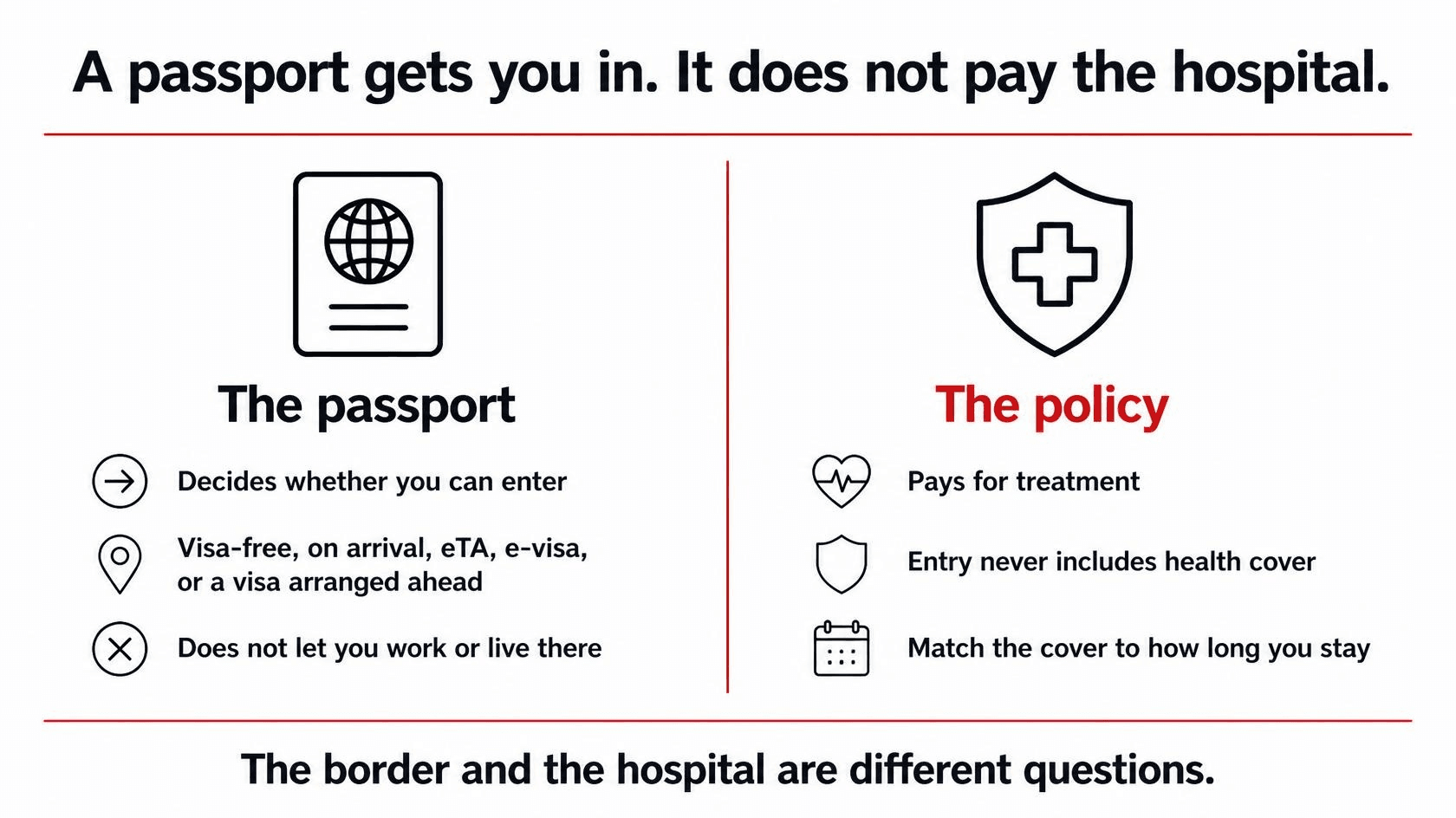
Panama has a two-part public system, the CSS social-security scheme and the MINSA public network, but nomads and expats use the private sector, which is concentrated in Panama City and very good.
Johns Hopkins-affiliated benchmark
The standout is Pacífica Salud (Hospital Punta Pacífica), the first hospital in Latin America affiliated with Johns Hopkins Medicine International and JCI-accredited since 2011. Other well-known private hospitals include Hospital Nacional, The Panama Clinic and Paitilla, though accreditations vary, so Punta Pacífica is the benchmark for complex care.
English and the dollar
The US Embassy confirms that Panama City private hospitals can generally provide care in English, and many doctors are US-trained, so language is rarely an issue in the private system. One useful quirk: Panama uses the US dollar as everyday currency, so there is no exchange-rate friction on a medical bill if you earn in dollars.
Pharmacies and emergencies
Pharmacies are widespread, with chains like Arrocha, Metro and El Rey, and many medicines are cheaper than in the US. The national emergency number is 911, though operators may speak only Spanish.
What you'd pay
Typical costs
| Private GP or specialist consultation | $30 to $65 USD |
|---|---|
| Emergency room visit (private) | $50 to $200 USD |
| Hospital, per day (top private, such as Punta Pacífica) | $800 to $1,200 USD |
| Serious admission or surgery (private) | $8,000 to $40,000+ USD |
Routine private care runs roughly 40 to 60% below US prices, but Panama's top hospitals can approach US pricing for complex care: a cardiac stent has been cited around $15,000 and major surgery far more. The dollar economy keeps the numbers familiar, but a serious case is still a serious bill.
Entry & stay
Visa, residency & insurance
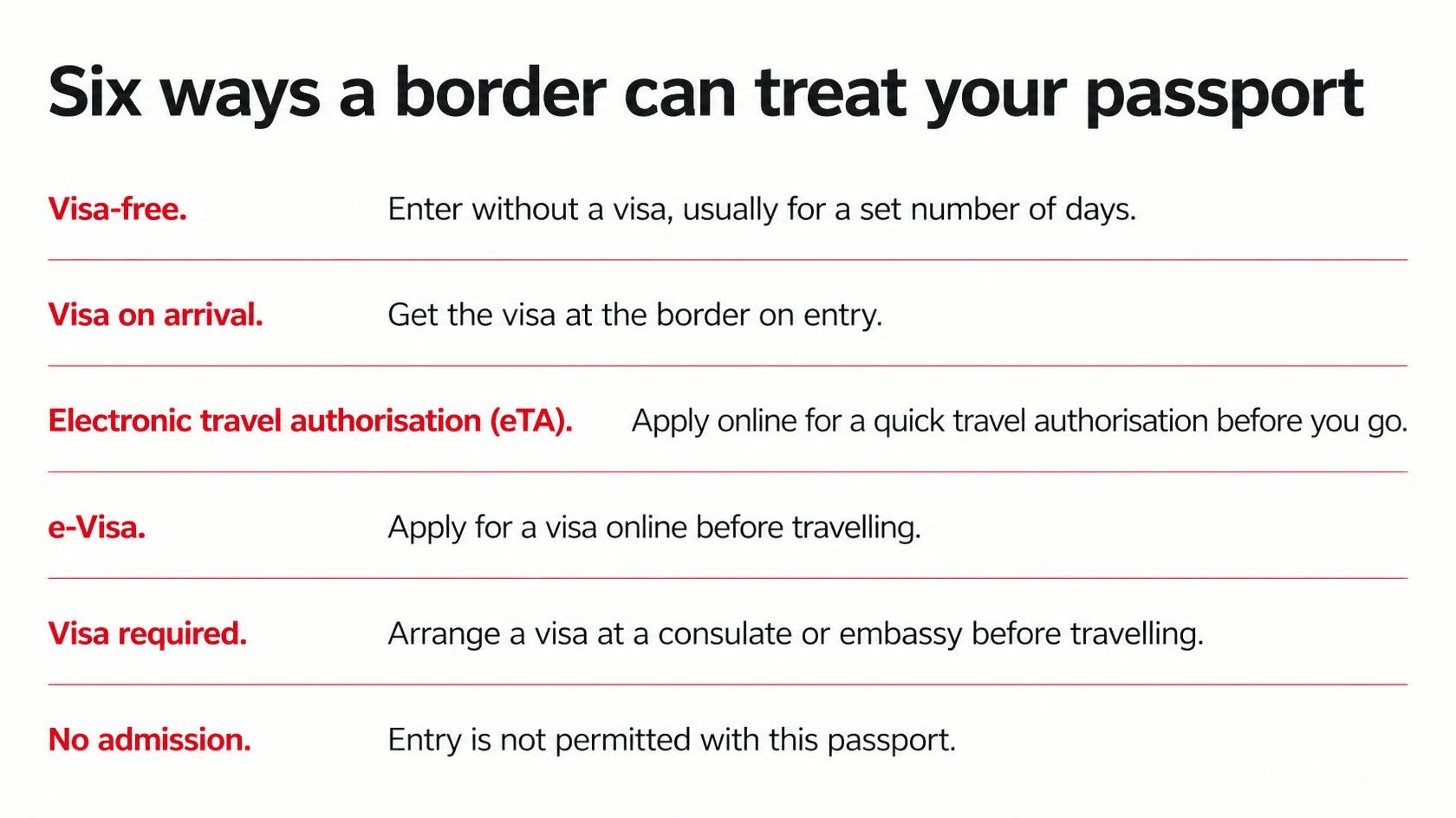
Tourist entry is generous and splits by nationality: US and Canadian visitors get up to 180 days, while British and Australian visitors get 90.
Tourist entry by nationality
You need an onward ticket and proof of funds, around $500, or $1,000 for British travelers. Travel insurance is not a legal entry requirement, but it is strongly advised given top-hospital pricing.
Remote-worker visa
To stay and work remotely, Panama's Short Stay Visa for Remote Workers (Executive Decree 198 of 2021) is for people working for a foreign employer or foreign clients, on income of at least $36,000 a year, and it runs nine months, renewable once for about eighteen months total. It is filed through a Panamanian lawyer, and it requires a valid medical insurance policy with coverage in Panama for the stay. No specific minimum coverage amount is published, so insure for the real risk, especially since the top hospitals cost real money. We break it down on the Panama remote-worker visa page. For longer-term residency, the Friendly Nations Visa is the common route, but it now requires an economic tie such as a $200,000 property purchase or bank deposit.
Who these rules apply to: All non-Panamanian; short-stay varies (180 days US/CA, 90 days most EU/UK/AU/NZ)
- Recommended
Tourist Entry (visa-free)
180 days US/CA; 90 days most othersUS/CA/EU/UK/AU/NZ and 100+ visa-exempt. Passport 3+ months, onward travel, ~500 USD funds
- Recommended
Work Permit Visa (Employee)
Tied to employment, typically 1-2 yrs renewableForeigners with Panamanian employer contract. Signed contract with PA company, employer meets local-foreign quotas, clean record, health cert
- Required
Short Stay Visa for Remote Workers (Digital Nomad)
9 months, extendable once to 18 totalRemote employees and self-employed with foreign clients/employers. Foreign income ≥3,000 USD/month (36,000/yr), clean record, employer/contract letter, 250 USD fee + 50 USD card
- Required
Pensionado Visa (Retirement)
PR from outset; only 1 day/calendar yr in PanamaRetirees with lifetime pension from gov or private. Lifetime pension ≥1,000 USD/month (+250 USD per dependent), or 750 USD/month if buying property ≥100,000 USD; pension letter stating life income
- Required
Friendly Nations Visa
2-year provisional, then PR eligibleCitizens of 50+ eligible countries incl. US/CA/UK/AU/EU/JP/KR/SG. One economic tie: PA employment, real estate ≥200,000 USD, or fixed bank deposit ≥200,000 USD; police clearance and solvency
- Required
Qualified Investor Visa
PR (~30-day processing)HNW investors seeking fast-track PR. Real estate ≥300,000 USD (rising to 500,000 after 15 Oct 2026), or 500,000 USD in PA securities, or 750,000 USD deposit; funds from abroad and held 5+ yrs
Visa rules change often and depend on your nationality. Always confirm with the official immigration service or your nearest consulate before you apply.
Interactive
Verified pricesWhat would it cost in Panama without insurance?
Gravel on a bend outside town. Road rash, a broken forearm, and a night or two before they discharge you.
| Ambulance | $175–$450 |
| Emergency room, on arrival | $50–$200 |
| X-ray on the forearm | $30–$40 |
| Two nights on the ward | $1,600–$2,400 |
| You pay, out of pocket | $1,855–$3,090 |
Priced as one lump instead of itemised, a serious admission in Panama runs $8,000 to $40,000.
That is the bill you carry alone. Insurance exists for exactly this.
See what a match needsTypical private-care estimates for illustration, not a quote. Actual bills vary by hospital, city and severity.
Local risk notes
What to watch out for in Panama
- The Darién Gap.
- The US and Australian governments say do not travel to the Darién Gap on the Colombia border, and the UK advises against it except with organised groups, because of crime, smuggling and difficult terrain.
- Urban crime. Pickpocketing and theft happen in busy areas; UK guidance flags neighbourhoods including El Chorrillo, Santa Ana, Calidonia and the city of Colón. Use ATMs inside banks or malls and keep the usual city wits about you.
- Mosquito-borne disease. Dengue, Zika and chikungunya circulate, so use repellent. Malaria is not a risk in Panama City or the Canal Zone, only in rural and eastern areas.
- Top-hospital costs. Panama's best private hospitals can bill close to US prices for complex care, so do not treat "cheaper than the US" as a reason to skimp on cover.
- Tap water. It is safe to drink in most of the country, including Panama City, but follow local advice in rural and island areas like Bocas del Toro.
Common questions
Panama insurance FAQ
Yes, the Short Stay Visa for Remote Workers (Decree 198 of 2021), for people working for a foreign employer or clients on at least $36,000 a year. It runs nine months, renewable once for about eighteen months total, and is filed through a Panamanian lawyer.
Yes, a valid medical insurance policy with coverage in Panama for the duration of your stay. No specific minimum amount is published, so insure for the real risk rather than a number.
US and Canadian visitors get up to 180 days, while British and Australian visitors get 90. You need an onward ticket and proof of funds.
Yes, in the private sector. Panama City's Pacífica Salud (Hospital Punta Pacífica) is affiliated with Johns Hopkins and JCI-accredited, and private hospitals generally provide care in English. Public care is more basic.
A private consultation runs about $30 to $65, but the top hospitals can approach US prices for complex care, and a serious admission runs from $8,000 into the tens of thousands.
Panama uses the US dollar as everyday currency, so if you earn in dollars there is no exchange-rate friction, including on medical bills.
In most of the country, including Panama City, yes. Follow local advice in rural and island areas such as Bocas del Toro.
Here for a few weeks rather than living here? A trip policy is the right tool; see our guide to travel insurance for digital nomads.
This page is the healthcare guide. It does not quote a premium and does not name an insurer. How we measure cost.
In 3 steps
- 01
Fill out
The form only asks what changes the plan.
- 02
We find your match
We compare the panel against your route, stay and visa.
- 03
Become a member
If the offer fits, you take it out directly.
Have a look if this page was not the question you came with.