

Destination
Healthcare in Ecuador, and what it costs without cover
A dollar economy, a two-year nomad visa that mandates health cover, and low private-care prices. The catch sits 1,000km offshore: a medical evacuation from the Galápagos can cost more than a year of rent.
A short trip to Ecuador can still use travel cover. Living there needs international health insurance that outlasts the visa.
- Best for Long-term nomads
- Best for Slowmads
- Best for Freelancers
- Best for Perpetual travelers
- Insurance required?
- RequiredVisa Nómada needs a valid national or foreign policy covering the full visa period, and a foreign policy must state it covers Ecuador
- Recommended coverage
- International plans with evacuation run roughly $300 to $800 a month; Galápagos evacuation can top $60,000
- Emergency number
- 911
- Healthcare quality
- Cheap, good private care in the cities; JCI-accredited Hospital Metropolitano in Quito
The system
Healthcare system in Ecuador
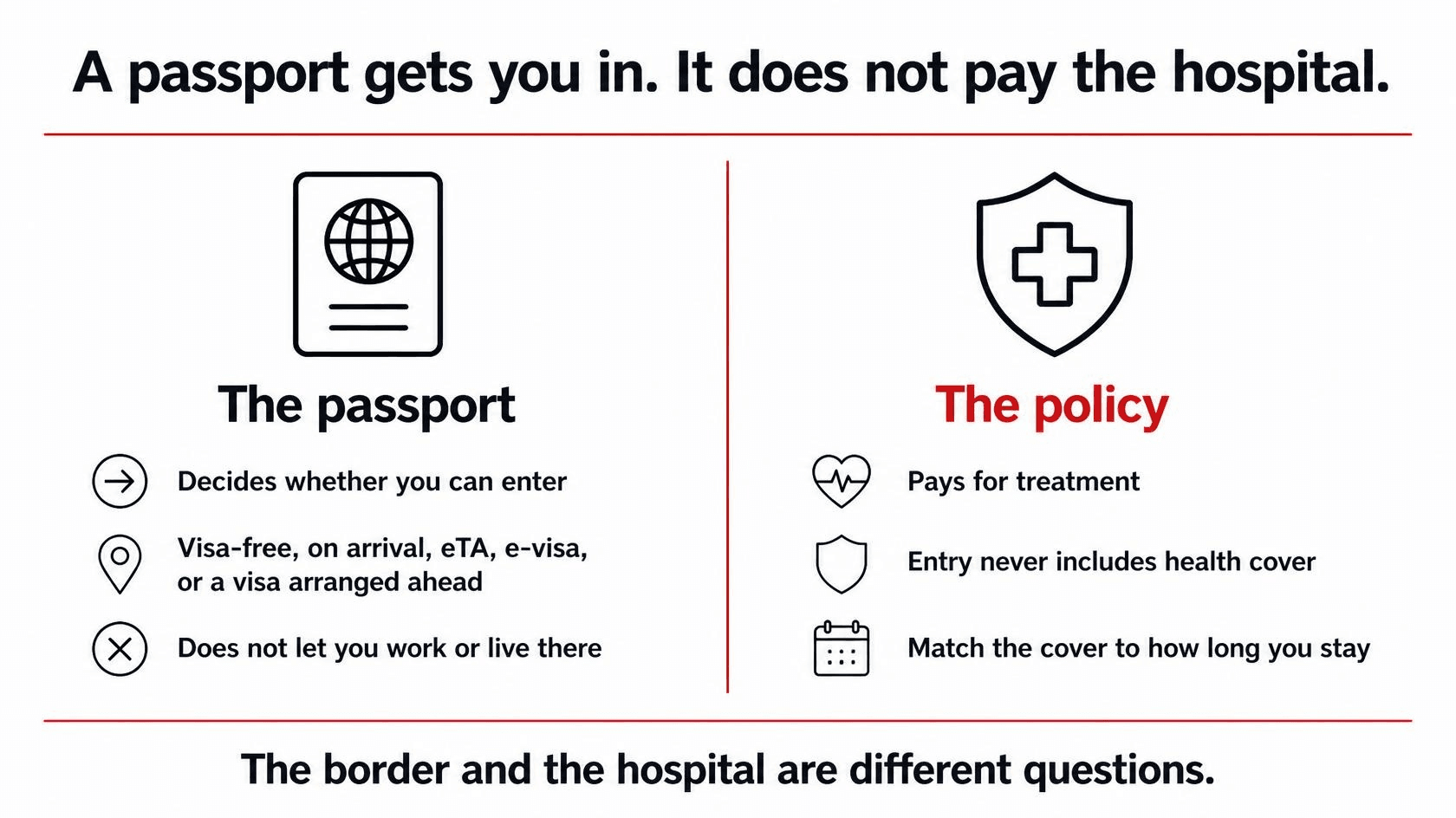
Ecuador has a public system (the MSP network for everyone and the IESS social-security scheme for contributors) alongside a private sector that most nomads and expats actually use.
Private care is the draw
Private care is the draw here: it is inexpensive by US or European standards, walk-in waits are short, and the quality in the big cities is genuinely good. Quito, Guayaquil and Cuenca hold the best private hospitals, and a routine GP visit costs less than a restaurant dinner back home. Public emergency care is free to anyone, but for anything planned, the private route is faster and the facilities are newer.
English-speaking doctors
English-speaking doctors are common in the private hospitals of Quito and Cuenca, many of them US-trained. In Quito the names nomads rely on are Hospital Metropolitano, which is JCI-accredited and the benchmark for complex care, plus Hospital de los Valles in the Cumbayá valley and Hospital Vozandes; Cuenca's expat community leans on Hospital Santa Inés and Hospital Monte Sinaí. The national emergency number is 911 (operators speak Spanish, but you can ask for an English-speaking operator, and the ECU 911 app can request help in English). Pharmacies are everywhere, with chains like Fybeca, Sana Sana and Cruz Azul, and many drugs sell over the counter for a fraction of US prices. The hard part is the Galápagos: the two small hospitals on Santa Cruz and San Cristóbal do not handle major procedures, so a serious case means an air evacuation to mainland Ecuador or the United States, which is why the islands legally require visitors to carry travel medical insurance.
What you'd pay
Typical costs
| Private GP consultation | $25 to $40 USD |
|---|---|
| Specialist consultation (private) | $40 to $80 USD |
| Local private health insurance (monthly) | $100 to $300 USD |
| Galápagos medical evacuation to mainland or US | $60,000+ USD |
Figures are in US dollars, which is Ecuador's official currency, so there is no exchange-rate friction on a medical bill if you earn in USD. The numbers above are indicative: consultation prices come from Quito and Cuenca private practice, local insurance varies with age and pre-existing conditions (most domestic insurers cap entry around 65 to 70), and international plans that include evacuation run higher, roughly $300 to $800 a month. The evacuation figure is the one to take seriously, especially for island trips.
Entry & stay
Visa, residency & insurance
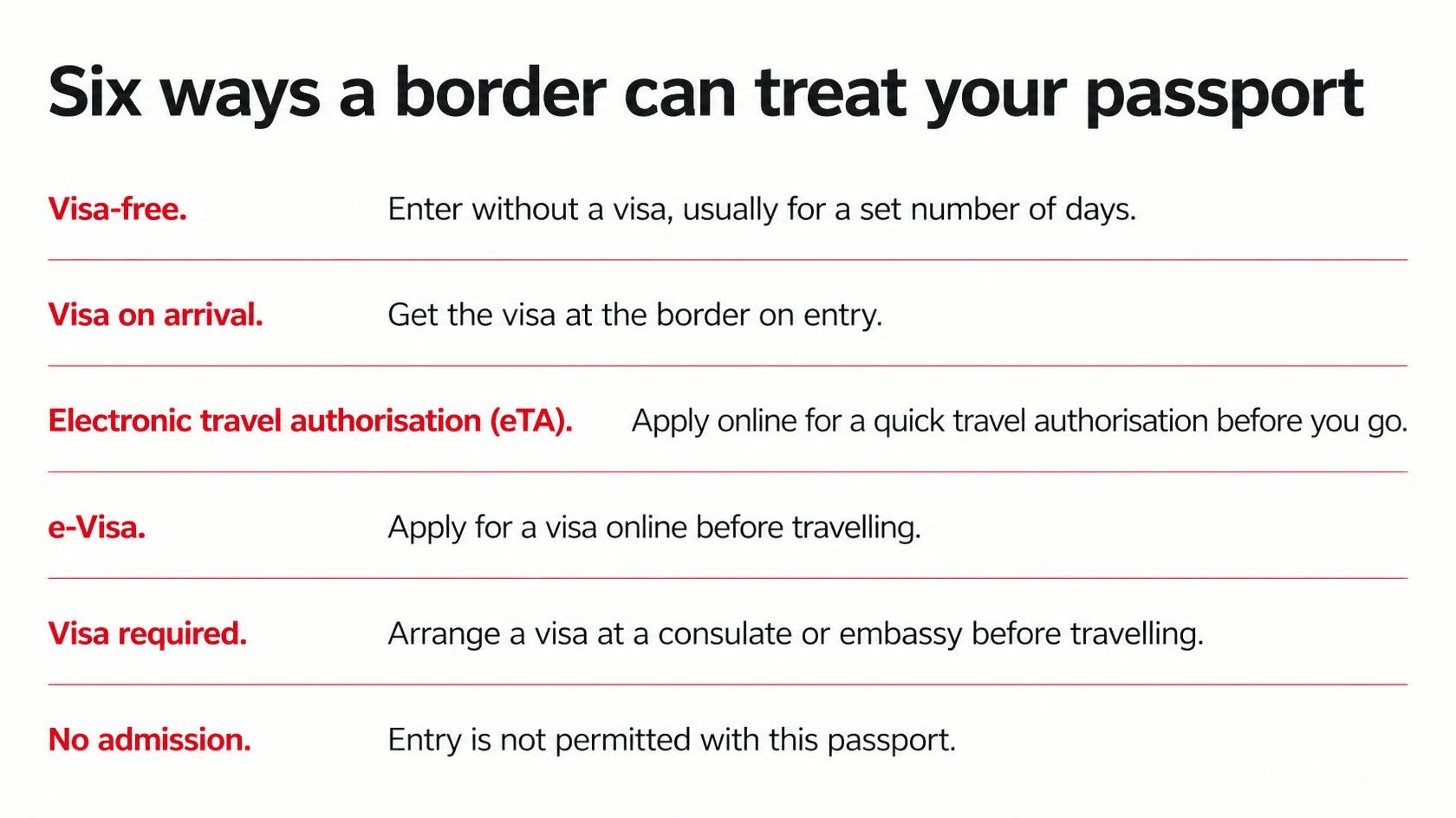
Tourists from the US, UK, Canada and Australia enter visa-free for 90 days, no application or fee, just a passport valid six months out and usually an onward ticket.
Note the rolling rule: Ecuador counts a maximum of 180 days in any 12-month period, the first 90 free and the next 90 via a paid extension (around $130), and leaving and re-entering does not reset the clock. Travel insurance is not required to enter mainland Ecuador, but it is mandatory to enter the Galápagos, where park authorities check for a policy with health and evacuation cover on arrival.
The remote-work visa
For a longer base, Ecuador's remote-work visa is the official "Visa de Residencia Temporal Rentista para Trabajo Remoto", marketed as the Visa Nómada. It is a temporary-residence visa valid for two years and renewable, for people earning from a foreign employer or clients. The income test is three times Ecuador's unified basic salary (SBU) per month: with the 2026 SBU set at $482, that is about $1,446 a month, proven over the three months before applying. Health insurance is a hard requirement: you must show a valid national or foreign policy covering the full visa period, and a foreign policy must explicitly state that it covers Ecuador. No minimum coverage amount is published, so insure for the real risk rather than a number. Full details and the latest figures are on the Ecuador digital nomad visa page.
Who these rules apply to: Non-residents seeking >tourist entry, incl. remote workers (DN Rentista), retirees (Pensioner), investors. Tourist visa-free for most Western
- Recommended
Tourist Visa-Free Entry (T-3)
90 days per 12-month period, extendable once for 90 more (180 total)Most Western (US/EU/UK/CA/AU/Schengen). Passport 6+ months, onward travel, funds; extension ~161 USD (one-third of 2026 SBU 482 USD)
- Required
Professional Visa
2 years temporary renewable; PR pathHolders of foreign university degrees registered with SENESCYT. Degree apostilled and registered with SENESCYT; clean record; passport 6+ months
- Required
Digital Nomad Resident Visa (Rentista, Decree 522/2022)
2 years, renewable in 2-yr incrementsRemote workers and freelancers for foreign companies or non-Ecuadorian businesses. Min monthly income ~1,446 USD (3x 2026 SBU of 482 USD) +250 USD per dependent; remote employment or foreign business ownership proof; clean record; passport 6+ months with 2 blank pages
- Required
Pensioner Visa
2 years temporary, PR after 21 months in-countryRetirees with qualifying pension (Social Security, government, private annuities, 401k as annuity). Min 1,446 USD/month lifetime pension (no age minimum); household income combinable for couples; notarized pension verification
- Required
Investor Visa
2 years temporary, then PR; citizenship possible in ~4 yrsInvestors placing capital in Ecuadorian real estate, bank CDs, or companies. Min 48,200 USD (100x 2026 SBU) in real estate, time deposit, or business equity; source-of-funds; processing 60-90 days
Visa rules change often and depend on your nationality. Always confirm with the official immigration service or your nearest consulate before you apply.
Once a stay outruns a travel policy's trip limit, our guide to nomad health insurance vs travel insurance explains which kind of cover fits.
Interactive
Verified pricesWhat would it cost in Ecuador without insurance?
Gravel on a bend outside town. Road rash, a broken forearm, and a night or two before they discharge you.
| Ambulance | $50–$150 |
| Emergency room, on arrival | $50–$150 |
| X-ray on the forearm | $15–$40 |
| Two nights on the ward | $400–$1,000 |
| You pay, out of pocket | $515–$1,340 |
Priced as one lump instead of itemised, a serious admission in Ecuador runs $1,000 to $5,000.
That is the bill you carry alone. Insurance exists for exactly this.
See what a match needsTypical private-care estimates for illustration, not a quote. Actual bills vary by hospital, city and severity.
Local risk notes
What to watch out for in Ecuador
- Galápagos evacuation.
- The islands have no facilities for major medical events, so a serious case is flown to the mainland or the US at a cost that can exceed $60,000; carry insurance with real evacuation cover.
- Altitude in Quito. The capital sits at roughly 2,850m, high enough to trigger altitude sickness in the first days, so acclimatise slowly and ease off strenuous activity on arrival.
- Crime and the coast. The US lists Ecuador at Level 2 (exercise increased caution) over crime and kidnapping, with the worst of it in coastal cities like Guayaquil and within 20km of the Colombian border; Cuenca, Quito's better districts and the Galápagos are calmer.
- Mosquito-borne and jungle disease. Dengue circulates on the coast and in the Amazon, and yellow fever vaccination is advised for Amazon lowland trips (not for Quito, Guayaquil or the Galápagos), so plan jabs before jungle travel.
- Tap water. It is not reliably safe to drink in much of the country, so stick to bottled or filtered water and watch ice outside good restaurants.
Common questions
Ecuador insurance FAQ
Yes. The "Visa de Residencia Temporal Rentista para Trabajo Remoto", known as the Visa Nómada, is a two-year, renewable temporary-residence visa for people working remotely for foreign employers or clients.
Yes. You must show valid health insurance covering the entire visa period, and if it is a foreign policy it must explicitly state coverage in Ecuador. No minimum amount is published, so cover the real risk.
Three times Ecuador's unified basic salary per month, proven over the prior three months. With the 2026 SBU at $482, that works out to about $1,446 a month; the figure rises whenever the minimum wage does.
US, UK, Canadian and Australian visitors get 90 days visa-free, extendable to 180, but only 180 days total in any rolling 12-month period. Re-entering does not reset the clock.
Yes. Travel medical insurance is mandatory to enter the islands and is checked on arrival. Because the local hospitals can't handle major cases, choose a policy with strong medical evacuation cover.
In the cities, yes on both counts. Quito's Hospital Metropolitano is JCI-accredited, English-speaking doctors are common in private hospitals, and a private GP visit runs roughly $25 to $40.
This page is the healthcare guide. It does not quote a premium and does not name an insurer. How we measure cost.
In 3 steps
- 01
Fill out
The form only asks what changes the plan.
- 02
We find your match
We compare the panel against your route, stay and visa.
- 03
Become a member
If the offer fits, you take it out directly.
Have a look if this page was not the question you came with.