
Destination
Healthcare in Cyprus, and what it costs without cover
A nomad visa, English everywhere, 300-odd sunny days, and a quirk worth knowing: Cyprus is EU but not Schengen, so your days there don't burn your Schengen allowance. Nomads use private healthcare, so cover matters.
A short trip to Cyprus can still use travel cover. Living there needs international health insurance that outlasts the visa.
- Best for Long-term nomads
- Best for Slowmads
- Best for Freelancers
- Best for Perpetual travelers
- Insurance required?
- Mandatorynomads cannot use public GESY, so private medical insurance valid in Cyprus is required with the standard €30,000 residence-permit minimum
- Recommended coverage
- €30,000standard Cyprus residence-permit minimum
- Emergency number
- 112
- Healthcare quality
- Universal public GESY (not open to nomads); nomads use private hospitals
The system
Healthcare system in Cyprus
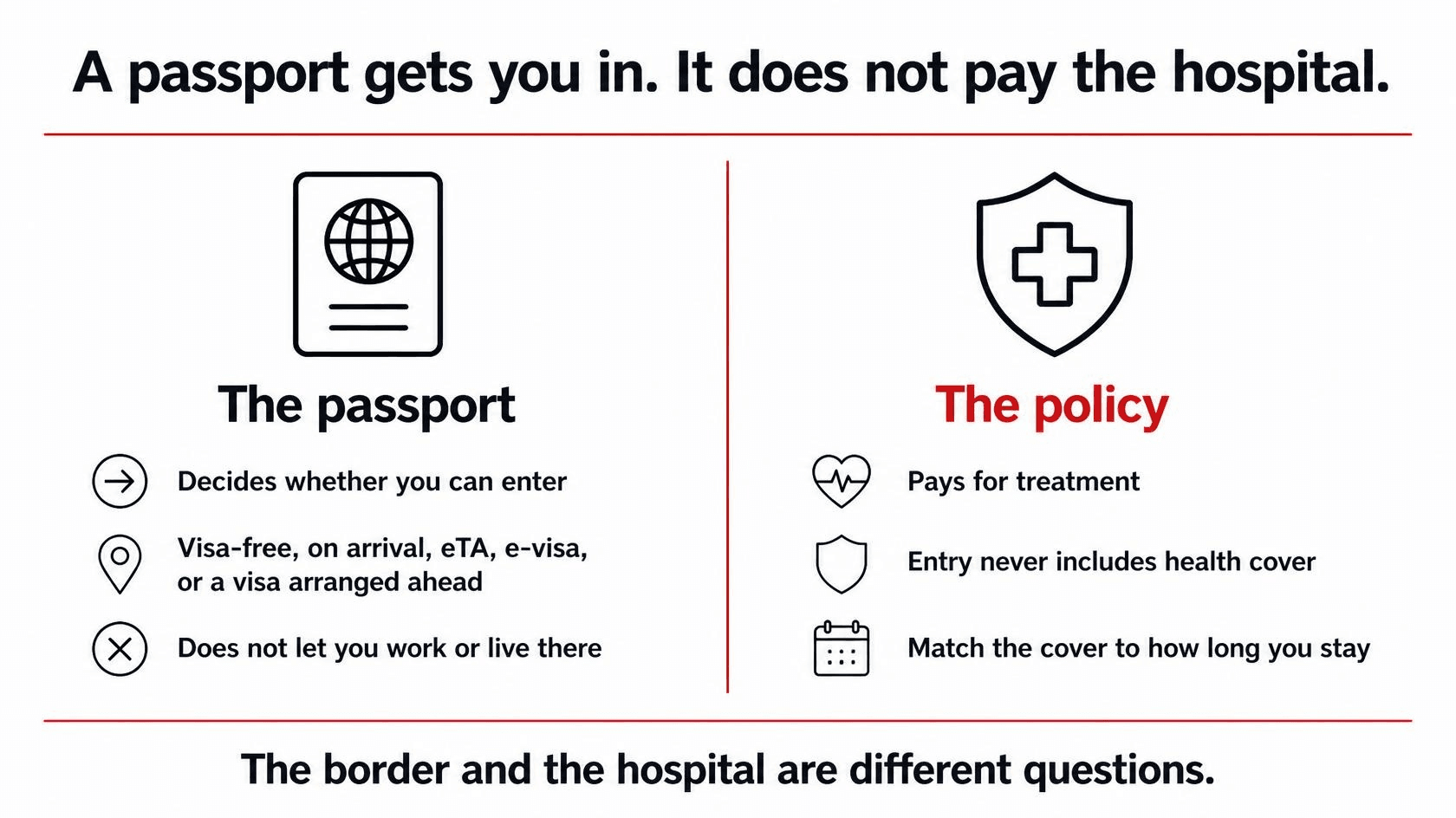
Cyprus runs a universal public system, GESY (the General Healthcare System), which since 2019 and 2020 has covered outpatient and then hospital care, and unusually contracts both state and private providers.
The catch for nomads: digital nomad permit-holders are not eligible for GESY, so private health insurance is mandatory and private care is what you will actually use.
Private hospitals to know
The private hospitals to know are the American Medical Center in Nicosia, and in Limassol the German Oncology Center and the Mediterranean Hospital of Cyprus. English is a non-issue: it is very widely spoken across the island, a legacy of British administration, and private hospitals routinely treat international patients in English.
Pharmacies and emergencies
Pharmacies are widespread, with a rotating on-duty rota covering nights and weekends, and pharmacists generally speak English. The emergency number is 112.
What you'd pay
Typical costs
| Private GP or consultation | €40 to €100 (~$45–115) (specialists higher) |
|---|---|
| Hospital, per day (basic, no treatment) | €150 to €200 (~$170–230) |
| Hospital, per day (private, with treatment) | €1,000 to €5,000 (~$1,100–5,700) |
| Advanced diagnostics (MRI or CT) | €300 to €800 (~$340–920) |
These are indicative private rates, not an official tariff. A routine consultation is affordable, but a serious private admission or surgery climbs into the thousands quickly, which is exactly why mandatory insurance is a feature, not a formality, here.
Entry & stay
Visa, residency & insurance
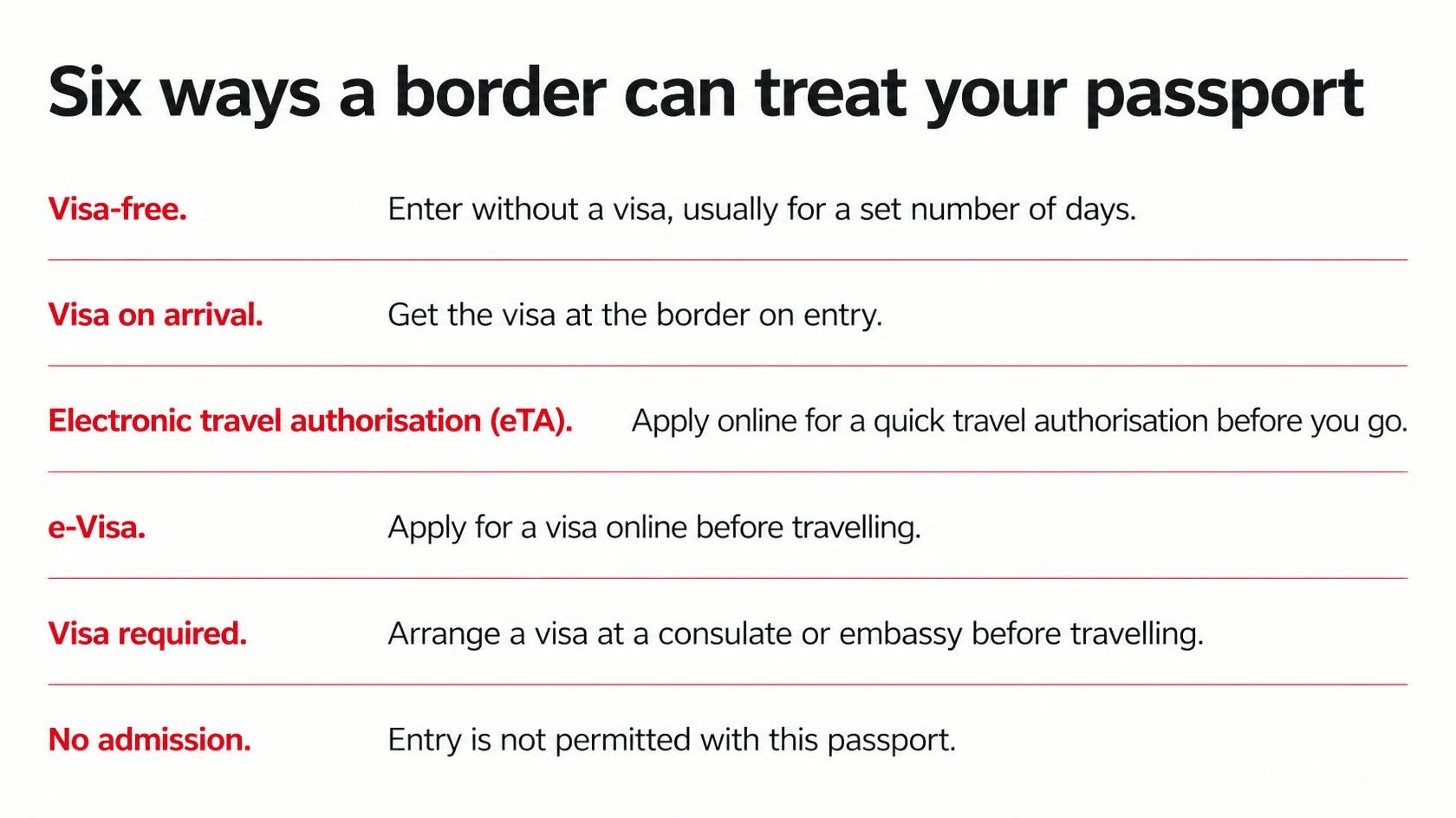
Cyprus is in the EU but not the Schengen Area, and that is the angle to understand.
US, British, Canadian and Australian visitors enter visa-free for 90 days in any 180, but, per the EU's own rules, time spent in Cyprus is counted separately and does not eat into your Schengen 90/180 allowance, effectively up to 90 bonus days for a Europe circuit. Cyprus is outside the new EES border system but is part of ETIAS, which is expected in late 2026; it is also working towards Schengen membership but has not joined yet. Travel insurance is not required for visa-free tourist entry.
Cyprus Digital Nomad Visa
To stay and work remotely, the Cyprus Digital Nomad Visa is for non-EU nationals working for an employer or clients abroad, on net income of at least €3,500 a month (plus 20% for a spouse and 15% per child). It runs one year and renews for up to two more, and the scheme is capped at 500 permits, so it can close once full. Insurance is central: because nomads cannot use GESY, you must hold private medical cover valid in Cyprus for the stay, with the standard Cyprus residence-permit minimum of €30,000. We lay out the visa on the Cyprus digital nomad visa page.
Who these rules apply to: Non-EU for DNV, Pink Slip, PR Category F. EU/EEA/Swiss use Yellow Slip (MEU1)
- Required
Schengen Short Stay C Visa (where required)
Up to 90 in 180Non-EU from visa-required countries for tourism/business/family up to 90 days. Passport 3+ months beyond stay, return ticket, accommodation, funds ~50 EUR/day, purpose. US/UK/CA/AU/NZ/JP visa-free. Cyprus not in Schengen so stays do not count against Schengen 90/180
- Required
Cyprus Digital Nomad Visa
1 year, renewable for 2 more (3 yrs total)Non-EU remote workers employed by or self-employed with foreign clients. Net monthly income min 3,500 EUR (~3,800 USD) +20% spouse +15% per child, clean record, accommodation. Cap previously 500 lifted; applications reopened March 2025
- Required
Pink Slip (Temporary Residence Permit)
1 year, annually renewable indefinitelyNon-EU retirees, FIPs, family of residents wanting >90 days without local work. Annual foreign income min 24,000 EUR (~26,000 USD) +20% spouse +15% per child to Cypriot bank, 12-month stamped rental, clean record. No right to work
- Required
Permanent Residency Category F
Indefinite (card renewed every 10 yrs); must visit at least every 2 yrsNon-EU with secured passive foreign income (pensions, dividends, rent, interest). Annual foreign income min 9,568 EUR (~10,300 USD) +4,613 EUR per dependent, 15,000-20,000 EUR Cyprus bank deposit, suitable accommodation. Official 1-yr processing, current 5-7 yr backlog
- Required
Permanent Residency Fast Track (Reg 6(2))
Indefinite; renew every 10 yrs; visit at least every 2Non-EU making qualifying investment (real estate or business). Investment 300,000 EUR + VAT in new residential, or commercial real estate, Cyprus company shares, or AIF; min secured annual foreign income ~50,000 EUR (+15,000 spouse, +10,000 per child); processing 2-4 months
- Required
Yellow Slip (MEU1)
Does not expire (registration of free-movement right)EU/EEA/Swiss citizens residing >3 months. Apply within 4 months of arrival; proof of employment, self-employment, sufficient resources, or study; accommodation; ID/passport; ~20 EUR fee. Paper MEU1 must become biometric card by 3 Aug 2026
Visa rules change often and depend on your nationality. Always confirm with the official immigration service or your nearest consulate before you apply.
Comparing plans for a long stay in Cyprus? Our guide to the best health insurance for a nomad visa sets out what to check first.
Interactive
Verified pricesWhat would it cost in Cyprus without insurance?
You pay, out of pocket
$2,300–$8,000
A serious private admission or common surgery.
Bars to scale. A flight home is in another league.
That is the bill you carry alone. Insurance exists for exactly this.
See what a match needsTypical private-care estimates for illustration, not a quote. Actual bills vary by hospital, city and severity.
Local risk notes
What to watch out for in Cyprus
- Extreme summer heat.
- Inland temperatures hit 40°C and above in July and August; heat and strong UV are the main real hazards, so plan around the midday sun.
- The divided island. Cyprus is split by a UN buffer zone (the Green Line). Crossing is routine for tourists, but legal, consular and insurance protections are weaker in the north, and some travel policies do not cover it, so check yours.
- Driving on the left. Cyprus drives on the left, a British legacy, which catches out visitors from mainland Europe and the Americas.
- Wildfires. Hot, dry summers bring a real wildfire risk, especially in rural and Troodos mountain areas; follow local instructions.
- Tap water. It is officially potable and meets EU standards in the cities, though much of it is desalinated, so it can taste flat or brackish and is hard; many people drink filtered or bottled by preference.
Common questions
Cyprus insurance FAQ
Yes, for non-EU nationals working for an employer or clients abroad, on net income of at least €3,500 a month. It runs one year, renewable for up to two more, and is capped at 500 permits.
Yes, and it matters more than usual: nomads cannot use the public GESY system, so private medical insurance valid in Cyprus is mandatory, with the standard Cyprus residence-permit minimum of €30,000.
No. Cyprus is in the EU but not Schengen, and the EU counts your Cyprus stay separately, so it does not use up your Schengen 90-in-180 allowance.
Net income of at least €3,500 a month, with 20% more for a spouse and 15% per child.
No. US, British, Canadian and Australian visitors enter visa-free for 90 days in any 180. ETIAS authorisation is coming in late 2026 but is not yet required.
Yes, and English-speaking. The public GESY system is universal but not open to nomads, so you use private hospitals like the American Medical Center in Nicosia or Limassol's private hospitals, which is why cover is required.
In the cities it is officially potable and meets EU standards, though much is desalinated and hard, so many people prefer filtered or bottled.
This page is the healthcare guide. It does not quote a premium and does not name an insurer. How we measure cost.
In 3 steps
- 01
Fill out
The form only asks what changes the plan.
- 02
We find your match
We compare the panel against your route, stay and visa.
- 03
Become a member
If the offer fits, you take it out directly.
Have a look if this page was not the question you came with.