Destination
Healthcare in Croatia, and what it costs without cover
One of the first EU nomad permits, tax-free nomad income, Schengen and the euro, and Adriatic living. The permit runs up to 18 months but isn't directly renewable, and earthquakes are the main natural hazard.
A short trip to Croatia can still use travel cover. Living there needs international health insurance that outlasts the visa.
- Best for Long-term nomads
- Best for Slowmads
- Best for Freelancers
- Best for Perpetual travelers
- Insurance required?
- Required for the nomad permit · valid travel or private health insurance covering Croatia for the whole stayinternational or Croatian policies accepted
- Recommended coverage
- A coverage level around €30,000 is commonly cited; check current wording with the Ministry of the Interior
- Emergency number
- 112194 for ambulance
- Healthcare quality
- Universal public system (HZZO) paired with private polyclinics; English in private clinics
The system
Healthcare system in Croatia
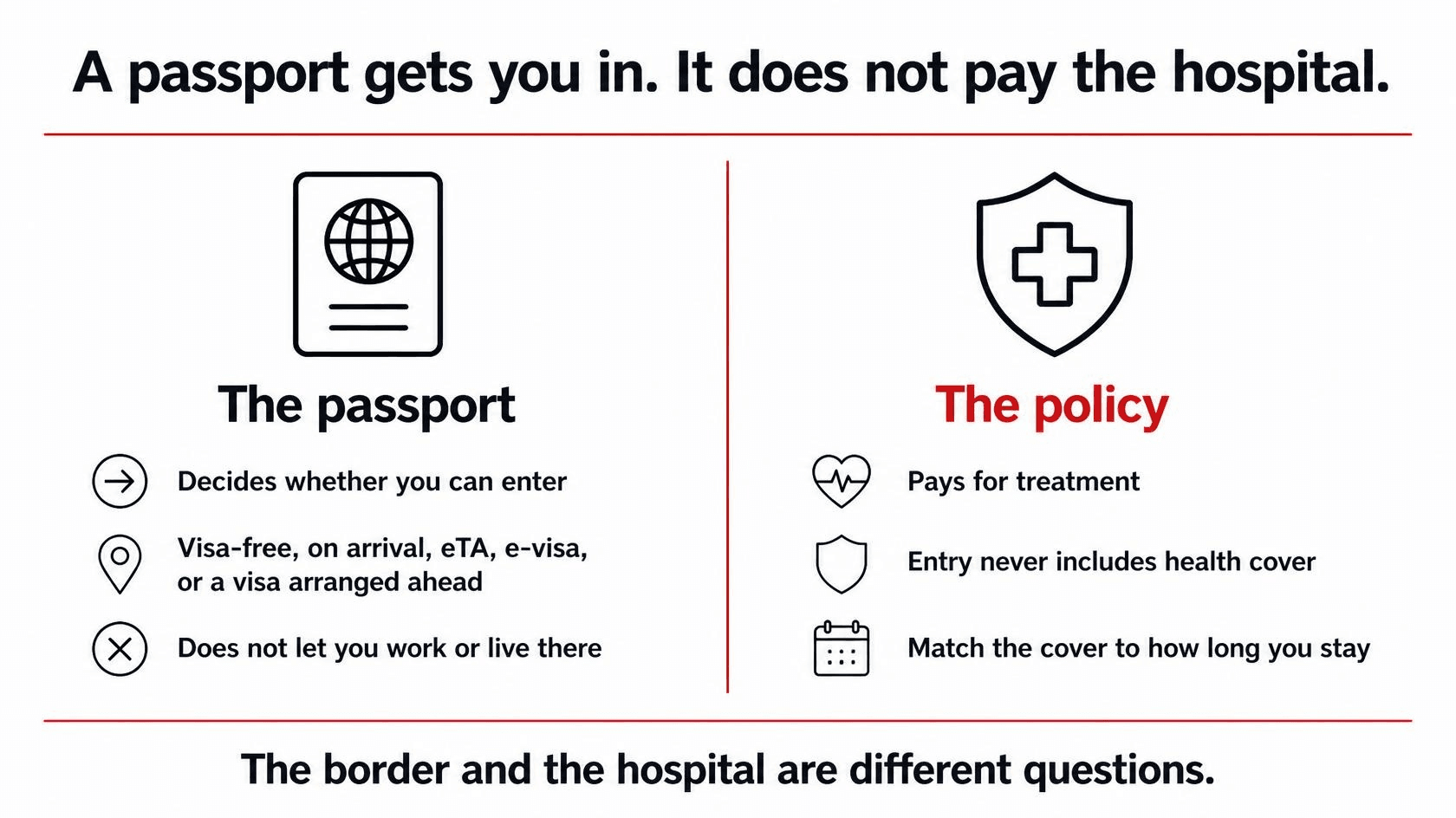
Croatia runs a universal public system through HZZO, the national health insurance fund, which residents pay into; care is then largely free at the point of use with small copays.
Public hospitals and polyclinics
The biggest public hospitals are the university centres KBC Zagreb, the largest in the country, and KBC Split on the coast. Nomads typically pair the public system for major treatment with private polyclinics, concentrated in Zagreb and along the coast, for fast specialist access.
Language and pharmacies
English is commonly spoken in private clinics and among younger doctors in the cities, less so in small-town public facilities. Pharmacies (ljekarna) are widespread, with a duty rota (dežurna ljekarna) for nights and holidays. The emergency number is the EU-wide 112, and 194 reaches an ambulance directly.
What you'd pay
Typical costs
| Private GP or short consultation | about €40 (~$45) |
|---|---|
| Private specialist consultation | €70 to €150 (~$80–170) |
| Public hospital copay (with state cover) | €17.70 a day (~$20), capped per illness |
| Major private surgery, such as a joint replacement | from about €7,000 (~$8,000) |
These are indicative figures. For a genuine emergency, the public hospital ER is the norm and is billed to your insurer, or to you if uninsured, where an admission or surgery runs into the thousands. The euro is the currency, so there is no conversion guesswork; the US-dollar figures are approximate conversions for comparison.
Entry & stay
Visa, residency & insurance
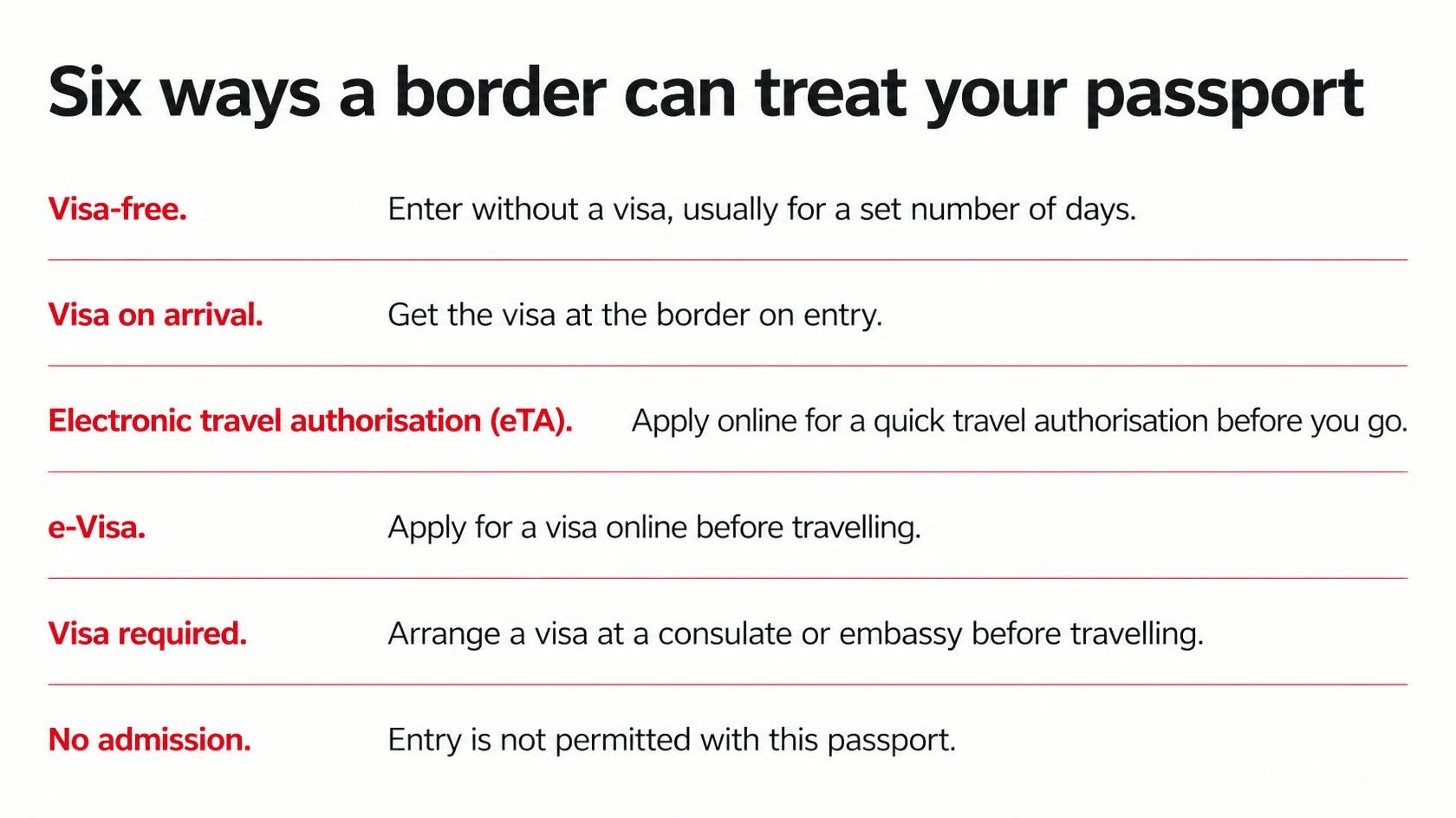
For short stays, Croatia has been in both the Schengen area and the Eurozone since January 2023, so US, British, Canadian and Australian visitors enter visa-free for 90 days in any 180-day period.
The EU's ETIAS authorisation is expected late in 2026 but is not yet required. Travel insurance is not a legal entry requirement for visa-free visitors.
Digital nomad permit
To stay and work remotely, Croatia's digital nomad permit, launched in January 2021, is for non-EU nationals working through technology for a company outside Croatia or their own foreign company, not for Croatian clients. It asks for income of about €3,620 a month (set at 2.5 times the average net salary and updated each year), with more per accompanying family member. It is granted for up to 18 months and, importantly, is not directly renewable: you must leave and spend time outside Croatia before reapplying. Insurance is required: valid travel or private health insurance covering Croatia for the whole stay, and both international and Croatian policies are accepted. A standout perk: digital-nomad income is not taxed in Croatia, though your home-country tax still applies. We lay out the permit on the Croatia digital nomad visa page.
Who these rules apply to: Non-EU/EEA/Swiss
- Required
Schengen Short-Stay Visa (Type C)
90 days in 180Non-EU tourists and short-term visitors. Valid passport, proof of funds, accommodation, return ticket
- Required
Digital Nomad Residence Permit
Up to 18 months (no consecutive renewal; 6-month wait before reapplying)Non-EU remote workers and self-employed serving non-Croatian clients. Income ~3,950 USD/month or savings 43,470 EUR for 12 months; remote employment or own company abroad; clean record; Croatian address
- Required
Temporary Residence Permit
Up to 1 year, renewableNon-EU for work, study, family reunification or research. Purpose-specific (contract, university admission, marriage cert), accommodation and support
- Required
Permanent Residence Permit
IndefiniteNon-EU after 5 years continuous legal temporary residence. 5 years legal residence, A2 Croatian, stable income, no record
Visa rules change often and depend on your nationality. Always confirm with the official immigration service or your nearest consulate before you apply.
If you will keep moving after Croatia, cover that keeps running between countries is explained in our guide to digital nomad insurance cover and limits.
Interactive
Verified pricesWhat would it cost in Croatia without insurance?
Gravel on a bend outside town. Road rash, a broken forearm, and a night or two before they discharge you.
| Ambulance | $43 |
| Emergency room, on arrival | $45–$170 |
| X-ray on the forearm | $51–$80 |
| Two nights on the ward | not verified here |
| At least | $139–$293 |
One step in this bill has no verified price for Croatia yet, so the real total sits above this one. We would rather leave the line blank than guess at it.
Priced as one lump instead of itemised, a serious admission in Croatia runs $3,500 to $13,000.
That is the bill you carry alone. Insurance exists for exactly this.
See what a match needsTypical private-care estimates for illustration, not a quote. Actual bills vary by hospital, city and severity.
Local risk notes
What to watch out for in Croatia
- Earthquakes.
- Croatia sits in a seismically active zone. Zagreb was hit by a magnitude-5.3 quake in March 2020, and a magnitude-6.4 quake near Petrinja in December 2020 killed several people. It is the main natural hazard.
- The coast and sea. Rocky seabeds mean sea urchins (water shoes help), summer jellyfish, and weever fish that sting if stepped on; narrow, busy coastal roads are a driving hazard in season.
- Summer heat and fires. Dalmatian heatwaves and seasonal coastal wildfires happen in summer.
- Legacy landmines. A small residual risk remains in parts of Karlovac and Lika-Senj counties, but only off marked paths in remote terrain; normal travel is unaffected, with demining targeted for completion by the end of 2026.
- Tap water. It is safe to drink nationwide; it is just hard in places, so expect limescale.
Common questions
Croatia insurance FAQ
Yes, a digital nomad residence permit, launched in January 2021, one of the first in the EU. It is for non-EU nationals working for a foreign company or their own company outside Croatia.
Yes, valid travel or private health insurance covering Croatia for the whole stay. Both international and Croatian policies are accepted. A coverage level around €30,000 is commonly cited, but check the current wording with the Ministry of the Interior.
About €3,620 a month, set at 2.5 times the average net salary and updated annually, with more required per accompanying family member.
Not directly. It runs up to 18 months, after which you must leave and spend time outside Croatia before you can reapply.
No. Digital-nomad income is exempt from Croatian income tax, though your home-country tax obligations still apply.
No. As a Schengen member, Croatia lets US, British, Canadian and Australian visitors stay 90 days in any 180. ETIAS is coming but not yet required.
Yes, it is safe to drink across Croatia; it is just hard in some areas.
This page is the healthcare guide. It does not quote a premium and does not name an insurer. How we measure cost.
In 3 steps
- 01
Fill out
The form only asks what changes the plan.
- 02
We find your match
We compare the panel against your route, stay and visa.
- 03
Become a member
If the offer fits, you take it out directly.
Have a look if this page was not the question you came with.