Destination
Healthcare in Italy, and what it costs without cover
A nomad visa live since 2024, Schengen entry, and good private hospitals in Milan and Rome. Note the confirmed €30,000 insurance floor on the visa, and plan around quakes near Naples and the summer heat.
A short trip to Italy can still use travel cover. Living there needs international health insurance that outlasts the visa.
- Best for Long-term nomads
- Best for Slowmads
- Best for Freelancers
- Best for Perpetual travelers
- Insurance required?
- Mandatoryhealth insurance valid in Italy, minimum €30,000 cover; inadequate cover is the top rejection reason
- Recommended coverage
- €30,000 minimum
- Emergency number
- 112
- Healthcare quality
- Universal public SSN plus good private hospitals; emergency care given to anyone regardless of status
The system
Healthcare system in Italy
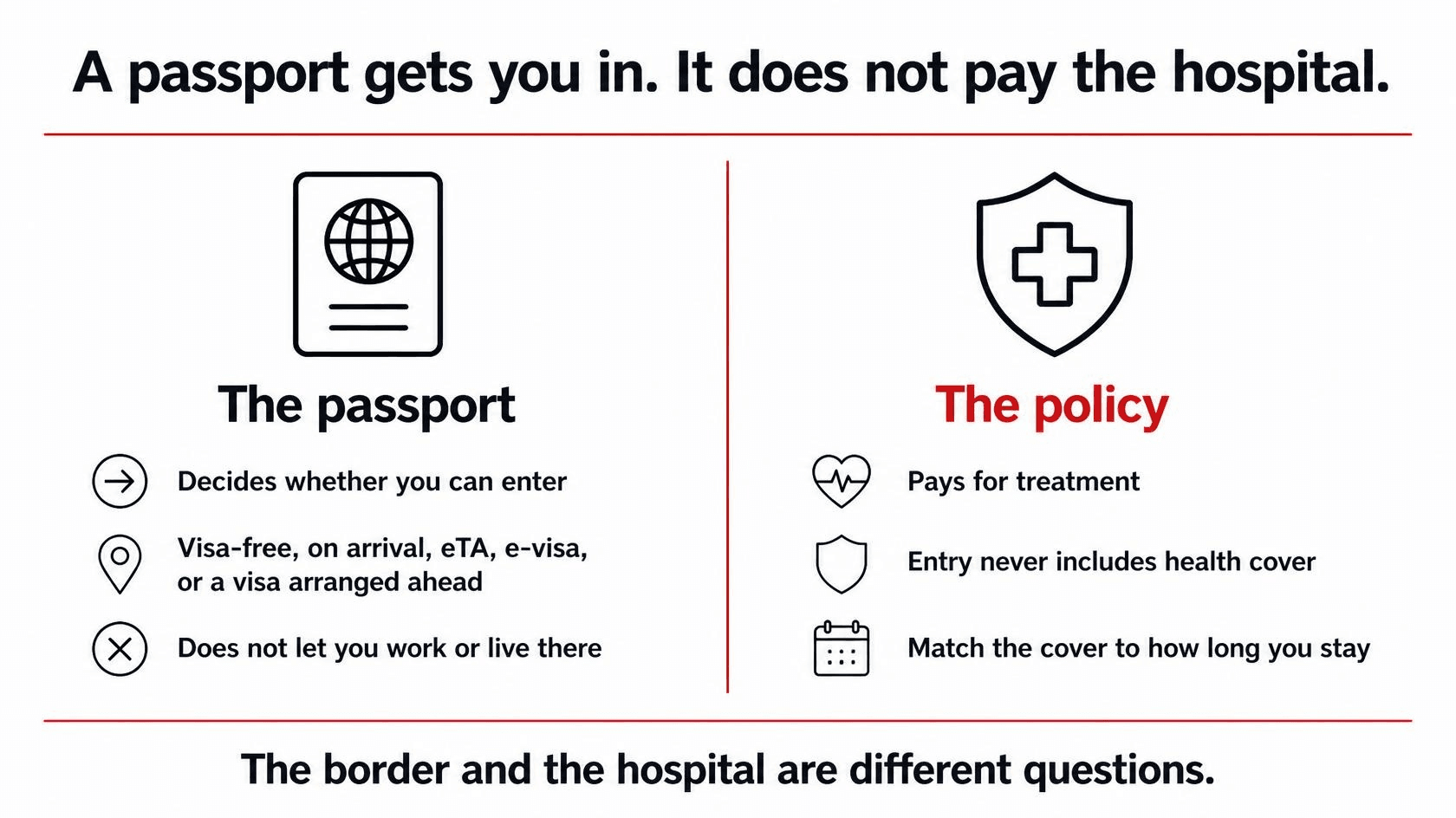
Italy's public system, the SSN, is universal and good for residents, but nomads on short stays generally are not covered and either self-pay or use private care, which has shorter waits and a more international feel.
One reassurance: emergency care in public hospitals is provided to anyone regardless of status. You may be billed afterwards if uninsured, but you will be treated.
Hospitals expats lean on
The hospitals expats lean on are in the big northern cities and Rome. Policlinico Gemelli in Rome is JCI-accredited and consistently top-ranked, and Humanitas and San Raffaele in Milan are major research hospitals with international patient services. English is more reliable in private facilities and big-city international offices than in routine public or GP settings.
Pharmacies and emergencies
Pharmacies (farmacia), marked by a green cross, handle minor ailments and advise widely, with a rotating after-hours "farmacia di turno". The emergency number is the EU-wide 112; the older 118 still reaches an ambulance directly.
What you'd pay
Typical costs
| Private GP or consultation | €50 to €100 (~$55–110) |
|---|---|
| Specialist first visit | €80 to €200 (~$90–230) |
| Public ER (pronto soccorso) | a non-urgent co-pay around €25 (~$30), with self-pay tests pushing it to €200 to €500 (~$230–570) |
| Private intensive care, per day | €2,000+ (~$2,300+), and a serious admission runs into the thousands to tens of thousands (~$3,000–40,000) |
These are indicative market rates, not an official tariff. The point for cover: genuinely urgent cases are treated in public hospitals regardless, but a planned private admission, or an uninsured bill after the fact, is a real cost, and a medical flight home far more.
Entry & stay
Visa, residency & insurance
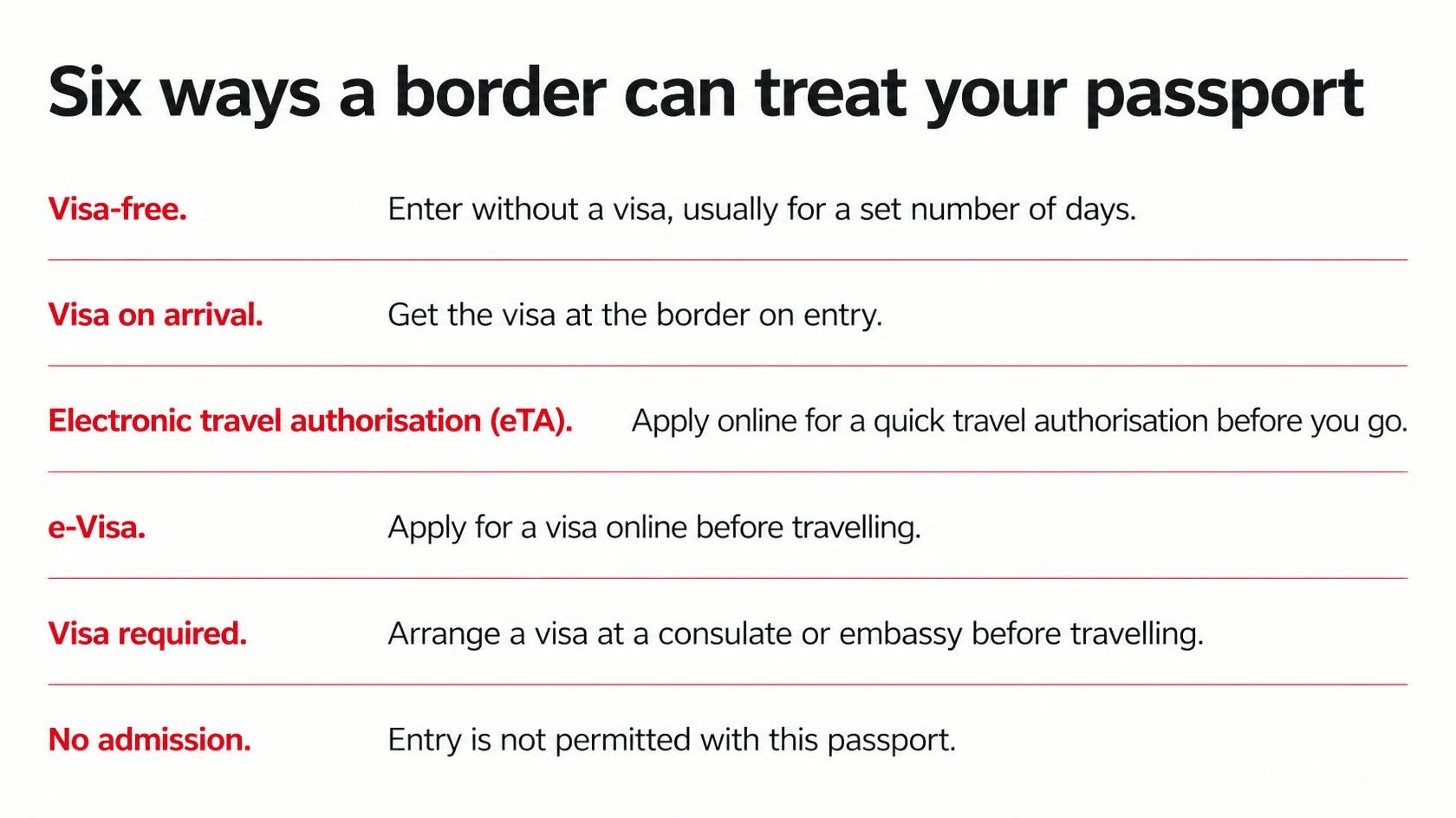
For short stays, Italy is in Schengen, so US, British, Canadian and Australian visitors enter visa-free for 90 days in any 180-day period across the Schengen area.
The EU's ETIAS authorisation is expected late in 2026 but is not yet required. Travel insurance is not a legal entry requirement for visa-free visitors.
Digital Nomad and Remote Worker Visa
To stay and work remotely, Italy's Digital Nomad and Remote Worker Visa has been live since its implementing decree took effect in April 2024. It is aimed at "highly skilled" workers (a relevant degree or qualification) with at least six months of prior remote-work experience, earning income from outside Italy of at least about €24,800 a year (set as three times the healthcare-exemption threshold; you will also see €28,000 quoted as a round-up). The insurance condition is concrete and strict: you need health insurance valid in Italy for the whole stay, with a minimum of €30,000 in cover, and inadequate cover is the single most common reason applications are refused. It runs one year and is renewable. We break it down on the Italy digital nomad visa page.
Who these rules apply to: Non-EU and non-EEA (EU/EEA/Swiss have free movement and SSN)
- Required
Schengen Short Stay (Type C)
90 days in 180Tourists, business visitors, short-term remote workers from non-visa-exempt non-EU. Valid passport, proof of funds, accommodation, return ticket
- Required
Self-Employment Visa (Lavoro Autonomo)
2 years initial, renewableNon-EU freelancers, entrepreneurs and independent professionals (capped Decreto Flussi). Min annual income ~8,500 EUR, nulla osta, accommodation, qualifications, business plan
- Required
Digital Nomad / Remote Worker Visa
1 year, renewableNon-EU highly skilled remote workers and freelancers for foreign clients/employers (launched April 2024). Highly skilled status, min annual income ~28,000 EUR (3x exemption), 6+ months remote work experience, accommodation, clean record
- Required
Elective Residence Visa (ERV)
1 year initial permit, renewable; long-term residency pathNon-EU retirees and financially independent with passive income; no work. Passive income ~32,000 EUR/year single (higher for couples and dependents), accommodation
- Required
Investor (Golden) Visa
2 years initial, renewable 3 years; PR pathNon-EU investors in Italian government bonds, companies, startups or philanthropy. Investment 250,000 EUR (startup) to 2M EUR (gov bonds); 1M EUR established cos or philanthropy; min annual income ~8,500 EUR
Visa rules change often and depend on your nationality. Always confirm with the official immigration service or your nearest consulate before you apply.
If you will keep moving after Italy, cover that keeps running between countries is explained in our guide to digital nomad insurance cover and limits.
Interactive
Verified pricesWhat would it cost in Italy without insurance?
Gravel on a bend outside town. Road rash, a broken forearm, and a night or two before they discharge you.
| Ambulance | $91–$114 |
| Emergency room, on arrival | $140–$345 |
| X-ray on the forearm | $28 |
| Two nights on the ward | $1,366 |
| You pay, out of pocket | $1,625–$1,853 |
Priced as one lump instead of itemised, a serious admission in Italy runs $3,500 to $11,500.
That is the bill you carry alone. Insurance exists for exactly this.
See what a match needsTypical private-care estimates for illustration, not a quote. Actual bills vary by hospital, city and severity.
Local risk notes
What to watch out for in Italy
- Earthquakes and volcanic unrest.
- Central and southern Italy are seismically active. The Campi Flegrei caldera west of Naples is in a prolonged period of ground uplift and earthquake swarms, with the strongest tremors in decades during 2024 and 2025. Follow local guidance if you base yourself near Naples.
- Summer heat. Heatwaves are a recurring summer health concern, and Italy's health ministry runs a city-by-city heat-alert system.
- Petty crime. Pickpocketing and bag-snatching are common in tourist hubs and on public transport; the UK flags a high risk of theft on Rome's transport. Violent crime is comparatively rare.
- Roads. City traffic and theft from parked or rental cars are the everyday risks; confirm scooter cover if you ride.
- Tap water. Tap water is safe across Italy unless a tap is marked "acqua non potabile" (not drinkable).
Common questions
Italy insurance FAQ
Yes, and it has been live since the implementing decree took effect in April 2024. It is for "highly skilled" remote workers with at least six months of experience, earning from outside Italy.
Health insurance valid in Italy for the whole stay, with a minimum of €30,000 in cover. Inadequate cover is the most common reason applications are rejected, so do not cut it fine.
Income from outside Italy of at least about €24,800 a year, set as three times the healthcare-exemption threshold. You will also see €28,000 quoted, which is a round-up, so check your consulate's figure.
No. As a Schengen member, Italy lets US, British, Canadian and Australian visitors stay 90 days in any 180. ETIAS is coming but not yet required.
Yes. The public SSN is universal, and emergency care is provided to anyone; private hospitals like Gemelli in Rome and Humanitas and San Raffaele in Milan are excellent. English is more reliable in private settings.
Yes. Public hospitals treat genuine emergencies regardless of status; you may be billed afterwards if uninsured, which is why proper cover matters.
Yes, across Italy, unless a tap is specifically marked "acqua non potabile".
This page is the healthcare guide. It does not quote a premium and does not name an insurer. How we measure cost.
In 3 steps
- 01
Fill out
The form only asks what changes the plan.
- 02
We find your match
We compare the panel against your route, stay and visa.
- 03
Become a member
If the offer fits, you take it out directly.
Have a look if this page was not the question you came with.