Destination
Healthcare in Malta, and what it costs without cover
An English-speaking EU island with a nomad visa, Schengen access and 3,000 hours of sun. The permit wants comprehensive health cover for Malta, pre-paid for a year, not a travel policy.
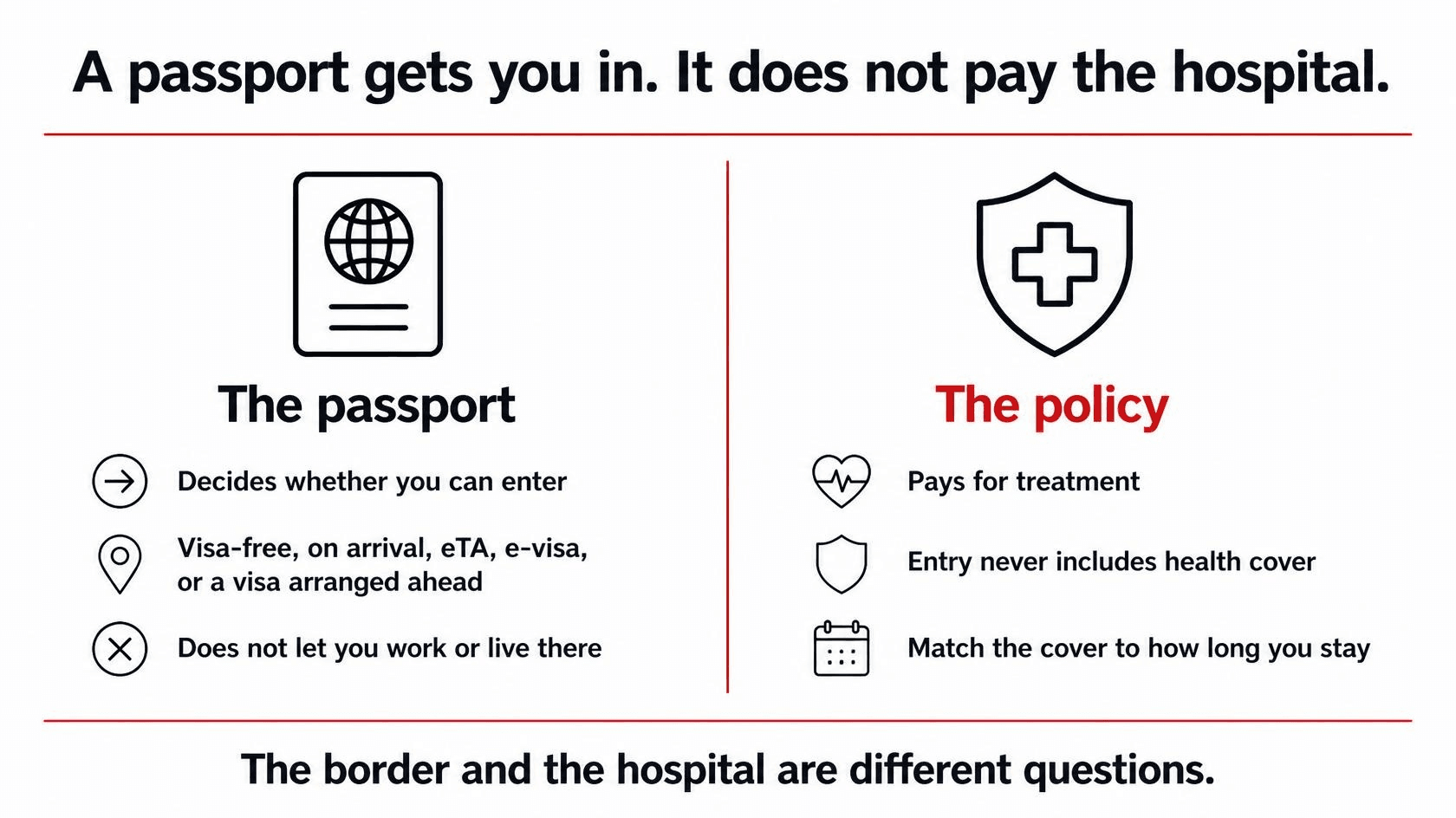
A short trip to Malta can still use travel cover. Living there needs international health insurance that outlasts the visa.
- Best for Long-term nomads
- Best for Slowmads
- Best for Freelancers
- Best for Perpetual travelers
- Insurance required?
- Nomad Residence Permit demands comprehensive health cover for Malta, pre-paid for a year; travel insurance explicitly rejected
- Emergency number
- 112
- Healthcare quality
- Solid, English-language; private care widely used
The system
Healthcare system in Malta
The standout is language: English is an official language of Malta, spoken by most of the population and used throughout healthcare, with records kept in English.
For an English-speaking nomad that removes the friction you hit almost everywhere else in the Mediterranean.
Hospitals and pharmacies
The main public hospital is Mater Dei in Msida, a large teaching hospital with a 24-hour emergency department. On the private side, St James Hospital is the largest, running walk-in immediate-care units, alongside Saint Thomas Hospital and DaVinci Health. Pharmacies are everywhere, with a duty rota covering Sundays and public holidays. The emergency number is 112.
What you'd pay
Typical costs
| Private GP or consultation | €10 to €30 (~$10–35) |
|---|---|
| Specialist consultation | €50 to €120 (~$55–140) |
| Minor surgery (private) | €100 to €500 (~$110–570) |
| Major surgery or serious admission (private) | from about €3,000 (~$3,400) |
Malta's private hospitals quote per case rather than publishing fixed tariffs, so treat these as indicative ranges. A routine visit is cheap, but a serious private admission climbs into the thousands, which is exactly the gap the permit's insurance rule is meant to close.
Entry & stay
Visa, residency & insurance
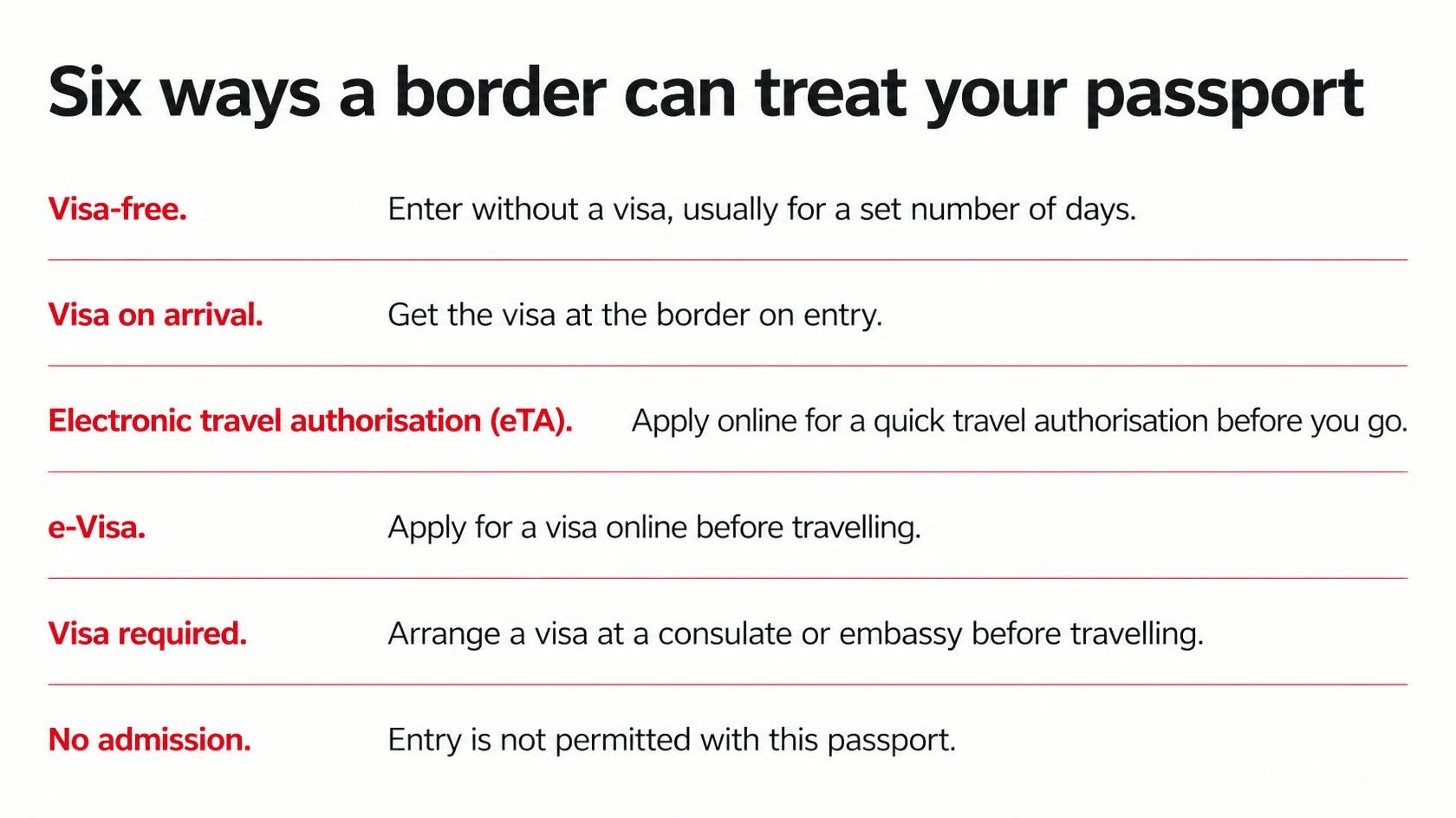
For short stays, Malta is in Schengen, so US, British, Canadian and Australian visitors enter visa-free for 90 days in any 180-day period.
The EU's ETIAS authorisation is expected late in 2026 but is not yet required. Travel insurance is not a legal entry requirement for visa-free visitors.
Nomad Residence Permit
To stay and work remotely, Malta's Nomad Residence Permit, run by the Residency Malta Agency, is for non-EU nationals working remotely for a foreign employer, foreign clients, or their own foreign company; you cannot work for Maltese companies. Income must be at least €42,000 gross a year (raised from €32,400 for applications from April 2024). The permit runs one year and renews up to three times, to a maximum of four years. The insurance condition is strict and specific: you need comprehensive health insurance covering medical care and hospitalisation in Malta for the full permit period, pre-paid for a year, and travel insurance is explicitly not accepted. A foreign policy works only if it demonstrably covers Malta. We lay out the visa on the Malta Nomad Residence Permit page.
Who these rules apply to: Non-EU/EEA/Swiss for NRP, MPRP, KEI. Schengen rules for non-visa-exempt short stays
- Required
Schengen Short Stay (Type C) / Visa-Free + ETIAS
90 in 180Tourists and short-term business visitors. Passport 3+ months beyond stay, proof of funds, return ticket, accommodation; ETIAS from 2026 for visa-exempt non-EU
- Required
Key Employee Initiative (KEI)
1 year, renewable up to 3 yearsNon-EU highly qualified managerial/technical hires by Maltese employers. Gross salary min 45,000 EUR (effective Aug 2025), qualifications, employer declaration, 2-week job advert, fast-track single-permit
- Required
EU Blue Card
Up to 2 years, renewable; long-term EU residence pathHighly qualified non-EU professionals with degree or 5+ years experience. Binding 6+ month job offer, salary 1.5x Maltese average gross, recognised higher ed
- Required
Nomad Residence Permit
1 year, renewable up to 4 years totalNon-EU remote workers, freelancers, contractors for foreign employers/clients. Gross annual income min 42,000 EUR (~46,000 USD), remote-work proof, clean record, rental or property in Malta, via Residency Malta Agency
- Required
Malta Permanent Residence Programme (MPRP)
Permanent residency, no minimum stayNon-EU/EEA/Swiss seeking EU PR by investment. Assets 500,000 EUR (incl 150,000 liquid) or 650,000 EUR (incl 75,000 liquid); property purchase from 375,000 EUR or rent from 14,000 EUR/yr; government contribution; 2,000 EUR philanthropic donation
- Required
Long Stay National Visa (Type D)
91 to 365 daysNon-EU for study, family reunification, work pending RP. Purpose-specific docs, proof of funds, accommodation, via Central Visa Unit (Identita)
Visa rules change often and depend on your nationality. Always confirm with the official immigration service or your nearest consulate before you apply.
Once a stay outruns a travel policy's trip limit, our guide to when travel insurance stops and nomad health insurance starts explains which kind of cover fits.
Interactive
Verified pricesWhat would it cost in Malta without insurance?
You pay, out of pocket
$3,400–$13,000
A serious private admission or common surgery.
Bars to scale. A flight home is in another league.
That is the bill you carry alone. Insurance exists for exactly this.
See what a match needsTypical private-care estimates for illustration, not a quote. Actual bills vary by hospital, city and severity.
Local risk notes
What to watch out for in Malta
- Summer heat.
- July and August are hot, and heatwaves driven by hot African winds regularly push past 40°C, sometimes for days. Plan around the midday sun.
- Driving on the left. A British legacy: Malta drives on the left, and the roads are narrow, congested and fast, which catches out many visitors.
- A crowded island. Malta is one of the EU's most densely populated countries, so expect heavy summer traffic and stretched services.
- Sea and jellyfish. The Mauve Stinger jellyfish is common from spring into autumn, peaking around June; locals check beach jellyfish status before swimming.
- Tap water. It is EU-compliant and safe, but around 60% is desalinated, so it can taste salty or chlorinated and many people drink bottled or filtered by preference.
Common questions
Malta insurance FAQ
Yes, the Nomad Residence Permit, for non-EU nationals working remotely for a foreign employer, clients or their own foreign company. It needs income of at least €42,000 gross a year and runs one year, renewable up to four years total.
Comprehensive health insurance covering treatment and hospitalisation in Malta for the full permit period, pre-paid for a year. Travel insurance is explicitly not accepted, and a foreign policy must demonstrably cover Malta.
The rule specifies comprehensive cover but does not publish a fixed minimum sum. The €30,000 figure you see elsewhere is the separate Schengen short-stay visa rule, not this permit.
No. As a Schengen member, Malta lets US, British, Canadian and Australian visitors stay 90 days in any 180. ETIAS is coming but not yet required.
Yes. English is an official language and the working language of healthcare, and care is solid: Mater Dei is the main public hospital and St James the largest private one. Most nomads use private care.
It is EU-compliant and safe to drink, though much of it is desalinated, so it can taste salty and many people prefer bottled or filtered.
This page is the healthcare guide. It does not quote a premium and does not name an insurer. How we measure cost.
In 3 steps
- 01
Fill out
The form only asks what changes the plan.
- 02
We find your match
We compare the panel against your route, stay and visa.
- 03
Become a member
If the offer fits, you take it out directly.
Have a look if this page was not the question you came with.