
Destination
Healthcare in Romania, and what it costs without cover
A genuine EU nomad visa with fast internet and low costs, now inside full Schengen. It comes with a steep income bar and a mandatory €30,000 health insurance policy for the entire stay.
A short trip to Romania can still use travel cover. Living there needs international health insurance that outlasts the visa.
- Best for Long-term nomads
- Best for Slowmads
- Best for Freelancers
- Best for Perpetual travelers
- Insurance required?
- Mandatory: private policy covering at least €30,000 for the whole stay
- Recommended coverage
- At least €30,000 in medical cover for the nomad visa
- Emergency number
- 112
- Healthcare quality
- Good, cheap private city networks; weaker public system
The system
Healthcare system in Romania
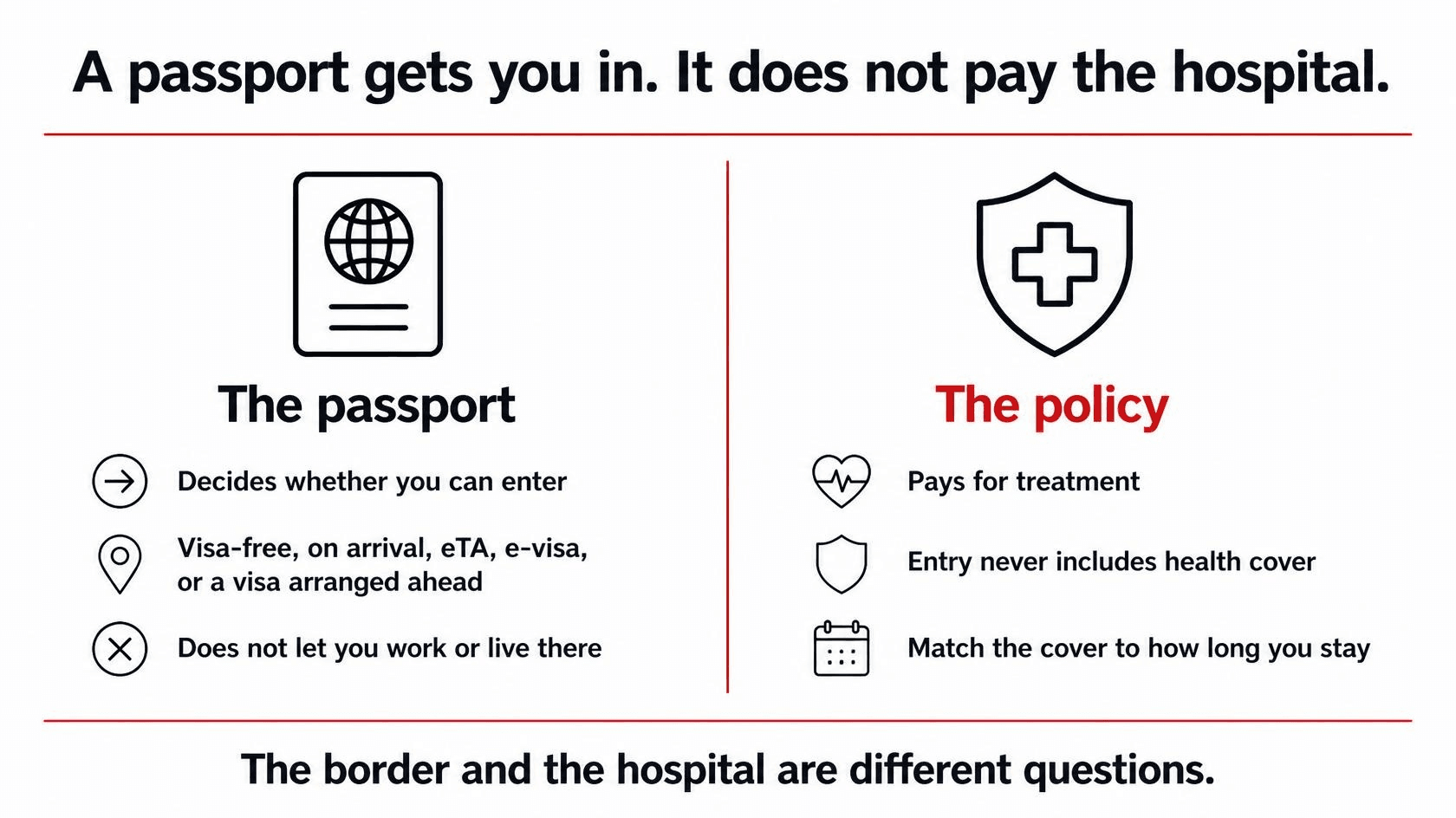
Romania has a universal public system funded through CNAS, the national health insurance house, but it is underfunded and uneven, and most foreigners in the cities skip it for anything non-urgent.
Private networks in the cities
The private sector is where nomads actually go: large networks such as Regina Maria, MedLife, Sanador, Medicover and Monza run modern hospitals and clinics in Bucharest, Cluj-Napoca, Timisoara and other cities, with same-week specialist access and quality that holds up well by EU standards. For a major emergency, the state system still matters: Bucharest's Floreasca Clinical Emergency Hospital is the country's main trauma centre, and serious cases often go there regardless of insurance.
English, pharmacies and 112
English is widely spoken by younger doctors and across the private networks, less so in small-town public clinics, so for complex care it pays to stay in a city. Pharmacies (farmacie) are everywhere, with 24-hour ones in larger towns, and many common medicines are sold over the counter. The emergency number is the EU-wide 112, which reaches ambulance, police and fire with operators who handle English. Romania is on the European continent with good road links, so this is not an evacuation-dependent island: the realistic worry is the bill for a private admission or a repatriation home, which is exactly what your policy needs to cover.
What you'd pay
Typical costs
| Private GP or short consultation | about €20 to €50 (~$25–55) |
|---|---|
| Private specialist consultation | about €40 to €80 (~$45–90) |
| Outpatient emergency or urgent-care visit | roughly €40 to €120 (~$45–140) |
| Required nomad-visa health insurance | about €200 to €600 (~$230–690) a year |
These are indicative figures in a country that uses the Romanian leu (RON), not the euro, so day-to-day prices are quoted in lei and the euro amounts above will drift with the exchange rate. Private hospital admission runs into the hundreds of euros a day before any surgery, which is the gap a proper policy is meant to close. For the visa itself, ordinary travel insurance is not enough: you need a health policy that meets the €30,000 floor for the full stay.
Entry & stay
Visa, residency & insurance
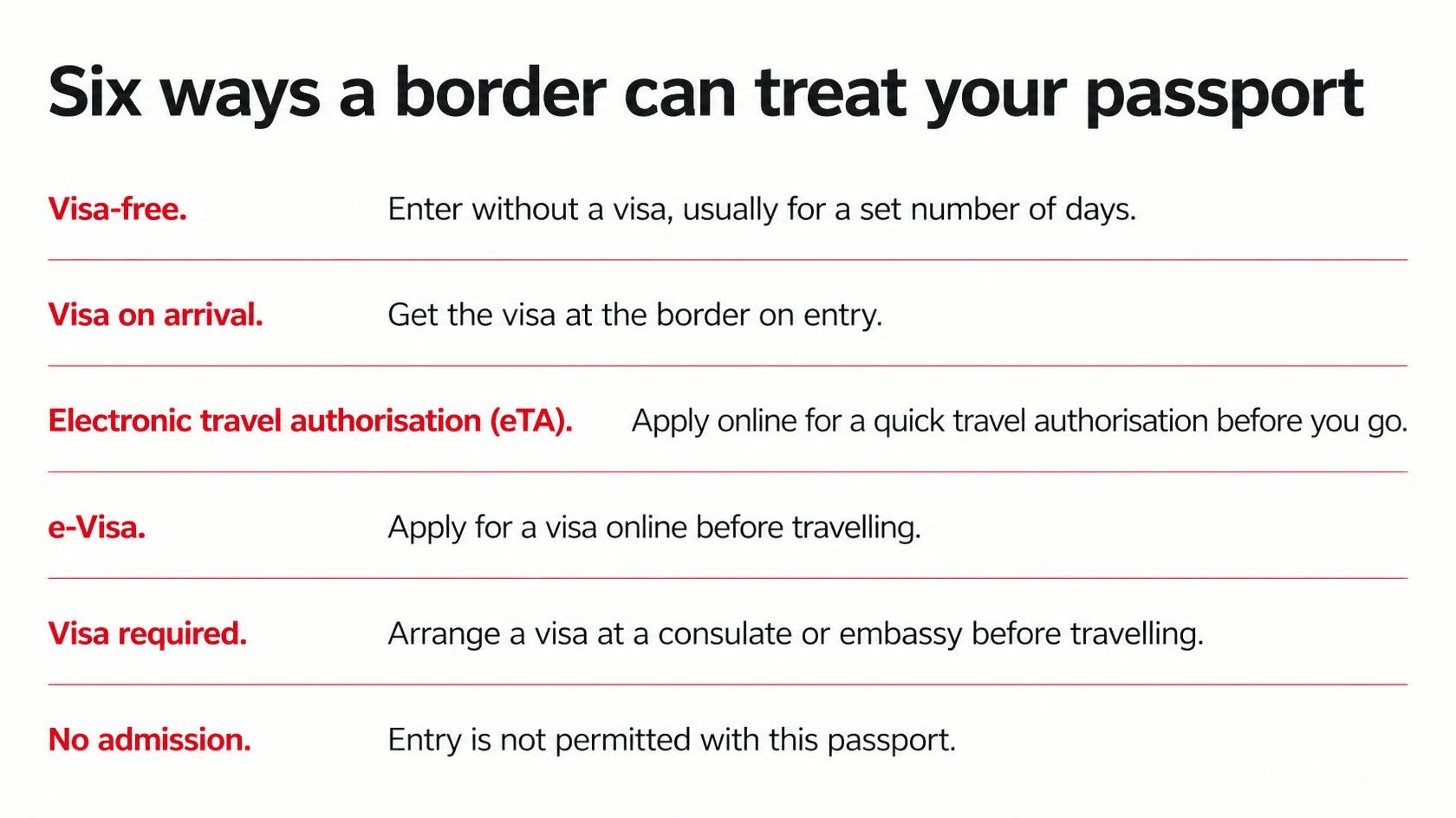
For short visits, US, British, Canadian and Australian passport holders enter Romania visa-free for 90 days in any 180-day period.
Full Schengen since 2025
Since January 2025 Romania is a full Schengen member (air and sea borders opened in March 2024, land borders in January 2025), so those 90 days count against the wider Schengen allowance. The EU's ETIAS authorisation is expected but is not yet required as of mid-2026, and there is no insurance mandate to enter as a tourist, though going uninsured anywhere is a poor bet.
Nomad visa and the €30,000 rule
To stay and work remotely, Romania's digital nomad visa (introduced in 2021) is for non-EU nationals who work for a company or clients based outside Romania. The income bar is high: you must show earnings of at least three times the Romanian average gross monthly salary for the six months before applying, which in practice has worked out to roughly €4,000 to €5,600 a month as the average wage has risen, so check the current figure before you apply. Health insurance is compulsory: a private policy valid for the entire stay covering at least €30,000 in medical costs, a figure stated in the Ministry of Foreign Affairs visa documentation. The long-stay visa leads to a residence permit, renewable to a total of around three years. Full details are on the Romania digital nomad visa page.
Who these rules apply to: Non-EU/EEA/Swiss >90 days; all non-visa-exempt for any stay
- Recommended
Schengen Short Stay (visa-exempt)
90 in 180 across SchengenUS/UK/CA/AU/JP/EU/EEA/Swiss for tourism, business, remote-work visits. Passport 3 months beyond stay (issued within 10 yrs), funds, return ticket, accommodation; ETIAS for visa-exempt non-EU from late 2026
- Required
Schengen Short Stay Visa (C visa)
Up to 90 in 180Nationals requiring visa for Schengen (e.g. India, China, most African). Romanian embassy/consulate application, purpose, funds (~50 EUR/day), accommodation, return
- Optional
Long Stay Visa for Employment (D/AM1 and D/AM2)
Initial 12 months, convertible to RP tied to employmentNon-EU with Romanian job (D/AM1 highly qualified no quota; D/AM2 general labour with quota). Work permit by IGI, contract meeting Romanian min wage (RON 4,325 gross from July 2026), apply at embassy within 60 days of permit
- Required
Digital Nomad Visa (D/AS)
Initial 12 months, renewable 6-12 month incrementsNon-EU remote employees of foreign companies or owners of foreign companies operating 3+ years. Income 3x Romania average gross (~3,500 USD/month in 2026) past 6 months; clean record; accommodation; 120 EUR fee
- Required
Long Stay Visa for Economic Activities (D/AE) / Micro-enterprise
Initial 12 months, then renewable RPNon-EU entrepreneurs founding or holding shares in Romanian SRL micro-enterprise (1-3% turnover tax under 500k EUR). Romanian company registration, business plan, min share capital, funds, accommodation
- Required
Residence Permit (Permis de sedere)
6 months to 5 years per category, renewable; PR after 5 yrs continuousHolders of any D long-stay visa extending beyond visa validity. Apply at IGI within D visa validity, ongoing-purpose proof, accommodation, biometrics
Visa rules change often and depend on your nationality. Always confirm with the official immigration service or your nearest consulate before you apply.
Once a stay outruns a travel policy's trip limit, our guide to nomad health insurance vs travel insurance explains which kind of cover fits.
Interactive
Verified pricesWhat would it cost in Romania without insurance?
The textbook traveller emergency. It cannot wait, it cannot be treated at a pharmacy, and it ends in an operating theatre.
| Emergency room, on arrival | $430–$1,075 |
| A scan to confirm it | $107–$213 |
| The operation | $3,250 |
| Three nights recovering | not verified here |
| At least | $3,787–$4,538 |
One step in this bill has no verified price for Romania yet, so the real total sits above this one. We would rather leave the line blank than guess at it.
Priced as one lump instead of itemised, a serious admission in Romania runs $1,500 to $7,000.
That is the bill you carry alone. Insurance exists for exactly this.
See what a match needsTypical private-care estimates for illustration, not a quote. Actual bills vary by hospital, city and severity.
Local risk notes
What to watch out for in Romania
- Stray dogs and rabies.
- Romania still has free-roaming dogs and confirmed rabies in wildlife, so a bite means prompt medical attention and post-exposure shots.
- Tick-borne encephalitis and Lyme. Ticks are active April to October in forests and grassland, including Transylvania and the Carpathians; TBE is a serious brain infection and a vaccine exists.
- Driving. Romania has some of the EU's highest road-death rates, with aggressive overtaking, horse-drawn carts on rural roads, and a zero blood-alcohol limit for drivers.
- Tap water. It is generally safe to drink in the main cities, but locals often filter or buy bottled, and mountain or village water should be treated.
- Petty theft and scams. Pickpocketing on crowded transport, taxi overcharging and ATM card-skimming are the common nuisances rather than violent crime, which is low.
Common questions
Romania insurance FAQ
Yes. Romania introduced a dedicated digital nomad visa in 2021 for non-EU nationals who work remotely for companies or clients based outside Romania.
Yes, and it is strict. You need private health insurance valid for the entire stay covering at least €30,000 in medical costs; plain travel insurance is not accepted.
At least three times the Romanian average gross monthly salary for the six months before applying, which has recently meant roughly €4,000 to €5,600 a month. Confirm the current figure, as it tracks the rising average wage.
No. They can enter visa-free for 90 days in any 180-day period. As Romania is now in full Schengen, that time counts against the wider Schengen limit.
In the cities, yes. Private networks like Regina Maria, MedLife and Sanador offer fast, English-speaking care at low cost; the public system is weaker, so most foreigners use private clinics.
It is 112, the EU-wide line for ambulance, police and fire, and operators can typically assist in English.
This page is the healthcare guide. It does not quote a premium and does not name an insurer. How we measure cost.
In 3 steps
- 01
Fill out
The form only asks what changes the plan.
- 02
We find your match
We compare the panel against your route, stay and visa.
- 03
Become a member
If the offer fits, you take it out directly.
Have a look if this page was not the question you came with.