
Destination
Healthcare in Philippines, and what it costs without cover
English everywhere, tourist stays that stretch to 36 months, and JCI-accredited private hospitals in Manila. The nomad visa is still finding its feet, and dengue, typhoons and the far-south advisory are the things to plan around.
A short trip to Philippines can still use travel cover. Living there needs international health insurance that outlasts the visa.
- Best for Long-term nomads
- Best for Slowmads
- Best for Freelancers
- Best for Perpetual travelers
- Insurance required?
- Required for the nomad visa (EO 86); close to essential in practice for tourists
- Recommended coverage
- Serious private admission or surgery runs $9,000 to $18,000+
- Emergency number
- 911
- Healthcare quality
- Good English-speaking private sector; JCI-accredited Manila hospitals; deposit often required
The system
Healthcare system in Philippines
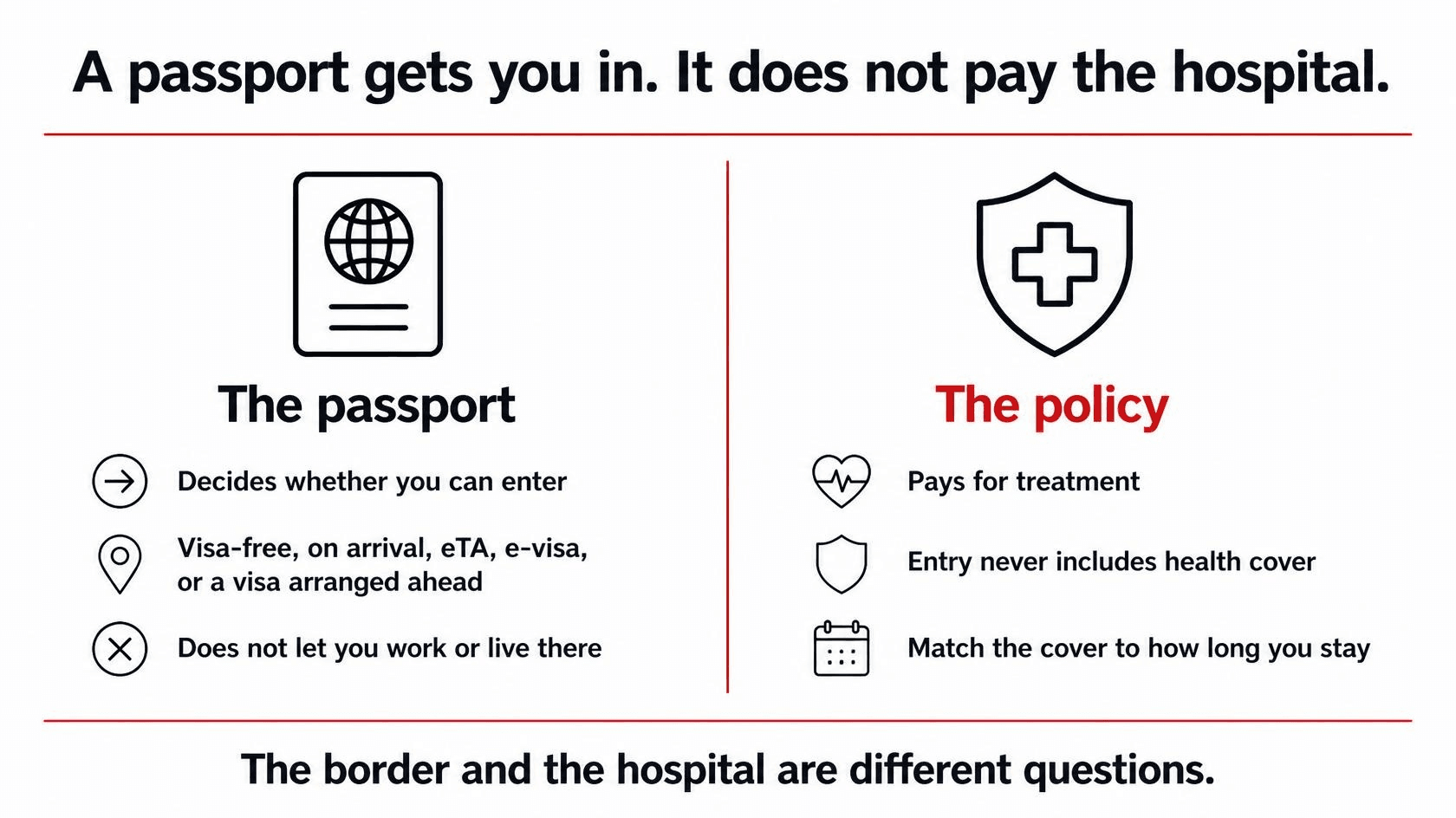
The big advantage here is language: English is an official language and the language of medical training, so care almost never gets lost in translation, which is rare in Asia.
Insurance or deposit up front
Public hospitals are cheap but crowded and stretched, so nomads use the private sector. One thing to know up front: private hospitals typically want proof of insurance or an upfront deposit before they will treat you, so arriving uninsured can mean paying cash before care.
JCI-accredited Manila hospitals
The private hospitals to know are in Metro Manila. St. Luke's Medical Center was the first hospital in the country to earn Joint Commission International accreditation, and Makati Medical Center, The Medical City and Asian Hospital are in the same tier. Outside the big cities, quality drops, and for anything serious people travel to Manila or Cebu.
Pharmacies and emergencies
Pharmacies are everywhere, led by the Mercury Drug chain. The national emergency number is 911, relaunched as a single unified hotline in 2025.
What you'd pay
Typical costs
| Private GP or consultation | $12 to $26 USD |
|---|---|
| Emergency room visit (private) | $175 to $880 USD |
| Hospital, per day (private room) | $150 to $235 USD |
| Serious admission or surgery (private) | $9,000 to $18,000+ USD, indicative |
These are private-sector figures and vary widely by hospital and procedure. Remember that private hospitals often require insurance or a cash deposit before admission, and a medical flight home from the islands is in a different league again.
Entry & stay
Visa, residency & insurance
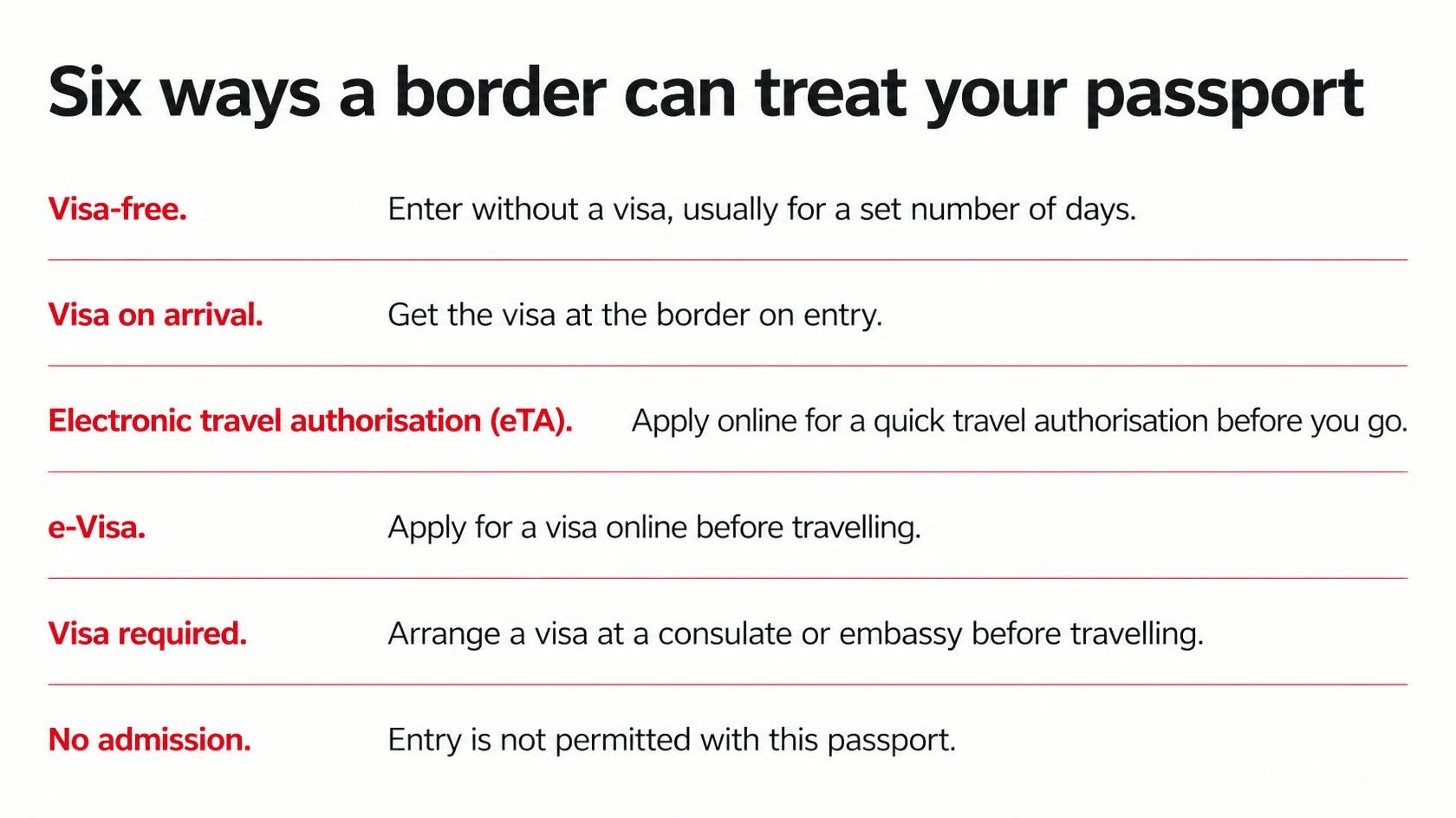
For most nomads today, the route is the tourist stamp.
Tourist stamp to 36 months
US, British, Canadian and Australian visitors enter visa-free for 30 days, and that can be extended in steps up to a total of 36 months, which is unusually generous. You need an onward ticket, and everyone files the free eTravel registration before arrival. Travel insurance is not a legal entry requirement, but private hospitals' deposit policies make it close to essential in practice.
Nomad visa still pending
A formal digital nomad visa was created by Executive Order 86 in April 2025. On paper it offers up to a year, renewable once, for remote workers earning from foreign clients, and it requires valid health insurance for the full stay. The catch: as of mid-2026 there is no official confirmation that the visa is actually being issued yet, so treat it as coming rather than available, and verify directly with the Department of Foreign Affairs before relying on it. It also works on reciprocity, so it is open only to nationals of countries that grant Filipinos the same. We track the status and the insurance rule on the Philippines digital nomad visa page. Longer term, the SRRV retirement visa is the other common route.
Who these rules apply to: Most Western passports enter visa-free 30 days. DNV limited to nationals of countries offering reciprocal nomad visas to Filipinos and where PH has a Foreign Service Post
- Recommended
Visa-Free Tourist Entry
30 days on arrival, extendable to 36 months in increments157+ countries incl. US/UK/EU/CA/AU/NZ. Passport 6+ months, onward travel, funds
- Recommended
Tourist Visa Extension (Visa Waiver and 9A)
Up to 36 months totalVisa-free entrants wanting >30 days. Apply at Bureau of Immigration; first extension 29 days for ~52-60 USD; ACR I-Card required after 59 days for ~50 USD
- Required
9G Pre-Arranged Employment Visa
1 to 3 years, renewable, tied to employmentForeigners with PH-registered employer offer, incl. shareholder-directors of own PH entity. Employer sponsorship, AEP (Alien Employment Permit) from DOLE, valid passport, employment contract
- Optional
Digital Nomad Visa (Executive Order 86)
1 year, renewable once, multi-entryRemote workers 18+ employed by or contracting with non-PH entities, from countries with reciprocal nomad visas and PH Foreign Service Post
- Required
SRRV Classic (Special Resident Retiree Visa)
Indefinite multi-entryForeign retirees 40+ (lowered from 50 in Sept 2025). Age 50+ with pension: 10,000 USD deposit + 800 USD/month pension (single) or 1,000 USD (couple). Without pension or 40-49: 20,000-50,000 USD deposit by bracket. + 1,500 USD processing + 360 USD/yr
- Required
SIRV (Special Investor's Resident Visa)
Indefinite while investment maintainedForeign investors 21+ in approved PH economic activities. Min 75,000 USD remitted via accredited PH bank (DBP or Land Bank) per Omnibus Investments Code; clean record and medical history
Visa rules change often and depend on your nationality. Always confirm with the official immigration service or your nearest consulate before you apply.
Once a stay outruns a travel policy's trip limit, our guide to when travel insurance stops and nomad health insurance starts explains which kind of cover fits.
Interactive
Verified pricesWhat would it cost in the Philippines without insurance?
Gravel on a bend outside town. Road rash, a broken forearm, and a night or two before they discharge you.
| Ambulance | $405 |
| Emergency room, on arrival | $30–$275 |
| X-ray on the forearm | $15–$24 |
| Two nights on the ward | $388–$550 |
| You pay, out of pocket | $838–$1,254 |
Priced as one lump instead of itemised, a serious admission in the Philippines runs $1,700 to $5,000.
That is the bill you carry alone. Insurance exists for exactly this.
See what a match needsTypical private-care estimates for illustration, not a quote. Actual bills vary by hospital, city and severity.
Local risk notes
What to watch out for in Philippines
- Dengue.
- Dengue is endemic and year-round, surging after the rains, with tens of thousands of cases a year. There is no specific treatment, so bite prevention is key.
- Typhoons. The season runs June to December and peaks from July to October; around twenty cyclones enter Philippine waters each year. Build flexibility into island travel in those months.
- Earthquakes and volcanoes. The country sits on the Ring of Fire and sees regular quakes and volcanic activity.
- The far south. The US government rates the Philippines "exercise increased caution" overall, but "do not travel" to the Sulu Archipelago and Marawi City because of terrorism and kidnapping. Mainland tourist areas are not covered by that warning.
- Roads and water. Road and motorbike accidents are a real risk, and tap water is not safe to drink, so stick to bottled or filtered.
Common questions
Philippines insurance FAQ
It created one on paper, by Executive Order 86 in April 2025, but as of mid-2026 there is no official confirmation it is actually being issued yet. Most nomads still use extended tourist visas. Check with the Department of Foreign Affairs for the current status.
US, British, Canadian and Australian visitors enter visa-free for 30 days, extendable in steps up to a total of 36 months, which is one of the most generous tourist setups anywhere.
Per Executive Order 86, yes, valid health insurance for the full stay. No official minimum coverage amount has been published. The income figure circulating online, around $24,000, is not officially confirmed either.
In practice, often yes. Private hospitals typically ask for proof of insurance or a cash deposit before admission, so arriving uninsured can mean paying upfront.
The private sector is good and English-speaking, with JCI-accredited hospitals like St. Luke's and Makati Medical Center in Manila. Public hospitals are cheaper but crowded. Most nomads use private care.
Yes. English is an official language and the language of medical training, so it is one of the easiest places in Asia to get care and handle admin in English.
No. Use bottled or filtered water, including in Manila and Cebu.
This page is the healthcare guide. It does not quote a premium and does not name an insurer. How we measure cost.
In 3 steps
- 01
Fill out
The form only asks what changes the plan.
- 02
We find your match
We compare the panel against your route, stay and visa.
- 03
Become a member
If the offer fits, you take it out directly.
Have a look if this page was not the question you came with.