Destination
Healthcare in Cayman Islands, and what it costs without cover
English-speaking, tax-free, with private hospitals built to a US standard, and no nomad visa since 2024. Most remote workers come as visitors. The insurance catch is specific: residency routes demand a local policy whose statutory floor covers a fraction of a flight to Florida.
- Best for Long-term nomads
- Best for Slowmads
- Best for Freelancers
- Best for Perpetual travelers
- Insurance required?
- Not for visitors · compulsory by law for residents
- Recommended coverage
- Standard local contract sets CI$100,000 major medical per year · add medical evacuation
- Emergency number
- 911
- Healthcare quality
- Good US-standard private care; serious cases flown to Florida or Jamaica
The 30-second read
The Global Citizen Concierge Programme stopped taking applications in 2022 and expired in 2024, so there is no nomad visa. Insurance is instead a standing legal duty on residents, and it has to be a local Cayman policy.
Care is US-standard and English-speaking; private hospitals include Health City Cayman Islands and CTMH Doctors Hospital, with the only 24-hour A&E at the Cayman Islands Hospital in George Town.
Life-threatening or unavailable treatment means air ambulance to Florida or Jamaica, typically tens of thousands of US dollars uninsured, so evacuation cover is non-negotiable.
US, British, Canadian and Australian visitors enter visa-free, commonly up to six months; the GCCP needs roughly US$100,000 a year for an individual.
The system
Healthcare system in Cayman Islands
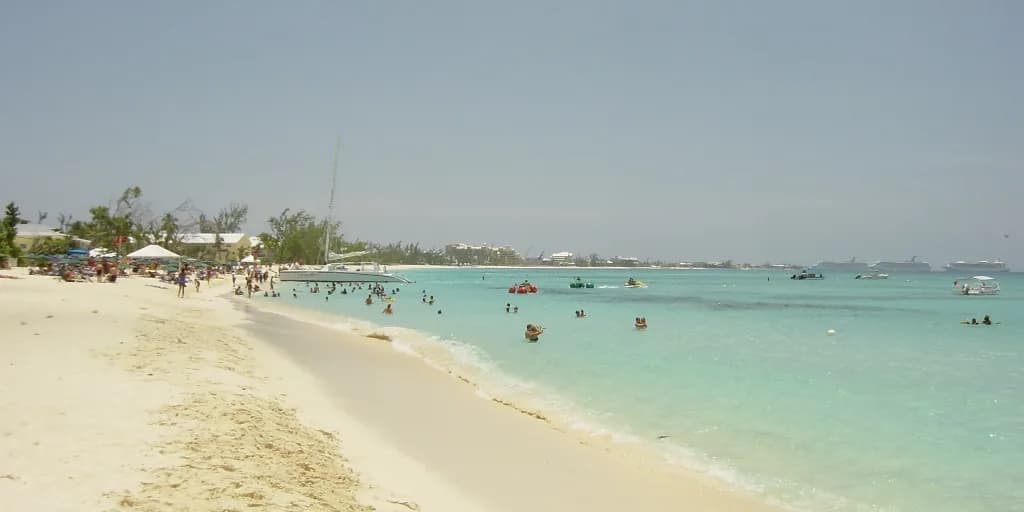
Healthcare on Grand Cayman is good and unmistakably private in feel, with care delivered to a US standard and priced accordingly.
Public and private hospitals
The public provider is the Health Services Authority, which runs the Cayman Islands Hospital (the Anthony S. Eden Hospital) in George Town, home to the only 24-hour accident and emergency department in the territory, plus Faith Hospital on Cayman Brac. On the private side, Health City Cayman Islands and CTMH Doctors Hospital are the names nomads tend to use, and Health City has built a reputation for cardiac and specialist surgery, with international (Joint Commission International) accreditation. Most expats and longer-stay visitors carry insurance and lean on the private system rather than the public hospital.
Navigating care
English is the official language and doctors are largely trained in the US or UK, so navigating care is straightforward. The emergency number is 911 for ambulance, fire and police. Pharmacies are widespread on Grand Cayman, several with extended or Sunday hours, though it is worth bringing enough of any essential medicine with a doctor's letter. The island reality is the part that matters most for insurance: if a condition is life-threatening or the treatment is not available locally, patients are flown by air ambulance to Florida or Jamaica, and the official tourism guidance is blunt that your level of health insurance, or your ability to pay, determines where you are sent. No visitor is refused care, but without cover you either pay out of pocket or accept the cheaper destination.
What you'd pay
Typical costs
| Private GP or short consultation | about CI$100 to CI$120 (roughly US$125 to US$150) |
|---|---|
| Specialist or longer private consultation | US$100 to US$250 and up |
| Emergency or hospital treatment | expensive, with cash or card payment often expected upfront |
| Air-ambulance evacuation to Florida or Jamaica | typically tens of thousands of US dollars if uninsured |
The currency is the Cayman Islands dollar (KYD), pegged to the US dollar at roughly CI$1 to US$1.20, and US dollars are accepted almost everywhere. There is no official public price list for private care, so treat these as indicative; the consistent message from government and clinics alike is that treatment is costly and an off-island evacuation is the bill that makes proper insurance non-negotiable.
Interactive
Verified pricesWhat would it cost in Cayman Islands without insurance?
You pay, out of pocket
$125–$150
A private GP or short consultation.
Bars to scale. A flight home is in another league.
That is the bill you carry alone. Insurance exists for exactly this.
See what cover costsTypical private-care estimates for illustration, not a quote. Actual bills vary by hospital, city and severity.
Entry & stay
Visa, residency & insurance
For short stays, US, British, Canadian and Australian visitors enter visa-free, commonly for up to six months, as the Cayman Islands is a British Overseas Territory that waives visas for these nationalities.
You should travel with a passport valid for your stay and may be asked for a return or onward ticket and proof of funds. Travel insurance is not a legal entry requirement for tourists, but given how care is paid for here it is strongly advised, and a policy with medical evacuation is the sensible default.
The nomad visa is gone, and nothing replaced it
Cayman was early to the pandemic-era remote-work visa and then quietly let it die. The Global Citizen Concierge Programme took its last applications on 31 October 2022, and the regulations underpinning it expired on 30 November 2024. If you find a guide quoting the old income tiers or the annual fee, it is describing something you can no longer apply for. The immigration reforms that came into force in 2026 reorganised work permits and residency but introduced no remote-work route to take its place.
So there is no digital nomad visa here. What remains is a split between coming as a visitor and committing to a residency or employment route, and the two sit very far apart in cost and paperwork.
Most remote workers just come as visitors
US, British, Canadian and Australian passport holders are landed for up to six months, and the Director can extend that for further periods of up to six months on application. Six months is a long runway by Caribbean standards, and for a stay measured in weeks or a season it is the obvious answer.
The limit is what the stamp does not give you. A visitor may not take work with a Cayman employer or client. Working online for people outside the islands while you happen to be sitting on Seven Mile Beach is the everyday reality for a lot of visitors, but it is not a status the immigration rules grant you, and nothing about the visitor stamp creates a right to stay on.
The routes that do exist are employment or money
If you want to be here properly, the realistic options are a work permit arranged by a Cayman employer, employment inside the special economic zone (the usual route for running your own company from the island), or one of the residency certificates for people with capital. The certificates are not nomad routes in any meaningful sense: independent-means residency on Grand Cayman asks for CI$120,000 a year of continuous income plus CI$1,000,000 invested locally, at least half of it in developed real estate, and the thresholds drop only on Cayman Brac and Little Cayman.
Insurance is a legal duty, and the legal minimum is not enough
This is the part worth reading twice, because it inverts the usual advice. In most destinations insurance is something a visa asks you to show once. In Cayman it is a standing obligation under the Health Insurance Act: every resident must hold at least the Standard Health Insurance Contract, and it has to be a local Cayman policy. Employers must arrange that cover for their staff and pay at least half the premium. Come on a residency certificate and there is no employer, so the duty and the bill are yours.
Now the catch. The standard contract sets a floor, not a comfortable ceiling: on the order of CI$100,000 of major medical a year against a lifetime cap around CI$1,000,000, with roughly CI$5,000 for emergency care and about CI$15,000 for air ambulance. Hold that last figure against the paragraph above about how serious cases leave this island. A medical flight to Florida runs into tens of thousands of US dollars. The statutory minimum, the thing the law makes you buy, covers a fraction of the single most likely large claim you will ever make here.
That is why people who live in Cayman treat the mandatory local policy as the base layer and carry international cover on top of it, rather than instead of it. A visitor is in a simpler position and a stronger one: no local policy is required of you, so your own international plan with real evacuation cover is doing the whole job.
Who these rules apply to: Written for US, UK, Canadian and Australian passport holders. The Cayman Islands has no digital nomad visa. The Global Citizen Concierge Programme stopped taking new applications on 31 October 2022 and the regulations behind it expired on 30 November 2024, so remote workers now use ordinary visitor entry or an employment or investor route.
- Most nomadsTourist
Visitor entry
Up to 6 months, extendable for further periods of up to 6 months on application to the Director
- Insurance
- OptionalNot required. Nothing is checked at the border, but private care is billed at US rates and often paid upfront, and an air ambulance to Florida or Jamaica is the exposure worth covering.
- Good for
- US, UK, Canadian and Australian passport holders arriving for tourism or business
- Requirement
- A passport valid beyond your return date, plus a paid return or onward ticket and proof of funds if the border officer asks
- Business
Residency Certificate (Substantial Business Presence)
25 years, renewable, with the right to work in the business you own or manage
- Insurance
- Required. Standard Health Insurance Contract minimum for you, and the business must cover its employees.
- Good for
- Owners or senior managers of a business in an approved category
- Requirement
- At least 10 percent of the shares in an approved category of business, or a senior management post in one, and at least 90 days a year on-island
- Work
Work permit
Granted for the permit term and renewable. A first-time permit granted on or after 1 May 2026 ties you to the sponsoring employer for two years.
- Insurance
- Requiredby law. The Health Insurance Act obliges every resident to hold at least the Standard Health Insurance Contract, and the employer must arrange it and pay at least half the premium. The SHIC floor is CI$100,000 of major medical a year and a CI$1,000,000 lifetime cap, with only CI$15,000 for air ambulance, which is why most people carry cover on top.
- Good for
- Anyone taking a job with a Cayman employer, who applies on your behalf through WORC
- Requirement
- A job offer from a licensed Cayman employer, a police clearance and a medical declaration cover letter, which has been compulsory for temporary work permits since 1 July 2025
- Work
Special economic zone employment
Runs with the zone employment certificate and is renewable while the zone company stays licensed
- Insurance
- Requiredby law. Zone certificate holders are resident, so the same Standard Health Insurance Contract minimum applies and the cover has to be a local Cayman policy.
- Good for
- Staff and founders of a company licensed inside the Cayman special economic zone, the usual route for running your own business from the island
- Requirement
- Employment by a licensed special economic zone enterprise. The Special Economic Zone Authority issues the certificate and the role does not have to be advertised locally first.
- Residence
Residency Certificate for Persons of Independent Means
25 years, renewable. No right to work in the Islands.
- Insurance
- Required. Holders count as residents under the Health Insurance Act, so the Standard Health Insurance Contract minimum applies and there is no employer to arrange or part-fund it.
- Good for
- Self-funded people who want to live in Cayman without working there
- Requirement
- Grand Cayman: CI$120,000 a year of continuous income and CI$1,000,000 invested locally, at least CI$500,000 of it in developed real estate. Cayman Brac or Little Cayman: CI$75,000 income and CI$500,000 invested, at least CI$250,000 in developed real estate.
- Residence
Certificate of Direct Investment
25 years, renewable, with the right to work in that business
- Insurance
- Required. The resident minimum applies to you, and as an employer the business must insure its staff to the same standard.
- Good for
- Investors putting capital into a Cayman business they will help run
- Requirement
- At least CI$1,000,000 invested in a licensed, employment-generating business with substantial management control, and at least 90 days a year on-island
- Residence
Certificate of Permanent Residence for Persons of Independent Means
Permanent, subject to an annual quota. Work rights are not automatic but can be added by variation.
- Insurance
- Required. Permanent residents are resident for health insurance purposes and must hold at least the Standard Health Insurance Contract.
- Good for
- People buying into Cayman property for the long term
- Requirement
- CI$2,000,000 invested in developed real estate and proof you can support yourself and your dependants
Thresholds, fees and permit rules change, and what applies to you depends on your nationality and the route you pick. Confirm the current position with Cayman Islands Customs and Border Control or WORC before you apply or commit to anything.
Compare visasHow Cayman Islands compares: insurance rules for every nomad visa, side by sidePassing through and settling in are two different insurance problems. If Cayman Islands is where you plan to live for a while, health insurance for Cayman Islands is the page that goes through what a plan has to include.
Local risk notes
What to watch out for in Cayman Islands
- Cost of everything. Cayman is one of the most expensive places in the Caribbean, and medical care is no exception, so budget for high private bills and upfront payment.
- Off-island evacuation. Serious or specialist cases are flown to Florida or Jamaica by air ambulance, and that flight is the reason evacuation cover matters more here than almost anywhere.
- Hurricane season. The Atlantic season runs June to November; major storms are rare (no major hurricane has struck Grand Cayman since Ivan in 2004) but follow local warnings and build in flexibility.
- Mosquito-borne disease. Dengue, Zika and chikungunya are present in the region, with dengue the main traveller risk, so use repellent.
- Water and firearms. Currents at remote dive and snorkel sites can be hazardous and emergency response there is slower, and Cayman bans the import of firearms and ammunition outright, including a single stray round in your luggage.
Common questions
Cayman Islands insurance FAQ
Not any more. The Global Citizen Concierge Programme took its last applications on 31 October 2022 and the regulations behind it expired on 30 November 2024. Nothing replaced it, and the 2026 immigration reforms did not add a remote-work route. Guides still quoting its income tiers or annual fee are out of date.
Most simply come as visitors. US, British, Canadian and Australian passport holders are landed for up to six months, extendable in further periods of up to six months on application. That stamp gives no right to work for a Cayman employer or client. Anything longer-term means a work permit, special economic zone employment, or a residency certificate based on income and investment.
For residents, yes, by law. Everyone resident must hold at least the Standard Health Insurance Contract, and it has to be a local Cayman policy. Employers arrange it for staff and pay at least half the premium; on a residency certificate there is no employer, so it falls to you. Visitors are not required to hold anything.
For an ordinary illness, usually. For the thing most likely to bankrupt you here, no. The standard contract's air-ambulance benefit is around CI$15,000, while a medical flight to Florida costs tens of thousands of US dollars. Residents generally treat the required local policy as a base layer and carry international cover with proper evacuation limits on top.
Yes. US, British, Canadian and Australian visitors enter visa-free, commonly for up to six months. You should carry a passport valid for your stay and may be asked for an onward ticket and proof of funds.
Because if your condition is life-threatening or the treatment is unavailable on-island, you are flown by air ambulance to Florida or Jamaica, and the official guidance says your insurance or ability to pay decides where you go. That flight can cost tens of thousands of dollars uninsured.
Yes for most things. Care is delivered to a US standard in English, and private hospitals like Health City Cayman Islands hold international accreditation. The trade-offs are high cost, upfront payment, and the need to leave the island for the most complex cases.
Keep exploring
Nearby destinations



Ready for Cayman Islands?
Three minutes of honest questions, then only the insurance options that actually fit your situation in Cayman Islands. No spam, no markup.
Find my plan