Destination
Healthcare in Peru, and what it costs without cover
A long visa-free stay, cheap and capable private clinics in Lima and Cusco, and one insurance trap worth knowing about: standard altitude caps that can leave a Rainbow Mountain or Salkantay emergency uncovered. Pick a policy that names your altitude.
A short trip to Peru can still use travel cover. Living there needs international health insurance that outlasts the visa.
- Best for Long-term nomads
- Best for Slowmads
- Best for Freelancers
- Best for Perpetual travelers
- Insurance required?
- Not required to enter; some trek operators require trekking insurance
- Recommended coverage
- Cover that names a maximum altitude of at least 5,000 metres; evacuation runs $20,000 to $80,000+
- Healthcare quality
- Capable, affordable private clinics in Lima and Cusco; pay upfront and claim back
The system
Healthcare system in Peru
Peru runs a mixed system, a public side through EsSalud and the Ministry of Health that carries long waits, and a large private sector that nomads and expats use almost by default.
Lima private clinics
Private care in Lima rivals US and European standards while costing a good deal less, which is why most foreigners go straight to it. The clinics people actually rely on cluster in the wealthier districts of San Isidro and Miraflores: Clínica Anglo Americana, Clínica Internacional, Clínica Ricardo Palma, and Clínica Delgado, all geared to international patients and used to working with overseas insurers.
Cusco and the tourist trail
Outside Lima the picture follows the tourist trail. In Cusco the go-to clinics are Clínica Pardo, Clínica Cima and the O2 Medical Network, all experienced with soroche, the local name for altitude sickness, which is the most common reason a visitor needs a doctor here. Arequipa has Clínica Arequipa and Clínica San Juan de Dios. English is reliable at the top Lima clinics and at the tourist-facing clinics in Cusco, less so at smaller or public facilities, so it pays to default to the private names above. Pharmacies are everywhere in the cities, with the InkaFarma and Mifarma chains on most main streets, and they stock routine medicines without much fuss.
What you'd pay
Typical costs
| Private clinic consultation (Lima), insured copay | commonly around 10 to 15 US dollars |
|---|---|
| Private consultation, uninsured | modest by US standards, though Peru publishes no official tariff |
| Altitude-sickness assessment at a Cusco tourist clinic | routine and widely available |
| Medical evacuation or repatriation, uninsured | an international benchmark of roughly 20,000 to 80,000 US dollars or more, depending on distance |
These are indicative figures rather than a price list, and they vary by clinic and city. The currency is the Peruvian sol (PEN), trading at roughly 3.7 to 3.8 to the US dollar, and private care broadly runs well below US prices, which is part of what draws long-stay nomads. Private clinics generally expect payment upfront and leave you to claim back from your insurer, so keep a card or cash buffer and save receipts. The number to internalise is the evacuation one: it sits in a different league from any consultation, and in the Andes the distances and altitude are exactly what make it expensive.
Entry & stay
Visa, residency & insurance
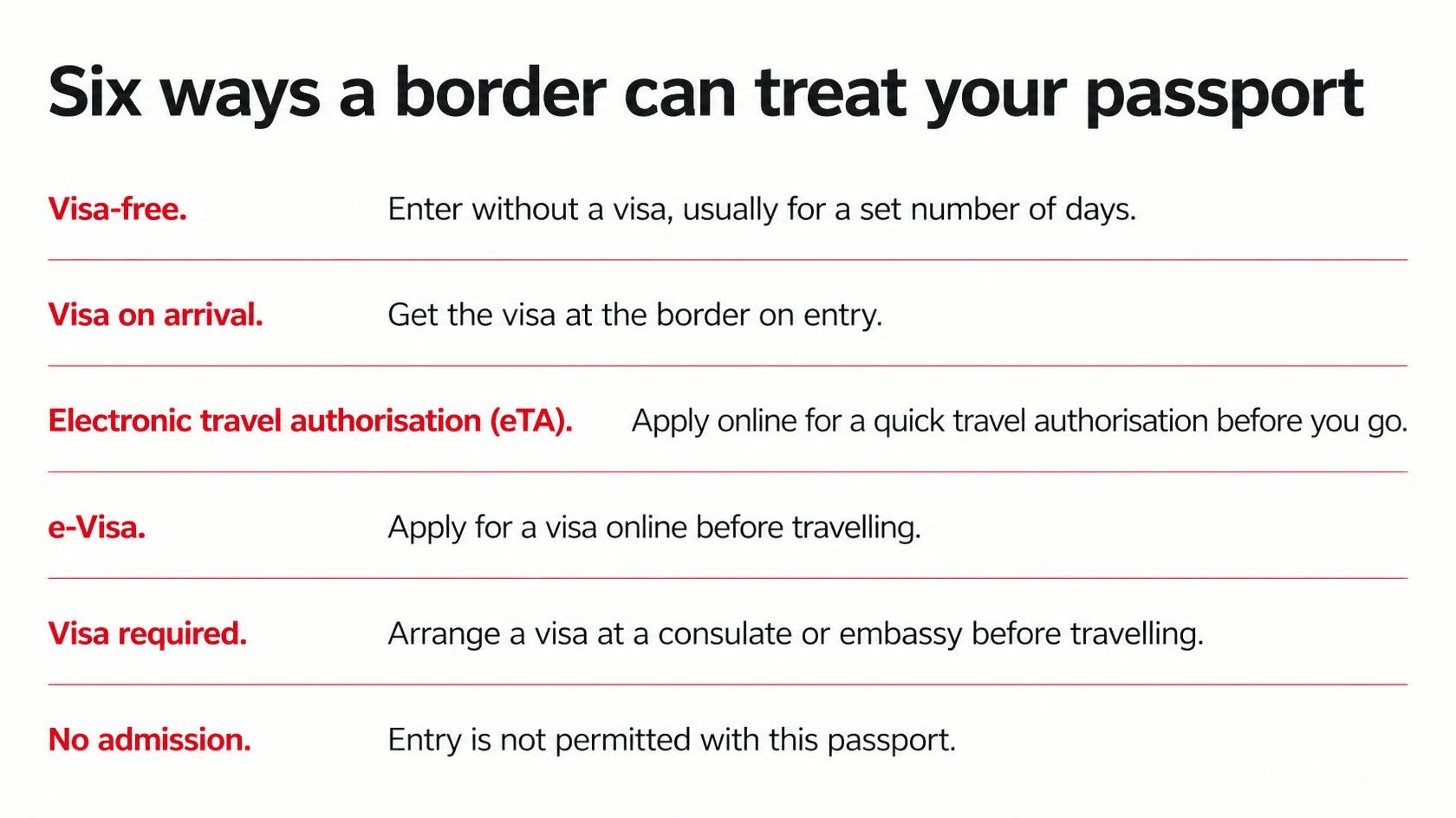
For tourism, US, British, Canadian and Australian travellers enter visa-free.
Tourist stay rules
The legal ceiling is generous, up to 183 days within any 365-day period, but the stay is not automatic: border officers usually stamp 90 days at their discretion, and since 2023 most nationalities can no longer extend a tourist stay from inside the country, so plan the full trip before you arrive and treat an overstay, which carries a daily fine, as a real risk. Your passport should be valid for at least six months, and onward travel is expected.
No working nomad visa
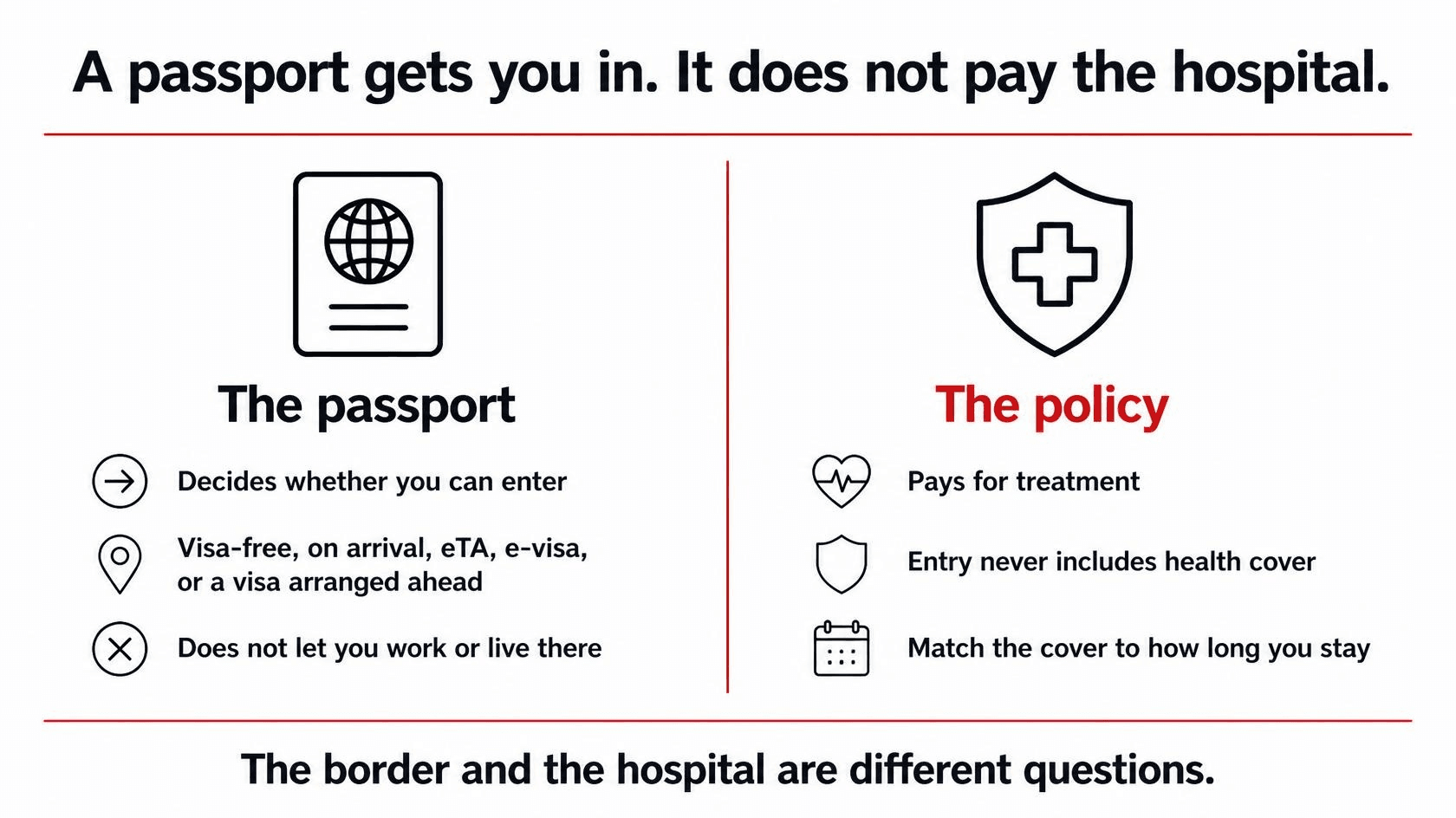
Peru has no working digital nomad visa. One was announced in late 2023 with a headline 365-day stay, but it was never made operational and Migraciones has published no rules to use it, so anyone telling you it is live is wrong. The realistic long-stay route is the rentista visa, built for passive income of at least 1,000 US dollars a month, which grants residency on the condition that you spend at least 183 days a year in the country; employer-sponsored work visas are the other path. Travel or health insurance is not a legal condition of tourist entry. The exception worth flagging is the trekking trade: many Inca Trail and Salkantay operators require their own proof of trekking insurance, and residency applications ask for a medical policy.
Altitude defines the policy
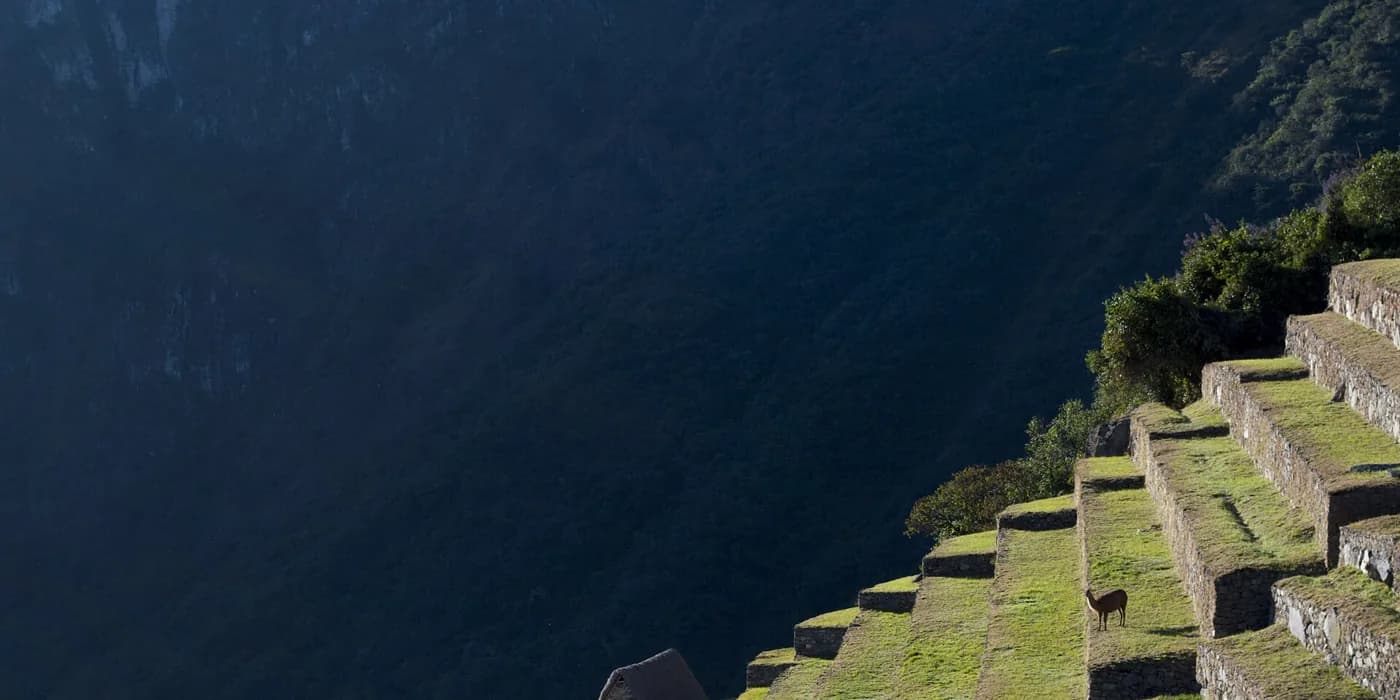
The detail that defines insurance in Peru is altitude, not entry rules. Many standard travel policies cap medical cover at around 4,000 metres and decline claims above it, which is fine for everyday life in Cusco at 3,399 metres but not for the trips people come to Peru to do. Rainbow Mountain sits near 5,000 metres, the Salkantay high pass around 4,650, and the Lake Titicaca area at roughly 3,800, near the line. A nomad based in Cusco who books a single Rainbow Mountain day tour can be uninsured at the exact moment of an altitude emergency if the policy carries the usual cap. The fix is simple: choose cover that explicitly names a maximum altitude of at least 5,000 metres, and read the trekking clause before booking anything in the high Andes.
Who these rules apply to: Most Western (US/EU/UK/CA/AU/NZ/most LatAm) visa-free for tourism; longer-stay visas via Migraciones or Peruvian consulate
- Recommended
Tourist (Visa-Free Entry)
Up to 183 days/calendar year (often only 90 granted at entry since 2021)US/EU/UK/CA/AU/NZ/most LatAm for tourism or business. Passport 6+ months, onward/return ticket, 2026 electronic pre-registration 72h before arrival
- Recommended
Worker Visa
1 year renewable; PR after 3 yrsForeigners with a Peruvian employer contract. Peruvian contract approved by Ministry of Labor, employer sponsorship, foreign workforce quota (max 20% of company workforce, 30% of payroll)
- Required
Digital Nomad Visa
Up to 365 days (renewable, per 2023 law)Remote workers employed by or contracting with non-Peruvian companies
- Recommended
Rentista (Independent Means)
Indefinite residence (no annual carne renewal)Retirees and individuals with guaranteed lifelong foreign income (pension, annuity). Min 1,000 USD/month permanent foreign income (e.g. pension) +500 USD/month per dependent; deposited to Peruvian bank; rental and freelance income do NOT qualify
- Recommended
Family / Marriage Visa
2 years initially, then PRSpouses, civil partners and family of Peruvian citizens or residents. Apostilled marriage/birth cert, cohabitation or family-link proof, clean record, financial solvency
Visa rules change often and depend on your nationality. Always confirm with the official immigration service or your nearest consulate before you apply.
Comparing plans for a long stay in Peru? Our guide to the best health insurance for a nomad visa sets out what to check first.
Interactive
Verified pricesWhat would it cost in Peru without insurance?
The textbook traveller emergency. It cannot wait, it cannot be treated at a pharmacy, and it ends in an operating theatre.
| Emergency room, on arrival | $30–$90 |
| A scan to confirm it | $74–$118 |
| The operation | $1,235 |
| Three nights recovering | not verified here |
| At least | $1,339–$1,443 |
One step in this bill has no verified price for Peru yet, so the real total sits above this one. We would rather leave the line blank than guess at it.
Priced as one lump instead of itemised, a serious admission in Peru runs $1,300 to $4,000.
That is the bill you carry alone. Insurance exists for exactly this.
See what a match needsTypical private-care estimates for illustration, not a quote. Actual bills vary by hospital, city and severity.
Local risk notes
What to watch out for in Peru
- Altitude sickness.
- Soroche is the defining Peru health risk. Cusco is at 3,399 metres, Lake Titicaca near 3,800, Rainbow Mountain close to 5,000. It hits fit travellers too, so acclimatise for a day or two, hydrate, and ask a clinic about acetazolamide before high treks.
- Tap water. It is not safe to drink anywhere in Peru, including in good hotels. Stick to bottled, boiled or treated water, which is also the main defence against traveller's diarrhoea.
- Dengue. Peru saw a heavy outbreak in 2025, with tens of thousands of cases, concentrated in coastal and northern cities during the rainy season. There is no traveller vaccine, so use a strong repellent.
- Yellow fever in the jungle. For Amazon regions such as Iquitos, Manu and Madre de Dios, vaccination is recommended, and US authorities raised their guidance in 2025. It is not a concern for Lima or the standard Cusco circuit.
- Petty theft and express robbery in Lima. Pickpocketing targets the historic centre and Miraflores, and short forced-ATM-withdrawal robberies happen, so use authorised airport taxis and keep phones out of sight at night.
Common questions
Peru insurance FAQ
No. One was announced in late 2023 but never became operational, and there are no rules to apply under it. The realistic long-stay route is the rentista (independent means) visa, which needs passive income of at least 1,000 US dollars a month.
Up to 183 days within a 365-day period in law, but officers commonly stamp 90 days at their discretion, and since 2023 most nationalities cannot extend a tourist stay from inside the country.
No, travel or health insurance is not a legal condition of tourist entry. Some Inca Trail and Salkantay trek operators do require their own trekking insurance, and residency applications ask for a medical policy.
Because many standard policies cap medical cover at around 4,000 metres, and the trips nomads do here, Rainbow Mountain near 5,000 metres or the Salkantay pass around 4,650, climb above that. Choose cover that names a maximum altitude of at least 5,000 metres.
No. Tap water is not potable anywhere in Peru, including in hotels, so use bottled, boiled or treated water, which also lowers the risk of traveller's diarrhoea.
In Lima, the international-facing private clinics in San Isidro and Miraflores, such as Clínica Anglo Americana, Clínica Internacional, Clínica Ricardo Palma and Clínica Delgado. In Cusco, tourist-experienced clinics like Clínica Pardo, Clínica Cima and the O2 Medical Network, which handle altitude sickness routinely.
This page is the healthcare guide. It does not quote a premium and does not name an insurer. How we measure cost.
In 3 steps
- 01
Fill out
The form only asks what changes the plan.
- 02
We find your match
We compare the panel against your route, stay and visa.
- 03
Become a member
If the offer fits, you take it out directly.
Have a look if this page was not the question you came with.