

Destination
Healthcare in Malaysia, and what it costs without cover
A proper nomad visa, low costs, English everywhere, and excellent private hospitals in KL and Penang. Dengue, the roads, the haze season and the security zone off east Sabah are the local risks.
A short trip to Malaysia can still use travel cover. Living there needs international health insurance that outlasts the visa.
- Best for Long-term nomads
- Best for Slowmads
- Best for Freelancers
- Best for Families
- Insurance required?
- Required on DE Rantaumedical insurance certificate valid in Malaysia, at least 3 months' validity, covering dependents; no official minimum
- Recommended coverage
- No official minimumcover valid in Malaysia
- Emergency number
- 999112
- Healthcare quality
- Good two-tier system, English everywhere; JCI-accredited private hospitals in KL and Penang
The system
Healthcare system in Malaysia
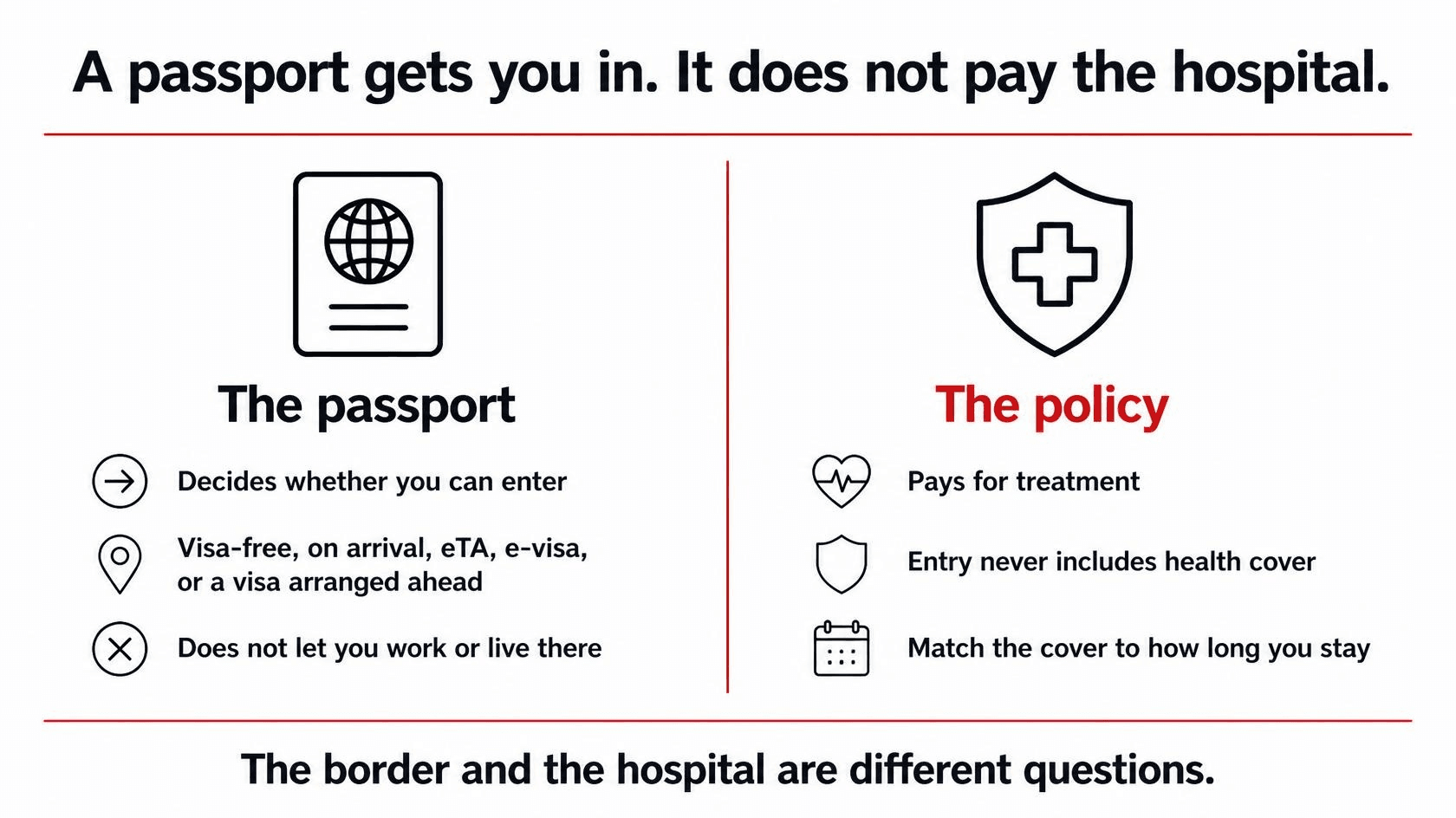
Malaysia runs a two-tier system, and both tiers are good.
Public hospitals are heavily subsidised and competent but crowded, with long waits, so nomads and expats lean on the private sector for anything timely. The advantage Malaysia has over most of Asia is language: English is spoken almost everywhere, and many doctors trained in the UK, the US or Australia, so care rarely gets lost in translation.
Private hospitals and accreditation
The private hospitals are excellent and several are internationally accredited. In Kuala Lumpur, Gleneagles, Prince Court Medical Centre and Sunway Medical Centre all carry Joint Commission International accreditation; in Penang, Gleneagles Penang does too, alongside well-regarded private hospitals like Island Hospital. Note that since mid-2025 a 6% sales tax applies to private healthcare for non-citizens, so budget a little above the headline price.
Pharmacies and emergencies
Pharmacies are easy: the Guardian, Watsons and CARiNG chains are in every mall, many medicines are over the counter, and a pharmacist is on hand for advice. The national emergency number is 999, and 112 works from any mobile.
What you'd pay
Typical costs
| Private GP or clinic visit | $17 to $38 USD |
|---|---|
| Specialist consultation | $32 to $128 USD |
| Emergency room visit (private) | $30 to $90 USD |
| Hospital, per day (private room) | $53 to $170 USD, with intensive care far more |
| Appendectomy or similar surgery (private) | $2,550 to $6,000 USD |
These are typical private-sector ranges, and a non-citizen 6% tax now applies on top. Premium hospitals and any complication push the serious-care figures higher, and a medical flight home is in a different league again.
Entry & stay
Visa, residency & insurance
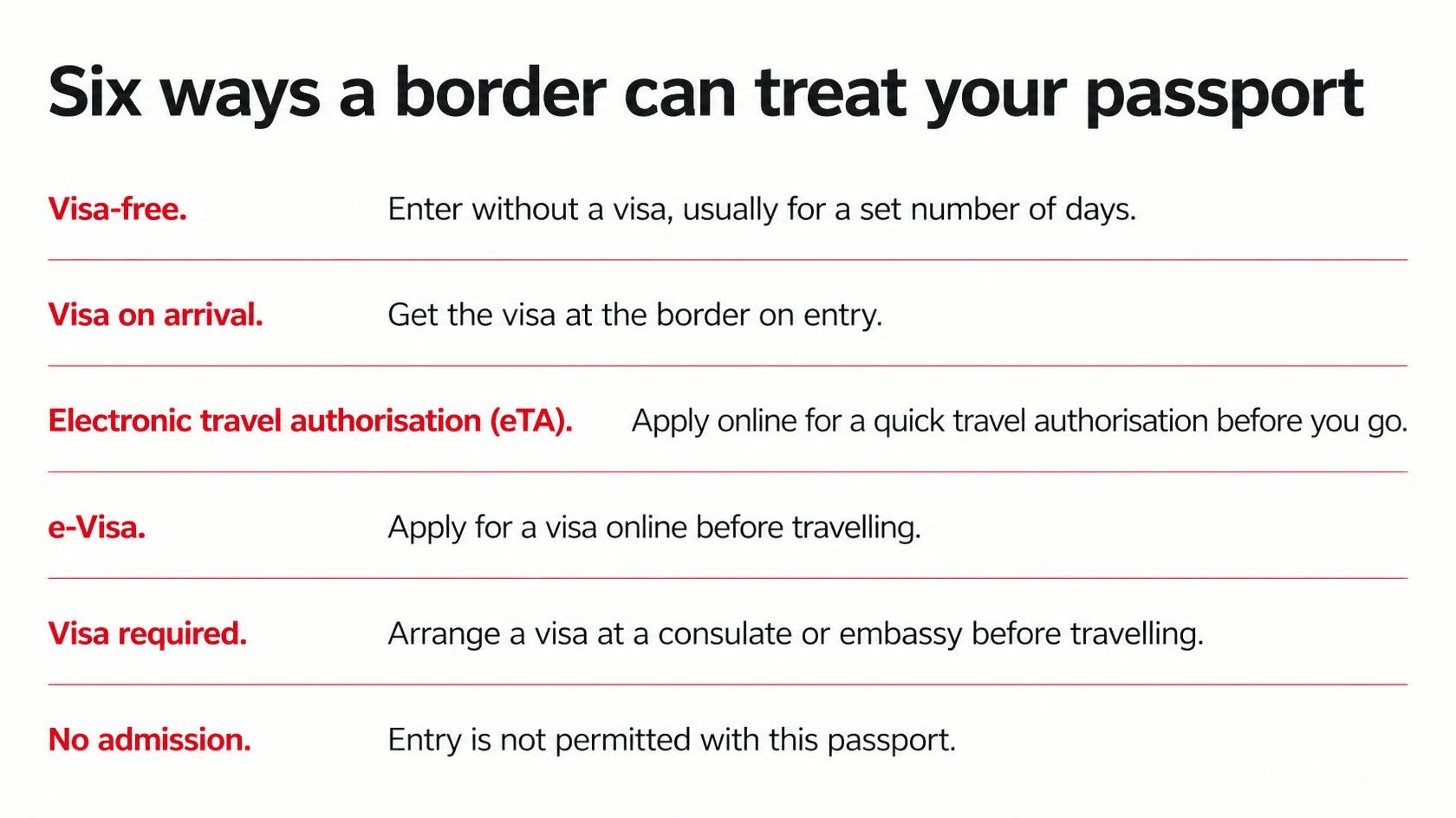
For short visits, US, British, Canadian and Australian passport holders enter visa-free for up to 90 days.
Everyone must file the free Malaysia Digital Arrival Card (MDAC) online within three days before arriving, and you should have an onward ticket and around $500 in available funds. Travel insurance is not a legal entry requirement, but going without it is a gamble given private-hospital pricing.
DE Rantau Nomad Pass
To stay and work remotely, Malaysia runs the DE Rantau Nomad Pass through MDEC. It is open to IT and digital professionals on income of at least $24,000 a year, and to a wider set of non-IT roles on at least $60,000 a year. The pass runs from three to twelve months and renews up to a two-year total. Insurance is required: you must show a medical insurance certificate valid in Malaysia, with at least three months' validity, and it must also cover any dependents you bring. A home-country travel policy only counts if it explicitly covers treatment in Malaysia. There is no official minimum coverage amount, so insure for the real risk rather than a number. We lay out the rule on the Malaysia DE Rantau visa page. The longer-term MM2H route also requires medical insurance.
Who these rules apply to: Most Western passports (US, UK, EU, Canada, AU, NZ) get 90-day visa-free; DE Rantau open to remote workers from most nationalities; MM2H open to foreigners 21+ meeting financial tiers
- Recommended
Social Visit Pass (visa-free)
Up to 90 days per entry (officer-set; CN nationals capped 30 days, max 90 in 180)Tourists and short-term business visitors from most Western countries. Passport 6+ months, return ticket, accommodation, funds, MDAC
- Optional
Employment Pass (EP I/II/III)
EP I up to 10 years; EP II up to 10 years with succession plan; EP III up to 5 years with succession plan (effective 1 June 2026)Skilled foreign professionals with a Malaysian employer. Salary RM 20,000+ (EP I), RM 10k to 19,999 (EP II), RM 5k to 9,999 (EP III); Malaysian sponsor
- Required
DE Rantau Nomad Pass
12 months, renewable once for 12 moreRemote workers, freelancers and digital professionals in IT/digital and other eligible sectors. Income min USD 24,000/year (digital/IT) or USD 60,000/year (other), remote-work or freelance proof, fee ~USD 230
- Required
MM2H Silver
5 years renewableForeigners 25+ seeking medium-term residency. Fixed deposit USD 150,000, property purchase min RM 600,000, min 90 days/year in Malaysia, licensed MM2H agent
- Required
MM2H Gold
15 years renewableHigher net-worth foreigners. Fixed deposit USD 500,000, property purchase min RM 1,000,000, min 90 days/year, hold property 10+ years
- Required
MM2H Platinum
20 years renewableHNW long-term residency. Fixed deposit USD 1,000,000, property purchase min RM 2,000,000, min 90 days/year, hold property 10+ years
- Required
MM2H SEZ/SFZ
10 years renewableForeigners investing in Special Economic/Financial Zones (e.g. Forest City, Johor-Singapore SEZ). Reduced thresholds vs mainland tiers, property in designated zone, licensed agent
Visa rules change often and depend on your nationality. Always confirm with the official immigration service or your nearest consulate before you apply.
Once a stay outruns a travel policy's trip limit, our guide to nomad health insurance vs travel insurance explains which kind of cover fits.
Interactive
Verified pricesWhat would it cost in Malaysia without insurance?
The textbook traveller emergency. It cannot wait, it cannot be treated at a pharmacy, and it ends in an operating theatre.
| Emergency room, on arrival | $30–$90 |
| A scan to confirm it | $122–$245 |
| The operation | $2,000–$5,000 |
| Three nights recovering | $210–$312 |
| You pay, out of pocket | $2,362–$5,647 |
Priced as one lump instead of itemised, a serious admission in Malaysia runs $2,500 to $6,500.
That is the bill you carry alone. Insurance exists for exactly this.
See what a match needsTypical private-care estimates for illustration, not a quote. Actual bills vary by hospital, city and severity.
Local risk notes
What to watch out for in Malaysia
- Dengue.
- Malaysia is dengue-endemic year-round and recorded well over 100,000 cases in 2024. There is no specific treatment, so bite prevention is the whole game.
- Roads. Malaysia has among the highest road-death rates in the region (about 13.9 per 100,000, WHO 2021 data), and motorcyclists account for most fatalities. If you rent a scooter, confirm your policy actually covers it.
- Haze. Seasonal transboundary haze from regional fires can push air quality into unhealthy territory, typically building from June and peaking around August to October. Check the Air Pollutant Index if you have respiratory issues.
- East Sabah security zone. The UK FCDO advises against all but essential travel to the islands and dive sites off the east coast of Sabah (the ESSZONE) because of a kidnapping threat. Travelling against official advice can also invalidate your insurance.
- Rabies and water. Rabies is present in parts of Borneo (Sarawak), so avoid stray animals and seek care immediately after any bite. Most people drink boiled or bottled water rather than straight from the tap.
Common questions
Malaysia insurance FAQ
Yes, the DE Rantau Nomad Pass, run by MDEC. IT and digital workers qualify on $24,000 a year, and a wider set of non-IT roles on $60,000. It runs three to twelve months and renews up to two years.
Yes. You must show a medical insurance certificate valid in Malaysia for at least three months that also covers any dependents. There is no official minimum coverage amount, so insure for the real risk rather than a number.
Only if it explicitly covers treatment in Malaysia for the required period. A policy that excludes Malaysia or is too short will not be accepted.
US, British, Canadian and Australian visitors enter visa-free for up to 90 days, but everyone must file the free MDAC arrival card online within three days before arrival.
Very good, and English-speaking. Private hospitals in KL (Gleneagles, Prince Court, Sunway Medical) and Penang (Gleneagles Penang) are JCI-accredited. Most nomads use private care; a non-citizen 6% tax now applies.
A private GP visit runs about $17 to $38 and an ER visit $30 to $90, but a serious admission runs into the thousands and a medical evacuation far more.
It is chlorinated, but most residents and visitors drink boiled or bottled water to be safe, especially outside the big cities.
This page is the healthcare guide. It does not quote a premium and does not name an insurer. How we measure cost.
In 3 steps
- 01
Fill out
The form only asks what changes the plan.
- 02
We find your match
We compare the panel against your route, stay and visa.
- 03
Become a member
If the offer fits, you take it out directly.
Have a look if this page was not the question you came with.