Destination
Healthcare in Norway, and what it costs without cover
No formal nomad visa, a 90-day Schengen window, and a self-employed permit that wants a genuine business. On Svalbard there is no welfare net, so your policy has to fly you out.
A short trip to Norway can still use travel cover. Living there needs international health insurance that outlasts the visa.
- Best for Long-term nomads
- Best for Slowmads
- Best for Freelancers
- Best for Perpetual travelers
- Insurance required?
- Not a separate condition of the self-employed permit; advised for short stays
- Recommended coverage
- Air ambulance off Svalbard runs into the tens of thousands of kroner and far more
- Emergency number
- 113ambulance), 112 (police), 116 117 (out-of-hours
- Healthcare quality
- Excellent public system for registered residents; short-stay visitors self-pay
The system
Healthcare system in Norway
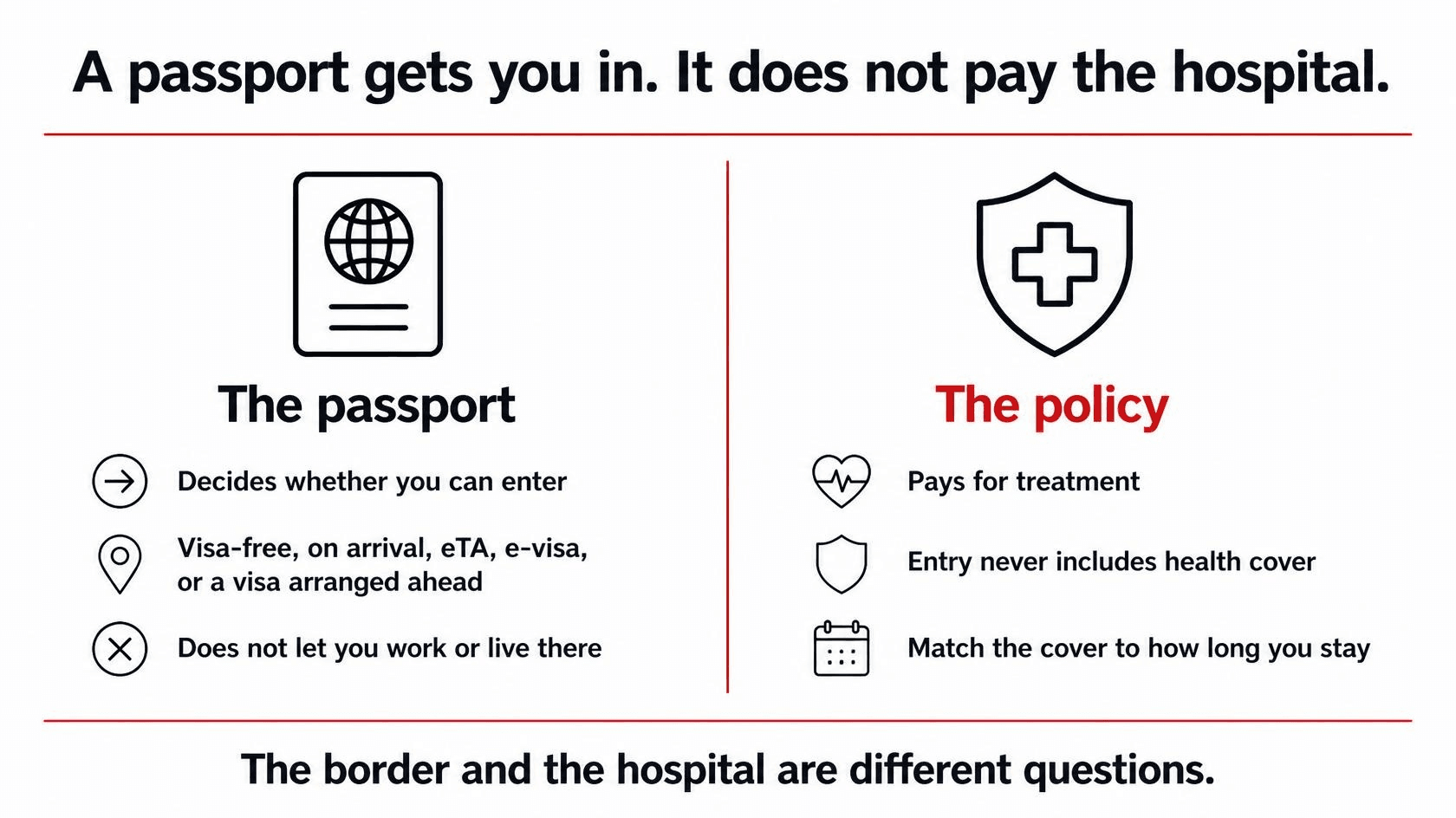
Norway runs one of the best public health systems anywhere, funded through the National Insurance Scheme (folketrygden).
Membership and self-pay
The catch for nomads is membership: you are enrolled once you are a legally registered resident, normally on a permit and a stay intended to last at least 12 months, after which a regular GP (fastlege) and hospital care cost only small capped patient fees. Short-stay visitors and people here on their own funds are not covered and self-pay, which is why most nomads who stay under the Schengen 90-day limit lean on private clinics for speed and English, and on travel insurance for anything serious. Private GP chains such as Dr. Dropin are widely used and let you skip the fastlege registration entirely.
Hospitals and the Svalbard outlier
English is spoken almost universally by Norwegian medical staff, so language is rarely the barrier. The big public hospitals are Oslo University Hospital (Norway's largest), Haukeland University Hospital in Bergen, St. Olav's Hospital in Trondheim and the University Hospital of North Norway (UNN) in Tromsø. The emergency number for an ambulance is 113; 112 reaches police and 116 117 is the out-of-hours urgent-care (legevakt) line. Pharmacies (apotek) are easy to find in towns and stock the usual range, though rural and Arctic access thins out fast. Svalbard is the real outlier: Longyearbyen Hospital has only a handful of beds, no CT or MRI and no routine surgery, so it stabilises serious cases and flies them roughly 1,000 km to Tromsø by air ambulance, weather and aircraft permitting. That single fact should shape any Svalbard insurance decision.
What you'd pay
Typical costs
| Private GP consultation | NOK 600 to 1,500 (~$60–155) (one chain lists about NOK 795 in-clinic ~$80, NOK 375 by video ~$40) |
|---|---|
| Public GP fee once you are a registered resident | roughly NOK 150 to 375 (~$15–40) per visit, capped at a few thousand kroner (~$300–800) a year |
| Public hospital outpatient or ER patient fee for residents | a modest fixed fee, also under the annual cap |
| Self-pay hospital admission or air ambulance from Svalbard | not officially priced, but easily into the tens of thousands of kroner (~$2,000–10,000) and far more for an evacuation |
All figures are in Norwegian kroner (NOK) and are indicative; private prices vary by clinic and city, and Norway is expensive across the board. The capped public fees apply only once you are a registered resident enrolled in folketrygden. As an uninsured short-stay visitor you pay the full economic cost of care, and an air ambulance off Svalbard is the kind of bill that makes evacuation cover non-negotiable.
Entry & stay
Visa, residency & insurance
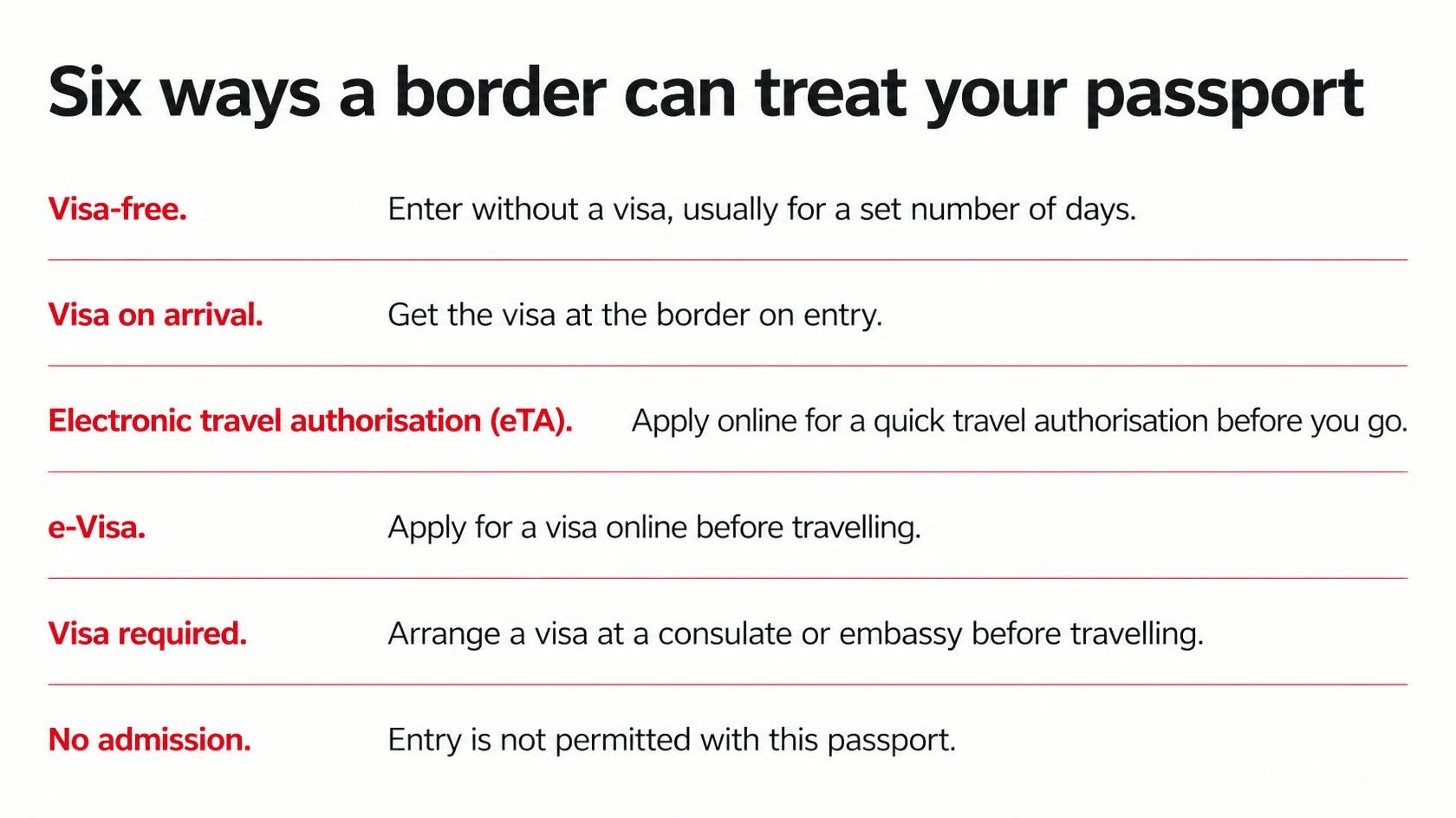
For short stays, mainland Norway is in the Schengen Area, so US, British, Canadian and Australian citizens enter visa-free for 90 days in any 180-day period.
Schengen short stays
The Entry/Exit System is now live at the border, and ETIAS, the cheap online pre-authorisation, is expected to start in the last quarter of 2026; neither is a visa and travel insurance is not a legal entry requirement for visa-free visitors. It is, however, strongly advised given how high Norwegian self-pay costs run.
Self-employed permit and Svalbard
Norway has no formal digital nomad or remote-work visa, so do not believe pages that advertise one. The realistic long-stay route for non-EU/EEA nationals is the self-employed person residence permit, which is demanding: you must be a skilled worker (typically at least three years of relevant education or equivalent experience), run your own Norwegian sole proprietorship (not a limited company), work only in that business, and show the venture will likely earn a profit of at least NOK 341,373 per year before tax (the current UDI figure). It is granted for one year at a time and can lead to permanent residence after three years. Notably, UDI does not impose a separate private health-insurance condition on this permit, because a successful applicant becomes a resident member of folketrygden. Svalbard is the wildcard: under the Svalbard Treaty anyone can live and work there visa-free, but there is no welfare safety net, you must prove you can support yourself, and you are not on Norway's social or health systems unless you work for a Norwegian employer, so private insurance with strong evacuation cover is essential. We cover the detail on the Norway digital nomad visa page.
Who these rules apply to: Non-EU/EEA/EFTA nationals for residence permits; Schengen short-stay rules for non-visa-exempt; Svalbard rules apply to all
- Recommended
Schengen Visa-Free / ETIAS Short Stay
90 days in any 180-day period across SchengenUS/UK/CA/AU/NZ/JP and other visa-exempt for tourism or business. Passport (6 months beyond stay), funds, return ticket; ETIAS from Q4 2026
- Optional
Self-Employed Person Residence Permit
Initially 1 year renewable; PR after 3 yearsNon-EU/EEA founders and freelancers establishing a viable Norwegian-registered business. Skilled-worker qualifications (3+ years education or equivalent), viable business plan with sufficient economic foundation, registered Norwegian company, secured housing
- Optional
Skilled Worker Residence Permit
Up to 3 years renewable; PR possible after 3 yearsNon-EU/EEA workers with concrete full-time job offer in Norway requiring vocational or higher education. Job offer matching qualifications; min gross salary NOK 522,600 (~49,800 USD) for bachelor-level or NOK 599,200 (~57,100 USD) for master-level as of Sep 2025
- Recommended
Svalbard Residence (No Visa)
Indefinite as long as self-supporting; register in Population Register within 8 days of arrivalAny nationality wishing to live or work in Svalbard archipelago outside Schengen. Self-support financially, secured accommodation, no burden on public welfare; Schengen access needed to transit mainland
- Required
Job Seeker Visa
6 months general skilled job seekers; 12 months graduates and researchers; non-extendableSkilled workers seeking employment in Norway, plus recent graduates and researchers from Norwegian institutions. Skilled-worker qualifications, ~NOK 155,034 (~14,800 USD) for living expenses, valid health insurance, secured accommodation
Visa rules change often and depend on your nationality. Always confirm with the official immigration service or your nearest consulate before you apply.
Comparing plans for a long stay in Norway? Our guide to the best health insurance for nomads sets out what to check first.
Interactive
Verified pricesWhat would it cost in Norway without insurance?
Off a kerb, off a bouldering wall, off a wet bathroom floor. No admission, just a bad afternoon.
| Emergency room, on arrival | $200–$620 |
| X-ray to confirm the break | $203 |
| You pay, out of pocket | $403–$823 |
That is the bill you carry alone. Insurance exists for exactly this.
See what a match needsTypical private-care estimates for illustration, not a quote. Actual bills vary by hospital, city and severity.
Local risk notes
What to watch out for in Norway
- No nomad visa, a hard Schengen clock.
- Many sites claim a Norway DNV exists; it does not, and overstaying the 90-in-180 Schengen allowance carries entry bans, so plan exits carefully.
- Svalbard has no safety net. Visa-free does not mean cared-for: there is no welfare system, serious cases are flown to the mainland, and running out of money can get you asked to leave.
- Winter darkness and cold. Long polar-night periods, ice and sub-zero temperatures raise the risk of falls, hypothermia and seasonal low mood, especially in the north.
- Mountains, avalanches and cold water. Fatal avalanches and fjord-edge falls happen most winters, and coastal water is cold enough to disable a strong swimmer within minutes, so respect weather alerts.
- Eye-watering prices. Norway is one of the world's most expensive countries; alcohol in particular is heavily taxed, and a bar beer can run well over NOK 100.
Common questions
Norway insurance FAQ
No. There is no formal digital nomad or remote-work visa for mainland Norway. Non-EU nationals who want to stay long term usually pursue the self-employed person residence permit, and Svalbard is separately visa-free for anyone.
UDI does not set a separate private-insurance condition for this permit, because once approved you become a registered resident and a member of the National Insurance Scheme, which covers public healthcare.
Your business must be likely to earn a profit of at least NOK 341,373 per year before tax, the current UDI figure, and you must run a Norwegian sole proprietorship in a skilled field. Verify the amount with UDI, as it is updated periodically.
Yes, under the Svalbard Treaty anyone can live and work in Svalbard without a visa or permit, but there is no welfare net, you must support yourself, and you need private insurance because serious medical cases are evacuated to the mainland.
No. As a Schengen member, Norway admits them visa-free for 90 days in any 180. ETIAS is expected to start in late 2026 but is a pre-authorisation, not a visa, and insurance is advised but not legally required to enter.
Dial 113 for an ambulance or medical emergency, 112 for police, and 116 117 for out-of-hours urgent care (legevakt). Operators speak English.
This page is the healthcare guide. It does not quote a premium and does not name an insurer. How we measure cost.
In 3 steps
- 01
Fill out
The form only asks what changes the plan.
- 02
We find your match
We compare the panel against your route, stay and visa.
- 03
Become a member
If the offer fits, you take it out directly.
Have a look if this page was not the question you came with.