

Destination
Healthcare in Taiwan, and what it costs without cover
A high-tech, very safe base with world-class healthcare and the Employment Gold Card for remote pros. National Health Insurance only starts after six months, and quakes and typhoons are part of life here.
A short trip to Taiwan can still use travel cover. Living there needs international health insurance that outlasts the visa.
- Best for Long-term nomads
- Best for Slowmads
- Best for Freelancers
- Best for Remote employees
- Insurance required?
- Gold Card needs no private cover; bridge the ~6-month NHI wait with private insurance
- Recommended coverage
- Self-pay rates low; serious admission with surgery runs into the thousands
- Emergency number
- 119 ambulance110 police · 112 mobile
- Healthcare quality
- World-renowned single-payer NHI covering ~99.9%; English-speaking Taipei hospitals
The system
Healthcare system in Taiwan
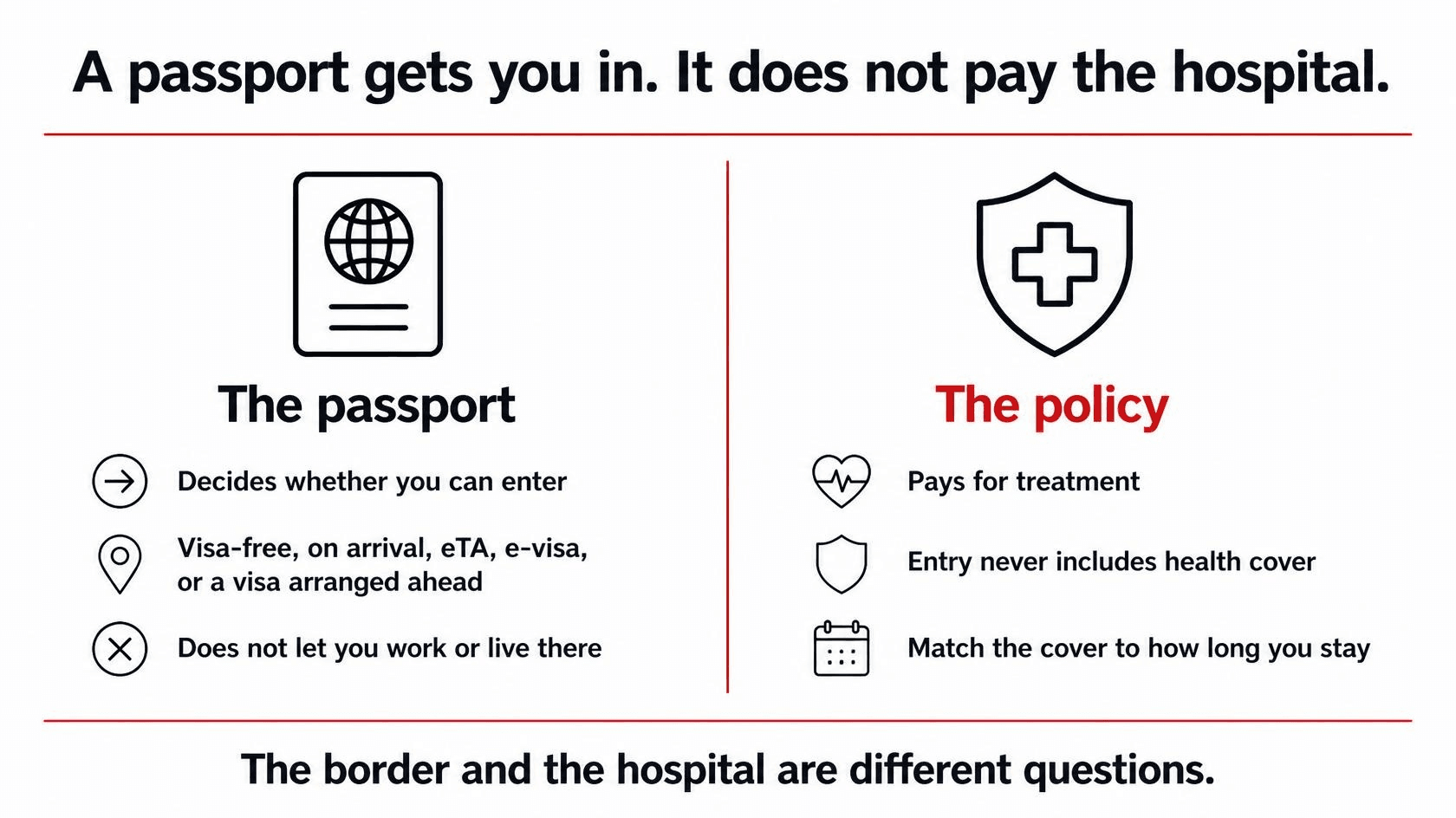
Taiwan's single-payer National Health Insurance is one of the most admired systems in the world, covering about 99.9% of the population at very low cost, fast and efficient.
Top Taipei hospitals, National Taiwan University Hospital, Taipei Veterans General and Taipei Medical University Hospital, run international centres for foreign, non-NHI patients, and care is excellent.
The timing nuance
The nuance for nomads is timing. Gold Card holders enrol in NHI, but if you don't have a Taiwanese employer you must complete about six months of continuous residence before you can join, during which you self-pay, which is cheap, or carry private cover to bridge the gap. Tourists and short-stay nomads aren't eligible for NHI and self-pay too, at modest rates. The emergency number is 119 for an ambulance, 110 for police, and 112 from a mobile. Pharmacies are widespread and clinics often dispense medicines directly.
What you'd pay
Typical costs
| Local clinic visit (self-pay, no NHI) | about NT$400 to NT$800 (US$13 to US$25) |
|---|---|
| Specialist consultation (self-pay) | NT$1,000 to NT$2,500 (about US$30 to US$80) |
| Emergency room (self-pay) | NT$2,000 to NT$5,000+ (about US$60 to US$155) |
| Hospital bed, per day (self-pay) | NT$3,000 to NT$8,000 (about US$95 to US$250) |
With NHI a clinic visit is a NT$50 copay (about $1.50); these figures are the self-pay rates a nomad pays before NHI starts, and they are still low. A serious admission with surgery runs into the thousands of dollars, a fraction of US prices.
Entry & stay
Visa, residency & insurance
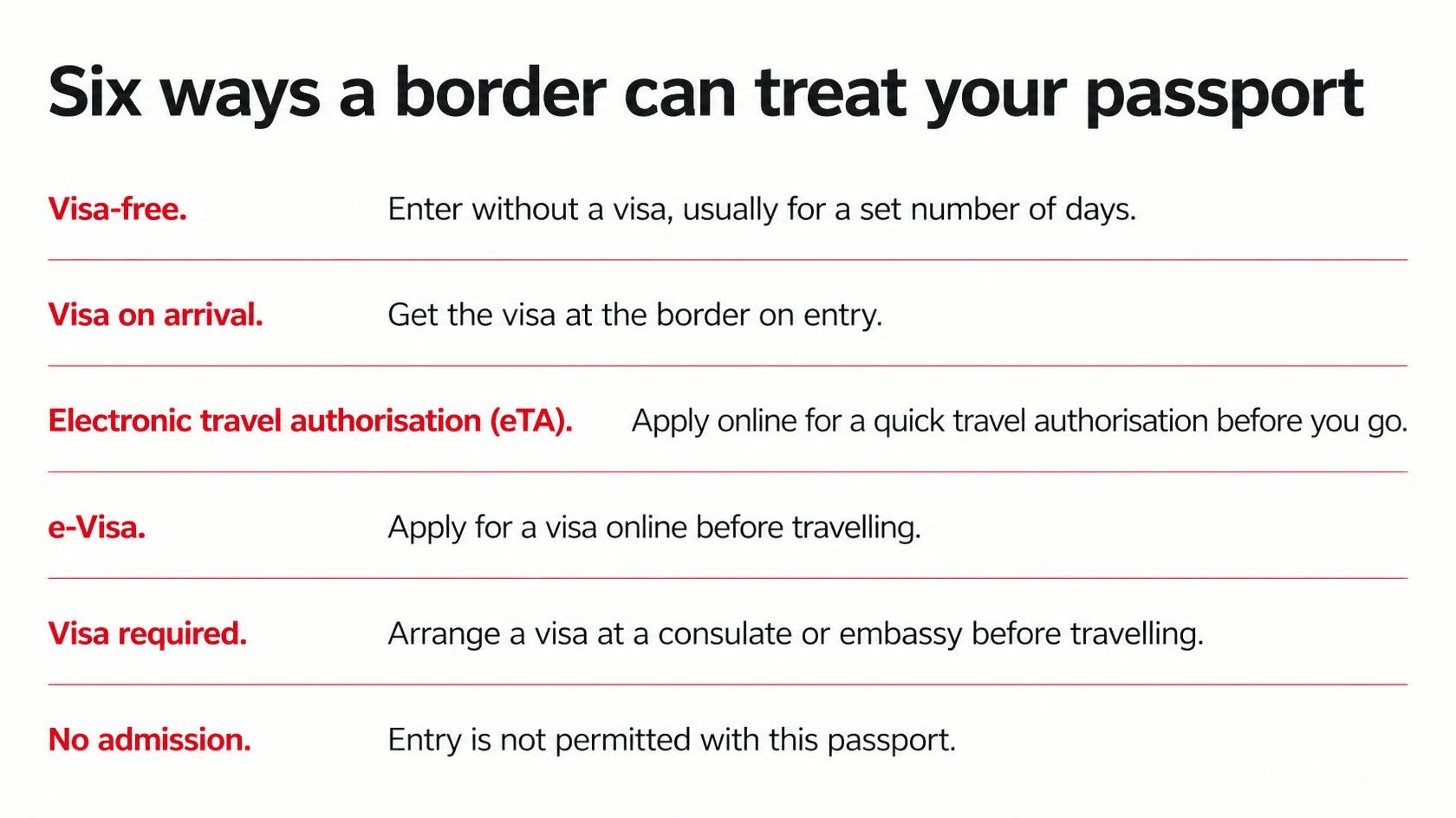
For short stays, US, British, Canadian and Australian visitors enter visa-free for 90 days (British and Canadian citizens can extend to 180).
Since October 2025 everyone files the free online Taiwan Arrival Card before arrival. Travel insurance is not a legal entry requirement.
Employment Gold Card
To stay and work remotely, Taiwan has no classic nomad visa; the route is the Employment Gold Card, a single card combining an open work permit, residence and re-entry, valid one to three years. You qualify through one of several professional fields or, in some, by a recent monthly salary of at least NT$160,000 (about US$5,000) gross. Crucially, the card does not require private insurance, it routes you into National Health Insurance, but the roughly six-month enrolment wait for the self-employed is the gap to cover with private or international insurance. We lay out the route on the Taiwan Gold Card page.
Who these rules apply to: Visa-exempt entry for US/UK/EU/CA/AU/NZ/JP/KR and 50+ passports up to 90 days. Employment Gold Card open to any nationality meeting professional, salary or academic criteria
- Recommended
Visitor Visa (Single or Multiple Entry)
60 days initial, extendable twice up to 180 days total at NIA discretionNationals not eligible for visa-exempt entry, or visa-exempt travelers needing >90 days for tourism, family, study, or business. Application at TECO or TW embassy with purpose docs, financial proof, return ticket
- Optional
Taiwan Employment Gold Card
1 to 3 years renewable; combines residence visa, open work permit, ARC and re-entry; APRC eligible after 3 yrsForeign Special Professionals in tech, finance, law, architecture, digital, economics, education, science, culture, arts, sports meeting experience/salary/PhD criteria. 5 yrs experience OR 160,000+ USD salary in last 3 yrs (some fields) OR PhD from global top-500 university; online via goldcard.nat.gov.tw, processing ~8 weeks
- Required
Employer-Sponsored ARC (Work Permit)
Up to 3 yrs per renewal, tied to employment; APRC after 5 yrs continuous residenceForeign professionals with Taiwanese employer sponsor. Employer applies to Ministry of Labor for work permit (7-14 business days), then applicant obtains resident visa and ARC (10-15 business days); fees ~1,000-3,000 TWD
- Required
Visa-Exempt Entry (90 days)
90 days per entry, non-extendable; no work permittedTourists and short-term visitors from US/UK/EU/CA/AU/NZ/JP/KR and 50+ eligible nationalities. Passport valid 6 months beyond stay, onward/return ticket, accommodation
- Required
Entrepreneur or Investor ARC
1 year initial renewable; APRC after 5 yrsFounders and investors establishing or investing in Taiwan business
- Optional
APRC (Alien Permanent Resident Certificate)
Permanent; must avg 183 days/yr to maintain (relaxed from fixed 183 in 2026 amendments)Long-term ARC residents, Gold Card holders, Foreign Special Professionals. 5 yrs continuous legal residence (3 for FSP, 1 for high earners meeting NT 6M annual income from Jan 2026); clean record, financial means
Visa rules change often and depend on your nationality. Always confirm with the official immigration service or your nearest consulate before you apply.
Comparing plans for a long stay in Taiwan? Our guide to the best health insurance for a nomad visa sets out what to check first.
Interactive
Verified pricesWhat would it cost in Taiwan without insurance?
A fever you assume is flu until the platelet count comes back. Common across the places nomads spend winters.
| The first doctor visit, before anyone worries | $13–$25 |
| Back again, this time to emergency | $60–$155 |
| Four nights on fluids and monitoring | $876–$940 |
| You pay, out of pocket | $949–$1,120 |
Priced as one lump instead of itemised, a serious admission in Taiwan runs $95 to $250.
That is the bill you carry alone. Insurance exists for exactly this.
See what a match needsTypical private-care estimates for illustration, not a quote. Actual bills vary by hospital, city and severity.
Local risk notes
What to watch out for in Taiwan
- Earthquakes.
- Taiwan is highly seismic; the April 2024 Hualien earthquake was magnitude 7.4, the strongest in 25 years. Buildings are well engineered and the alert system is excellent, but know the basics.
- Typhoons. The season runs roughly June to October, peaking in late summer, with occasional closures and suspended transport.
- Heat and humidity. Summers are hot and very humid; pace yourself and hydrate.
- The NHI gap. Worth repeating: self-employed Gold Card holders wait about six months for NHI, so bridge it with private cover.
- Tap water. It is treated and meets standards in the main cities, but most residents boil, filter or drink bottled water because of old building pipes.
Common questions
Taiwan insurance FAQ
Not a classic one. The route for remote professionals is the Employment Gold Card, an open work-and-residence permit valid one to three years. You qualify by professional field or, in some, by a recent monthly salary of at least NT$160,000 (about US$5,000).
No private-insurance mandate; instead you enrol in National Health Insurance. But self-employed holders wait about six months to enrol, so carry private or international cover to bridge that gap.
Among the best and cheapest anywhere. National Health Insurance covers about 99.9% of people, and Taipei's big hospitals run English-speaking international centres. Self-pay rates before NHI starts are still low.
90 days for US, British, Canadian and Australian visitors, with British and Canadian citizens able to extend to 180. File the free Taiwan Arrival Card online before arrival.
Very. It ranks among the safest countries in the world; the practical day-to-day risks are earthquakes and typhoons, not crime.
It is treated to standard in the cities, but most people boil, filter or drink bottled water due to old plumbing.
This page is the healthcare guide. It does not quote a premium and does not name an insurer. How we measure cost.
In 3 steps
- 01
Fill out
The form only asks what changes the plan.
- 02
We find your match
We compare the panel against your route, stay and visa.
- 03
Become a member
If the offer fits, you take it out directly.
Have a look if this page was not the question you came with.