

Destination
Healthcare in South Korea, and what it costs without cover
The Workation visa, world-class hospitals and the world's first nationwide 5G. The visa names a specific insurance rule, cover above ₩100 million including repatriation. Spring fine dust and the summer monsoon are the seasonal ones.
A short trip to South Korea can still use travel cover. Living there needs international health insurance that outlasts the visa.
- Best for Long-term nomads
- Best for Slowmads
- Best for Freelancers
- Best for Remote employees
- Insurance required?
- Required: private cover over ₩100 million (~$75,000) incl. emergency repatriation
- Recommended coverage
- More than ₩100 millionabout $75,000
- Emergency number
- 119 ambulanceMedical Korea 1330 interpretation
- Healthcare quality
- World-class; big Seoul hospitals run English-speaking international centres
The system
Healthcare system in South Korea
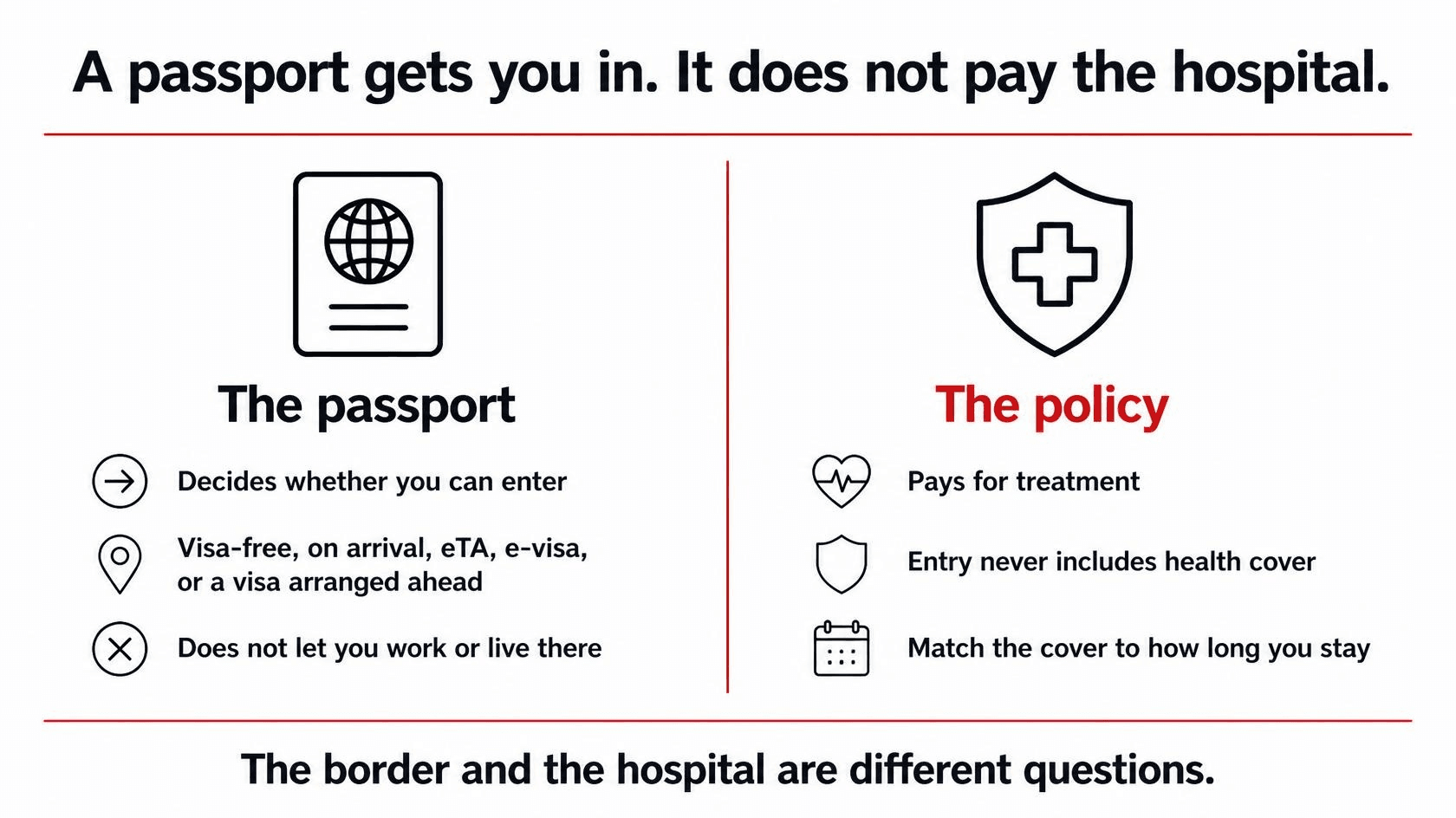
South Korea's healthcare is world-class and, by Western standards, affordable.
The public system runs through the NHIS, which residents staying six months or more must join; short-stay nomads typically self-pay or use private insurance. Seoul's major tertiary hospitals, Severance (Yonsei), Asan Medical Center, Samsung Medical Center, Seoul National University Hospital and Seoul St. Mary's, each run dedicated international healthcare centres with fluent English, so language is not a barrier at the top hospitals.
Emergency and pharmacies
The emergency number is 119 for an ambulance, with English assistance available, and the Medical Korea 1330 helpline offers 24-hour interpretation. Pharmacies (yakguk) are everywhere; prescription drugs need a doctor, but pharmacists handle minor ailments directly.
What you'd pay
Typical costs
| Local clinic visit (minor) | from about ₩10,000 (around $8) |
|---|---|
| English-language international-clinic consultation | ₩40,000 to ₩80,000 (about $30 to $60) |
| Emergency room (uninsured) | ₩150,000 to ₩400,000+ (about $110 to $300+) |
| Private hospital room, per night | ₩200,000 to ₩480,000 (about $150 to $360) |
Care is high quality and affordable, but note that top hospitals may bill uninsured foreigners at international rates well above the standard schedule, so a serious admission or surgery can climb. The won figures are what bind; dollar conversions are approximate.
Entry & stay
Visa, residency & insurance
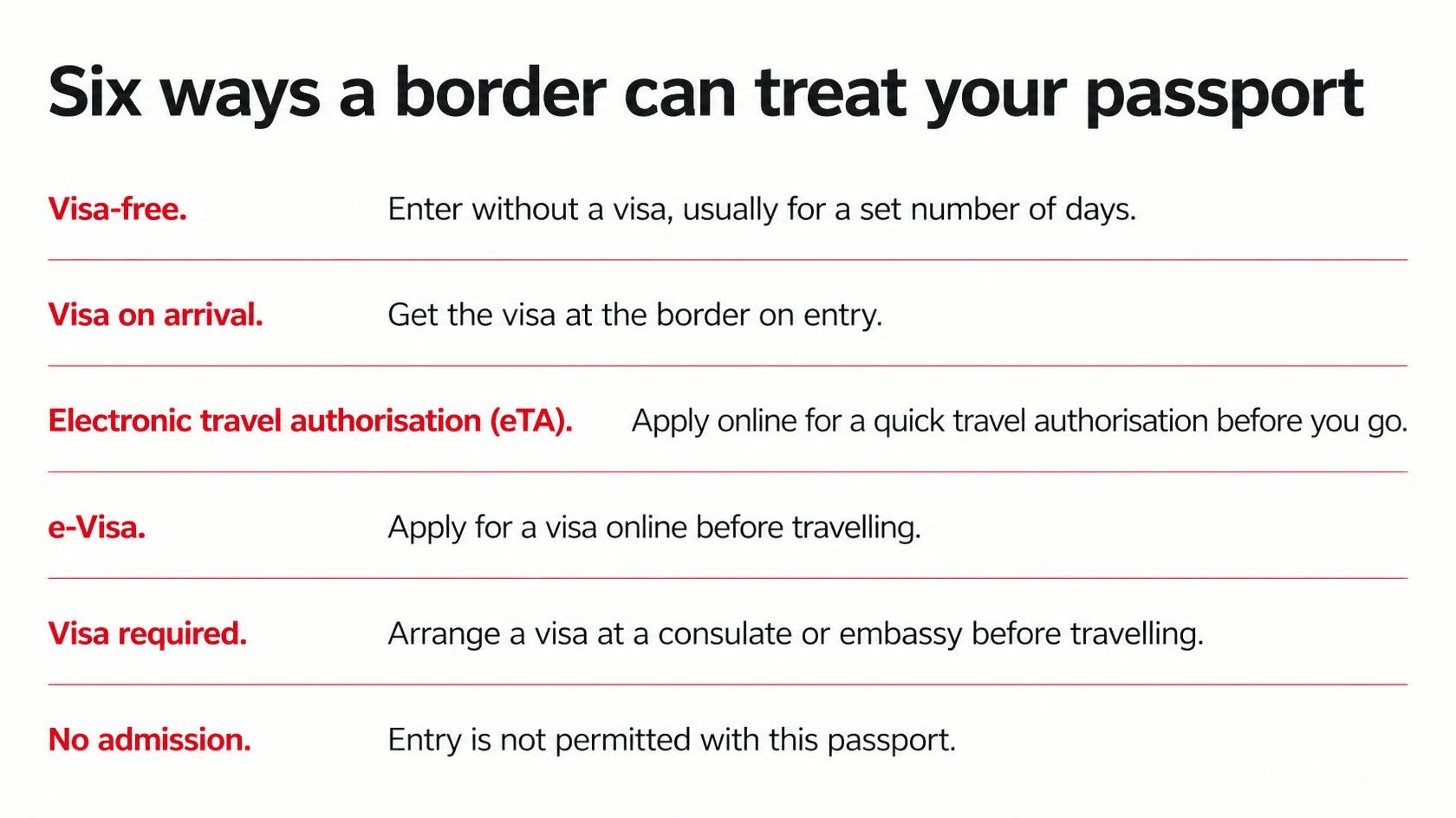
For short stays, US, British and Australian visitors enter visa-free for 90 days, and Canadians for up to 180.
The K-ETA travel authorisation is waived for these nationalities through the end of 2026 (it returns in 2027), but from January 2026 everyone entering without a K-ETA must file the digital e-Arrival Card before arrival. Travel insurance is not a legal entry requirement.
Workation visa insurance rule
To stay and work remotely, South Korea's Workation visa (the F-1-D, launched in 2024) is for people aged 18 and over with at least a year of experience in their field, working remotely for an overseas employer or their own overseas business. The income test is more than twice Korea's prior-year GNI per capita, around ₩85 million a year (roughly $66,000), which adjusts annually, so confirm the current figure. The insurance rule is specific and strict: you must hold private medical insurance covering more than ₩100 million (about $75,000), including medical treatment, hospitalisation and emergency repatriation, for the whole stay. It runs one year, extendable to two. We lay out the visa on the South Korea Workation visa page.
Who these rules apply to: All foreign nationals; visa-exempt to 67 nationalities incl. most EU/UK/US/CA/AU/NZ/JP/GCC. F-1-D Workation Visa open worldwide to remote workers meeting income threshold
- Recommended
K-ETA Visa-Exempt Entry
90 days per entry (180 days CA)Tourists, short business, family visits from 67 nationalities. Valid passport; K-ETA waived through 31 Dec 2026 (mandatory from 1 Jan 2027); e-Arrival Card within 3 days; no remote work allowed
- Recommended
E-7 Specialist Visa
Up to 3 yrs renewable; F-2 pathForeign professionals with specialised skills sponsored by KR employer in designated occupations. KR employer sponsorship; min annual salary ~KRW 31.12M (~23,000 USD); relevant degree or experience
- Required
F-1-D Workation (Digital Nomad) Visa
1 year initial, extendable to 2Remote workers, freelancers, overseas business owners 18+ with 1+ yr same-industry experience. Annual income above 2x Korean GNI per capita (~66,000 USD / KRW 88.1M); remote employment or overseas business proof; clean record
- Recommended
D-8 Corporate Investment Visa
Up to 2 yrs renewable indefinitelyForeign entrepreneurs and executives investing in or managing a KR company. Min KRW 100M (~75,000 USD) per investor in KR corporation; business plan and corporate registration
- Recommended
F-2 Long-Term Residence Visa
Up to 5 yrs renewable; F-5 PR pathLong-term residents transitioning from E-7/D-8 or qualifying via points; spouses of Koreans; high-skilled professionals. Points-based (80+ points: income, education, KR language, residence length); or 500,000 USD investment with 3 yrs D-8 (F-2-5)
Visa rules change often and depend on your nationality. Always confirm with the official immigration service or your nearest consulate before you apply.
Interactive
Verified pricesWhat would it cost in South Korea without insurance?
A fever you assume is flu until the platelet count comes back. Common across the places nomads spend winters.
| The first doctor visit, before anyone worries | $25–$60 |
| Back again, this time to emergency | $75–$500 |
| Four nights on fluids and monitoring | not verified here |
| At least | $100–$560 |
One step in this bill has no verified price for South Korea yet, so the real total sits above this one. We would rather leave the line blank than guess at it.
Priced as one lump instead of itemised, a serious admission in South Korea runs $5,000 to $10,000.
That is the bill you carry alone. Insurance exists for exactly this.
See what a match needsTypical private-care estimates for illustration, not a quote. Actual bills vary by hospital, city and severity.
Local risk notes
What to watch out for in South Korea
- Air quality.
- Fine dust (misemunji) peaks in late winter and spring, roughly March to May, and can reach unhealthy levels; it is cleanest in the rainy summer. If you are sensitive, track the air-quality index and keep masks for bad days.
- Summer monsoon and typhoons. The jangma rains fall from late June into July, and typhoon season runs roughly July to September, bringing heavy rain and occasional disruption.
- North Korea. Technically still at war, with periodic tension, but the practical day-to-day risk to visitors is low and advisories sit at the lowest tier.
- Crowds and demonstrations. Generally peaceful; avoid large protests.
- Tap water. Seoul's Arisu tap water is officially tested as safe, though many Koreans still drink bottled or filtered out of habit.
Common questions
South Korea insurance FAQ
Yes, the Workation visa (F-1-D), launched in 2024. It is for remote workers aged 18 and over with at least a year of experience in their field, earning more than about ₩85 million a year, and runs one year, extendable to two.
Private medical insurance covering more than ₩100 million (about $75,000), including treatment, hospitalisation and emergency repatriation, for the full stay. It is a specific, confirmed requirement.
Not for now. The K-ETA is waived for US, UK, Canadian and Australian visitors through the end of 2026, returning in 2027. From January 2026, though, you must file the digital e-Arrival Card before arrival.
90 days for US, British and Australian visitors, and up to 180 days for Canadians.
World-class, and affordable by Western standards. Seoul's big hospitals run English-speaking international centres. Short-stay nomads self-pay or use private insurance, as NHIS enrolment is for stays of six months or more.
Seoul's Arisu tap water is officially safe to drink, though many locals still prefer bottled or filtered.
Here for a few weeks rather than living here? A trip policy is the right tool; see our guide to travel insurance for digital nomads.
This page is the healthcare guide. It does not quote a premium and does not name an insurer. How we measure cost.
In 3 steps
- 01
Fill out
The form only asks what changes the plan.
- 02
We find your match
We compare the panel against your route, stay and visa.
- 03
Become a member
If the offer fits, you take it out directly.
Have a look if this page was not the question you came with.