
Destination
Healthcare in Iceland, and what it costs without cover
A 180-day remote-work visa, a high income bar, and a hard insurance rule: Iceland wants residency-grade health cover, not a holiday policy. With just two advanced-care hospitals and air-ambulance evacuation for the rest, that cover earns its keep.
A short trip to Iceland can still use travel cover. Living there needs international health insurance that outlasts the visa.
- Best for Long-term nomads
- Best for Slowmads
- Best for Freelancers
- Best for Perpetual travelers
- Insurance required?
- Mandatorylong-term health cover valid in Iceland (or Schengen), not travel insurance; no fixed minimum sum published
- Recommended coverage
- No fixed minimum publishedbuy generously
- Emergency number
- 112
- Healthcare quality
- Good universal Nordic system, almost no private sector; only two advanced-care hospitals
The system
Healthcare system in Iceland
Iceland runs a publicly funded, universal system in the Nordic tradition, and care is good.
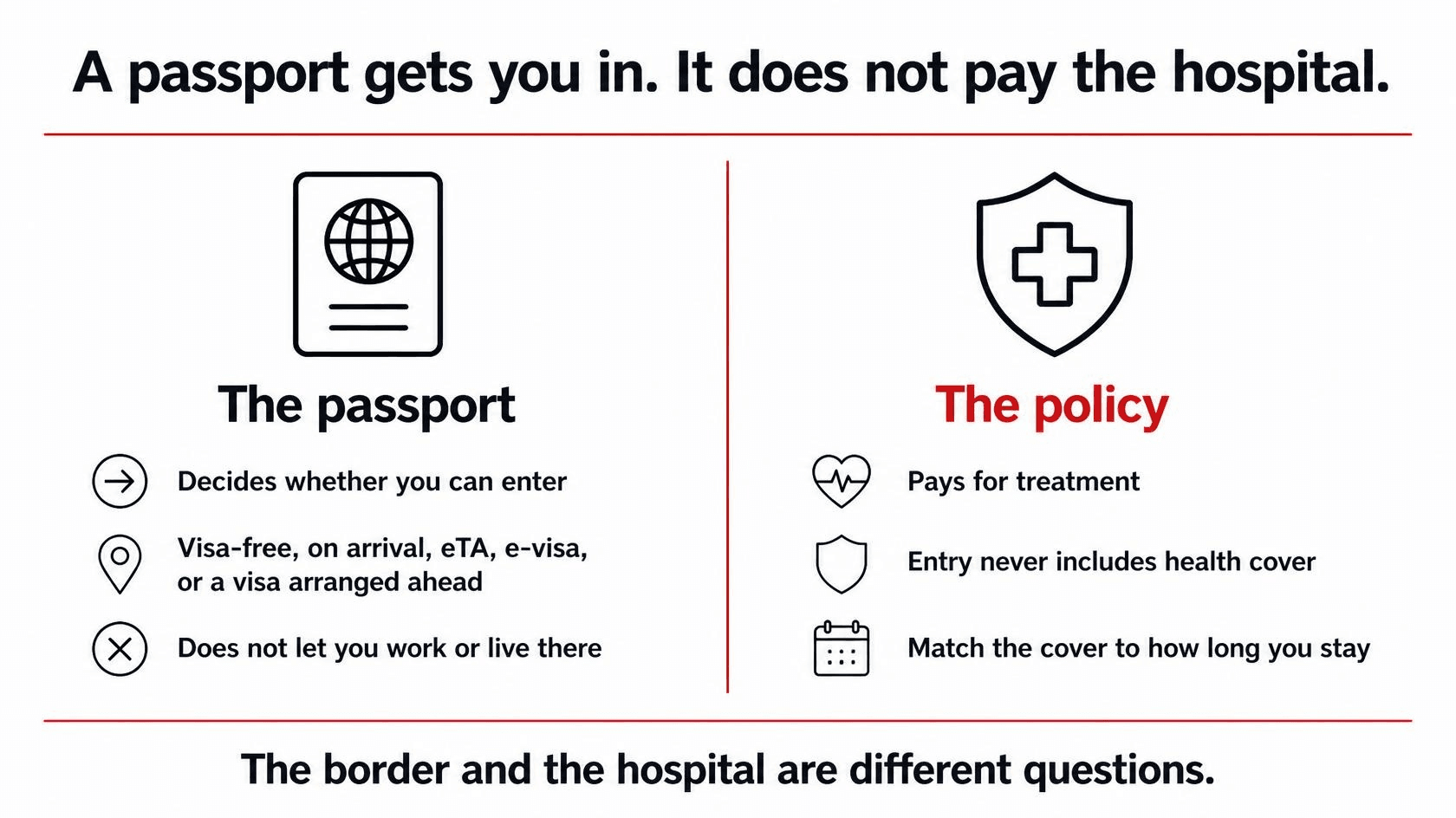
The catch for nomads is twofold. First, new arrivals are not covered by Icelandic Health Insurance (Sjúkratryggingar) until they have been legally resident for six months, and someone on a 180-day visa never reaches that point. Second, there is almost no private hospital sector to fall back on: the population is too small to sustain one, so a handful of self-employed specialists aside, the state system is the system. That means a nomad pays the full uninsured tariff for everything unless a private policy reimburses it.
Where care is centralised
Care is centralised around Landspítali, the National University Hospital in Reykjavík, with the country's second hospital, Sjúkrahúsið á Akureyri (Akureyri Hospital) in the north, the only other site doing advanced emergency care. Day-to-day, you use a heilsugæsla (health centre) GP in hours and the after-hours doctor service Læknavaktin in Reykjavík outside them; pharmacies are apótek. English is spoken almost universally by medical staff. The emergency number is 112. The point worth dwelling on for an island this remote: if you fall seriously ill or get injured outside the capital, you may be moved by air. Iceland operates one fixed-wing air ambulance (based in Akureyri) plus physician-staffed Icelandic Coast Guard helicopters out of Reykjavík, and for the most specialised cases the country sends patients abroad. Repatriation and evacuation cover is not a nice-to-have here.
What you'd pay
Typical costs
| GP visit at a health centre, daytime, without Icelandic insurance | ISK 13,951 (~$110) |
|---|---|
| GP visit after hours (after 4pm), without insurance | ISK 20,648 (~$165) |
| Emergency room attendance fee at Landspítali, uninsured (visit only) | ISK 9,221 (~$75) |
| Doctor home visit, daytime, uninsured | ISK 29,576 (~$235) |
Figures are in Icelandic króna (ISK) and come from the Capital Area Health Centres and Landspítali published rates for people without Icelandic health insurance. They are starting fees: the ER number covers the attendance only, not imaging, labs, procedures or an overnight stay, so a real emergency with hospitalisation or surgery runs into the hundreds of thousands of króna fast. Add air ambulance transport and the gap a policy has to close is large.
Entry & stay
Visa, residency & insurance
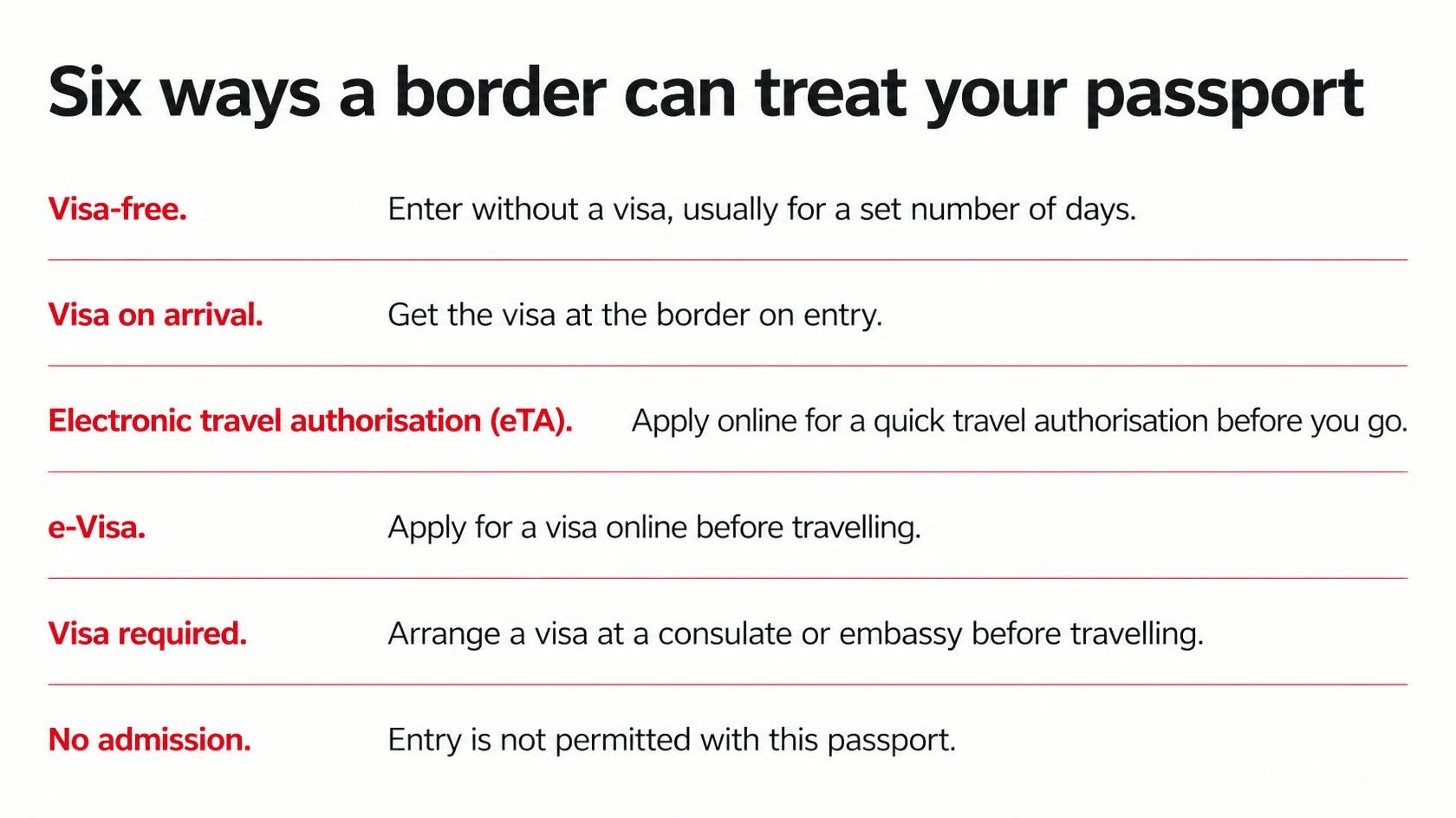
Tourists from the US, UK, Canada and Australia enter visa-free for up to 90 days in any 180, since Iceland is in the Schengen Area.
No insurance is required to enter as a tourist, though it is strongly advisable given the costs above. From late 2026 these same travellers will need an ETIAS authorisation (a roughly €20 online pre-screening valid three years), which is not a visa but will be checked at the border.
Long-term remote-work visa
To stay longer and keep working, Iceland offers a long-term visa for remote workers, aimed at non-EU/EEA/EFTA nationals who are already visa-exempt for Schengen. Apply from your home country before travelling and it can run up to 180 days; apply after you have entered Schengen and it is capped at 90. It does not renew, and you cannot reapply within 12 months of a previous Icelandic long-term visa. The income bar is high: confirmed monthly income of ISK 1,000,000 (commonly cited as roughly $7,000 to $8,000), or ISK 1,300,000 with a spouse or partner. Insurance is a hard condition, not a box-tick. The Directorate of Immigration requires health insurance valid in Iceland (or the wider Schengen Area) for the full period, covering medical treatment, emergencies and hospitalisation, and stating the coverage amounts and where it is valid; the guidance is explicit that ordinary travel insurance is not accepted and that it must be long-term health cover. No fixed minimum sum in ISK or EUR is published in that guidance, so buy generously rather than to a number. Full detail is on the Iceland remote work visa page.
Who these rules apply to: Non-EU/EEA/EFTA remote workers with high foreign income; spouses and children under 18 may accompany
- Recommended
Schengen Visa-Free Entry (90/180)
90 days in any 180-day period across SchengenUS/UK/CA/AU/JP and other visa-exempt third-country nationals. Valid passport (6+ months); ETIAS pre-authorization from late 2026
- Required
Schengen Short-Stay Visa (Type C)
Up to 90 days in 180Nationals requiring Schengen visa. Application via Icelandic embassy or VFS, funds, itinerary, return ticket
- Optional
EU/EEA/EFTA Registration
Unlimited; must register with Registers Iceland if staying >3 monthsCitizens of EU/EEA/EFTA states (incl. NO/LI/CH). Valid national ID or passport; employment, study, sufficient funds or family ties when registering
- Required
Residence Permit (Work / Family / Study)
Typically 1 year, renewableNon-EU/EEA/EFTA nationals planning >180 days for work, family or studies. Sponsor (employer, family or accredited school), housing and means proof, application before entry via Directorate of Immigration
- Required
Long-Term Visa for Remote Workers (L-802)
Up to 180 days, non-renewableNon-EU/EEA/EFTA remote employees or self-employed of foreign companies with high income. Monthly income 1,000,000 ISK (~7,250 USD) single, or 1,300,000 ISK (~9,425 USD) with family; foreign employment contract; clean record; cannot work for Icelandic employers or clients
Visa rules change often and depend on your nationality. Always confirm with the official immigration service or your nearest consulate before you apply.
Interactive
Verified pricesWhat would it cost in Iceland without insurance?
You pay, out of pocket
$1,500–$8,000
A serious private admission or common surgery.
Bars to scale. A flight home is in another league.
That is the bill you carry alone. Insurance exists for exactly this.
See what a match needsTypical private-care estimates for illustration, not a quote. Actual bills vary by hospital, city and severity.
Local risk notes
What to watch out for in Iceland
- Volcanic activity.
- The Reykjanes Peninsula near Reykjavík and Keflavík airport has erupted repeatedly since 2023, and eruptions can start with little warning and push toxic gas (including over the capital).
- Weather that turns fast. Storms, blizzards and severe wind arrive quickly, especially October to March; exposure and hypothermia are real risks if you are caught out unprepared.
- The outdoors bites back. Trails, glaciers and geothermal areas are often unmarked and genuinely dangerous; most air-ambulance trauma cases come from the backcountry, not the city.
- Driving conditions. The Ring Road has one-lane bridges, blind hills, sudden fog, ice and gravel; rollovers and run-offs are a common way visitors end up needing care.
- Cost of being uninsured. Crime is very low and the bigger financial danger is medical: without a qualifying policy you pay full tariff, and serious cases mean expensive transport on top.
Common questions
Iceland insurance FAQ
Yes, in effect. It is called the long-term visa for remote workers: up to 180 days for non-EU/EEA nationals who are visa-exempt for Schengen, with a high income requirement and mandatory health insurance.
Yes, and strictly. You must hold health insurance valid in Iceland or Schengen for the whole stay, covering treatment, emergencies and hospitalisation. The Directorate is explicit that travel insurance is not accepted, it must be long-term health cover, and no fixed minimum amount is published.
Confirmed income of ISK 1,000,000 a month for a single applicant, or ISK 1,300,000 with a spouse or partner. That is commonly cited as roughly $7,000 to $8,000 a month, one of the higher bars among nomad visas.
No. They enter visa-free for up to 90 days in any 180 under Schengen rules. From late 2026 they will need an ETIAS authorisation, which is a pre-screening rather than a visa.
Only Reykjavík (Landspítali) and Akureyri do advanced emergency care, so serious cases are often moved by fixed-wing air ambulance or Coast Guard helicopter, and the most specialised are sent abroad. That is why repatriation and evacuation cover matters in Iceland specifically.
Here for a few weeks rather than living here? A trip policy is the right tool; see our guide to the best travel insurance for digital nomads.
This page is the healthcare guide. It does not quote a premium and does not name an insurer. How we measure cost.
In 3 steps
- 01
Fill out
The form only asks what changes the plan.
- 02
We find your match
We compare the panel against your route, stay and visa.
- 03
Become a member
If the offer fits, you take it out directly.
Have a look if this page was not the question you came with.