Destination
Healthcare in Montenegro, and what it costs without cover
An Adriatic nomad permit with zero tax on foreign income, the euro, and Schengen-free days. Serious cases go abroad, and the roads are genuinely dangerous.
A short trip to Montenegro can still use travel cover. Living there needs international health insurance that outlasts the visa.
- Best for Long-term nomads
- Best for Slowmads
- Best for Freelancers
- Best for Perpetual travelers
- Insurance required?
- Digital nomad permit requires valid health insurance covering Montenegro for the stay; no minimum sum confirmed
- Emergency number
- 112124 ambulance
- Healthcare quality
- Public system basic; private clinics used, complex cases referred abroad
The system
Healthcare system in Montenegro
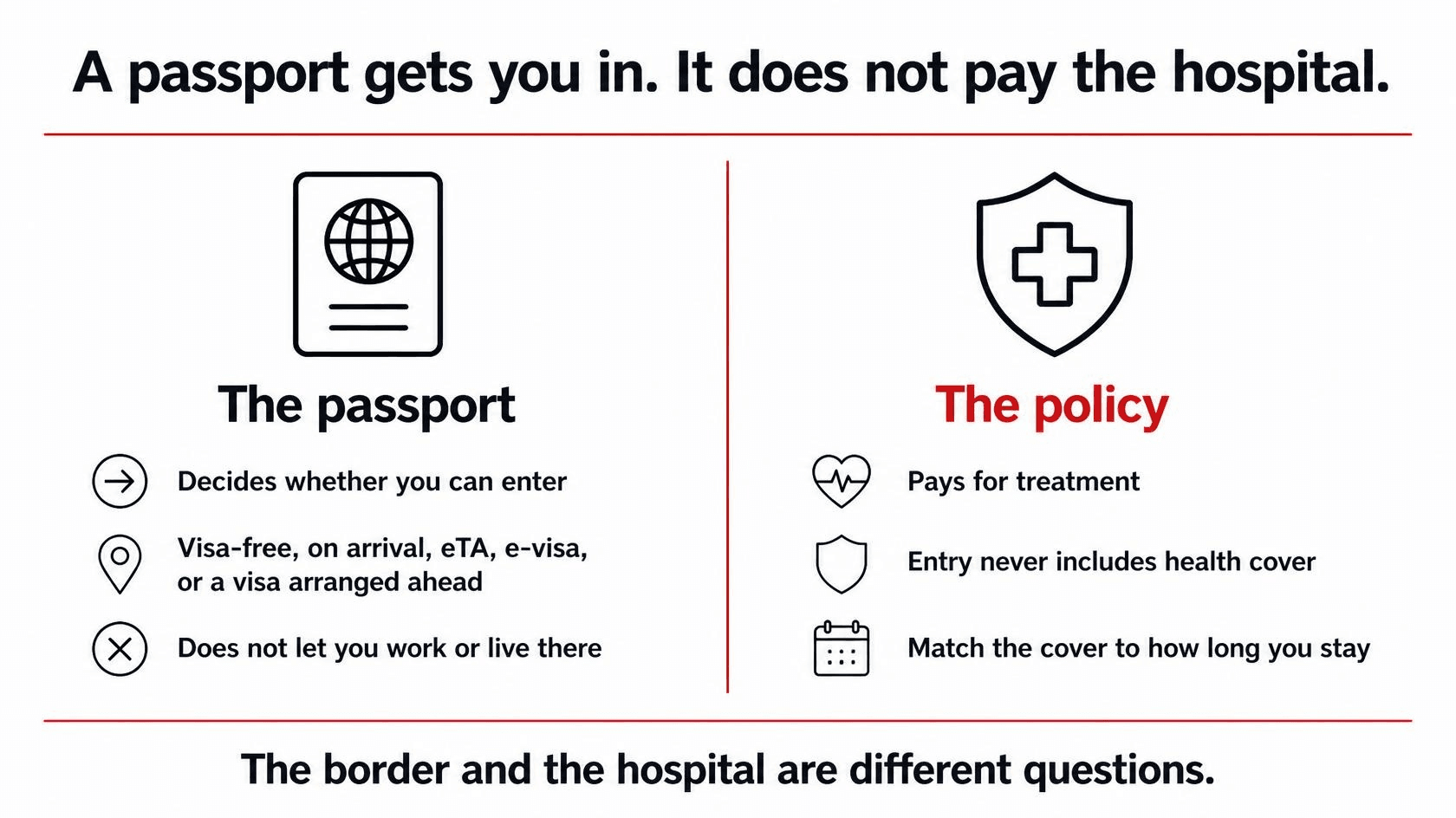
Montenegro's public system is funded but underfunded in practice, with long waits, and the only tertiary hospital is the Clinical Centre of Montenegro in Podgorica.
Nomads and expats lean on private clinics, chiefly Codra Hospital in Podgorica, which also handles emergencies, and Meljine near Herceg Novi on the coast. English is realistic in the private clinics and the coastal tourist towns, less so in public facilities and the rural north.
Referred abroad for advanced care
The caveat that shapes your insurance: for advanced care, complex surgery, serious oncology, or cardiac and neurosurgery, patients are commonly referred abroad, to Belgrade, Croatia or Italy. That makes medical evacuation the cover that counts. The general emergency number is 112, and 124 reaches an ambulance. Pharmacies (apoteka) are widely available in towns, with rotating duty pharmacies after hours.
What you'd pay
Typical costs
| Private GP or consultation | €20 to €30 (~$25–35) |
|---|---|
| Common prescription medicines | about €4 to €10 (~$5–10) |
| Emergency or urgent private visit | variable, paid upfront, often in cash |
| Serious admission or surgery | no fixed tariff, but roughly 50 to 70% below Western Europe, payable upfront |
Montenegro publishes no official private tariff, so treat these as indicative. The relevant number is not the day rate but the cost of being moved abroad for a serious case, which is why evacuation cover matters more here than the local prices.
Entry & stay
Visa, residency & insurance
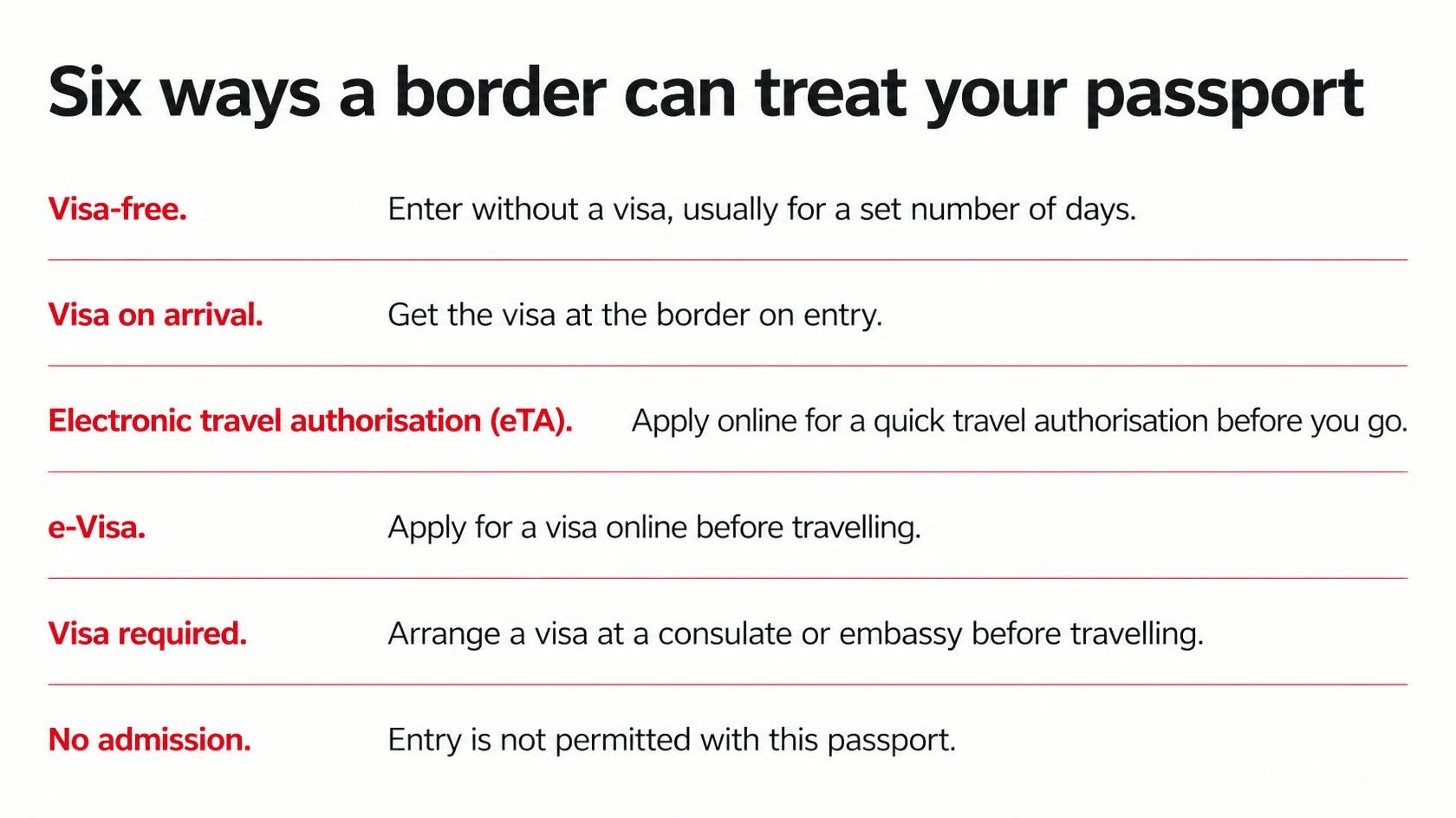
Montenegro is an EU candidate, not an EU or Schengen member, and it uses the euro.
US, British, Canadian and Australian visitors enter visa-free for 90 days in any 180, and because Montenegro is outside Schengen, that time does not count against your Schengen allowance. Travel insurance is not a legal entry requirement for visa-free visitors.
Digital nomad permit and tax
To stay and work remotely, Montenegro's digital nomad residence permit is for people working online for a foreign employer or their own foreign company, not for Montenegrin clients. It runs up to two years and extends for up to two more. The headline draw is tax: foreign-source income under the permit is exempt from Montenegrin income tax, though spending 183 days or more can make you tax-resident. The income test is pegged to three times the Montenegrin minimum wage, reported at roughly €1,350 to €2,010 a month, so confirm the live figure with the interior ministry. Insurance is required: valid health insurance covering Montenegro for the stay, though no specific minimum sum is confirmed in the nomad rule, so insure for the real risk, especially evacuation. We lay out the visa on the Montenegro digital nomad visa page.
Who these rules apply to: Most Western (US/UK/EU/EEA/CA/AU/NZ/Swiss) for visa-free 90/180. DNV open to non-EU remote workers employed by or contracted to companies outside Montenegro
- Recommended
Visa-free short stay (90/180)
90 in 180US/UK/EU/EEA/CA/AU/NZ/Swiss for tourism or short-term business. Passport 3+ months beyond stay; white-card registration with police or accommodation within 24 hrs of arrival
- Required
Short-stay Schengen-style C visa
Up to 90 in 180; single or multi-entryNationals not on Montenegro visa-free list (e.g. India, China, most African, some Asian) without valid multi-entry Schengen/US/UK/Irish. Montenegrin embassy/consulate application, passport, photo, itinerary, accommodation, funds, return, fee ~60-80 USD
- Optional
Temporary Residence + Work Permit (Employment)
Up to 1 year tied to contract, renewableForeigners with Montenegrin job offer. Contract with registered Montenegrin employer, employer-filed work-permit application, clean record, accommodation
- Required
Digital Nomad Visa
Up to 2 years, renewable once for 4 yrs total; program set to end 31 Dec 2026Non-EU remote workers employed by or contracted to non-Montenegrin companies; freelancers with foreign clients. Foreign remote-work proof, monthly income ≥ 3x Montenegrin min wage (~1,800-2,400 EUR depending on education), clean record, accommodation
- Required
Temporary Residence Permit (Privremeni boravak)
Up to 1 year, renewable annually; PR path after 5 yrsForeigners >90 days for real estate, business, family, study or other grounds. Passport 6+ months beyond permit, basis proof (deed, company, family), accommodation, clean record, means (~3,843 USD in Montenegrin bank or income >367 USD/month)
- Required
Residence by Real Estate
1 year, renewable annually while property ownedForeigners owning residential property in Montenegro. Title deed in applicant's name, passport, clean record, subsistence funds
Visa rules change often and depend on your nationality. Always confirm with the official immigration service or your nearest consulate before you apply.
Interactive
Verified pricesWhat would it cost in Montenegro without insurance?
Off a kerb, off a bouldering wall, off a wet bathroom floor. No admission, just a bad afternoon.
| Emergency room, on arrival | $300–$1,000 |
| X-ray to confirm the break | $34–$102 |
| You pay, out of pocket | $334–$1,102 |
That is the bill you carry alone. Insurance exists for exactly this.
See what a match needsTypical private-care estimates for illustration, not a quote. Actual bills vary by hospital, city and severity.
Local risk notes
What to watch out for in Montenegro
- The roads.
- Montenegro's mountain and coastal roads are narrow, winding and often without guardrails, with aggressive overtaking; the Morača Canyon route north of Podgorica is notably dangerous, and winter adds ice. This is the real daily risk.
- Earthquakes. Montenegro sits in an active Adriatic seismic zone; the 1979 magnitude-6.9 quake was devastating. It is a normal background risk.
- Summer heat and wildfires. Hot, dry summers from roughly April to October bring wildfire risk.
- The sea. Autumn and winter storms bring strong undertows, and submerged rocks cause diving injuries, so don't dive into unknown water.
- Tap water. It is potable in Podgorica and the main coastal towns; bottled is sometimes preferred for taste or in rural areas.
Common questions
Montenegro insurance FAQ
Yes, a digital nomad residence permit for people working online for a foreign employer or their own foreign company. It runs up to two years, extends for up to two more, and exempts foreign income from Montenegrin tax.
Yes, valid health insurance covering Montenegro for the stay. No specific minimum sum is confirmed in the nomad rule, so insure for the real risk, and prioritise evacuation given complex cases go abroad.
No. Montenegro is outside Schengen, so your stay there does not use up the Schengen 90-in-180 allowance.
It is pegged to three times the Montenegrin minimum wage, reported at roughly €1,350 to €2,010 a month. Confirm the current figure with the interior ministry.
The public system is basic, so nomads use private clinics like Codra in Podgorica. Complex cases are referred abroad to Belgrade, Croatia or Italy, which is why evacuation cover matters.
Yes, in Podgorica and the main coastal towns; bottled is sometimes preferred for taste or in rural areas.
Here for a few weeks rather than living here? A trip policy is the right tool; see our guide to the best travel insurance for digital nomads.
This page is the healthcare guide. It does not quote a premium and does not name an insurer. How we measure cost.
In 3 steps
- 01
Fill out
The form only asks what changes the plan.
- 02
We find your match
We compare the panel against your route, stay and visa.
- 03
Become a member
If the offer fits, you take it out directly.
Have a look if this page was not the question you came with.