Destination
Healthcare in Andorra, and what it costs without cover
A tax-light mountain micro-state with a real remote-worker permit and a public system you do not join as a nomad. With one hospital in the whole country, private cover that pays for transfers to Spain or France is the part to get right.
A short trip to Andorra can still use travel cover. Living there needs international health insurance that outlasts the visa.
- Best for Long-term nomads
- Best for Slowmads
- Best for Freelancers
- Best for Perpetual travelers
- Insurance required?
- Requiredprivate cover valid in Andorra · no fixed minimum
- Recommended coverage
- Comprehensive, covering hospitalisation and cross-border transfer
- Emergency number
- 112116 ambulance
- Healthcare quality
- High qualityone hospital · referrals abroad
The system
Healthcare system in Andorra
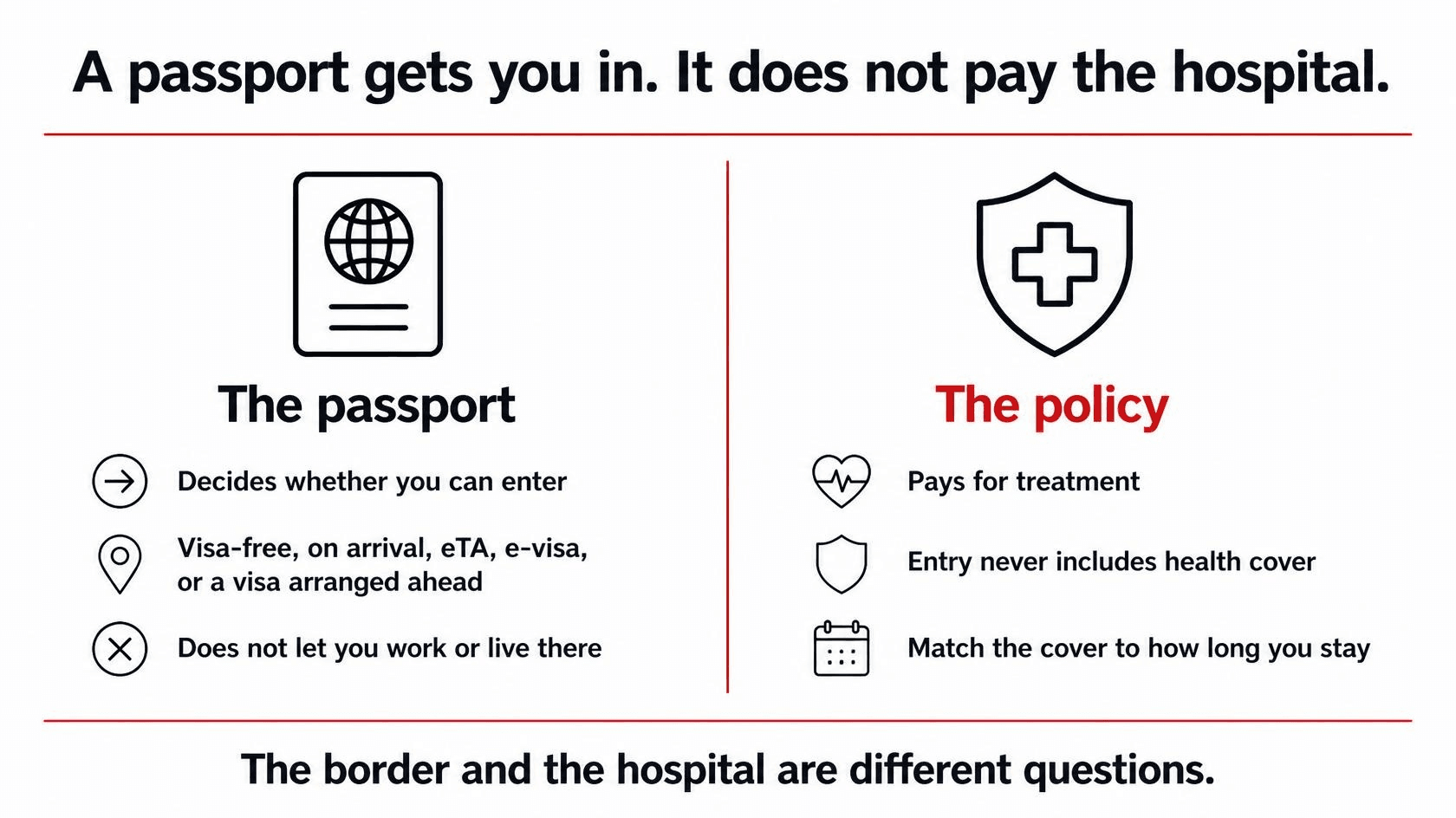
Andorra runs a public social-security system, CASS (Caixa Andorrana de Seguretat Social), that reimburses care rather than providing it free at the point of use: typically 100% for a GP, at least 75% for specialists and around 90% of a hospital stay, with the patient paying upfront or via a third-party arrangement and claiming the rest back.
No public cover for nomads
The catch for nomads is that the digital nomad permit does not put you into CASS at all. You are required to hold private health insurance instead, so in practice nomads live entirely on private cover and private clinics, most of which work under agreement with CASS.
One hospital, referrals abroad
The whole country is served by one hospital, Hospital Nostra Senyora de Meritxell in Escaldes-Engordany (around 200 beds, +376 871 000), backed by roughly ten primary-care centres and one of the highest pharmacy densities per capita in the world, with a weekend duty rota. Catalan is the official language, though Spanish and French are widely spoken and you will find English in clinics used to international patients, less so in routine public care. The emergency number is 112, with English-speaking operators; ambulance is also reachable on 116. The part to plan for is evacuation: Meritxell handles emergencies, surgery, maternity and intensive care, but highly specialised or complex cases are referred out to partner hospitals in Barcelona, Lleida, Toulouse or Montpellier, and a genuine emergency can mean a helicopter transfer over the border. There is no airport in Andorra, so check your policy covers cross-border medical transport and treatment in Spain and France, not just care inside the principality.
What you'd pay
Typical costs
| Private GP consultation | roughly €20 to €60 (~$25–70) before any reimbursement |
|---|---|
| Specialist consultation | roughly €60 to €120 (~$70–140) before reimbursement |
| Private health insurance (nomad/private cover) | commonly cited from about €50 to €150 (~$55–170) per month depending on age and plan |
| One-bedroom rent (residential area) | around €800 to €1,000 (~$920–1,100) per month |
Figures are in euros (Andorra uses the euro despite not being in the EU), with approximate US-dollar equivalents for comparison, and are indicative, drawn from expat and provider guides rather than an official tariff. Out-of-pocket consultation costs vary because CASS-affiliated clinics reimburse part of the bill while you pay upfront, and a serious admission or a transfer to a Spanish or French hospital runs far higher, which is exactly what your private policy needs to absorb.
Entry & stay
Visa, residency & insurance
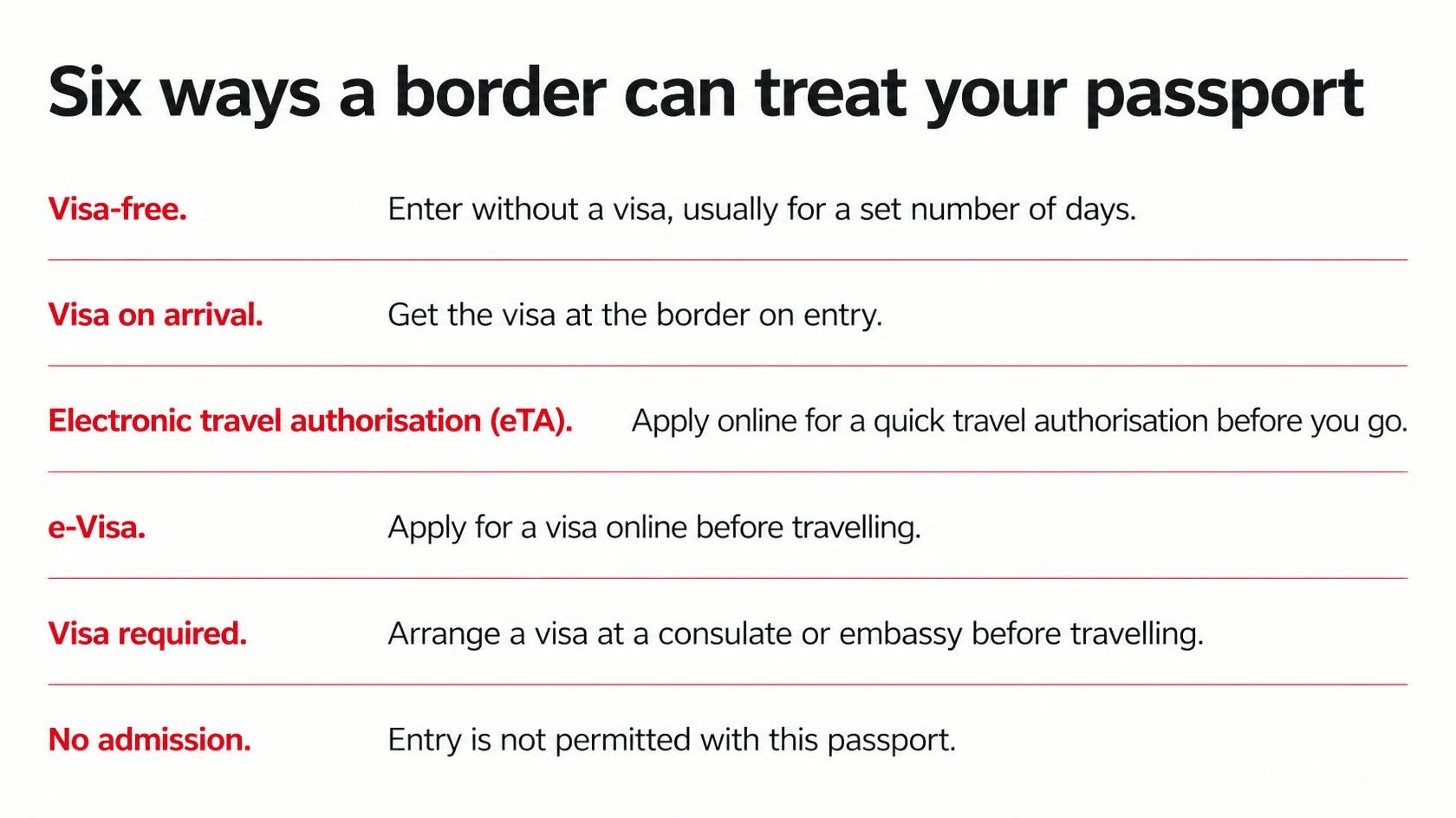
For short visits, US, UK, Canadian and Australian passport holders do not need a visa for Andorra and can stay up to 90 days.
The practical wrinkle is geography: Andorra has no airport and is reachable only by road through Spain or France, both in the Schengen area, so you clear Schengen first and the Schengen 90-days-in-180 clock applies de facto. If you need to re-enter Schengen after your Andorra trip, make sure your status allows it. Andorra does not require visitors to hold travel insurance to enter, but going uninsured in a country with one hospital and helicopter referrals abroad is a poor bet.
A real remote-work route
To stay and work remotely, Andorra has a real route created under Law 42/2022 and its 2023 regulations: a residence permit for people who work entirely through telecommunications and are not tied to a location. You apply via the Ministry of Economy and immigration service, the permit runs two years initially and then renews, and the headline conditions are proof of income of roughly three times the Andorran minimum wage (commonly cited around €4,100 to €4,400 a month, plus more per dependent, so confirm the current figure at application), proof of housing in Andorra, and a commitment to be physically present at least 90 days a year. Crucially for insurance, nomads are not enrolled in CASS and must show private health insurance valid in Andorra; no fixed minimum coverage sum is published for this permit, so buy comprehensive cover that pays for hospitalisation and cross-border transfer rather than a thin policy. Note the practical hurdles too: an annual quota (commonly cited at around 50 permits), an application fee around €2,500 plus a residence-card fee around €500, and approvals that applicants report can be slow. Full detail sits on the Andorra digital nomad visa page.
Who these rules apply to: Most non-EU do not need an Andorran visa but must satisfy Schengen entry at French or Spanish border; from late 2026 most visa-exempt need ETIAS to enter France or Spain. EU/EEA/Swiss may enter with ID card
- Recommended
Tourist (visa-free, Schengen-gated)
90 days in any 180-day Schengen period (counted across Schengen + Andorra)Most non-EU visitors and short-stay travelers entering via France or Spain. Valid passport or EU ID card; from late 2026 ETIAS required for visa-exempt non-EU to enter France or Spain first
- Required
Active Residence (Self-Employed / Compte Propi)
Renewable; min 183 days physical presence/yrEntrepreneurs running an Andorran company, freelancers, remote business owners. Majority shareholding in an Andorran company, real economic activity and effective management proof, 50,000 EUR non-refundable AFA deposit, apostilled criminal record from prior countries of residence, Andorran address
- Required
Sports Professional Residence
Renewable; min 90 days physical presence/yrInternationally recognized athletes and coaches (skiers, cyclists, motorsport) basing in Andorra
- Required
Passive Residence (Residencia Passiva)
Renewable; min 90 days physical presence/yrNon-working investors, retirees, HNW living off passive income. 1,000,000 EUR investment in Andorran assets (800,000 EUR min per real-estate unit) + 50,000 EUR non-refundable AFA deposit under 2026 Omnibus 2 reform; income >300% of Andorran min wage (+100% per dependent); clean record
- Required
Entrepreneur / Innovative Activity Residence
Renewable; min 90 days physical presence/yrFounders launching innovative or high-value projects approved by Andorran government
Visa rules change often and depend on your nationality. Always confirm with the official immigration service or your nearest consulate before you apply.
Once a stay outruns a travel policy's trip limit, our guide to nomad health insurance vs travel insurance explains which kind of cover fits.
Interactive
Verified pricesWhat would it cost in Andorra without insurance?
You pay, out of pocket
$1,500–$8,000
A serious private admission or common surgery.
Bars to scale. A flight home is in another league.
That is the bill you carry alone. Insurance exists for exactly this.
See what a match needsTypical private-care estimates for illustration, not a quote. Actual bills vary by hospital, city and severity.
Local risk notes
What to watch out for in Andorra
- One hospital, real evacuations.
- Serious or specialised cases leave the country for Barcelona, Lleida, Toulouse or Montpellier, so confirm your policy covers treatment and medical transport in Spain and France, not only inside Andorra.
- No public cover as a nomad. The permit keeps you out of CASS, so there is no public safety net; your private policy is the whole of your healthcare cover.
- The Schengen clock. You can only reach Andorra through France or Spain, so your Schengen 90/180 allowance, not Andorra's own rules, is usually the binding constraint on a tourist trip.
- Winter driving. From 1 November to 15 May you must have winter tyres or carry snow chains; the on-the-spot fine is around €180, and mountain roads bring steep grades, tight bends, snow and fog.
- Altitude and terrain. The country sits high in the Pyrenees, with skiing, hiking and mountain sports that drive most injury claims, so check your policy covers your activities and the altitude.
Common questions
Andorra insurance FAQ
Yes. Under Law 42/2022 and its 2023 regulations, Andorra issues a residence permit for people who work remotely through telecommunications. It runs two years initially and then renews, and it does not enrol you in the public health system.
Private health insurance valid in Andorra, because the permit does not put you into CASS. There is no published minimum coverage sum for the permit, so choose comprehensive cover that includes hospitalisation and cross-border medical transfer.
No. US, UK, Canadian and Australian visitors can stay up to 90 days without a visa. But since you can only enter via Spain or France, the Schengen 90-days-in-180 rule effectively governs your trip.
Roughly three times the Andorran minimum wage, commonly cited around €4,100 to €4,400 a month with more required per dependent. The exact figure tracks the minimum wage and any quota or fee changes, so confirm the current number when you apply.
Care quality is high; Andorra consistently ranks among the world's top few countries for life expectancy. There is one hospital plus primary-care centres and many pharmacies. Catalan is official with Spanish and French widely spoken, and you will find English in clinics used to international patients more than in routine public care.
Call 112 (or 116 for an ambulance). The national hospital handles emergencies and surgery, but complex cases are referred to Barcelona, Lleida, Toulouse or Montpellier, sometimes by helicopter, which is why cross-border medical transport cover matters.
This page is the healthcare guide. It does not quote a premium and does not name an insurer. How we measure cost.
In 3 steps
- 01
Fill out
The form only asks what changes the plan.
- 02
We find your match
We compare the panel against your route, stay and visa.
- 03
Become a member
If the offer fits, you take it out directly.
Have a look if this page was not the question you came with.