Destination
Healthcare in Curaçao, and what it costs without cover
A Dutch Caribbean island with a real remote-work permit, English everywhere and safe tap water. Medicine here is island-scale, and serious cases leave for Colombia at your cost.
A short trip to Curaçao can still use travel cover. Living there needs international health insurance that outlasts the visa.
- Best for Long-term nomads
- Best for Slowmads
- Best for Freelancers
- Best for Perpetual travelers
- Insurance required?
- Required for the @HOME permit · valid international travel and medical insurance including COVID-19 cover is a stated prerequisiteno local insurer required
- Emergency number
- 912911 also cited
- Healthcare quality
- One main hospital (Curaçao Medical Center) plus private clinics; care described as limited
The system
Healthcare system in Curaçao
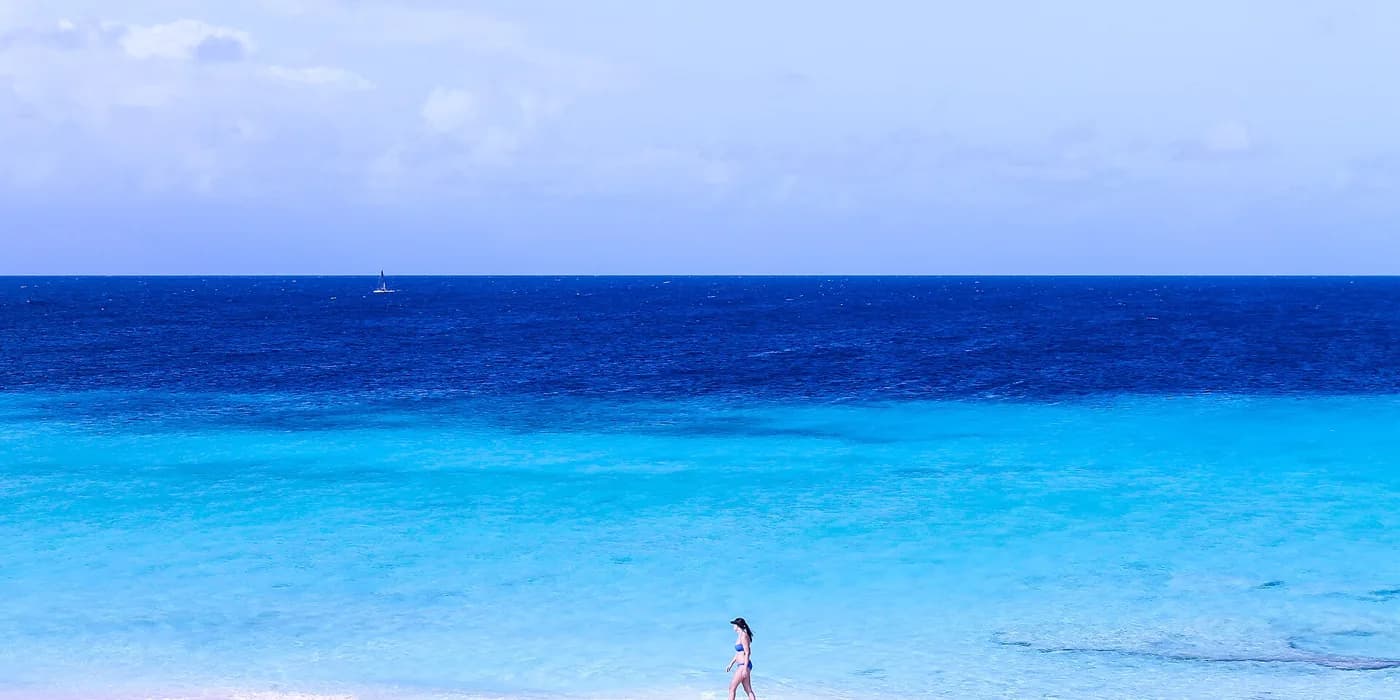
Curaçao has one main hospital and a handful of private clinics, and nomads use both.
The Curaçao Medical Center
The Curaçao Medical Center (CMC) in Willemstad, opened in 2019, is the island's acute and trauma centre: it has the only intensive care unit, a 24-hour emergency room, trauma and neurosurgeons, and, useful for the dive crowd, a hyperbaric (decompression) chamber on site. For day-to-day care there are private options including the Antillean Adventist Hospital (Advent Hospital) and Taams Clinic, plus clinics that do consultations, house calls and telemedicine for visitors.
Language and the evacuation reality
English is widely spoken alongside Dutch and Papiamentu, so navigating care is straightforward. The ambulance number is 912 (you will also see 911 cited locally, so save both). Pharmacies, known as botikas, are well stocked and easy to find, with rotating after-hours service; basic medicines are over the counter, but antibiotics and controlled drugs need a prescription, so bring enough of anything essential with a doctor's letter. The island caveat is the one that matters most: the US Consulate states plainly that access to quality medical care is limited and that critically ill patients needing services not offered on Curaçao are normally transferred to Colombia at the patient's expense. European EHIC and GHIC cards are not valid here. That is the evacuation reality this page keeps coming back to.
What you'd pay
Typical costs
| Private doctor visit | about US$60 to US$120 |
|---|---|
| Emergency room visit | about US$150 to US$400 |
| Ambulance call-out | about US$100 to US$250 |
| Overnight hospital stay | about US$300 to US$800 (a serious case or an off-island evacuation runs far higher) |
Curaçao publishes no official tourist tariff, so treat these as indicative ranges, not quotes. The local currency is the Caribbean guilder (XCG), which replaced the Netherlands Antillean guilder in 2025 at the same peg of about 1.79 to the US dollar, and US dollars are widely accepted. The number that should drive your insurance decision is not the doctor's fee: it is the air ambulance. The default off-island destination for serious cases is Colombia, and that flight is the expense a policy here has to be built around.
Entry & stay
Visa, residency & insurance
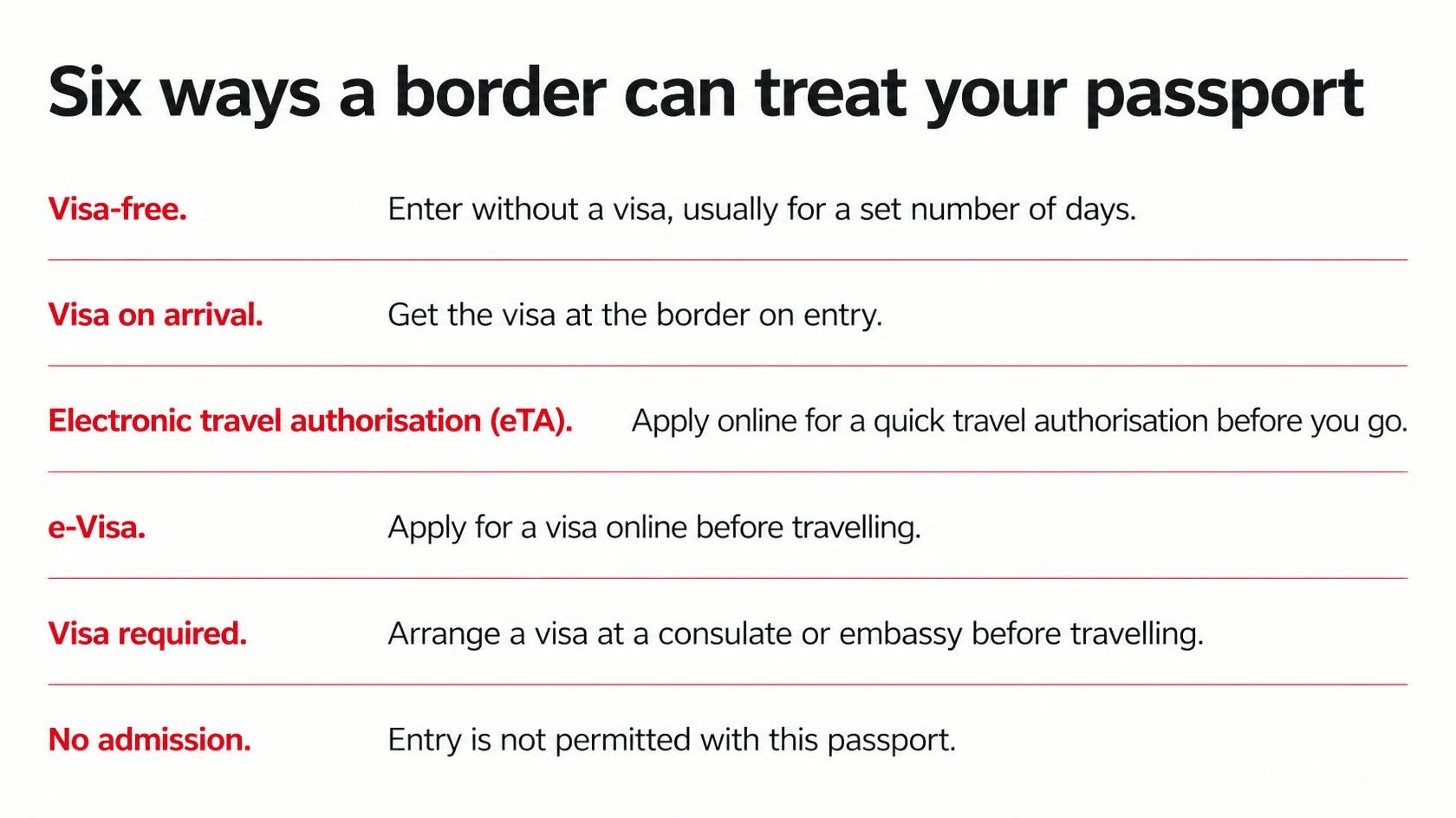
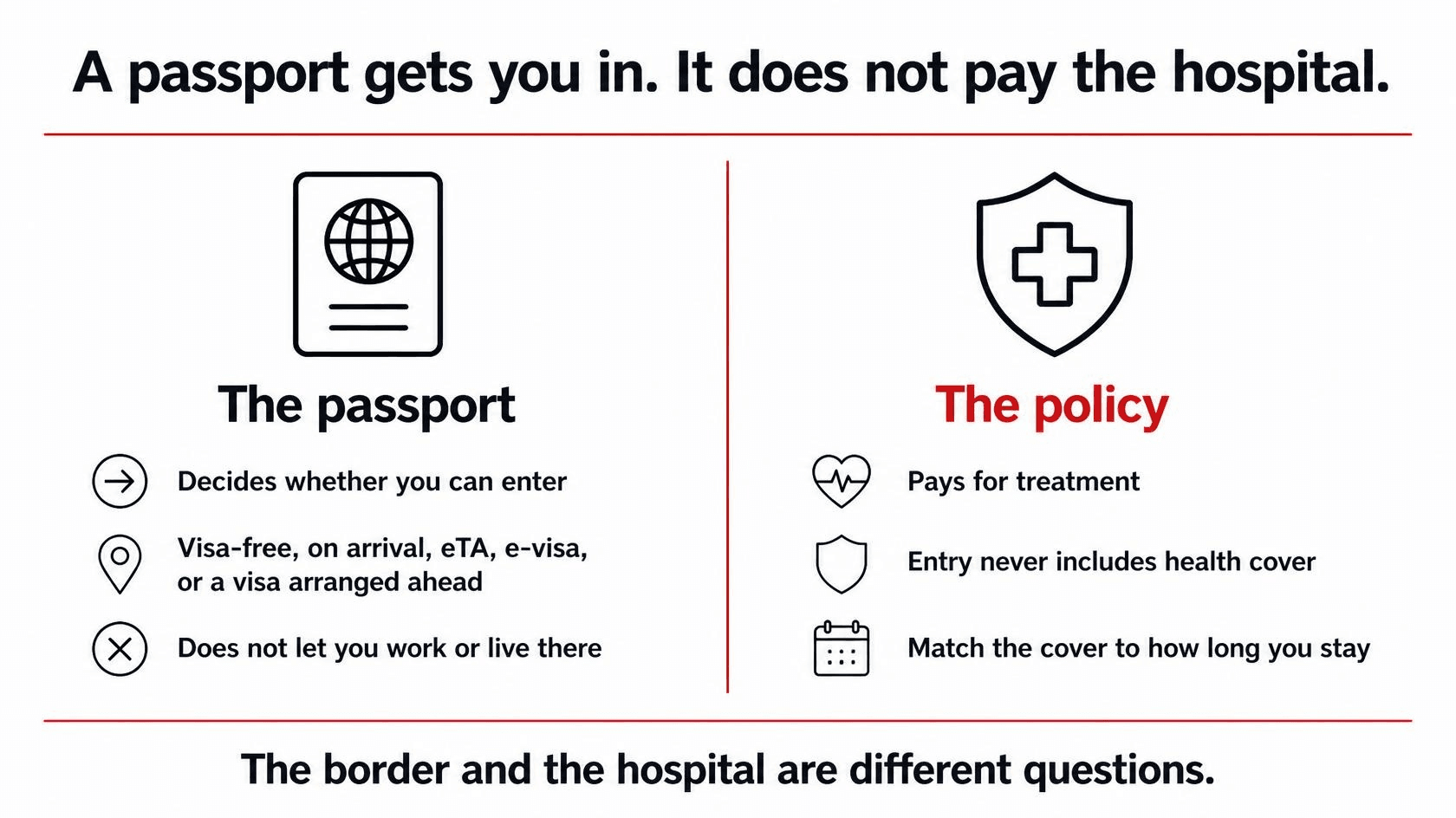
For short visits, US, British, Canadian and Australian travellers all enter visa-free.
US citizens get up to 180 days per calendar year; British, Canadian and Australian visitors get up to 90 days (Canadians within a 180-day window). Everyone must complete the free online Digital Immigration card before arrival and hold an onward ticket plus proof of funds. Travel insurance is not a legal entry requirement for tourists, but given that serious cases leave the island, it is strongly advised.
@HOME in Curaçao permit
To stay longer and keep working, Curaçao offers the @HOME in Curaçao remote-work permit, for people working remotely for an employer or clients outside the island (you cannot work for a local employer). The immigration service lists remote workers and digital nomads as a purpose of stay in their own right, so this is a real route rather than a tourism label. It runs to a maximum of six months, and the first application costs XCG 535, roughly US$299. Holders are not liable for Curaçao income tax. There is no officially published minimum income, only a requirement to show a livable income and sufficient funds, so treat the monthly thresholds quoted online as unofficial.
Insurance is where the two official sources part company, and it is worth knowing which is which. The programme's own site states that valid international travel and medical insurance, including COVID-19 cover, is a prerequisite for approval. The immigration service, which actually grants the permit, lists only proof of payment, a passport valid at least six months and proof of means of subsistence. Treat insurance as a stated programme condition rather than a verified legal one, and bring a policy regardless: separately, the UK Foreign Office notes that extending a stay beyond the visa-free period requires proof of travel insurance.
No minimum sum is set and no local insurer is required, so the choice is entirely yours. On this island the part worth getting right is medical evacuation.
Who these rules apply to: Most Western visa-free for short; @Home in Curacao open to non-residents working for foreign employers or clients
- Recommended
Tourist visa-free entry
30 consecutive days, up to 90 days per 180-day period (varies by nationality)Most Western (EU/UK/CA/AU and others). Valid passport, return ticket, accommodation, funds, completed digital immigration card
- Recommended
Tourist visa-free (US and Dutch nationals)
Up to 180 consecutive days per calendar yearUS and Dutch passport holders. Valid passport, return ticket, accommodation, digital immigration card; declaration of admission required to re-enter same year after 6 months
- Optional
Short-stay visa (Caribbean visa)
Up to 90 days in 180Nationals from countries requiring a visa (e.g. many African, Asian, some South American). Apply at Dutch embassy/consulate; passport, return ticket, funds, accommodation, travel insurance, purpose
- Required
@Home in Curacao (digital nomad permit)
6 months, renewable once for 12 total; no PR pathRemote workers, freelancers, business owners for clients/employers outside Curacao. Valid passport, remote-income proof from non-Curacao sources, clean record, residential address or lease, online application ~264 USD fee
- Required
Residence permit (temporary)
Typically 1 year, renewable; longer-term path possibleIndividuals staying >180 days, working locally, studying, retiring, or joining family. Application to Admission Organization (Toelatingsorganisatie); passport, income or local sponsor, clean record, medical cert, accommodation
Visa rules change often and depend on your nationality. Always confirm with the official immigration service or your nearest consulate before you apply.
Comparing plans for a long stay in Curaçao? Our guide to the best health insurance for a nomad visa sets out what to check first.
Interactive
Verified pricesWhat would it cost in Curaçao without insurance?
A fever you assume is flu until the platelet count comes back. Common across the places nomads spend winters.
| The first doctor visit, before anyone worries | $60–$120 |
| Back again, this time to emergency | $150–$400 |
| Four nights on fluids and monitoring | $3,444 |
| You pay, out of pocket | $3,654–$3,964 |
Priced as one lump instead of itemised, a serious admission in Curaçao runs $300 to $800.
That is the bill you carry alone. Insurance exists for exactly this.
See what a match needsTypical private-care estimates for illustration, not a quote. Actual bills vary by hospital, city and severity.
Local risk notes
What to watch out for in Curaçao
- Off-island evacuation.
- The island's own US Consulate calls local care limited and says critically ill patients are normally flown to Colombia at the patient's expense, so insurance with strong medical evacuation cover is the headline here, not a nicety.
- Mosquito-borne disease. Dengue is present year-round and peaks in the October-to-January rains; Zika and chikungunya also circulate. The mosquitoes bite by day, so use repellent.
- Sun and dehydration. The Caribbean sun is intense and the island is dry, so heat and dehydration are easy to underestimate, especially on long days outdoors or diving.
- Rip currents. Strong currents cause drownings every year; swim at lifeguarded spots and respect local warnings rather than untested coves.
- Diving accidents. Curaçao is a major shore-diving destination, and decompression illness is a real risk; the CMC chamber treats it on-island, but confirm your policy covers diving.
- Petty crime. Curaçao is a low-risk destination (US Level 1), but pickpocketing and theft from cars and unattended bags happen, so take normal precautions.
Common questions
Curaçao insurance FAQ
Yes, the @HOME in Curaçao remote-work permit. It is for people working remotely for an employer or clients outside Curaçao (not a local employer), grants six months extendable by another six, and costs about ANG 535 (US$294).
Yes. A valid international travel and medical insurance, including COVID-19 coverage, is a stated prerequisite for approval. No minimum sum is published and you do not have to use a local insurer, so prioritise strong medical evacuation cover.
There is no officially published figure. The requirement is to show a livable income and sufficient funds, so the specific monthly amounts circulating online are unofficial and should be verified with the program.
US citizens get up to 180 days per calendar year; British, Canadian and Australian visitors get up to 90 days. Everyone completes the free Digital Immigration card before arrival and needs an onward ticket and proof of funds.
Because the US Consulate states that local care is limited and that critically ill patients are normally transferred to Colombia at their own cost. A transfer to the US can run roughly US$15,000 to US$25,000, which is why evacuation cover is the part that counts.
Yes. Curaçao's public water is desalinated, well regulated and widely considered safe and high quality, so you do not need bottled water.
This page is the healthcare guide. It does not quote a premium and does not name an insurer. How we measure cost.
In 3 steps
- 01
Fill out
The form only asks what changes the plan.
- 02
We find your match
We compare the panel against your route, stay and visa.
- 03
Become a member
If the offer fits, you take it out directly.
Have a look if this page was not the question you came with.