Destination
Healthcare in Greece, and what it costs without cover
A well-trodden nomad visa, island living, English-speaking private hospitals, and a 50% tax break for movers. Bring proper health insurance rather than a short-term travel policy, and expect to plan around wildfire season and the heat.
A short trip to Greece can still use travel cover. Living there needs international health insurance that outlasts the visa.
- Best for Long-term nomads
- Best for Slowmads
- Best for Freelancers
- Best for Perpetual travelers
- Insurance required?
- RequiredThe Digital Nomad Visa needs proper health insurance valid in Greece covering hospitalisation and repatriation, not a short-term travel policy
- Emergency number
- 112166 for EKAB ambulance
- Healthcare quality
- Modern, English-speaking private sector; JCI-accredited Hygeia in Athens
The system
Healthcare system in Greece
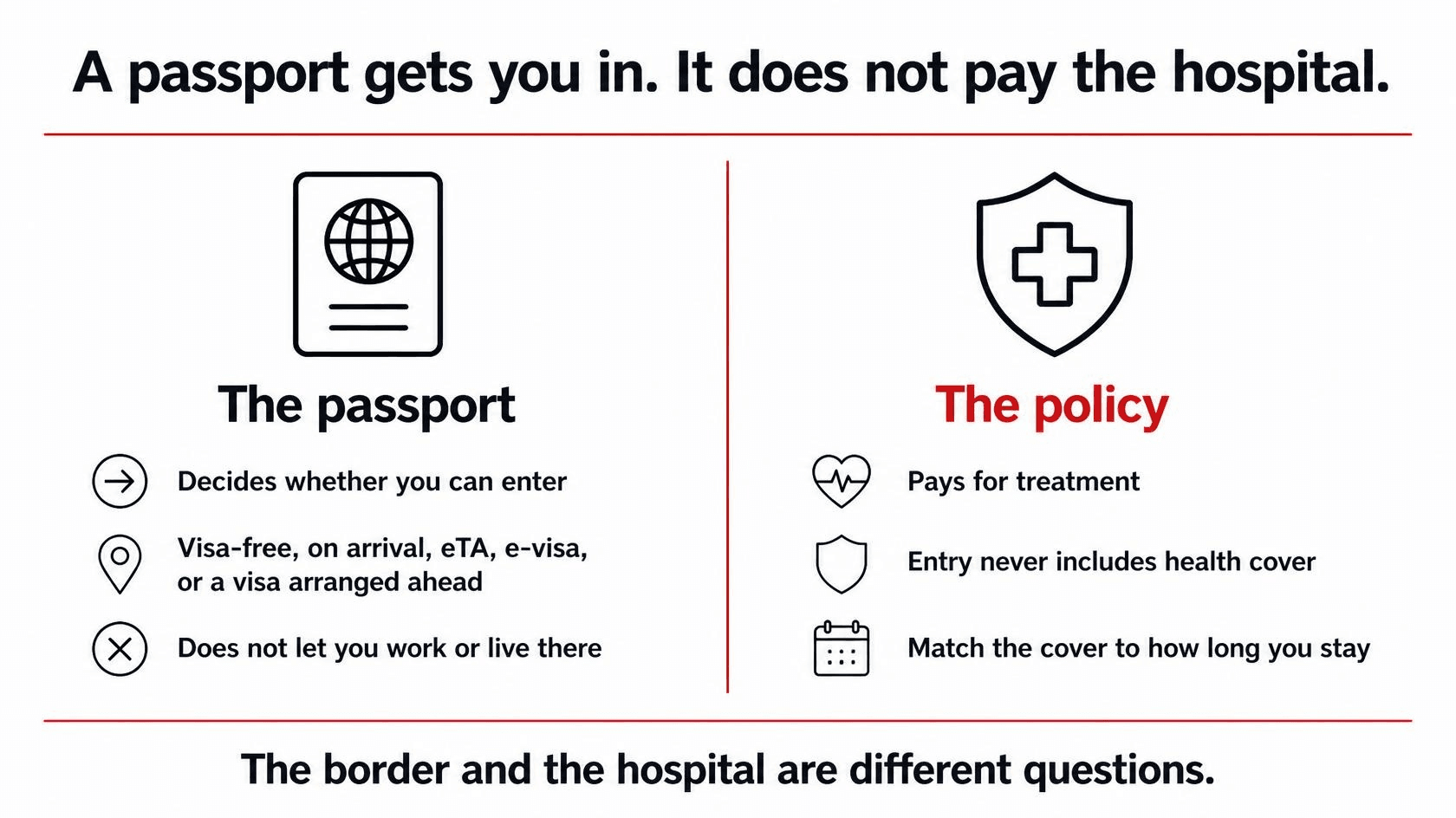
Greece has a universal public system, the ESY, funded through social security, but using it as a resident means registering for an AMKA social-security number, and waits and English can be variable.
For anything timely, nomads use the private sector, which is modern, quick to book, and where English is commonly spoken.
Private hospitals to know
The private hospitals to know are in Athens. Hygeia was the first hospital in Greece to earn Joint Commission International accreditation, holding the JCI gold seal since 2010, and Metropolitan, Henry Dunant and IASO are also well-regarded private hospitals that handle international patients. For islands and smaller towns, serious care usually means a transfer to Athens or Thessaloniki.
Pharmacies and emergency numbers
Pharmacies (farmakeio), marked by a green cross, are the first stop for minor issues and can advise widely; a duty-pharmacy rota covers nights and weekends. The emergency number is the pan-European 112, and 166 still reaches the national ambulance service (EKAB) directly.
What you'd pay
Typical costs
| Private GP or specialist consultation | €50 to €120 (~$55–140) |
|---|---|
| Emergency or urgent private visit | $120 to $180 USD |
| Hospital, per day (top private) | from about €550 a night (~$630) |
| Routine surgery, such as a laparoscopic procedure | €3,000 to €5,000 (~$3,400–5,700) |
These are typical private-sector figures rather than an official tariff, and the euro and dollar are close to parity in this range. Public emergency care is far cheaper, but the private route is what most nomads actually use, and a serious case still adds up.
Entry & stay
Visa, residency & insurance
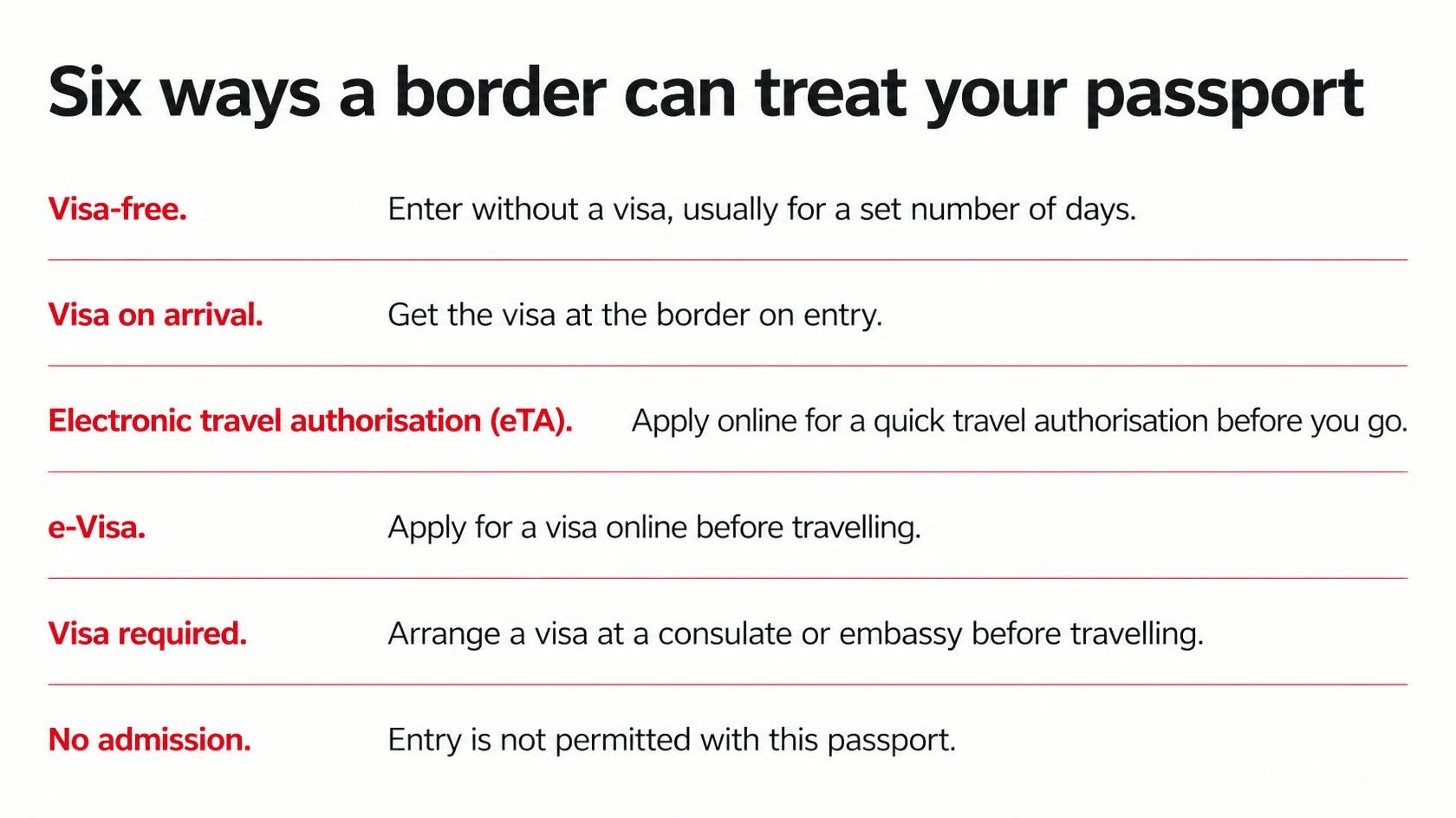
For short stays, Greece is in the Schengen area, so US, British, Canadian and Australian visitors enter visa-free for 90 days in any 180-day period, counted across all Schengen countries.
The EU's ETIAS travel authorisation is expected to start late in 2026 but will not be mandatory until 2027. Travel insurance is not required to enter visa-free, though US plans rarely cover care abroad, so it is wise to have.
The Digital Nomad Visa
To stay and work remotely, Greece's Digital Nomad Visa (Law 4825/2021) is for non-EU nationals working for employers or clients outside Greece, on income of at least €3,500 a month, with more required for a spouse or children. It is a 12-month visa that converts to a two-year residence permit, renewable. The insurance condition matters here: Greece wants proper health insurance valid in Greece, covering the full period including hospitalisation and repatriation, not a short-term travel policy. There is no single published euro minimum for the nomad visa itself (the €30,000 figure you see is the separate Schengen-visa rule). A draw worth knowing: people who move their tax residence to Greece can claim a 50% income-tax exemption for up to seven years. We lay out the visa on the Greece digital nomad visa page.
Who these rules apply to: Non-EU and non-EEA (US, UK, CA, AU, etc.); EU/EEA/Swiss have free movement
- Required
Schengen Short Stay (Type C)
90 days in 180Non-EU tourists and short-term visitors. Valid passport, proof of funds, accommodation, return ticket
- Required
Digital Nomad Visa (Type D)
12 months, convertible to 2-year residence permit, renewableNon-EU remote workers and freelancers earning from outside Greece. Income min 3,500 EUR (~3,800 USD)/month net, remote-work proof, clean record. 50% tax break up to 7 years via AADE
- Required
Financially Independent Persons (FIP) Visa
Type D entry up to 12 months, then 3-year residence permit, renewableRetirees, passive-income earners, FIRE expats. Passive income min 3,500 EUR (~3,800 USD)/month or savings 126,000 EUR (~137,000 USD), +20% spouse +15% per child; no work in Greece
- Required
Golden Visa
5-year renewable, no minimum stayNon-EU investors and families. Real estate 800,000 EUR Athens/Thessaloniki/Mykonos/Santorini and islands 3,100+; 400,000 EUR elsewhere; 250,000 EUR for commercial-to-residential or heritage. 120 m2 min, no short-term rentals
- Required
National Residence Permit (general)
1 to 3 years initially, renewableNon-EU on work, study, family, etc.. Category-specific (contract, university enrolment, family ties), Greek tax number
Visa rules change often and depend on your nationality. Always confirm with the official immigration service or your nearest consulate before you apply.
If you will keep moving after Greece, cover that keeps running between countries is explained in our guide to digital nomad insurance that meets visa minimums.
Interactive
Verified pricesWhat would it cost in Greece without insurance?
A fever you assume is flu until the platelet count comes back. Common across the places nomads spend winters.
| The first doctor visit, before anyone worries | $45–$115 |
| Back again, this time to emergency | $175–$900 |
| Four nights on fluids and monitoring | $2,200 |
| You pay, out of pocket | $2,420–$3,215 |
Priced as one lump instead of itemised, a serious admission in Greece runs $1,700 to $6,000.
That is the bill you carry alone. Insurance exists for exactly this.
See what a match needsTypical private-care estimates for illustration, not a quote. Actual bills vary by hospital, city and severity.
Local risk notes
What to watch out for in Greece
- Wildfires.
- Hot, dry, windy summers bring frequent and sometimes deadly wildfires from roughly April to October, especially in the south and on the islands. Starting one, even accidentally, is a criminal offence.
- Earthquakes. Greece is one of Europe's most seismically active countries; moderate-to-strong quakes happen, including near the islands, as the 2025 Santorini-area swarm showed.
- Summer heat. Temperatures regularly top 38°C in summer, and authorities issue heat warnings and even close the Acropolis during the hottest hours.
- Island ferries. Ferries are the main way around the islands and are routinely suspended in high winds, so build buffer days into island travel.
- Tap water. It is safe to drink on the mainland and in Athens, but on many islands the water is desalinated or salty and bottled is the norm, so check locally.
Common questions
Greece insurance FAQ
Yes, under Law 4825/2021. It is for non-EU nationals working for clients or employers outside Greece, on income of at least €3,500 a month. It runs 12 months and converts to a two-year residence permit, renewable.
Proper health insurance valid in Greece for the full period, covering hospitalisation and repatriation, not a short-term travel policy. There is no single published euro minimum for the nomad visa itself.
No. That €30,000 figure is the rule for Schengen short-stay visas, not the digital nomad visa. The nomad visa requires comprehensive health insurance valid in Greece, without a single published amount.
No. As a Schengen member, Greece lets US, British, Canadian and Australian visitors stay 90 days in any 180. ETIAS authorisation is coming but not mandatory until 2027.
Yes. People who move their tax residence to Greece can claim a 50% exemption on Greek-source income for up to seven years, subject to conditions. It is a separate regime from the visa.
The private sector is modern and English-speaking, with JCI-accredited Hygeia and other strong private hospitals in Athens. The public ESY is universal but slower. Most nomads use private care.
On the mainland and in Athens, yes. On many islands it is desalinated or salty, so bottled water is the norm; check locally.
This page is the healthcare guide. It does not quote a premium and does not name an insurer. How we measure cost.
In 3 steps
- 01
Fill out
The form only asks what changes the plan.
- 02
We find your match
We compare the panel against your route, stay and visa.
- 03
Become a member
If the offer fits, you take it out directly.
Have a look if this page was not the question you came with.