
Destination
Healthcare in Bahamas, and what it costs without cover
The remote-work permit is still advertised by tourism but unknown to immigration, with no working way to apply, so most people come as visitors. English-speaking care, no income tax, and an archipelago where a serious case means an air ambulance.
A short trip to Bahamas can still use travel cover. Living there needs international health insurance that outlasts the visa.
- Best for Long-term nomads
- Best for Slowmads
- Best for Freelancers
- Best for Perpetual travelers
- Insurance required?
- Not required to enter as a visitor
- Recommended coverage
- No minimum sum published; prioritise medical evacuationair ambulance to Miami runs into five figures
- Emergency number
- 919911 also connects
- Healthcare quality
- English-speaking; good private care in Nassau (Doctors Hospital), basic clinics on the Out Islands
The system
Healthcare system in Bahamas
The Bahamas runs a public system anchored by Princess Margaret Hospital in Nassau, a 400-bed acute and trauma centre, with Rand Memorial serving Grand Bahama.
Public and private care
Nomads and expats lean heavily on the private side, where Doctors Hospital in Nassau offers a 24-hour emergency room, an ICU and shorter waits. On the smaller Family Islands (the Out Islands), the reality is different: healthcare is limited to small government clinics doing basic outpatient work, and anything serious is stabilised and moved.
Language and emergency numbers
English is the official language, so consultations and paperwork are straightforward. The all-purpose emergency number is 919 (911 also connects in the Bahamas), not the three-digit codes used on some other Caribbean islands. Pharmacies are well stocked in Nassau and Freeport but thin on the Out Islands, so carry essential medication with a doctor's letter. The point that drives the insurance case: complex or life-threatening cases are routinely airlifted, first to Nassau and often onward to Miami, and there is a dedicated recompression chamber near Lyford Cay for diving injuries. Air ambulance operators quote each Bahamas evacuation individually rather than to a fixed price, and a flight to Florida runs into five figures, which is exactly why a policy with medical evacuation is the one to have here.
What you'd pay
Typical costs
| Private GP or short consultation | around B$95 to B$100 (about US$95 to US$100) |
|---|---|
| Specialist consultation | from about US$150 (a cardiologist visit is commonly cited around this) |
| Emergency room (private) | expect to prepay; budget several hundred US dollars upward |
| Serious admission, surgery, or an air ambulance to Miami | into the thousands, often five figures |
The Bahamian dollar is pegged one-to-one to the US dollar, so prices read almost like US prices, and the cost of living runs roughly 30% above the US mainland because nearly everything is imported. The Bahamas publishes no single official private tariff, so treat these as indicative; private facilities commonly expect prepayment or a deposit and may not bill a foreign insurer directly, meaning you often pay first and claim later.
Entry & stay
Visa, residency & insurance
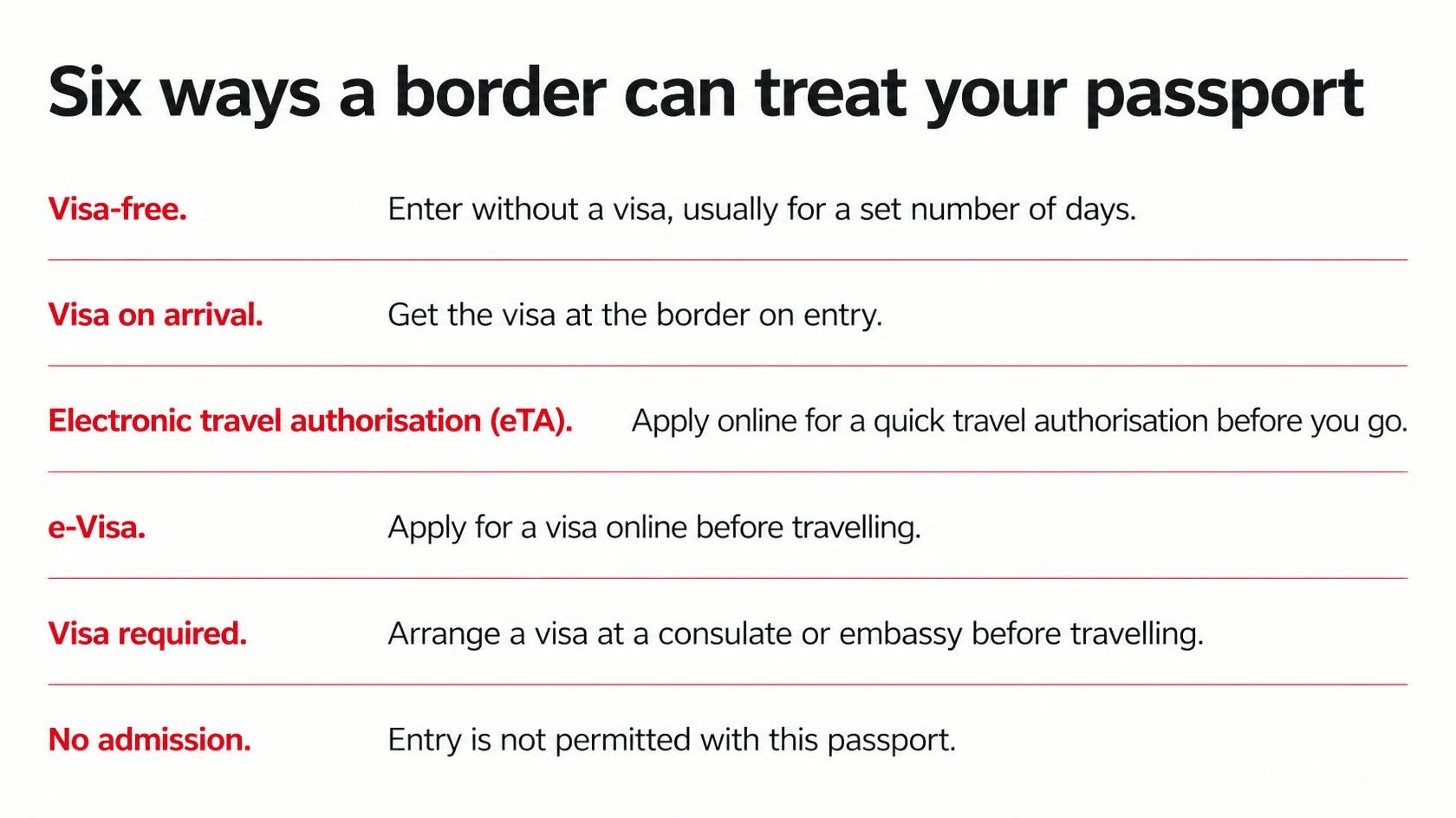
For short stays the Bahamas is easy.
US citizens can enter visa-free as bona fide visitors for up to eight months, Canadians similarly for stays under eight months (landed immigrants get 30 days), and British and Australian visitors enter visa-free as well, with British tourists commonly cited at up to 90 days. Everyone needs a passport valid for at least six months, a return or onward ticket, proof of funds, and a completed immigration card; the officer at the port sets the exact length. Travel insurance is not a legal entry requirement for tourists, though it is strongly advised given the evacuation reality.
Working remotely on BEATS
BEATS launched in 2020 for professionals and students working or studying online for entities outside the islands, running 12 months and renewable up to three years. The published terms are a US$25 application plus a US$1,000 permit, dependants at US$25 plus US$500 each, no income threshold, and proof of medical insurance covering the Bahamas from every applicant and dependant.
The problem is that two arms of the same government now say different things. The programme's own site is still up, unchanged since early 2021, and the Ministry of Tourism still calls BEATS new. The Department of Immigration, which would issue the permit, does not acknowledge it anywhere: not in its list of ways to apply to stay, not in its fee schedule, which contains no line matching the BEATS fees, not in its eServices portal, and not in a search of its own site, on a site that is otherwise actively maintained. The single application link the programme gives no longer resolves in DNS at all.
Immigration advisers reported as far back as January 2022 that the programme appeared suspended, while noting the government had issued no official notice. That is still the position today.
This is not the same as a programme that expired on a stated date, and it would be wrong to tell you BEATS is dead. Nothing has been announced. But nothing supports treating it as obtainable either, and the practical test is simple: there is no address at which an application can currently be filed.
Plan on entering as a visitor and treat any BEATS approval as a bonus rather than a foundation. That is a better fallback than it sounds: as set out above, US and Canadian visitors can be admitted for stays of up to eight months, which is longer than most Caribbean nomad permits grant, and it asks nothing of you beyond a passport, onward travel and means of support. British and Australian visitors get less, commonly 90 days, so the arithmetic changes depending on your passport. There is no Bahamian income or capital gains tax on either footing.
Who these rules apply to: Visa-free tourist for US/UK/EU/Schengen/CA/AU/NZ and most Commonwealth; BEATS open to remote workers and students worldwide; residency permits open to all meeting financial thresholds
- Recommended
Tourist Visa-Free (US)
Up to 8 months (officer discretion)US passport holders for tourism or short visits. Valid passport, return/onward ticket, funds
- Recommended
Tourist Visa-Free (UK, EU, Commonwealth)
Up to 3 monthsUK/EU/Schengen/CA/AU/NZ and most Commonwealth. Valid passport (6 months recommended), return/onward ticket, funds
- Required
BEATS (Bahamas Extended Access Travel Stay)
1 year, renewableRemote workers employed/self-employed by entities outside Bahamas, plus remote students. Valid passport, job letter or self-employment proof (or enrollment for students), funds, 25 USD application fee + 1,000 USD permit (500 USD students), 500 USD per dependent
- Recommended
Annual Residence Permit
1 year renewable annuallyIndependent economic residents, homeowners, spouses/dependents of citizens or permit holders. Application to Director of Immigration, financial self-sufficiency or qualifying tie; gov fee 1,000 USD/yr + 100 USD processing
- Recommended
Economic Permanent Residency (EPR)
Permanent (10-yr asset hold, re-declaration every 10 yrs); ~90 days min cumulative presence/yr expectedHNW investing in Bahamian real estate or government bonds. Min 1,000,000 USD qualifying investment (real estate or Central Bank Zero Coupon Bonds) held 10+ yrs; 200 BSD processing + 20,000 BSD gov fee on approval + 300 BSD per endorsee
Visa rules change often and depend on your nationality. Always confirm with the official immigration service or your nearest consulate before you apply.
If you will keep moving after Bahamas, cover that keeps running between countries is explained in our guide to digital nomad insurance that meets visa minimums.
Interactive
Verified pricesWhat would it cost in Bahamas without insurance?
You pay, out of pocket
$3,000–$10,000
A serious private admission or common surgery.
Bars to scale. A flight home is in another league.
That is the bill you carry alone. Insurance exists for exactly this.
See what a match needsTypical private-care estimates for illustration, not a quote. Actual bills vary by hospital, city and severity.
Local risk notes
What to watch out for in Bahamas
- Off-island evacuation.
- Outside Nassau and Freeport, a serious case means an air ambulance to Nassau or Miami, and a flight to Florida runs into five figures, so medical evacuation cover is the single most important feature here.
- Prepayment at private clinics. Private facilities commonly want a deposit or payment upfront and may not bill your insurer directly, so expect to pay and claim back.
- Hurricane season. The Atlantic season runs June to November; storms can be severe, with power outages and water shortages during and after, so build in flexibility and follow warnings.
- Mosquito-borne disease. Dengue, Zika and chikungunya are present, with risk rising in the June to November rainy season; use repellent and cover up.
- Crime. The US keeps the Bahamas at a Level 2 advisory; most violent crime is in parts of Nassau and Freeport (avoid the "Over the Hill" area south of Shirley Street), so take normal city precautions, especially at night.
Common questions
Bahamas insurance FAQ
On paper yes, in practice no. BEATS launched in 2020 and its site still describes a 12-month permit renewable to three years, but the Department of Immigration lists it nowhere, its fee schedule contains no matching line, and the only application link no longer resolves. No closure was ever announced, so it is best described as advertised but not obtainable.
As a visitor. US and Canadian passport holders can be admitted for up to eight months, British and Australian visitors commonly 90 days, with the officer at the port setting the exact length. You need a passport valid six months, an onward ticket, proof of funds and a completed immigration card.
Nothing in visitor entry requires it, and the BEATS insurance condition is moot while the permit cannot be applied for. The reason to hold cover is the geography rather than the paperwork: this is an archipelago where serious cases are moved to Nassau and often on to Miami, and that flight is the expense worth insuring.
No. The Bahamas levies no personal income tax and no capital gains tax. You will pay VAT on many goods and services, and the cost of living is high because most things are imported.
Because it is an archipelago of 700 islands. Out Island clinics handle only basic care, and anything serious is airlifted to Nassau or on to Miami. An air ambulance to Florida can cost five figures, which a good evacuation policy is built to cover.
US and Canadian visitors can stay visa-free for up to eight months, and British and Australian visitors enter visa-free too (British tourists commonly up to 90 days). You need a passport valid six months, an onward ticket, proof of funds and a completed immigration card.
This page is the healthcare guide. It does not quote a premium and does not name an insurer. How we measure cost.
In 3 steps
- 01
Fill out
The form only asks what changes the plan.
- 02
We find your match
We compare the panel against your route, stay and visa.
- 03
Become a member
If the offer fits, you take it out directly.
Have a look if this page was not the question you came with.