

Destination
Healthcare in Hungary, and what it costs without cover
Budapest on a budget, the White Card nomad permit, Schengen access, thermal baths and famously cheap dentistry. Bring cover that is valid in Hungary for the whole permit, and watch the bar scams.
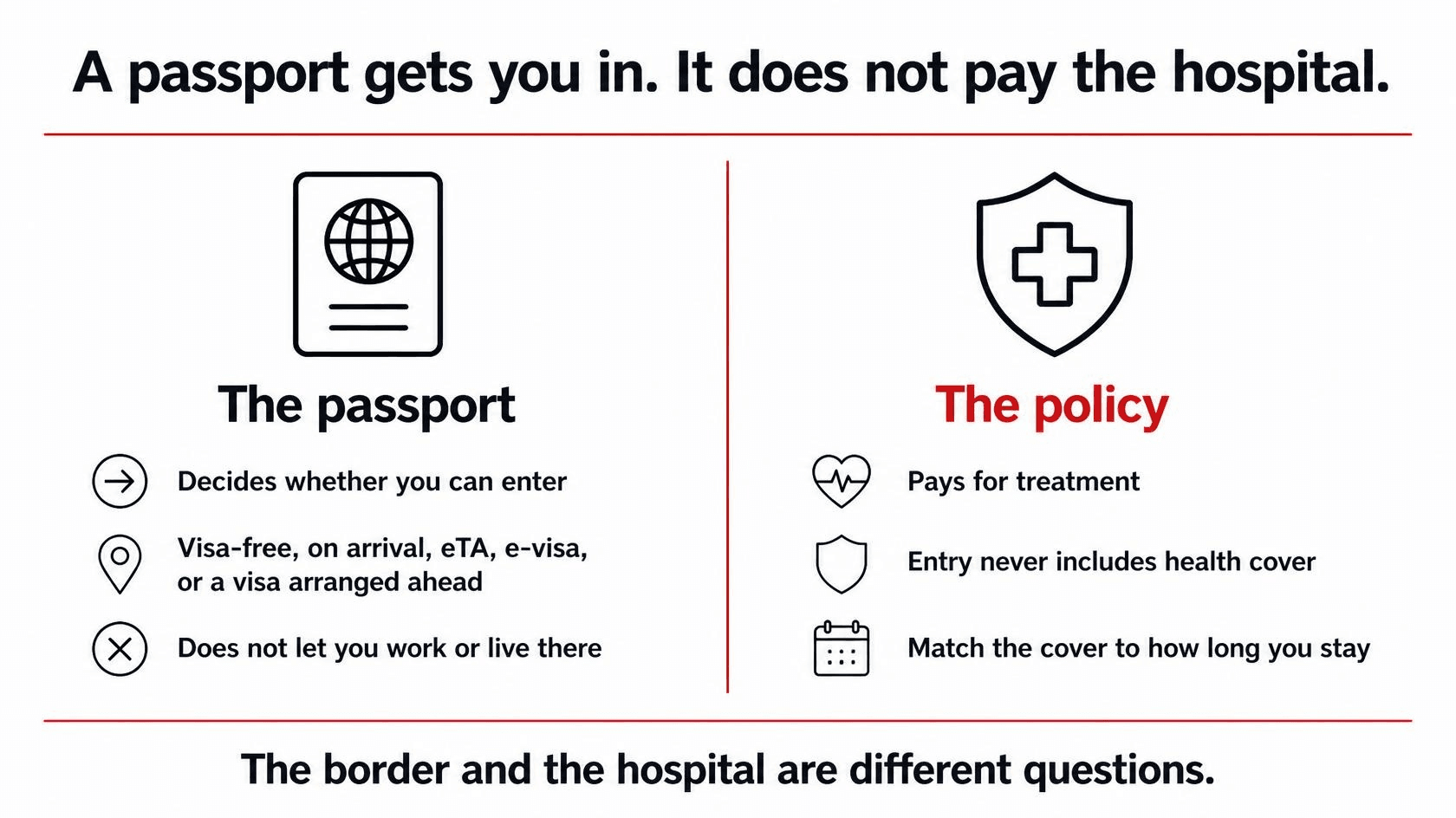
A short trip to Hungary can still use travel cover. Living there needs international health insurance that outlasts the visa.
- Best for Long-term nomads
- Best for Slowmads
- Best for Freelancers
- Best for Perpetual travelers
- Insurance required?
- RequiredThe White Card needs comprehensive health insurance covering the full range of care in Hungary, or proof of funds to cover it
- Emergency number
- 112
- Healthcare quality
- Free emergency public care for all; English-speaking private clinics in Budapest for everything else
The system
Healthcare system in Hungary
Hungary's public system is funded through contributions, and one thing is genuinely reassuring: emergency care is free to everyone, including visitors, with the national ambulance service taking you to the on-duty public hospital.
For anything non-urgent, though, the public system has long waits and limited English, so nomads and expats in Budapest lean on private clinics for speed and English-speaking doctors.
Private clinics and the catch
The catch to know: private clinics in Hungary generally do not run their own emergency rooms, so a real emergency still routes to a public hospital. The expat-oriented private clinics in Budapest (names like FirstMed, Medicover and Rózsakert) are where you go for GP and specialist care in English; they are self-pay or bill your insurance directly and do not take the EHIC. The emergency number is 112, and pharmacies (gyógyszertár, or patika) are everywhere, with 24-hour duty pharmacies for after hours.
What you'd pay
Typical costs
| Private GP or short consultation | around €60 (~$70, about 24,000 HUF) |
|---|---|
| Specialist consultation (private) | €50 to €110 (~$55–125) |
| Emergency room | free at a public hospital; a private urgent visit is roughly €100 to €200 (~$110–230) |
| Serious admission or surgery (private) | into the low thousands of euros (~$1,000–4,000), well below Western Europe |
These are indicative private figures, not an official tariff. Hungary is also Europe's leading dental-tourism destination, with widely cited savings of 40 to 80% on treatment like implants and crowns versus Western Europe, which is a real reason some nomads base here.
Entry & stay
Visa, residency & insurance
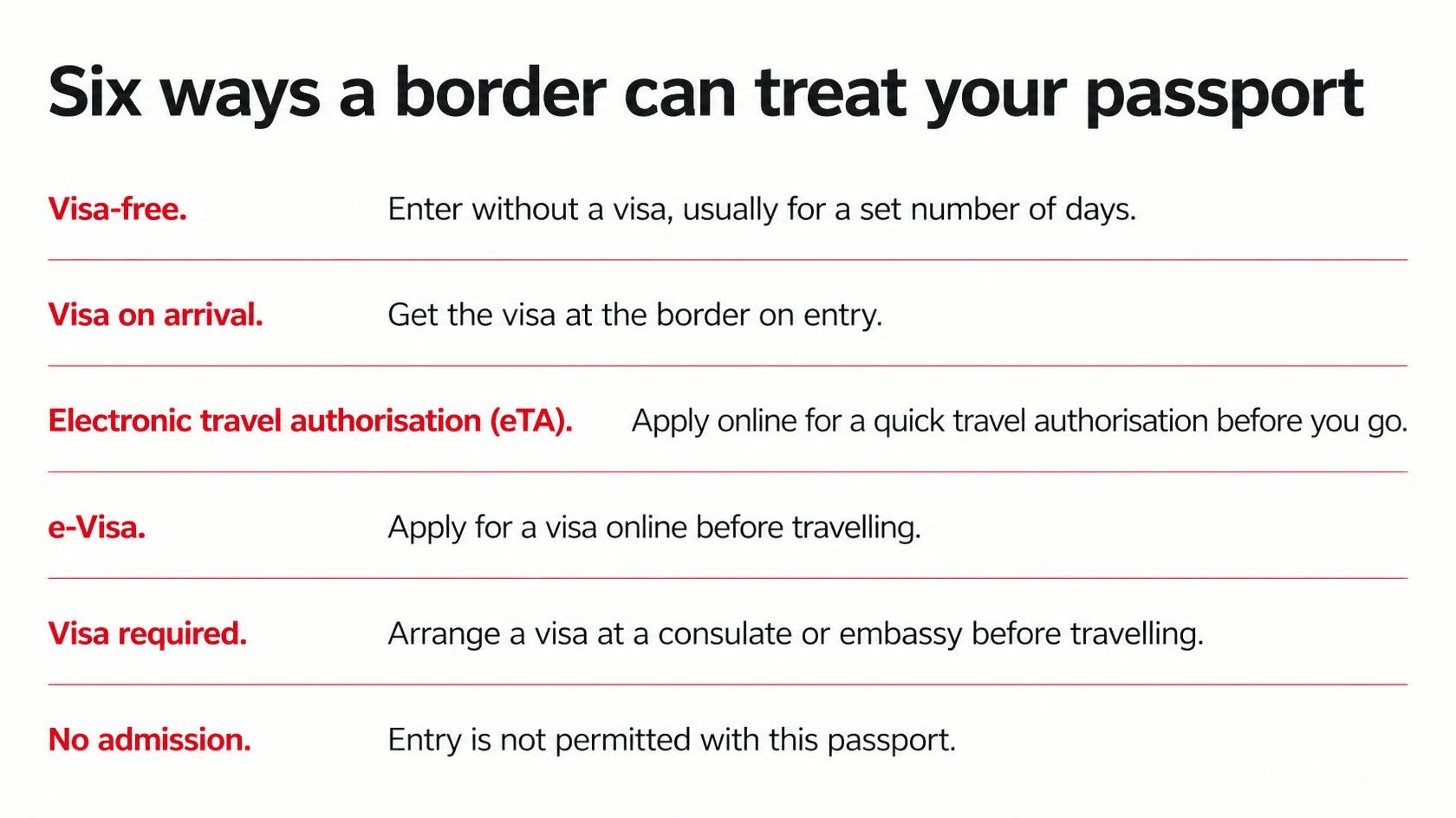
For short stays, Hungary is in Schengen, so US, British, Canadian and Australian visitors enter visa-free for 90 days in any 180-day period.
The EU's ETIAS authorisation is expected late in 2026 but is not yet required. Travel insurance is not a legal entry requirement for visa-free visitors.
The White Card
To stay and work remotely, Hungary's White Card (fehér kártya) is for non-EU nationals who work remotely for an employer based outside Hungary, or who profit from a foreign company; you cannot work for Hungarian companies or take Hungarian clients. The income test is at least €3,000 net a month over the six months before you apply (raised from the original €2,000). It runs up to a year and extends once by up to another year, around two years total, and it does not lead to permanent residence. Insurance is required: you show comprehensive health insurance covering the full range of care in Hungary, or proof of funds to cover it. There is no confirmed euro minimum specific to the White Card (the €30,000 figure is the separate Schengen-visa rule). We lay out the visa on the Hungary White Card page.
Who these rules apply to: Non-EU/EEA/Swiss for long-stay; Schengen rules for short stays for non-visa-exempt
- Required
Schengen Short Stay (Type C) / Visa Free
90 in 180Tourists, business visitors from non-EU; visa-free for US/UK/CA/AU/JP and 60+ others. Passport 6 months beyond stay, funds, accommodation, return ticket; ETIAS for visa-exempt from late 2026
- Recommended
Type D Residence Permit for Employment
Up to 3 years initially, renewable; tied to employmentNon-EU with Hungarian employer sponsor (note 2024 decree limits eligible nationalities). Hungarian employer sponsorship, contract meeting min salary, labour-market test (unless exempt), accommodation, qualifications
- Required
Type D RP for Study
Programme duration, renewable annuallyInternational students at accredited Hungarian universities (incl. Stipendium Hungaricum). Acceptance letter, tuition payment proof, ~5 EUR/day funds plus accommodation
- Required
Hungarian White Card (DN Residence Permit)
1 year, renewable once for 2 yrs total; then leave and reapplyNon-EU remote workers, freelancers, owners of foreign companies for non-Hungarian clients. Monthly income 3,000 EUR (6 months bank statements or contract), 10,000 EUR savings, Hungarian address (12-month rental or purchase), no Hungarian clients/employers
- Required
Guest Investor Programme (Golden Visa)
10-year renewable RP; no min physical presenceNon-EU/EEA HNW seeking long-term residency by investment, plus family. 250,000 EUR in approved real estate fund (5 years) or 1,000,000 EUR donation to approved higher-ed/cultural institution; accommodation; clean record
- Required
Type D Family Reunification RP
Up to 3 years initially, renewable; aligned with sponsorSpouses, minor children, dependent relatives of Hungarian citizens or RP holders. Family relationship proof (apostilled), sponsor's stable income and accommodation, clean record
Visa rules change often and depend on your nationality. Always confirm with the official immigration service or your nearest consulate before you apply.
Interactive
Verified pricesWhat would it cost in Hungary without insurance?
The textbook traveller emergency. It cannot wait, it cannot be treated at a pharmacy, and it ends in an operating theatre.
| Emergency room, on arrival | $150–$300 |
| A scan to confirm it | $455–$1,025 |
| The operation | $11,273 |
| Three nights recovering | $3,279 |
| You pay, out of pocket | $15,157–$15,877 |
Priced as one lump instead of itemised, a serious admission in Hungary runs $2,000 to $12,000.
That is the bill you carry alone. Insurance exists for exactly this.
See what a match needsTypical private-care estimates for illustration, not a quote. Actual bills vary by hospital, city and severity.
Local risk notes
What to watch out for in Hungary
- Budapest nightlife scams.
- The classic is overcharging bars and clubs, where friendly locals invite tourists, often solo men, to venues that then present a huge bill. Avoid unofficial taxis (use the Bolt app) and street currency exchange around Váci utca.
- Petty crime. Pickpocketing happens in crowded tourist spots and on public transport, so keep the usual city wits about you.
- Ticks. Forested and grassy areas carry tick-borne encephalitis risk in the warm months; if you hike, cover up, check for ticks, and consider the TBE vaccine.
- Roads. Hungary's road-death rate is a little above the EU average, and the drink-drive limit is zero, so do not drink and drive at all.
- Tap water. It is safe to drink and meets EU standards; only very old buildings with pre-2005 plumbing are a possible exception.
Common questions
Hungary insurance FAQ
Yes, the White Card, for non-EU nationals working remotely for a foreign employer or profiting from a foreign company. It needs income of at least €3,000 net a month and runs up to a year, extendable once.
Yes, comprehensive health insurance covering the full range of care in Hungary, or proof of funds to cover it. There is no confirmed euro minimum specific to the White Card.
No. It is strictly for remote work for a foreign employer or income from a foreign company; Hungarian companies and clients are not allowed.
Emergency care is free to everyone, including visitors, via the public ambulance service and on-duty hospitals. Non-emergency care is where you use private clinics, which is why proper cover matters.
Yes, it is Europe's leading dental-tourism hub, with widely cited savings of 40 to 80% versus Western Europe on treatments like implants and crowns.
Yes, it is safe to drink and meets EU standards, with old pre-2005 plumbing the only likely exception.
Here for a few weeks rather than living here? A trip policy is the right tool; see our guide to nomad travel insurance.
This page is the healthcare guide. It does not quote a premium and does not name an insurer. How we measure cost.
In 3 steps
- 01
Fill out
The form only asks what changes the plan.
- 02
We find your match
We compare the panel against your route, stay and visa.
- 03
Become a member
If the offer fits, you take it out directly.
Have a look if this page was not the question you came with.