Destination
Healthcare in Antigua and Barbuda, and what it costs without cover
The two-year nomad visa closed in November 2025 with no successor, so remote workers arrive as ordinary visitors. Two islands share one public hospital, and serious cases leave by air ambulance, so evacuation cover is the line that counts.
A short trip to Antigua and Barbuda can still use travel cover. Living there needs international health insurance that outlasts the visa.
- Best for Long-term nomads
- Best for Slowmads
- Best for Freelancers
- Best for Perpetual travelers
- Insurance required?
- Not requirednomad visa ended Nov 2025
- Recommended coverage
- Must include medical evacuation
- Emergency number
- 911999
- Healthcare quality
- One public hospitalEnglish-speaking · serious cases flown abroad
The system
Healthcare system in Antigua and Barbuda
English is the official language, so navigating care is straightforward.
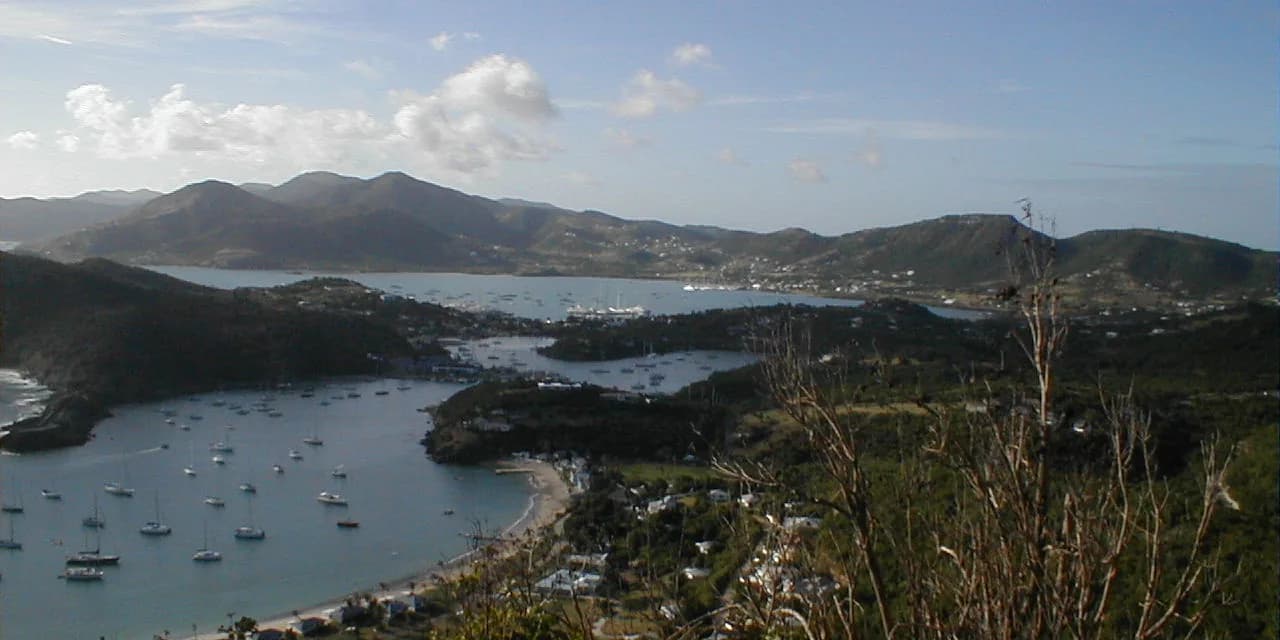
The main public facility is the Sir Lester Bird Mount St. John's Medical Centre in St. John's (still widely called Mount St. John's, renamed in 2021), a roughly 185-bed referral hospital with emergency, surgical, maternity and diagnostic services. It is the only public hospital on Antigua; Barbuda has just a small eight-bed facility, so anything beyond routine care means a trip to Antigua first. Most nomads use the private clinics for day-to-day needs, including the Adventist Health Care Centre and the Caribbean Medical Centre in St. John's, where waits are shorter and the experience more predictable.
Off-island evacuation
The emergency number is 911 (999 also works) and you ask for an ambulance. The island caveat is the one that matters: the UK Foreign Office states plainly that the main hospital handles many treatments but serious cases may need emergency evacuation off the island, and that treatment is costly. That evacuation, usually a medical flight to the US or a larger Caribbean hospital, is the bill that makes evacuation cover non-negotiable here. A practical point on payment: private clinics commonly expect prepayment and may not bill a travel insurer directly, so you pay and then claim. Pharmacies are available in St. John's and the main towns, but bring enough of any essential medicine with a doctor's letter, as specific brands may not be stocked.
What you'd pay
Typical costs
| Private GP or consultation | EC$50 to EC$150 (about US$20 to US$55) |
|---|---|
| Private health insurance for an expat, with evacuation | about US$240 to US$375 a month |
| Emergency room or private admission | expect to prepay, often hundreds of US dollars |
| Serious admission, surgery or an off-island evacuation | into the thousands, or far more |
Antigua and Barbuda publishes no official private tariff, so treat these as indicative; the Eastern Caribbean dollar is pegged to the US dollar at EC$2.70 to US$1. The figure that should drive your decision is the last one: a serious case or a medical flight off the island is exactly the cost insurance exists to cover.
Entry & stay
Visa, residency & insurance
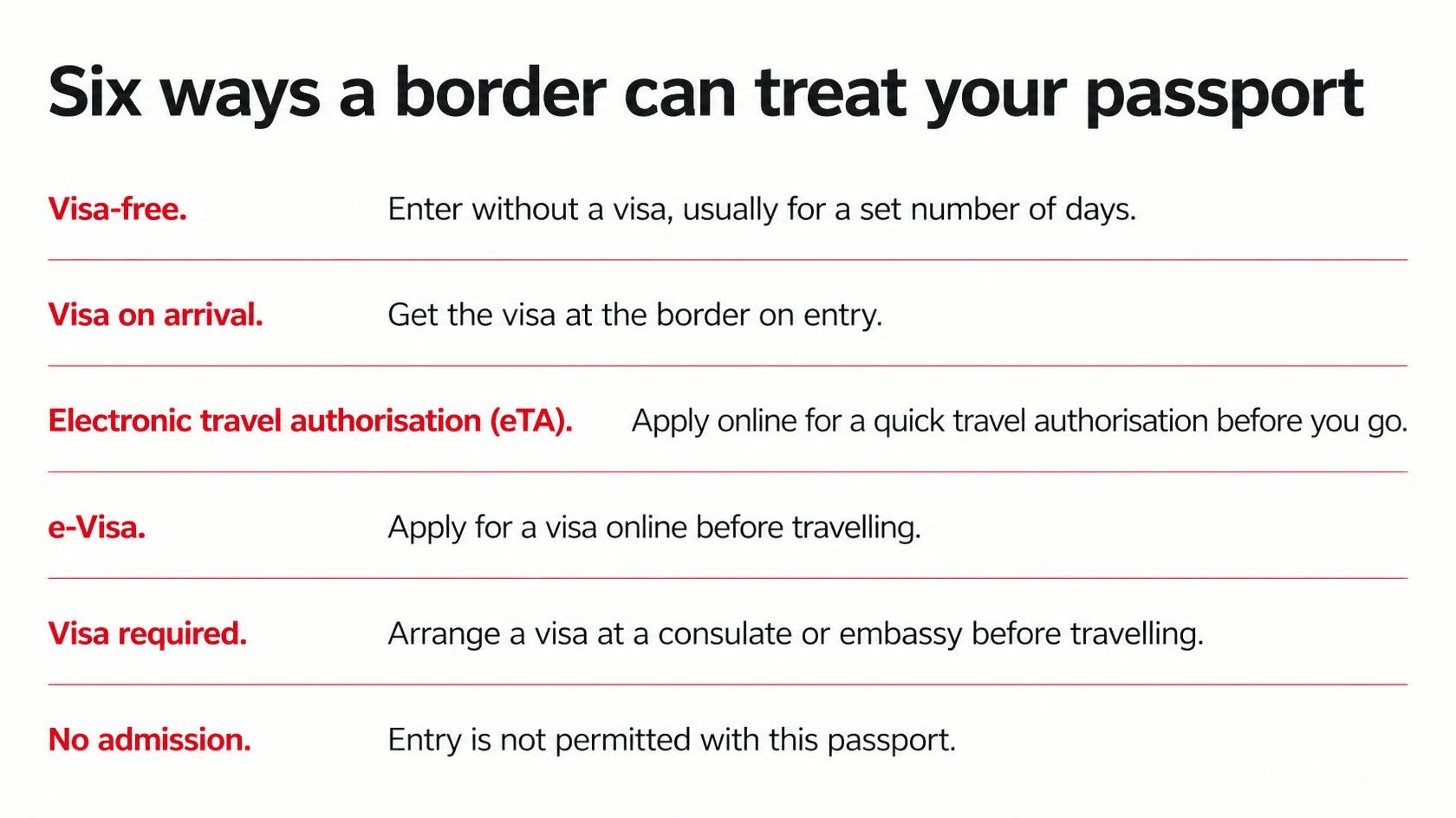
For short stays, US, British, Canadian and Australian visitors enter visa-free.
How long you get is genuinely unclear from the published sources: the UK Foreign Office states 90 days for British visitors, while Antiguan immigration material indicates stays of up to six months granted at the officer's discretion. Both are official, and they do not agree.
Plan around 90 days and treat anything longer as a decision made at the border rather than an entitlement you can book flights against. This matters more than it looks, because with the nomad visa gone there is no permit to convert a long stay into, so an over-optimistic assumption about the stamp is now the whole plan.
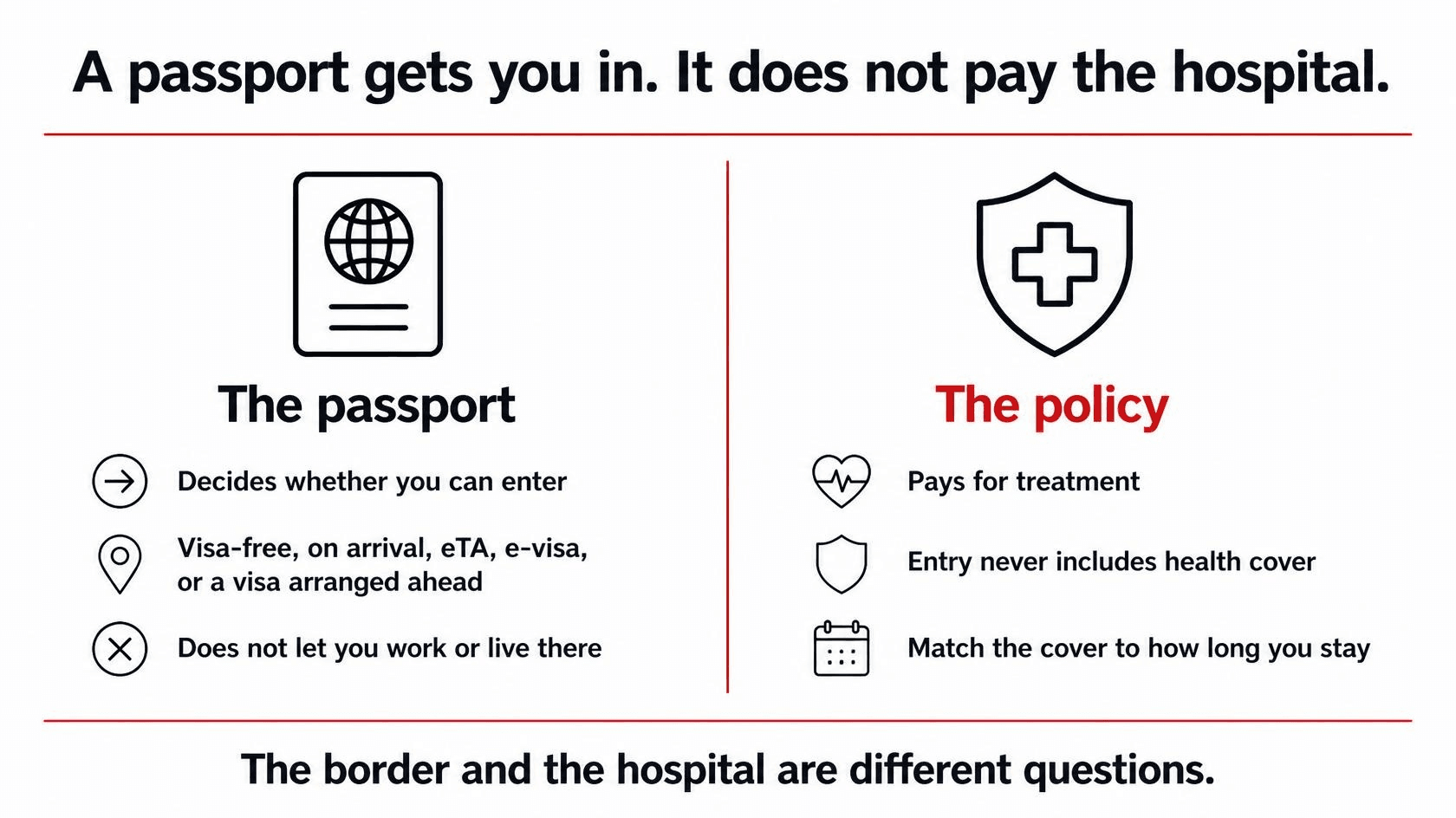
Your passport should be valid for at least six months, and you need an onward or return ticket plus proof you can support yourself. Travel insurance is not a legal entry requirement, and with the nomad route closed there is no longer any Antiguan process that asks about cover at all.
The Nomad Digital Residence visa closed in November 2025
The NDR was the reason a lot of people looked at Antigua: two years, remote work, no local tax on foreign income. The government discontinued it by notice dated 10 November 2025, effective 15 November 2025, and named no successor route.
Be careful what you read about it, because the internet has not caught up. Plenty of guides still describe the NDR as open, the High Commission in London still lists it, and the programme's old application website has since lapsed and been resold to an unrelated commercial operator. If a page invites you to apply for the NDR today, it is either out of date or not the government.
What remote workers use now
Ordinary visa-free entry. US, British, Canadian and Australian visitors are admitted without a visa, and sources disagree on the length: the FCDO says 90 days, while the Antiguan immigration service indicates stays of up to six months granted at the officer's discretion. Plan for the shorter figure and treat anything more as a bonus your officer decides on arrival. You need a passport valid six months, an onward or return ticket and proof you can support yourself.
There is no remote-work permit to convert that into, so a longer stay means leaving and returning, or looking at the country's residency and citizenship-by-investment routes, which are a different proposition entirely.
With the visa gone, so is the insurance requirement
The NDR did require applicants to show medical insurance for the full period of stay, and that condition died with the programme. Nothing replaces it: entry as a visitor carries no insurance requirement, and the FCDO entry-requirements page lists only passport validity and onward travel.
That leaves you with the same exposure and no paperwork forcing you to address it. Two islands share one public hospital, foreign visitors pay privately, and anything beyond local capability means an air ambulance to Puerto Rico, Martinique or the US mainland. The cost of that flight has not changed just because nobody checks for a policy at the airport.
Who these rules apply to: All nationalities (NDR open globally); tourist visa-free for US/UK/EU/CA/AU/NZ and most Commonwealth and OAS
- Recommended
Tourist Visa-Free Entry
30 to 180 days depending on nationality (US 30 days, UK/EU up to 180)US/UK/EU/CA/AU/NZ/Commonwealth and most OAS. Valid passport, onward/return ticket, accommodation, funds
- Recommended
Visitor Visa (visa-required nationals)
Up to 6 months at immigration discretionNationals of countries not on visa-exempt list (e.g. CN/IN, most African)
- Recommended
Work Permit
Typically 1 year, renewableForeign nationals with job offer from AG employer
- Required
Nomad Digital Residence (NDR)
2 years (special resident authorisation)Remote workers, freelancers, remote business owners earning income outside AG. Min annual income USD 50,000, remote employment or business proof, clean record, valid health insurance, application fee USD 1,500 single / 2,000 couple or family up to 3 / 3,000 family >3 (+USD 650 per extra dependent)
- Optional
Citizenship by Investment (CIP)
Permanent (full citizenship and passport)HNW investors and families seeking second citizenship and visa-free travel to 150+ countries. NDF contribution from USD 230,000, or University of West Indies Fund from USD 260,000 (family 6+), or approved real estate from USD 300,000, or business investment from USD 1.5M; due diligence and gov fees additional
Visa rules change often and depend on your nationality. Always confirm with the official immigration service or your nearest consulate before you apply.
Once a stay outruns a travel policy's trip limit, our guide to nomad health insurance vs travel insurance explains which kind of cover fits.
Interactive
Verified pricesWhat would it cost in Antigua & Barbuda without insurance?
You pay, out of pocket
$2,100–$7,000
A serious private admission or common surgery.
Bars to scale. A flight home is in another league.
That is the bill you carry alone. Insurance exists for exactly this.
See what a match needsTypical private-care estimates for illustration, not a quote. Actual bills vary by hospital, city and severity.
Local risk notes
What to watch out for in Antigua and Barbuda
- Stale nomad-visa information is everywhere.
- The Nomad Digital Residence ended on 15 November 2025, but guides, agencies and even the High Commission in London still present it as open, and its former application website has lapsed and been resold to an unrelated commercial operator. Anyone offering to process an NDR application for you is either working from old information or is not what they appear to be. Verify any Antiguan immigration route against a government address before you send money or documents.
- Off-island evacuation. With one public hospital on Antigua and an eight-bed facility on Barbuda, serious cases are flown abroad, so a policy with medical evacuation is genuinely important, not a formality.
- Hurricane season. The Atlantic season runs June to November; storms can intensify fast and disrupt flights, power and medical services, so build in flexibility and follow local warnings.
- Mosquito-borne disease. Dengue, Zika and chikungunya are all present, with dengue the main traveller risk; use repellent, especially around dawn and dusk.
- Private clinics want prepayment. Many will not bill your insurer directly, so keep accessible funds and itemised receipts to claim back later.
- Tap water and post-storm flooding. Tap water quality varies, so many residents filter or buy bottled; after heavy rain or hurricanes, avoid wading in floodwater (leptospirosis risk rises).
Common questions
Antigua and Barbuda insurance FAQ
Not any more. The Nomad Digital Residence visa was discontinued by government notice on 15 November 2025 and no successor was announced. Guides describing it as open have not caught up, and its old application website has lapsed and been resold, so anything inviting you to apply there today is not the government.
No. The insurance condition belonged to the nomad visa and ended with it, and visa-free entry carries none. That removes the paperwork, not the exposure: two islands share one public hospital, visitors pay privately, and cases beyond local capability are flown to Puerto Rico, Martinique or the US mainland.
Antigua and Barbuda levies no personal income tax at all, so foreign earnings are not taxed locally regardless of which route you are on.
Sources disagree. The FCDO says 90 days for British visitors, while the Antiguan immigration service indicates up to six months granted at the officer's discretion. Plan around the shorter figure. You need a passport valid for at least six months, an onward ticket and proof of funds.
Because there is one public hospital on Antigua and only an eight-bed facility on Barbuda. The most serious cases are flown off-island, and that medical flight is expensive, so evacuation cover is the part of a policy that earns its keep.
Often not. Private clinics commonly expect prepayment and may not accept travel insurance as payment, so you typically pay up front and claim afterwards. Keep itemised receipts.
This page is the healthcare guide. It does not quote a premium and does not name an insurer. How we measure cost.
In 3 steps
- 01
Fill out
The form only asks what changes the plan.
- 02
We find your match
We compare the panel against your route, stay and visa.
- 03
Become a member
If the offer fits, you take it out directly.
Have a look if this page was not the question you came with.