Expat insurance
Expat insurance in Peru
Altitude is the clause to read. Cusco sits at 3,399 metres, the day trips go higher, and a standard policy often excludes exactly the thing you came for. A short trip to Peru can still use travel cover. Living there needs international health insurance that outlasts the visa.
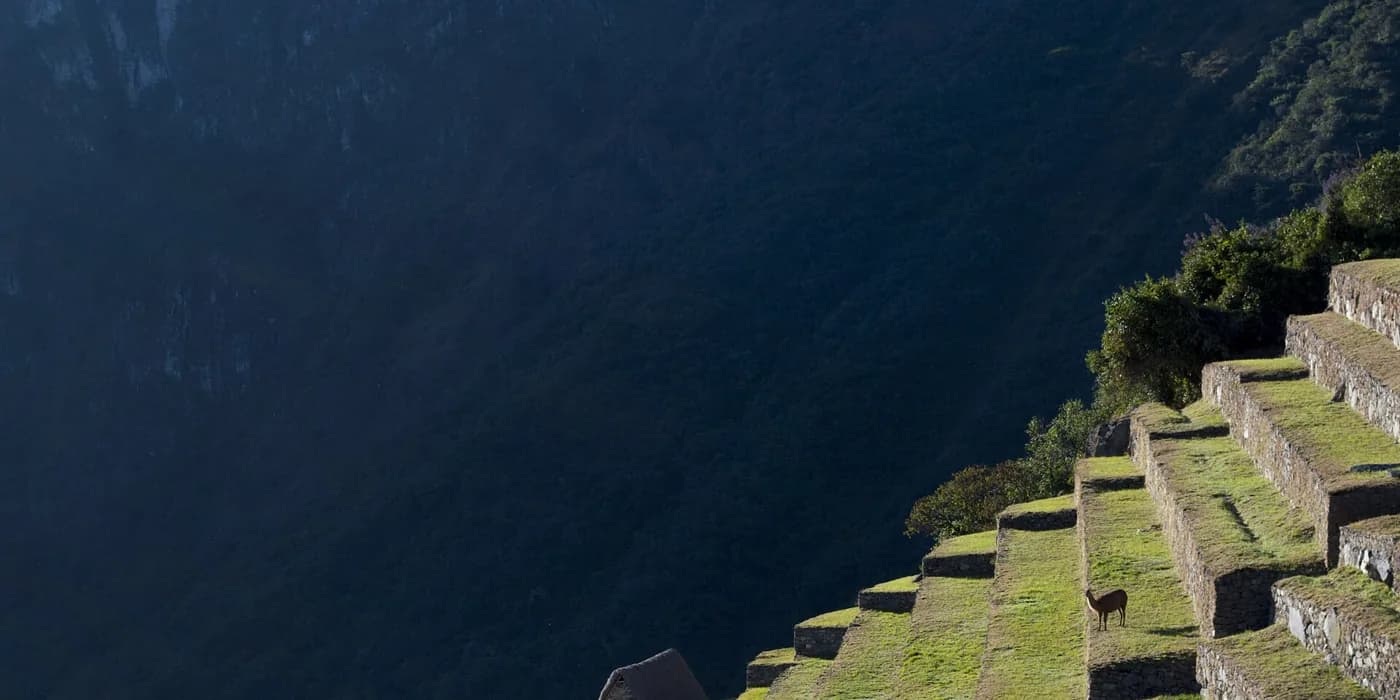
Peru gives tourists one of the most generous stays in Latin America, up to 183 days in a 365-day window, and no insurance is required to enter. The catch that actually matters here is altitude. Cusco sits at 3,399 metres, and the day trips nomads come for, Rainbow Mountain near 5,000 metres, the Salkantay pass, Lake Titicaca, climb past the height where many travel policies quietly stop paying. The cover that counts in Peru is the one that names a high enough altitude.
What expat insurance covers in Peru
Expat insurance is built for expats with a residence permit or long-stay visa, families, retirees abroad. The lines below are the base. Exact terms are carrier-specific, so always check the policy document for the Peru situation you care about.
What you get
- Full inpatient and outpatient medical
- Maternity (with waiting period)
- Dental and vision (add-ons)
- Chronic-condition management
- Multi-year renewals without trip-length resets
What it won't do
- Cover in your home country (limited windows on some plans)
- Pre-existing conditions during initial underwriting
- Cosmetic procedures
Healthcare in Peru: what you are actually buying into
Peru runs a split system. Public care is built for Peruvians and formal workers, so as a visitor you are not enrolled and would pay out of pocket anyway. In practice foreigners use private clinics. The good ones are in Lima and quality drops off fast outside it. The US embassy is blunt about the money: clinics expect immediate cash deposits, and facilities require you to pay before being released.
- Private GP visit
- A private consultation in Lima typically runs 80 to 250 soles (about 23 to 73 USD). The top-end international clinics sit at the upper end of that market.
- Emergency room visit
- Emergency attention at a private Lima clinic starts at around 500 soles (about 145 USD) just to be seen, before lab work, imaging or admission. Expect to leave a deposit on arrival: US embassy guidance says medical facilities in Peru require you to pay before being released.
- English-speaking care
- In Lima's leading private clinics most doctors speak English, and Cusco has tourist-facing clinics used to foreign patients and altitude cases. Beyond that it is Spanish only, and UK government advice notes that medical treatment is not easily available outside Lima at all.
- Pharmacy access
- Pharmacy chains are on almost every block in Lima and Cusco, with 24-hour branches and app delivery in the capital. Antibiotics and other prescription-only medicines legally require a prescription, so bring an adequate supply of anything you take regularly.
- Emergency number
- 106 for an ambulance (SAMU), 105 for police, 116 for fire. Private ambulance services operate in Lima and are often faster.
Hospital quality
The gap between private and public is the entire story. Peru has 1.56 hospital beds per 1,000 people and 1.69 physicians per 1,000, and the public network is stretched. The private clinics in Lima are a different world: Clínica Internacional and Clínica Anglo Americana both hold Joint Commission International accreditation and are set up for international patients.
Geography is the real risk. UK government advice says medical treatment is not easily available and is more difficult to access outside Lima. Cusco has private clinics that handle altitude sickness and trekking injuries competently, but anything complicated means a transfer to Lima. From the high Andes or the Amazon that transfer can mean an air ambulance, which is why the US embassy in Lima keeps a list of private air ambulance operators alongside its hospital lists.
Where people actually go
Clínica Anglo Americana
San Isidro, Lima
Lima's most internationally oriented private hospital, JCI-accredited and used to foreign patients and international insurers.
Clínica Internacional
San Borja and Cercado de Lima
JCI-accredited private network with two large Lima hospitals. A solid default for emergencies in the capital.
Clínica Ricardo Palma
Lima
Another of Lima's main private hospitals, and one of the three names that consistently come up for expats and travellers.
Clínica Pardo
Cusco
24-hour private emergency service, used to treating altitude sickness in tourists and handling transfers across the Cusco and Machu Picchu region.
Health risks worth insuring against in Peru
- Altitude illness. Cusco sits at 3,399m, Puno at 3,827m, and the Inca Trail tops out at 4,215m at Dead Woman's Pass. A Journal of Travel Medicine study of travellers in Cusco found 39 percent developed acute mountain sickness. Acetazolamide reduced the risk; coca leaf tea did not.
- Yellow fever. Vaccination is recommended for jungle areas below 2,300m including Loreto, Madre de Dios and Ucayali, with confirmed cases in Madre de Dios in March 2026. It is not recommended for Lima, Cusco city, Machu Picchu or the Inca Trail.
- Dengue, with thousands of cases in 2026 to date and a major outbreak following recent floods. There is no specific treatment, only bite avoidance.
- Oropouche virus, an emerging midge-borne infection with hundreds of cases reported in Peru. No vaccine and no treatment.
- Malaria in the Amazon basin, mainly Loreto near the Brazilian border. Lima and the coast are malaria-free, so this only matters if the itinerary goes into the jungle.
- Food and water infections plus rabies. Hepatitis A and typhoid are the usual vaccine recommendations, and rabies is present, which matters for long stays and anyone spending time around dogs or bats.
The Inca Trail tops out at 4,215m at Dead Woman's Pass, above the 4,000m trekking limit written into many standard policies. Cusco itself sits at 3,399m, and one published study found 39 percent of travellers there developed acute mountain sickness.
What this means for your policy
The biggest hole in a Peru policy is altitude. Many standard policies treat trekking above a set height as a high-risk activity and exclude it, and the thresholds are commonly 3,000m or 4,000m, both below the Inca Trail's 4,215m high point. Find the metre figure in your wording. If it is lower than the passes on your itinerary, a rescue and the hospital bill that follows would be yours to pay, and the policy would be doing exactly what it says it does.
Then cover the two things that actually drive cost. First, evacuation: serious cases end up in Lima, and from the Andes or the Amazon that can mean an air ambulance, so a meaningful evacuation limit is not optional here. Second, payment mechanics: Peruvian clinics expect a cash deposit up front and will not release you until the bill is settled, so a 24-hour assistance line that can issue a guarantee of payment to the clinic is worth more than a slightly higher limit you can only claim back later. And if the trip includes the jungle, get the yellow fever vaccination sorted well before departure.
Before you buy, check these four things
- Does it pay the hospital, or you? A reimbursement plan means you front the money. Where hospitals in Peru expect payment before treatment, that difference is the whole policy.
- Is evacuation actually included, and up to what limit? It is the one bill that can exceed a year of income, and it is the benefit people cut first.
- Does the term cover your permit? A 90-day travel policy expires inside a one-year visa, and an immigration officer comparing the dates will see it.
- Have you declared everything? A condition you left off is grounds to challenge a claim years later, even one unrelated to it.
What care costs in Peru
These are the bills expat insurance exists to stand between you and. Read them before you decide how much cover is enough, because the number that looks generous in the abstract rarely does next to a real invoice.
| Private clinic consultation (Lima), insured copay | commonly around 10 to 15 US dollars |
|---|---|
| Private consultation, uninsured | modest by US standards, though Peru publishes no official tariff |
| Altitude-sickness assessment at a Cusco tourist clinic | routine and widely available |
| Medical evacuation or repatriation, uninsured | an international benchmark of roughly 20,000 to 80,000 US dollars or more, depending on distance |
These are indicative figures rather than a price list, and they vary by clinic and city. The currency is the Peruvian sol (PEN), trading at roughly 3.7 to 3.8 to the US dollar, and private care broadly runs well below US prices, which is part of what draws long-stay nomads. Private clinics generally expect payment upfront and leave you to claim back from your insurer, so keep a card or cash buffer and save receipts. The number to internalise is the evacuation one: it sits in a different league from any consultation, and in the Andes the distances and altitude are exactly what make it expensive.
The cost of going uninsured in Peru
Insurance is abstract until you put a number on the thing it prevents. Pick a scenario and see what it costs in Peru with nobody paying on your behalf.
Interactive
Verified pricesWhat would it cost in Peru without insurance?
The textbook traveller emergency. It cannot wait, it cannot be treated at a pharmacy, and it ends in an operating theatre.
| Emergency room, on arrival | $30–$90 |
| A scan to confirm it | $74–$118 |
| The operation | $1,235 |
| Three nights recovering | not verified here |
| At least | $1,339–$1,443 |
One step in this bill has no verified price for Peru yet, so the real total sits above this one. We would rather leave the line blank than guess at it.
Priced as one lump instead of itemised, a serious admission in Peru runs $1,300 to $4,000.
That is the bill you carry alone. Insurance exists for exactly this.
See what cover costsTypical private-care estimates for illustration, not a quote. Actual bills vary by hospital, city and severity.
Expat insurance in Peru: FAQ
In most cases Peru expects long-stay residents and visa applicants to show proof of health coverage. The specific bar (carrier, sum insured, residency-vs-travel cover) depends on your visa class; the Peru guide covers the country's current visa-and-residency stance.
Premiums vary by age, plan and deductible far more than by country; the underwriting risk is priced, not the postal code. The Peru guide breaks down local treatment costs so you can see what your insurance protects you from, then run a real quote for your own number.
It depends on your situation: how long you're staying, your visa class, your age and health, and whether you want cashless treatment or are fine with reimbursement. Rather than push one plan, we match you against the options that actually fit a stay in Peru: answer a few honest questions and see only what's relevant.
106 for an ambulance (SAMU), 105 for police, 116 for fire. Private ambulance services operate in Lima and are often faster.. Worth saving before you need it. Note that reaching an ambulance and being covered for what happens next are different problems, and in many countries the second one is yours to solve.
In Lima's leading private clinics most doctors speak English, and Cusco has tourist-facing clinics used to foreign patients and altitude cases. Beyond that it is Spanish only, and UK government advice notes that medical treatment is not easily available outside Lima at all. This matters more than people expect: describing a symptom precisely is part of being diagnosed correctly, and it is the main practical reason foreigners end up in the private system even where the public one is good.
In Peru, a private GP visit runs A private consultation in Lima typically runs 80 to 250 soles (about 23 to 73 USD). The top-end international clinics sit at the upper end of that market. and an emergency room visit Emergency attention at a private Lima clinic starts at around 500 soles (about 145 USD) just to be seen, before lab work, imaging or admission. Expect to leave a deposit on arrival: US embassy guidance says medical facilities in Peru require you to pay before being released.. Those are the routine numbers and they are survivable. The reason to insure is not the GP visit, it is the admission that follows a bad day, which is where the figures stop being survivable.
This page explains the product type. It does not state a premium and does not name an insurer. How we measure cost.
In 3 steps
- 01
Fill out
The form only asks what changes the plan.
- 02
We find your match
We compare the panel against your route, stay and visa.
- 03
Become a member
If the offer fits, you take it out directly.
Have a look if this page was not the question you came with.