Expat insurance
Expat insurance in Malta
English is an official language, so nothing gets lost at the admissions desk. The Nomad Residence Permit still wants full cover valid in Malta for the whole term. A short trip to Malta can still use travel cover. Living there needs international health insurance that outlasts the visa.
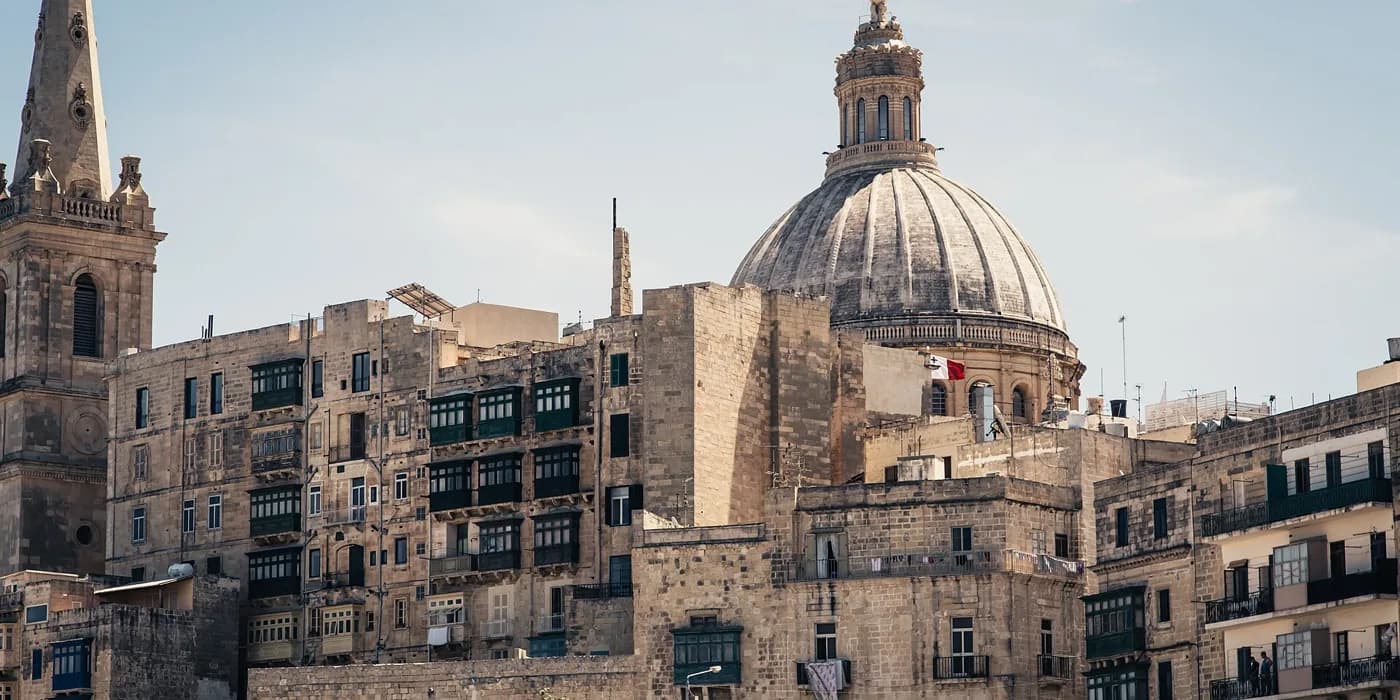
Malta is the rare Mediterranean nomad base where English is an official language, so nothing gets lost in translation, paired with a Nomad Residence Permit, EU and Schengen access, around 3,000 hours of sunshine, and low crime. The catch on insurance is specific: the permit demands comprehensive health cover for Malta, pre-paid for a year, and explicitly rejects travel insurance. Watch the summer heat, the left-hand driving, and the crowded roads.
What expat insurance covers in Malta
Expat insurance is built for expats with a residence permit or long-stay visa, families, retirees abroad. The lines below are the base. Exact terms are carrier-specific, so always check the policy document for the Malta situation you care about.
What you get
- Full inpatient and outpatient medical
- Maternity (with waiting period)
- Dental and vision (add-ons)
- Chronic-condition management
- Multi-year renewals without trip-length resets
What it won't do
- Cover in your home country (limited windows on some plans)
- Pre-existing conditions during initial underwriting
- Cosmetic procedures
Healthcare in Malta: what you are actually buying into
Malta is the rare Mediterranean base where English is an official language and the working language of healthcare, so care is frictionless for English speakers. The main public hospital is Mater Dei; St James is the largest private one. A private GP visit runs about €10 to €30, but a serious private admission climbs into the thousands.
- Private GP visit
- €10–€30 (private)
- Emergency room visit
- Private quoted per case; public A&E at Mater Dei is 24/7
- English-speaking care
- Excellent. English is an official language of Malta and the working language of healthcare, with records kept in English.
- Pharmacy access
- Pharmacies are widespread, with a duty rota covering Sundays and public holidays, published in the local press.
- Emergency number
- 112
Hospital quality
The main public hospital is Mater Dei in Msida, a large teaching hospital with a 24-hour emergency department.
On the private side, St James Hospital is the largest (with walk-in immediate-care units), alongside Saint Thomas Hospital and DaVinci Health. Care is delivered in English throughout.
Where people actually go
Mater Dei Hospital
Msida
Malta's main public teaching hospital; 24-hour emergency department.
St James Hospital
Sliema / Żabbar
Malta's largest private hospital group; walk-in immediate-care units.
Saint Thomas Hospital
Qormi (Luqa)
Private hospital used by expats.
Health risks worth insuring against in Malta
- Summer heat, with heatwaves driven by hot African winds regularly pushing past 40°C
- Driving on the left (a British legacy) on narrow, congested roads
- One of the EU's most densely populated countries, with heavy summer traffic and stretched services
- Mauve Stinger jellyfish common from spring into autumn, peaking around June
- Tap water EU-compliant but around 60% desalinated, so often drunk bottled or filtered
English is an official language of Malta and the working language of its healthcare, with medical records kept in English, making it unusually frictionless for English-speaking nomads among Mediterranean hubs.
What this means for your policy
Care quality and language are not the worry in Malta; the permit's insurance rule is. It wants comprehensive Malta cover pre-paid for a year, not a travel policy, so line that up first.
Then mind the summer heat and the left-hand driving if you rent a car.
Before you buy, check these four things
- Does it pay the hospital, or you? A reimbursement plan means you front the money. Where hospitals in Malta expect payment before treatment, that difference is the whole policy.
- Is evacuation actually included, and up to what limit? It is the one bill that can exceed a year of income, and it is the benefit people cut first.
- Does the term cover your permit? A 90-day travel policy expires inside a one-year visa, and an immigration officer comparing the dates will see it.
- Have you declared everything? A condition you left off is grounds to challenge a claim years later, even one unrelated to it.
What care costs in Malta
These are the bills expat insurance exists to stand between you and. Read them before you decide how much cover is enough, because the number that looks generous in the abstract rarely does next to a real invoice.
| Private GP or consultation | €10 to €30 (~$10–35) |
|---|---|
| Specialist consultation | €50 to €120 (~$55–140) |
| Minor surgery (private) | €100 to €500 (~$110–570) |
| Major surgery or serious admission (private) | from about €3,000 (~$3,400) |
Malta's private hospitals quote per case rather than publishing fixed tariffs, so treat these as indicative ranges. A routine visit is cheap, but a serious private admission climbs into the thousands, which is exactly the gap the permit's insurance rule is meant to close.
The cost of going uninsured in Malta
Insurance is abstract until you put a number on the thing it prevents. Pick a scenario and see what it costs in Malta with nobody paying on your behalf.
Interactive
Verified pricesWhat would it cost in Malta without insurance?
You pay, out of pocket
$3,400–$13,000
A serious private admission or common surgery.
Bars to scale. A flight home is in another league.
That is the bill you carry alone. Insurance exists for exactly this.
See what cover costsTypical private-care estimates for illustration, not a quote. Actual bills vary by hospital, city and severity.
Does a Malta visa require health insurance?
Yes. Every Malta route we track requires you to show proof of health insurance, and the cover has to run for the full length of the permit. A short-trip travel policy expires inside the term and gets applications rejected.
Expat insurance in Malta: FAQ
In most cases Malta expects long-stay residents and visa applicants to show proof of health coverage. The specific bar (carrier, sum insured, residency-vs-travel cover) depends on your visa class; the Malta guide covers the country's current visa-and-residency stance.
Premiums vary by age, plan and deductible far more than by country; the underwriting risk is priced, not the postal code. The Malta guide breaks down local treatment costs so you can see what your insurance protects you from, then run a real quote for your own number.
It depends on your situation: how long you're staying, your visa class, your age and health, and whether you want cashless treatment or are fine with reimbursement. Rather than push one plan, we match you against the options that actually fit a stay in Malta: answer a few honest questions and see only what's relevant.
1 of the 1 Malta routes we track require proof of health insurance. No minimum figure is published, so the policy has to look adequate for the length of the permit. The cover must run for the whole permit, which a 90-day travel policy cannot do.
112. Worth saving before you need it. Note that reaching an ambulance and being covered for what happens next are different problems, and in many countries the second one is yours to solve.
Excellent. English is an official language of Malta and the working language of healthcare, with records kept in English. This matters more than people expect: describing a symptom precisely is part of being diagnosed correctly, and it is the main practical reason foreigners end up in the private system even where the public one is good.
In Malta, a private GP visit runs €10–€30 (private) and an emergency room visit Private quoted per case; public A&E at Mater Dei is 24/7. Those are the routine numbers and they are survivable. The reason to insure is not the GP visit, it is the admission that follows a bad day, which is where the figures stop being survivable.
This page explains the product type. It does not state a premium and does not name an insurer. How we measure cost.
In 3 steps
- 01
Fill out
The form only asks what changes the plan.
- 02
We find your match
We compare the panel against your route, stay and visa.
- 03
Become a member
If the offer fits, you take it out directly.
Have a look if this page was not the question you came with.